





 Portuguese
  English
  Spanish
 5 min of reading
  5 comments


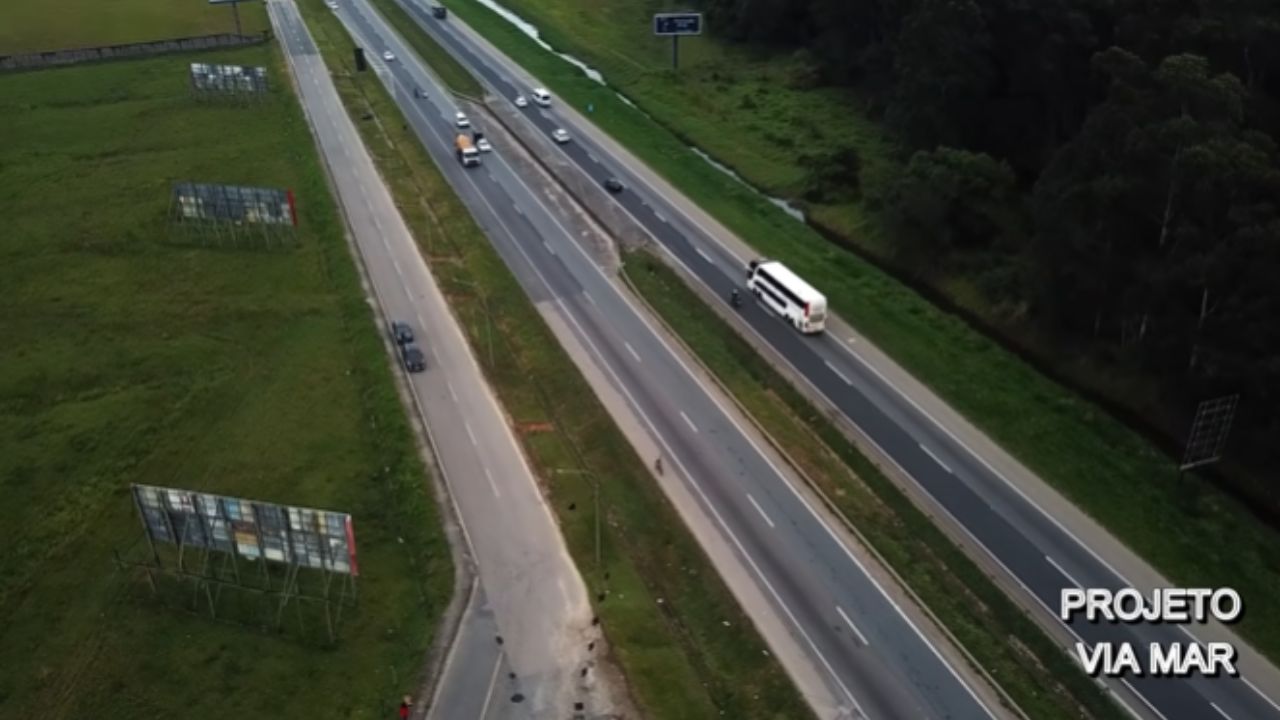


New Highway Parallel to BR-101, the Via Mar Will Be About 90 km, Divided into 5 Lots, with Up to 6 Lanes, and Construction Is Expected to Start in the First Half of 2026 to Reduce Congestion Between Joinville and Florianópolis
The new highway Via Mar is designed to tackle one of the biggest bottlenecks in northern Santa Catarina: the increasingly intense traffic and constant congestion on BR-101 between Joinville and Florianópolis. Widened in the 1990s, the federal highway can no longer handle the current volume of vehicles, turning short trips into hours-long journeys, especially during holidays and the summer season.
In light of this situation, the state government decided to bring the new highway to life, designed parallel to BR-101, with a modern layout, up to 6 lanes in some stretches, and divided into 5 construction lots. The expectation is that, with the start of construction in the first half of 2026, Via Mar will become the main alternative to alleviate traffic on BR-101 and reduce delays, accidents, and losses for residents, tourists, and the productive sector.
BR-101 Saturated and the Need for an Alternative Route
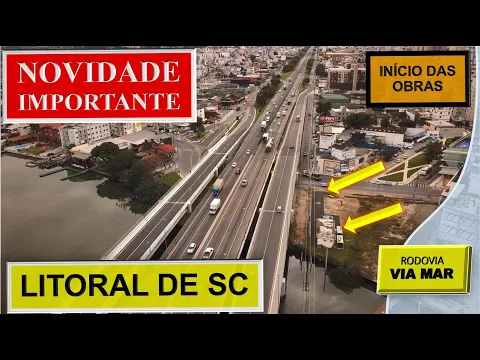

For years, BR-101 in the northern stretch of Santa Catarina has been operating at its limit. Long queues, daily congestion, and accidents that completely halt the highway have become part of the routine. Distances that should take minutes to cover often take hours, affecting those who work in the region, those transporting goods, and those who depend on the road for personal commitments.
-
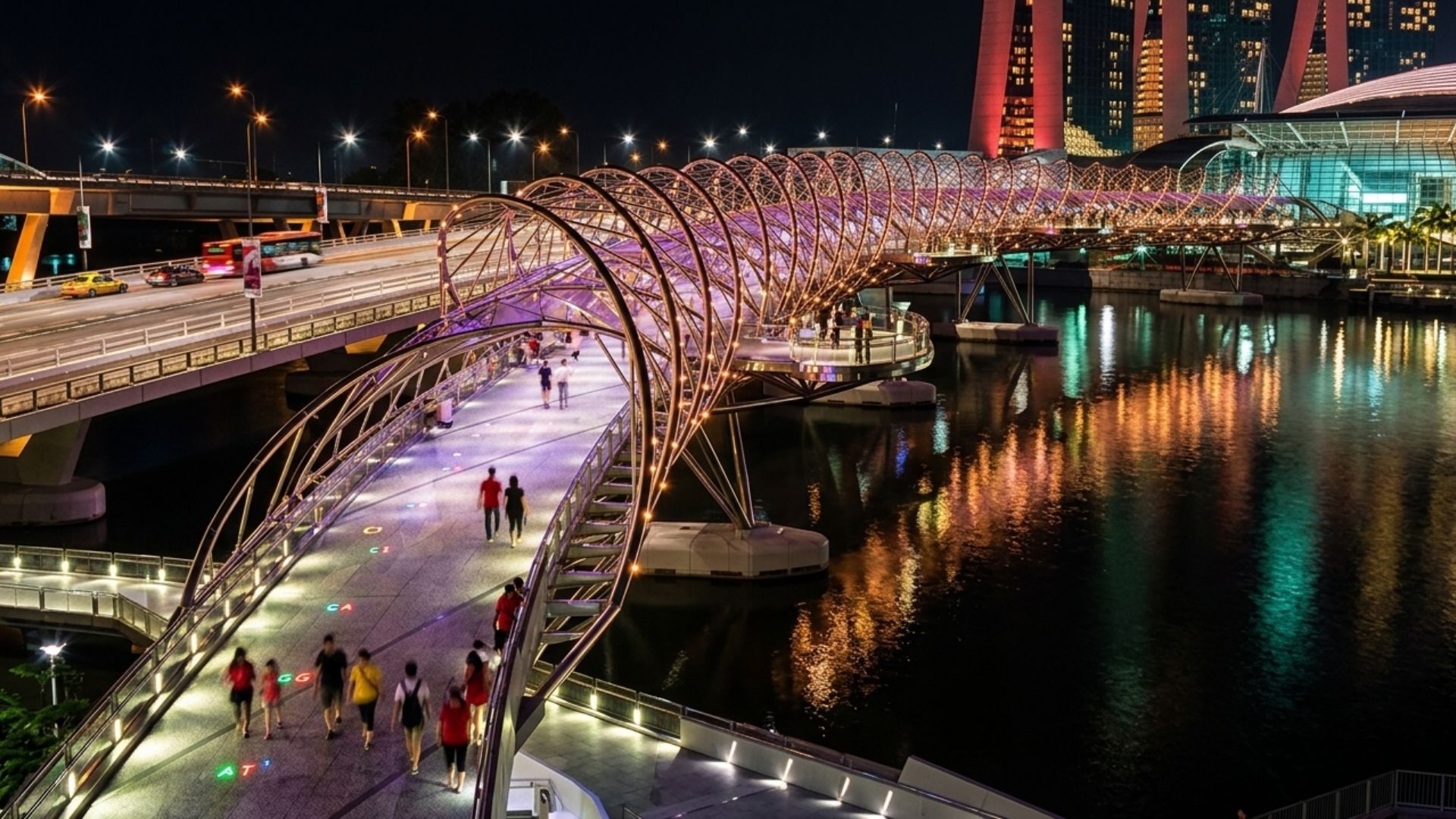
With a DNA shape, this bridge in Singapore draws attention in modern architecture and surprises tourists by transforming a simple crossing into an unforgettable visual experience in the urban heart.
-
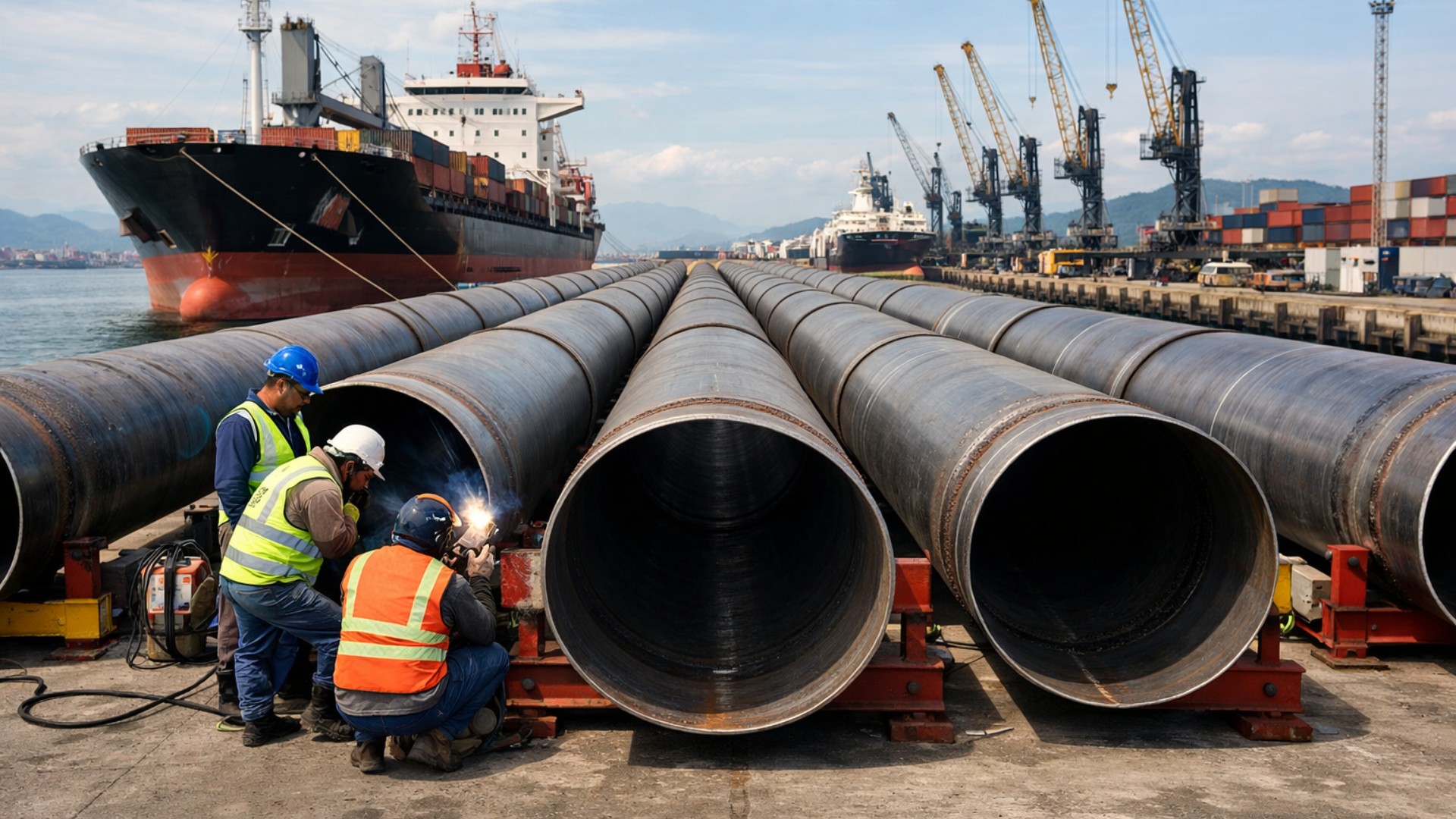
Giant underwater pipeline begins to take shape with a R$ 134.7 million project at the Port of Santos: the 1.7 km structure uses 12-meter and 700 mm pipes to supply water to 450,000 people in Guarujá.
-
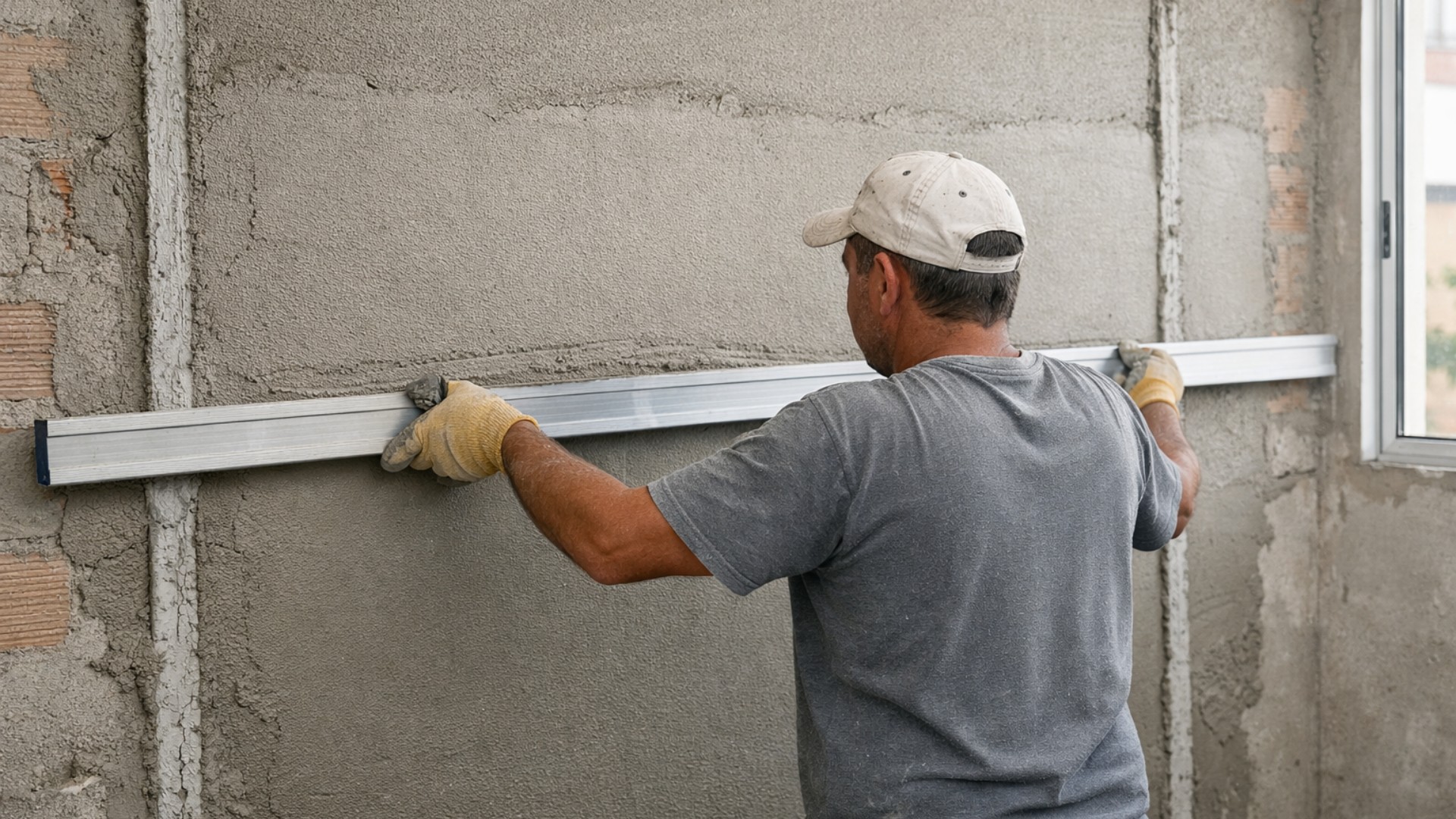
A mason reveals a professional plastering technique that uses aligned guides and a 3-meter ruler to plaster an entire wall in up to 3 hours, without visible seams, with uniform thickness, perfect plumb, and a finish ready for painting without rework.
-
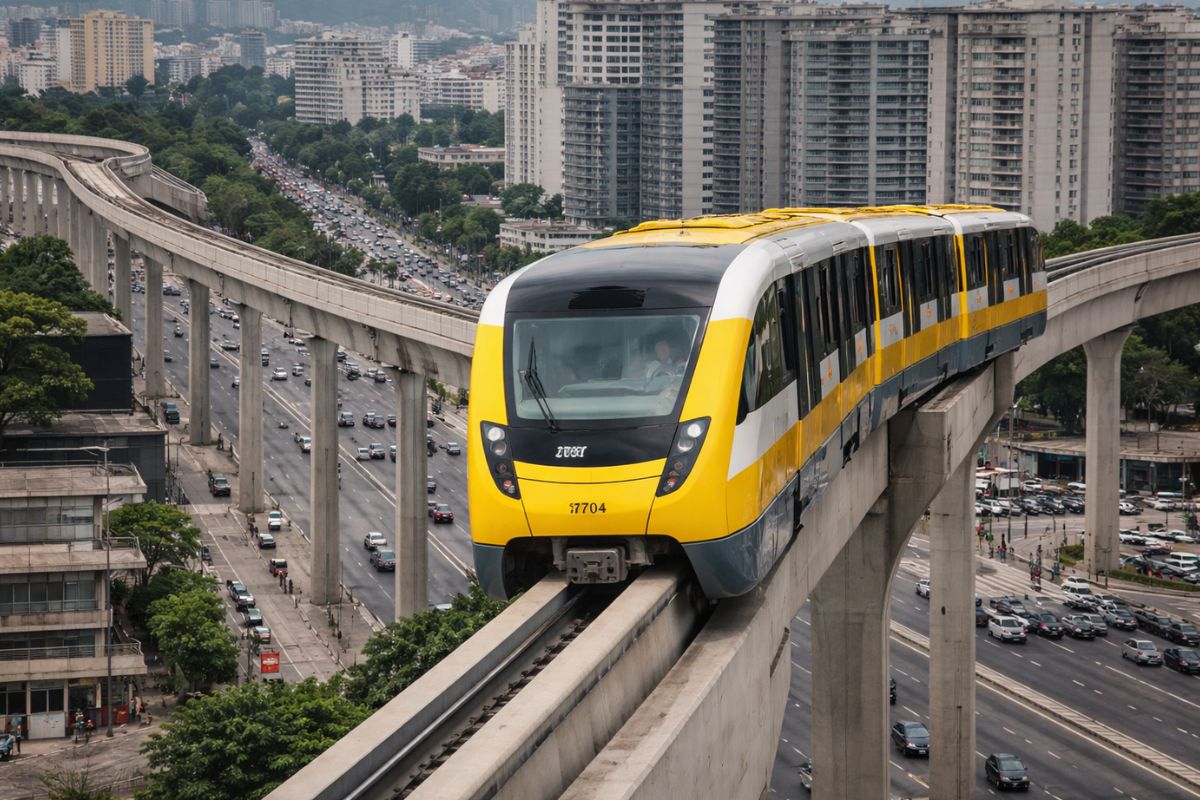
The project that was supposed to be ready for the 2014 World Cup in Brazil debuted with a 12-year delay and nearly R$ 6 billion invested: the Line 17-Gold of the São Paulo monorail opened with reduced hours and is only expected to operate fully in October.

With the arrival of summer, the problem worsens. The Santa Catarina coast attracts tourists from all over Brazil, further increasing traffic on BR-101, which is currently the only significant land connection between Joinville and Florianópolis. There is ongoing discussion about a third lane in stretches of BR-101, but, as experts point out, this would only partially reduce queue times, without eliminating the structural saturation. Hence the need for a new highway parallel to it, with real capacity to split the flow.
How the New Highway Via Mar Will Be
Via Mar was conceived as a new modern highway, parallel to BR-101, connecting the Joinville–Florianópolis axis with wide lanes and current safety and fluidity standards. The project envisions up to three lanes in each direction, totaling 6 lanes in certain stretches, representing a significant increase in capacity compared to the current scenario.
By creating a parallel route, the new highway is expected to absorb a considerable portion of long-distance traffic, freeing BR-101 for local and regional travel. This tends to reduce congestion, improve fluidity, and decrease the impact of accidents, as there will be more than one robust road alternative between the two main cities of the northern coastal axis of Santa Catarina.
Division into 5 Lots and Key Stretches
To enable the construction, Via Mar has been divided into 5 lots, which facilitates planning, bidding, and execution in stages. Overall, the new highway will cover about 90 kilometers in the main stretch, connecting to important state and federal highways in the region.
Among the highlights of the layout are:
- Stretch between Joinville and BR-280 in Guaramirim, just over 20 km, including overpasses and bridges to cross rivers and other roads
- Stretch between BR-280 and SC-415, connecting municipalities like Massaranduba and São João do Itaperiú
- Stretch between SC-415 and SC-414, in the region of Luiz Alves and Navegantes, bringing the new highway closer to strategic industrial and port areas
- Stretch between SC-414 and the Antônio Heil highway, with important crossings over the Itajaí-Açu River and BR-470
- Final stretch towards Greater Florianópolis, connecting the new highway to the bypass around Florianópolis in the Tijucas and Biguaçu region
Each lot plans a set of overpasses and bridges designed for the heavy and passenger traffic flow, reinforcing the idea of an infrastructure planned for the future growth of the region.
Start of Construction in the First Half of 2026
The major news announced by the government of Santa Catarina is the timeline for the start of construction. The official forecast is that construction of the new Via Mar highway will begin in the first half of 2026, with machinery already working on defined sections of the project.
This timeline marks the transition from the phase of studies, projects, and bureaucracy to the stage where the population will actually see the new highway come to fruition. Even though it is a large-scale and lengthy construction, the mere presence of work fronts should indicate to drivers and residents that the definitive solution for the saturation of BR-101 is underway.
Expected Impacts on Traffic and the Regional Economy
The operation of Via Mar is expected to have a direct impact on the daily lives of those traveling in the region. By splitting the flow with BR-101, the new highway promises to shorten travel times between municipalities, reduce delays in deliveries, and improve the predictability of cargo and passenger transport.
For the productive sector, especially industries, commerce, and logistics operators, the new highway should represent fewer risks of losing perishable goods, fewer fines for delays, and greater efficiency in circulation between the north, the Itajaí Valley, and Greater Florianópolis. For tourism, the expectation is for less stressful travel, with fewer hours spent in traffic jams during the peak season.
At the same time, Via Mar could redistribute development along its route, attracting new businesses, logistics centers, service stations, and industrial areas, reinforcing the economic impact of the project beyond mere traffic improvement.
New Highway as a Structural Solution for the Future
Via Mar is seen as a structural solution, not just a stopgap adjustment on BR-101. Instead of trying to squeeze another lane into an already saturated highway, the strategy was to create a new highway with a higher capacity standard, more prepared for the continuous growth of vehicle traffic.
If the timeline is adhered to and construction progresses at the right pace, drivers and companies can expect, in the coming years, a significant change in travel between Joinville and Florianópolis. The new Via Mar highway will play a central role in the mobility of northern Santa Catarina and the region’s competitiveness, reducing historic bottlenecks that currently block traffic and the economy.
And you, do you believe that the new Via Mar highway will be sufficient to solve the congestion on BR-101 or do you think that other measures will still be necessary to improve traffic in the region?





Parabéns ao Governador Jorginho Mello que tem correspondido as expectativas do povo Catarinense. Na matéria faltou ser dito qual a previsão de conclusão dessa importante obra.
Parabéns pela matéria, só favor encurtar o texto ficou repetindo várias vezes as mesmas informações.
E se conseguir colocar o traçado bem certo seria interessante também, pois moro no interior de Camboriú e quero ver por onde passará a rodovia.
E com certeza essa rodovia irá desafogar o gargalo da BR 101.
Orçamento? Originario de onde?