





 Portuguese
  English
  Spanish
  3 min of reading
  1 comment




An Unusual Car With Factory Color Swaps Captivated Fans and Became a Rare Classic in the 90s
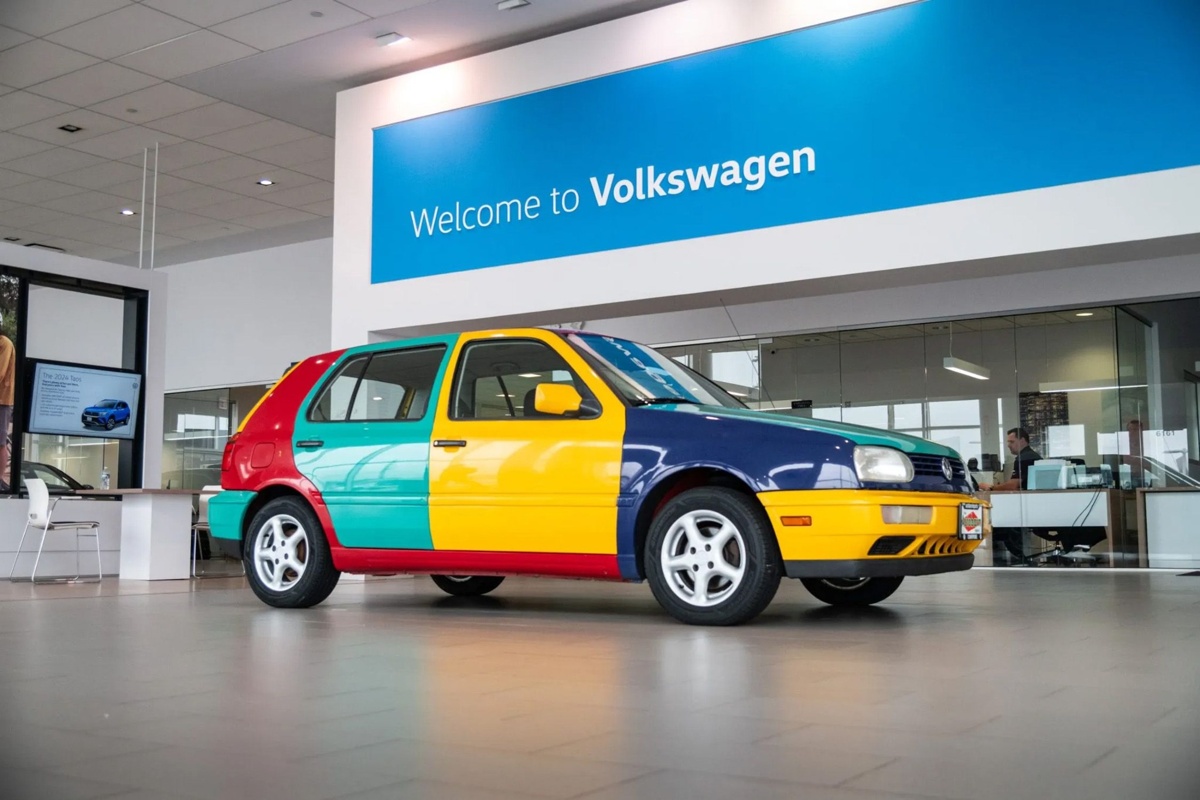
In 1995, Volkswagen of America launched a limited series of the VW Golf in the United States. The model challenged the aesthetic standards of the time.
Named the Golf Harlequin, this special version drew attention for an unusual detail: its multicolored body, something never seen before in the market.
Instead of a single shade, the car featured four different colors (blue, yellow, green, and red). They were applied in a deliberately swapped manner.
-
The car stored for 38 years: when opening the barn door, what appears is breathtaking and looks like a scene from a movie!

-
Fiat works miracles in the Brazilian market, lowers the price of its 0 km hatch to R$ 69,990, reestablishes the model as the cheapest car in the country, and reignites the battle against Kwid and C3.
-
Chevette with cooking gas: How the gas cylinder ends up being used in cars clandestinely and why this makeshift solution can result in leaks, explosions, damaged engines, and seized vehicles.

-
Fiat launches the new 2027 Toro hybrid with 48V, 176 hp, an electric motor of 15.5 hp, a 0.85 kWh battery, up to 7% fuel savings, 8% fewer emissions, and possible exemption from IPVA.


The combination was not random. The factory produced cars in a single color and then swapped doors, hoods, fenders, and trunk lids among them.
This creative approach surprised the public. Each vehicle received a unique identity, although they all shared the same vibrant and eye-catching hues.


Marketing Strategy That Went Viral by Word of Mouth
The production started as a simple promotional action. Initially, only four cars were assembled to be showcased at North American automotive events.
However, the positive public reaction exceeded expectations. Therefore, in 1996, Volkswagen decided to produce 264 more units of the Harlequin series.
In total, 268 cars of this edition were manufactured, all based on the third generation of the model, known as Golf Mk3.
Even with the flashy exterior, the interior of the vehicles maintained the traditional standard. The seats and interior finishes did not follow the colorful style of the bodywork.
The vehicles were still equipped with the “Trek” package, which included accessories like a bike rack and CD player, reinforcing the youthful and sporty appeal.
Limited Production Elevated the Rarity Status of the Model
The short production run transformed the Harlequin into a collector’s item. Despite being a promotional gimmick, its unusual appearance attracted a lot of attention over the years.
Moreover, the car became a symbol of a more experimental time in automotive design. Therefore, today it is a highly valued rare piece among enthusiasts.
Many have tried to replicate the multicolored look on their own. However, only the original models produced by Volkswagen have recognized historical value.
These vehicles often appear at vintage car meetings. Their owners display them proudly and invest in preserving the original style.
Despite its success, Volkswagen never officially sold the model in Brazil.
Its production and sale were limited to the North American market.
Inspiration from Previous Campaigns by the Brand
The idea for the Harlequin stemmed from the promotional campaign for the VW Polo, launched in Germany in the early 1990s.
At that time, Volkswagen was betting on campaigns aimed at young audiences. The goal was to break away from the conservative look of vehicles of the period.
Inspired by this success, the marketing team in the United States adapted the concept for the Golf. The result was an irreverent model that combined creativity and boldness.
The name Harlequin references the character Harlequin from commedia dell’arte, known for his colorful clothing and playful spirit.
With that, the special series captivated an audience looking for differentiation and style, while not sacrificing the mechanical reliability of the Golf.
Legacy Lives On Among Enthusiasts of the Brand
The Golf Harlequin, even produced for a short time, certainly left a remarkable legacy in Volkswagen’s history.
For this reason, its bold proposal influenced not only subsequent creative campaigns but also the development of special editions in other markets.
Furthermore, the manufacturer has already mentioned the model in nostalgic promotional actions, which reinforces, therefore, the affection that fans still hold for this special chapter of the brand.
In the United States, the car continues to be a highlight at automotive fairs.
In fact, some specimens are displayed in museums and private collections, demonstrating its historical relevance.
The Harlequin, therefore, represents a more experimental era in the automotive industry, a time when daring in design was undoubtedly an essential part of the emotional connection with the consumer.









Sim, já conhecia. Uma matéria beeeem parecida foi publicada neste site em 2024: maxicar.com.br/2024/02/vw-golf-harlequin-uma-curiosa-serie-especial-multicolorida/