





 Portuguese
  English
  Spanish
  5 min of reading
  2 comments


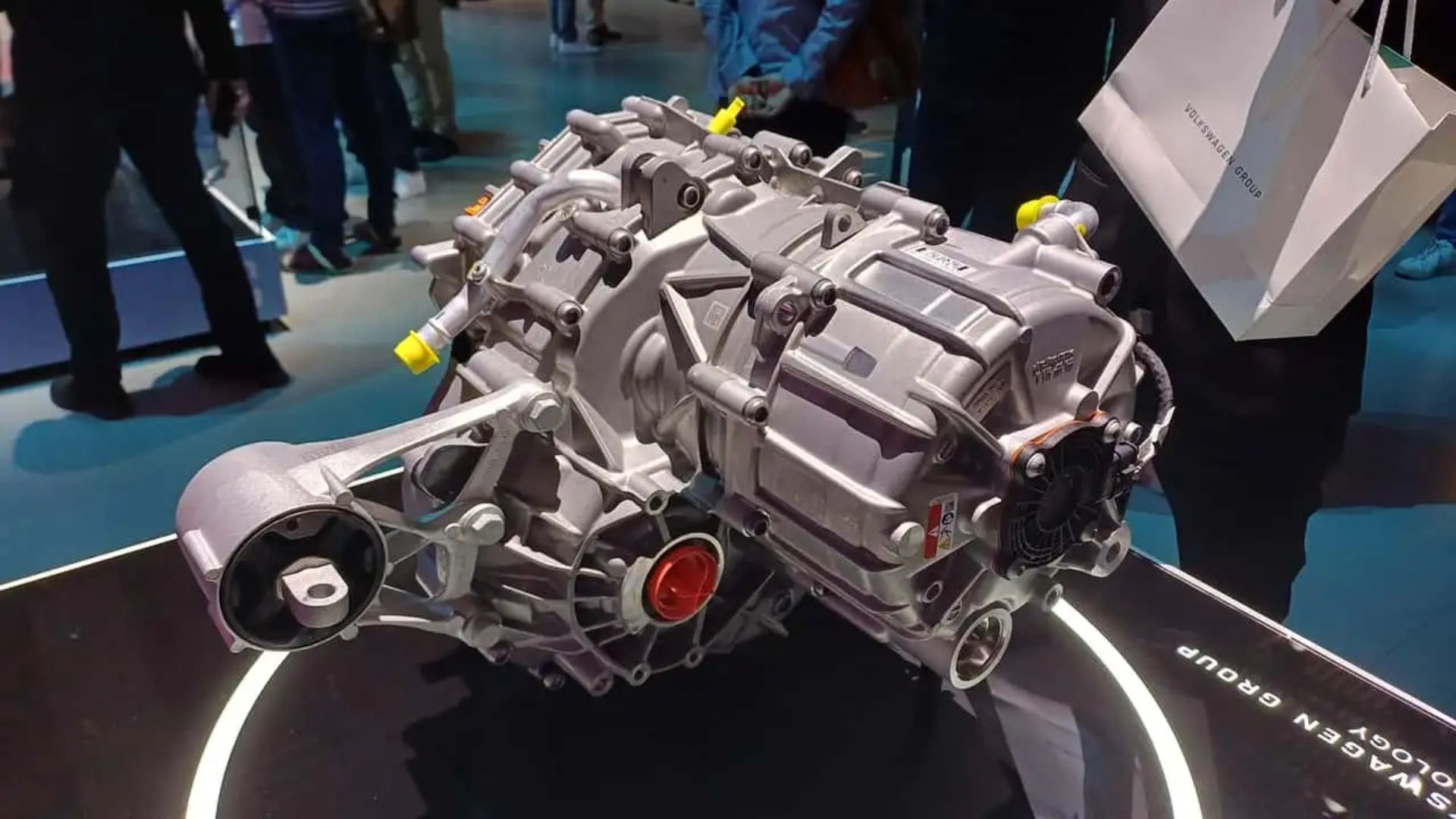


New Electric Compact from Volkswagen Arrives with APP290 Motor, 38 kWh and 56 kWh Batteries, as Well as Silicon-Carbide Inverter. Model Promises Fast Charging, Unified Cell, and MEB+ Platform to Standardize Costs and Efficiency.
Volkswagen detailed the ID. Polo at IAA 2025 in Munich, the new electric compact from the Electric Urban Car family, alongside its “siblings” Cupra Raval and Skoda Epiq.
The highlight is the powertrain set with the APP290 permanent magnet synchronous motor and a silicon carbide (SiC) inverter developed by the group itself, combined with two batteries — 56 kWh (NMC) and 38 kWh (LFP) — promising 10% to 80% charging in about 25 minutes.
The architecture adopts the MEB+ platform and the new unified cell with Cell-to-Pack (CTP), solutions designed to reduce costs and standardize components across brands.
-
The car stored for 38 years: when opening the barn door, what appears is breathtaking and looks like a scene from a movie!

-
Fiat works miracles in the Brazilian market, lowers the price of its 0 km hatch to R$ 69,990, reestablishes the model as the cheapest car in the country, and reignites the battle against Kwid and C3.
-
Chevette with cooking gas: How the gas cylinder ends up being used in cars clandestinely and why this makeshift solution can result in leaks, explosions, damaged engines, and seized vehicles.

-
Fiat launches the new 2027 Toro hybrid with 48V, 176 hp, an electric motor of 15.5 hp, a 0.85 kWh battery, up to 7% fuel savings, 8% fewer emissions, and possible exemption from IPVA.

Powertrain and Performance
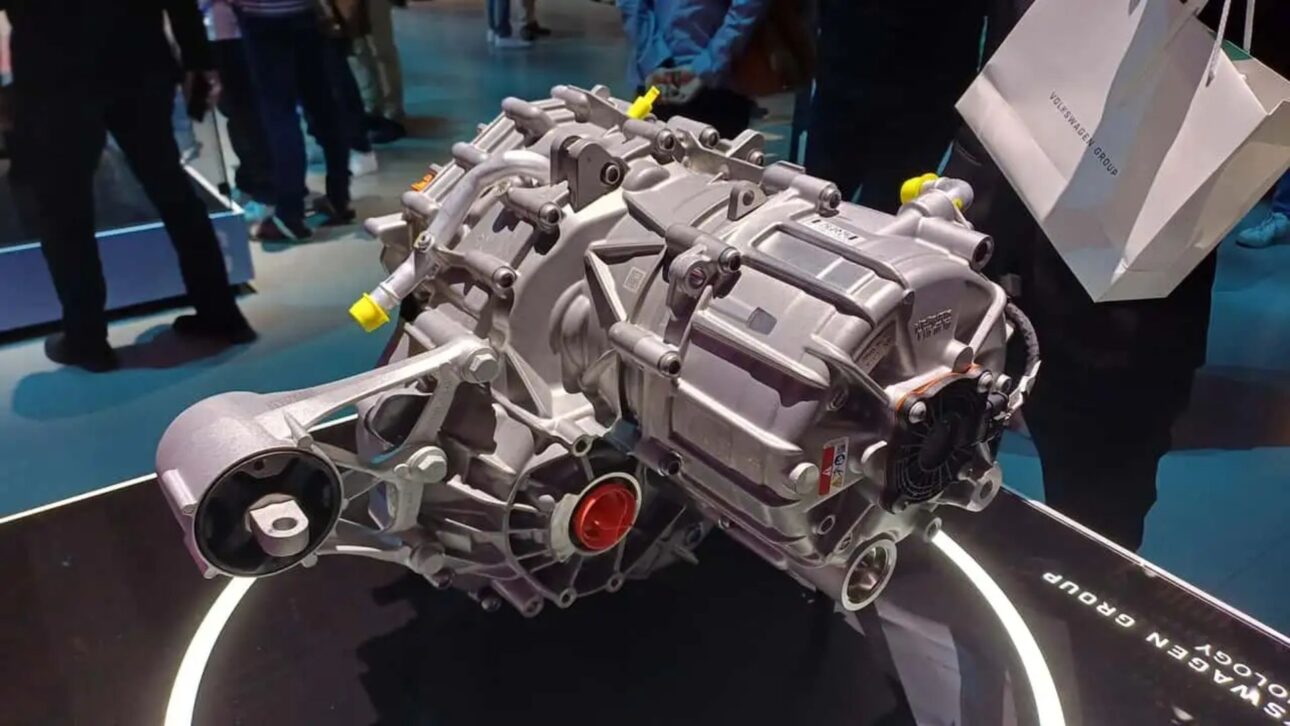
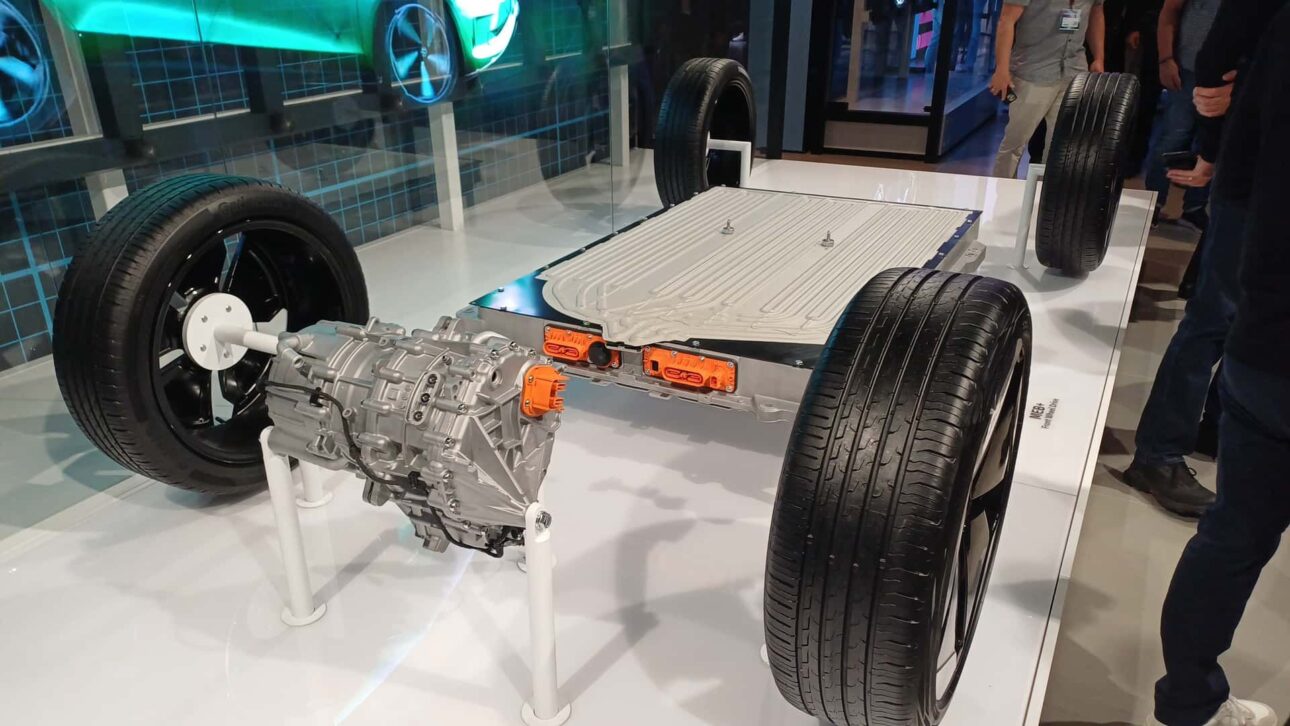
The APP290 is a new PSM installed on the front axle, prioritizing efficiency and response.
Power reaches up to 160 kW (218 hp), with torque around 290 Nm, according to technical material presented to journalists.
Cooling is simple, liquid-cooled, and the inverter uses SiC semiconductors to reduce losses and relieve the thermal system.
In larger models, the APP550 continues with liquid-thermal cooling to support higher thermal loads and also cool the inverter.
Battery Range
The ID. Polo will have two battery options.
The NMC 56 kWh has been sized to achieve up to 450 km of estimated range in the hatch configuration.
The LFP 38 kWh targets around 300 km, aimed at urban usage and lower cost.
In both cases, the manufacturer mentions fast charging from 10% to 80% in approximately 25 minutes.
By average calculation, this translates to something close to 1.6 kWh/min for the NMC package and 1.1 kWh/min for the LFP, considering net energy values.
MEB+ Platform and Unified Cell
All the novelties arrive with the MEB+, an evolution of the well-known electric module from the group.
In addition to electronic updates, the base adopts the “Einheitszelle”, the unified prismatic cell from PowerCo, the battery company of the VW Group.
The design aims to standardize equipping different models and chemistries, achieving economies of scale and reducing industrial complexity.
Series production starts in Salzgitter (Germany) and will be expanded to Valencia (Spain) and St. Thomas (Canada), forming a regionalized supply chain.
Cell-to-Pack Technology and Safety
The battery abandons intermediate modules and moves to the Cell-to-Pack (CTP) concept, optimizing space and energy density.
For the Electric Urban Car Family, the configuration uses three rows of cells (stacks).
In the larger models of the portfolio, such as ID.3 and ID.4, the arrangement increases to four stacks.
Another highlighted point is the top-side cooling of the pack.
This change interacts with the new unified cell, which has relief valves at the base: in the event of a thermal event, the gas discharge is directed downward, away from the cabin, increasing safety.
As the electrical contacts are located on the sides of the cells, the energy paths are integrated into the battery chassis rails.
Silicon-Carbide Inverter
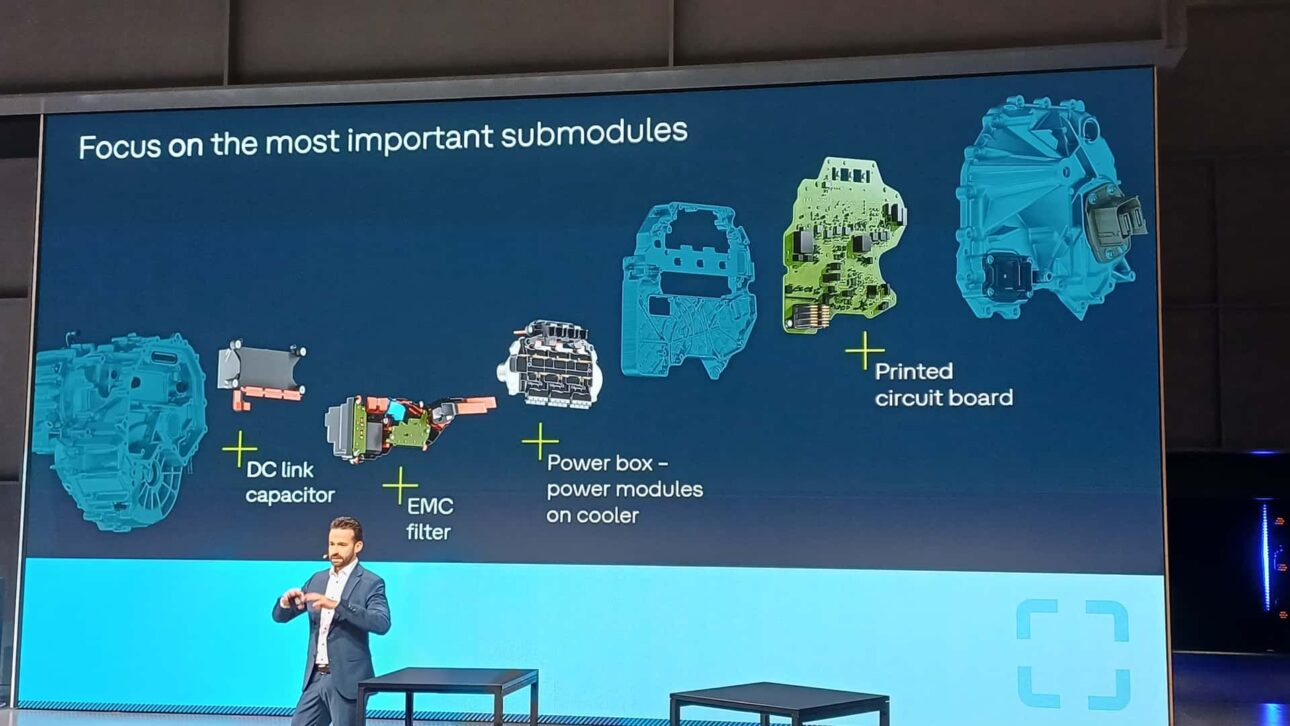
The SiC inverter arrives at the group’s entry segment focused on energy efficiency.
The architecture integrates four blocks developed in-house: SiC chips in power modules, DC link bus capacitor, AC filter, and printed circuit board.
The compact integration reduces conversion losses, favors autonomy, and simplifies thermal management.
In parallel, VW highlights that the APP290 uses a simple water jacket, while the APP550 maintains the liquid-thermal system.
Supply Chain
The unified cell was designed to be manufactured by PowerCo and also by specialized partners.
The industrial plan stipulates that half of the volume will come from the group’s factories and the other half from Asian suppliers.
Among the mentioned names are Samsung SDI, SK On, Gotion, CATL, and LG Energy Solution, always maintaining a prismatic format and standardized interface.
The standardization facilitates the exchange of chemistry — LFP, NMC, and future variants — without deep reengineering of vehicles and packs.
NMC vs. LFP: Which to Choose
For those needing greater range, the NMC 56 kWh delivers more energy density and estimated range of up to 450 km, benefiting extended urban trips and metropolitan commutes.
On the other hand, the LFP 38 kWh emphasizes durability, safety, and lower cost per kWh, sufficient for daily routines with quick stops at charging corridors.
The similar charging time between the two versions brings the user experience of electric compacts closer to that of larger group cars, with the advantage of a lighter and more compact package.
Outlook for the Brazilian Market
Volkswagen has still not set a date for the ID. Polo to reach the Brazilian market.
However, the combination of MEB+, unified cell, CTP, and SiC inverter indicates that the upcoming electric compacts from the brand may gather competitive range, quick charging, and safety solutions aligned with what is being prepared for Europe.
Cell and pack standardization is likely to reduce production costs and simplify logistics of components, which could facilitate future local assembly strategies and nationalization of parts.
The Electric Urban Car Family
The offensive of electric compacts will bring together Volkswagen ID. Polo, Cupra Raval, and Skoda Epiq under the same technical base, with pricing positioned for volume.
According to corporate statements and presentations at the fair, the family debuts in Europe focusing on accessibility, battery technology, and architectural standardization, with promises of ranges in the 400–450 km range for the higher capacity versions.
How do you imagine the use of these solutions — unified cell, CTP, and SiC inverter — in the reality of charging and infrastructure in Brazilian cities?








Carro elétrico hoje em dia é a maior roubada. É caro, a bateria dura pouco, quase não tem onde recarregar e se a bateria estragar, de adeus ao carro. Sai mais barato comprar outro.
Então é melhor comprar outro. Ficar refém dessas montadoras sanguessugas, nunca mais.