





 Portuguese
  English
  Spanish
  4 min of reading
  75 comments


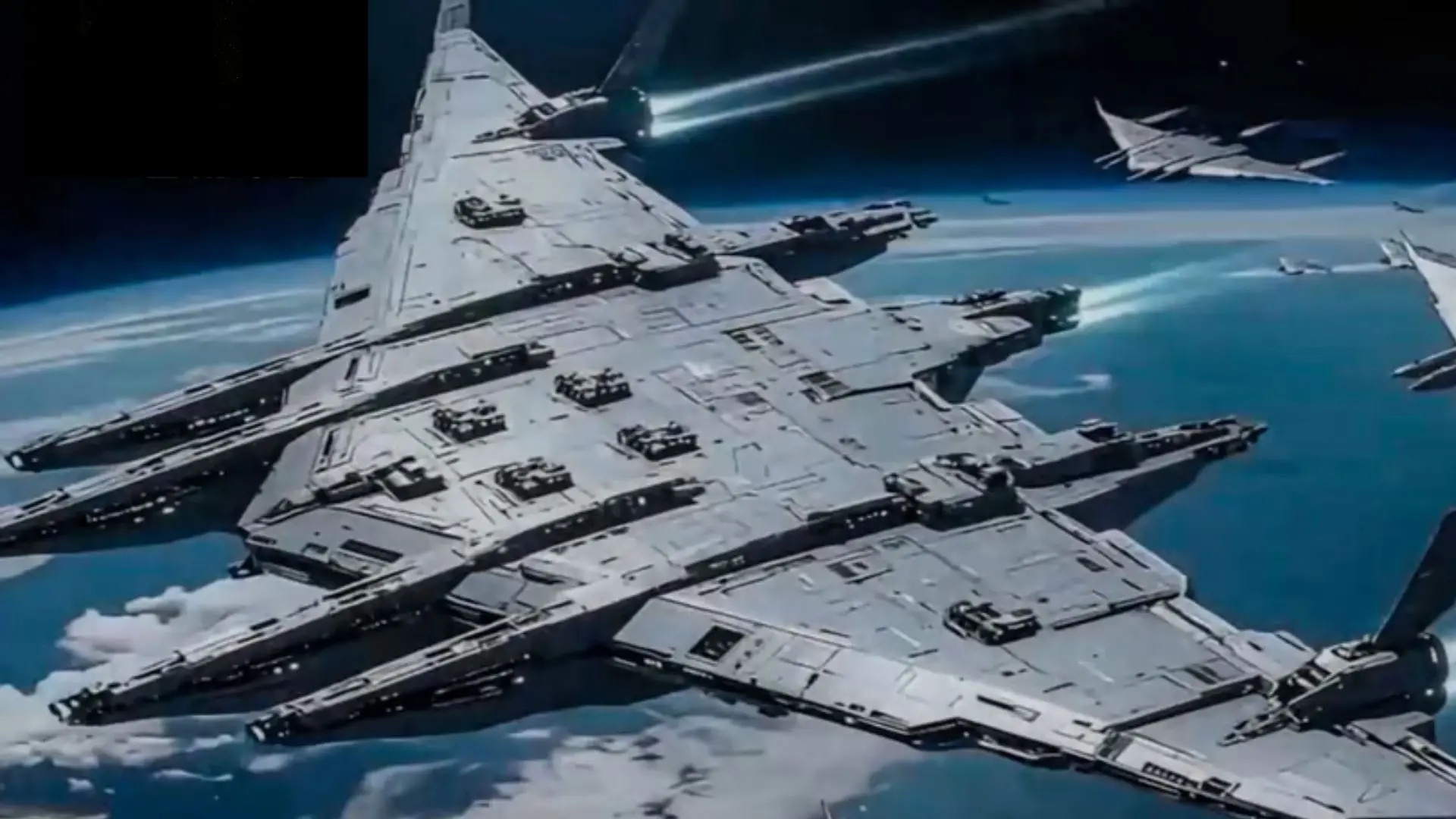


With 120 Thousand Tons and Imagined Operation at 30 km Altitude, the Luanniao Concept Reveals China’s Ambition to Create a Stratospheric Mother Ship for Drones and Hypersonic Missiles.
The disclosure of the concept known as Luanniao does not represent the announcement of a ready weapon or a formally ongoing military program. Still, its impact was immediate. The images, numbers, and descriptions associated with the project drew attention because they far exceed anything that has been built or even attempted in modern aviation and aerospace engineering. Luanniao emerges as part of Nantianmen, a conceptual umbrella that brings together Chinese ideas about the future of air, hypersonic, and space warfare.
More than a project, Luanniao functions as a declaration of strategic ambition.
A “Mother Ship” Between Heaven and Space
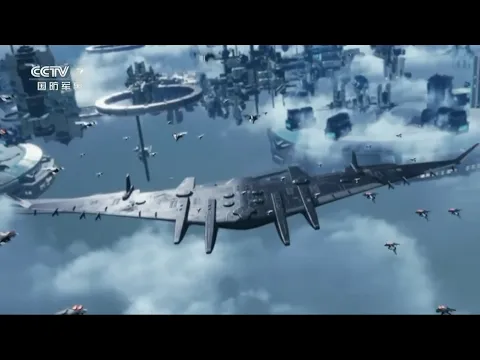

According to descriptions associated with the concept, Luanniao would be a colossal platform, with an estimated mass of 120 thousand tons, a length of approximately 242 meters, and a wingspan close to 684 meters.
-
Brazil relies on cloudless windows to monitor remote areas, but a new satellite created with China will have a radar capable of observing the territory in the dark and strengthening deforestation alerts.

-
Young African who studied algebra at age 3 now uses theoretical physics to create a weather forecasting model in Zambia, attempts to anticipate extreme events, and becomes a finalist for an international award while farmers face droughts, floods, livestock losses, and lack of reliable alerts before disaster.

-
Project developed by Faetec students transforms knowledge into technology with social impact by creating a rescue robot prepared to operate in collapses, reaching inaccessible locations and assisting missions that depend on every minute.

-
Scientific breakthrough surprises by achieving ammonia production up to 3 times higher with the application of a magnetic field, paving the way for more efficient chemical technologies, reduced environmental impact, and new large-scale fertilizer solutions.


These numbers would place it in a completely new category, far beyond any aircraft ever built and even larger warships.
The imagined operating altitude, around 30 kilometers, positions Luanniao in the stratosphere, above most conventional air defense systems and below low Earth orbit. It is precisely in this “operational void” that the concept aims to operate, exploring an area little occupied by traditional military means.
The Role Within the Nantianmen Project
Luanniao does not appear as an isolated system. It is described as a central element of Nantianmen, an integrated vision that would connect satellites, stratospheric platforms, hypersonic drones, and reusable spacecraft.
Within this logic, the supposed “mother ship” would function as a mobile air base, command center, and advanced launch platform.
The idea is that, from this structure, combat drones Xuannü, high-altitude reconnaissance vehicles, and, in more extreme scenarios, hypersonic missiles could be launched, drastically shortening the time between detection and attack.
Xuannü Drones and Power Projection of the Nantianmen Project
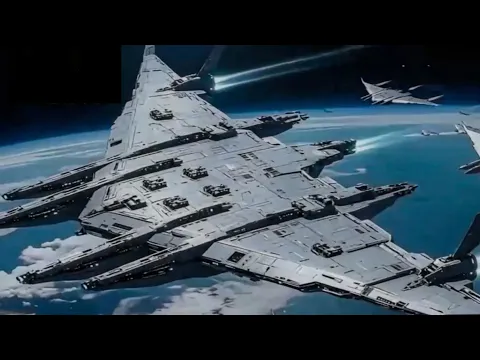
The drones frequently associated with the concept, known as Xuannü or “White Emperor,” appear in conceptual materials as space fighters or reusable hypersonic vehicles.
Although they also do not exist as operational systems, they illustrate the type of capability that Luanniao would seek to project: rapid, long-range operations with high survivability.
In this scenario, Luanniao would function as a range multiplier, allowing drones and assault vehicles to launch from an elevated position, reducing fuel consumption and extending operational reach.
Hypersonic Missiles on the Edge of the Atmosphere
Another point that draws attention is the mention in the Nantianmen project of the capability to employ hypersonic missiles. From the stratosphere, these vectors could be launched with initial energy advantages, making detection and interception even more difficult.
Although there is no evidence of a real system capable of supporting this operation, the concept reinforces the strategic message: China is thinking about integrating space, air, and hypersonic in a single combat ecosystem.
The Nearly Insurmountable Physical Challenges
This is where epic discourse meets the reality of engineering. Sustaining a structure of 120 thousand tons at tens of kilometers altitude presents an unprecedented energy and structural challenge.
There are currently no known propulsion technologies, materials, or power generation methods capable of making this feasible continuously.
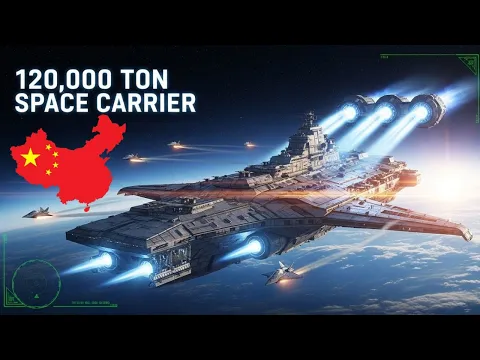
Additionally, issues such as structural stability, resistance to stratospheric winds, protection against debris, maintenance, and thermal control make Luanniao, at the current state of technology, highly unlikely as a real platform in the short or medium term.
Concept, Propaganda, or Idea Laboratory?
International analysts tend to interpret Luanniao not as a secret project under construction, but as a strategic signaling tool. By disclosing such an extreme concept, Beijing communicates technological ambition, long-term vision, and willingness to compete for dominance in space and the stratosphere.
This type of approach is not new in military history. Great powers often use futuristic concepts to influence perceptions, stimulate debates, and force adversaries to spend resources analyzing threats that may never materialize.
Even if it never comes to fruition, Luanniao serves a relevant role. It helps push military debate beyond traditional fighters, ships, and missiles, placing the stratosphere and near space as battlefields of the future.
In doing so, China positions itself as an actor that not only reacts to global trends but attempts to define the strategic imagination of the next generation.
A Symbol of Future Warfare
Luanniao is not, today, a weapon. It is a symbol. A symbol of an era in which the boundaries between air and space become blurred, in which giant platforms and integrated networks become as important as individual missiles, and in which deterrence begins to be built also in the realm of technological imagination.
Whether something like this will ever become viable is an open question. But as a concept, Luanniao has already fulfilled its mission: to provoke, impress, and reposition the debate about how and where — the wars of the future may be fought.







Ponerlo en órbita desde la tierra imposible, construirlo en órbita más probable. Seguro le encuentran la vuelta para hacerlo.
Bueno si la corrupción y la deflación económica de China sumado a su bajo consumo interno per cápita por ciudadano no los quiebra antes de tiempo ah olvidé el gasto ahora militar que están haciendo y sumando el problema político militar interno donde el presidente eliminó a los seis militares de la ****pula que lo acompañaba… Porque porque el señor tiene miedo de que lo tumben. Siguen creyendo y sobrevaluando a China…
Obviamente, isso não é para já. Mas se pensarmos que há pouco mais de 140 anos nem existiam carros e pouco mais de 120 anos nem avião nós tínhamos e há 56 anos o homem foi para a Lua mesmo sem os atuais supercomputadores. Com a tecnologia avançando exponencialmente, não duvido nada de que daqui uns 50 anos isso seja possível!!!🤷♂️🤷♂️🤷♂️