





 Portuguese
  English
  Spanish
  4 min of reading
  0 comments


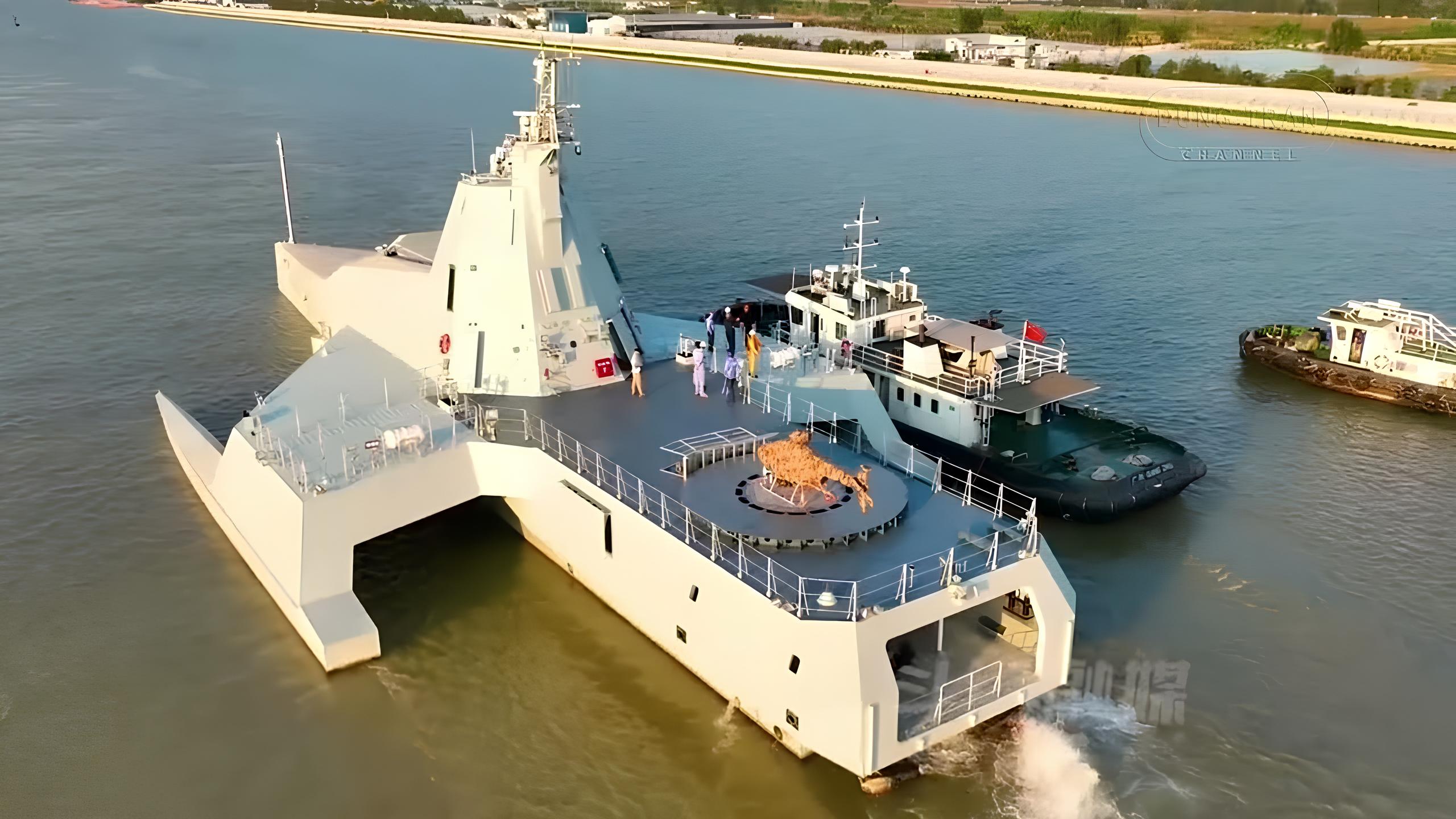
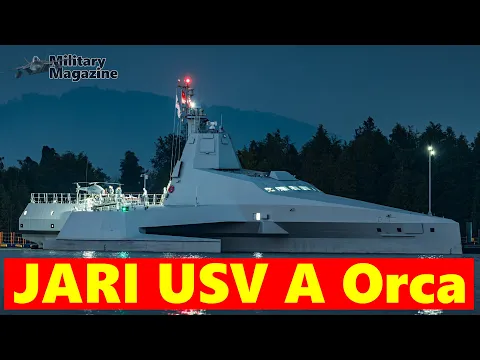
China Revealed at the Zhuhai Airshow 2024 the JARI-USV-A “Orca”, Largest Unmanned Combat Vessel in the World, with 500 Tons and 58 Meters, Surpassing the Sea Hunter of the USA and Marking a New Leap in Autonomous Naval Warfare
China presented at the Zhuhai Airshow the JARI-USV-A “Orca”, the largest unmanned combat vessel ever built globally. With a displacement of 500 tons, a length of 58 meters, and a width of 23 meters, the autonomous ship surpasses the displacement of the Sea Hunter and Sea Hawk vessels of the United States Navy by three times. The project was developed by the No.716 and No.702 research institutes of the China State Shipbuilding Corporation since 2022.
The vessel represents a technological leap in unmanned naval warfare and maritime military automation. Unlike experimental prototypes tested by other nations, the Orca was presented as a fully functional combat system, with complete operational capabilities. The Chinese Ministry of Defense confirmed that the platform achieved initial combat capabilities as early as August 2019, following launch at an undisclosed location.
The trimaran design features a slender central hull and two side floats that provide superior stability in rough seas. This structure reduces hydrodynamic drag, resulting in a maximum speed of 40 knots (74 km/h). The operational range of 4,000 nautical miles allows for prolonged missions without refueling, covering distances comparable to crossing the Atlantic.
-
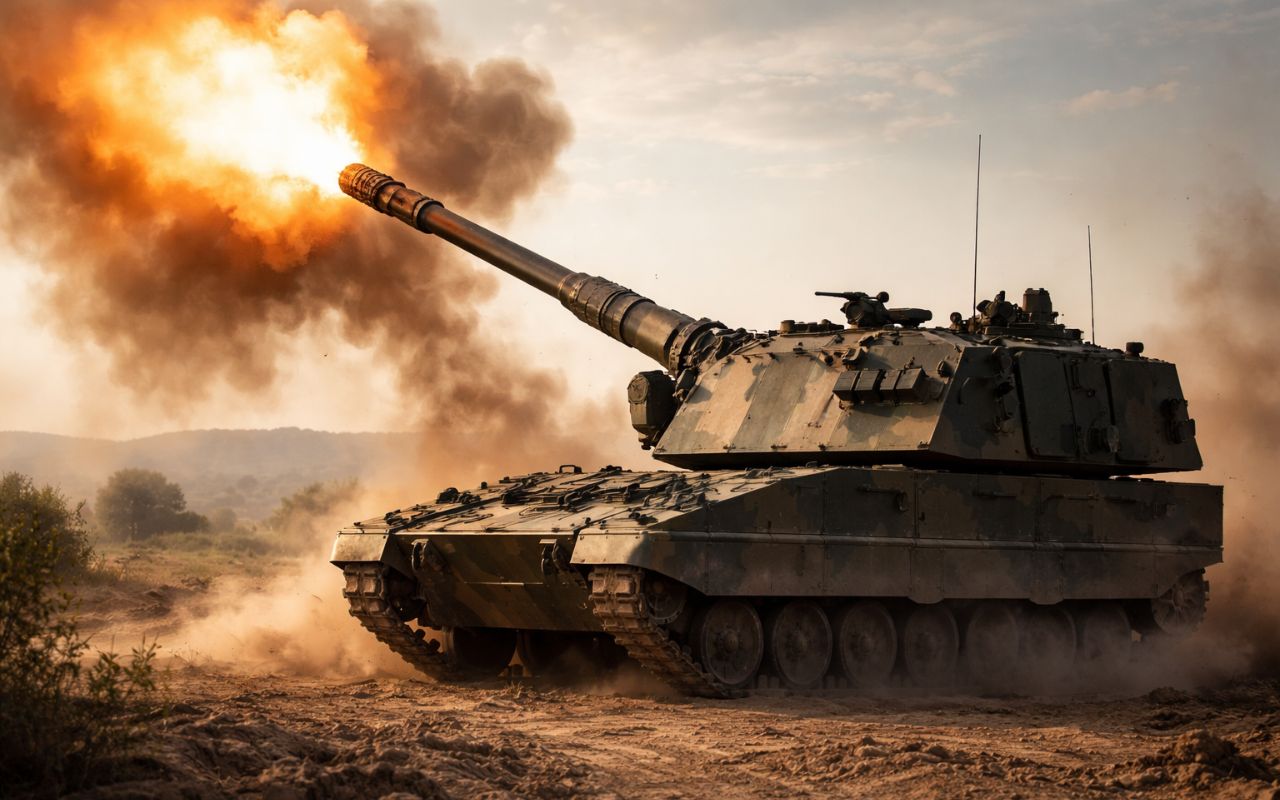
The German “steel monster” weighing 55 tons fires up to 10 projectiles per minute at over 40 km and avoids counterattacks on the battlefield by moving quickly to escape enemy attacks; meet the Panzerhaubitze 2000.
-
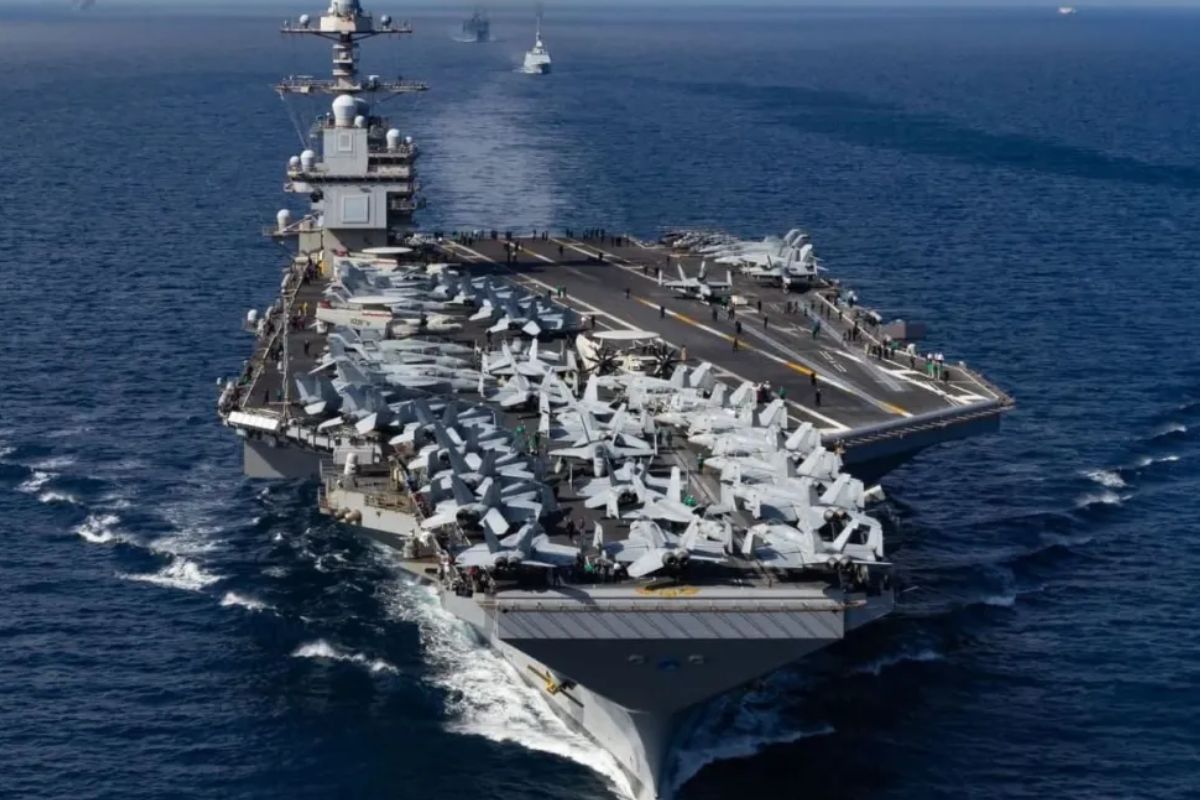
USS Gerald R. Ford, the largest aircraft carrier in the world, returns to sea after a fire in the laundry in the Red Sea; repaired in Crete, it resumes missions of Operation Epic Fury against Iran.
-
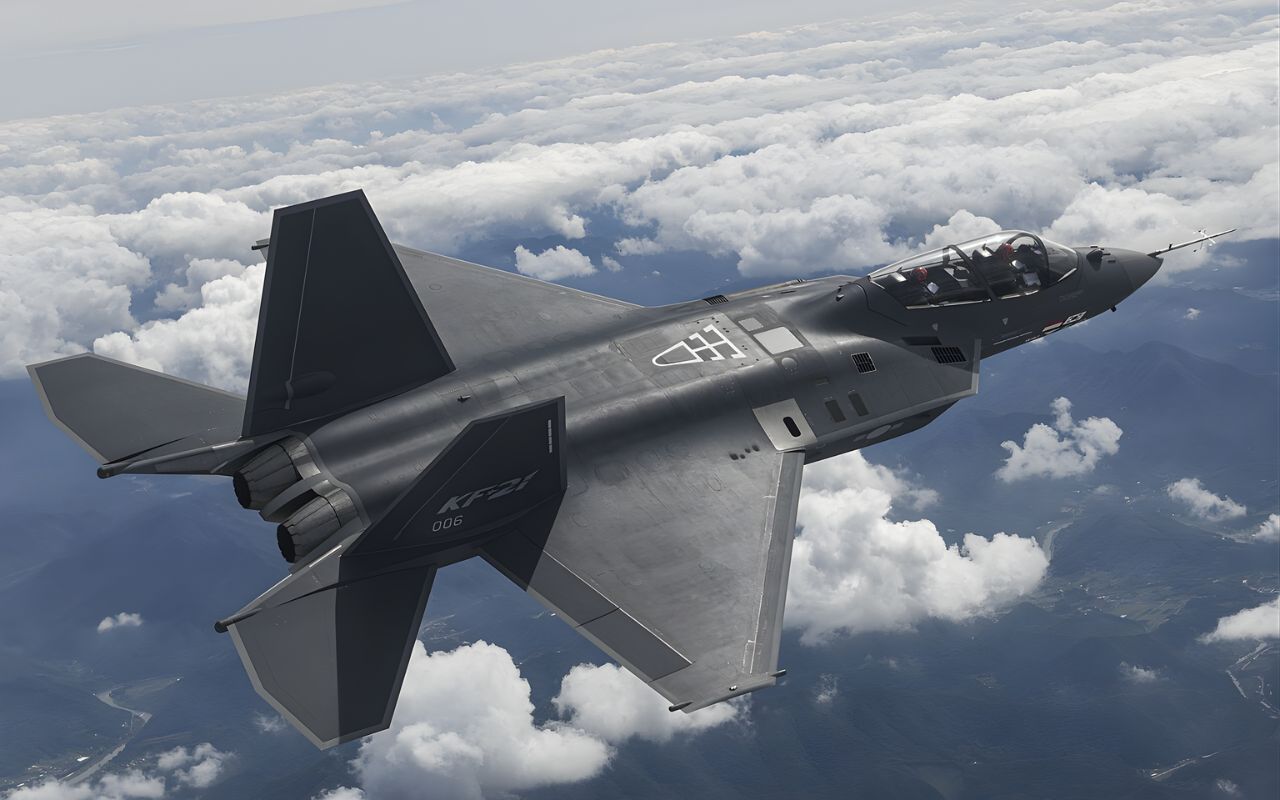
Military power: South Korea’s new KF-21 fighter jet will be a key component in replacing the aging aircraft of the air force, placing the country on the map of air military powers.
-
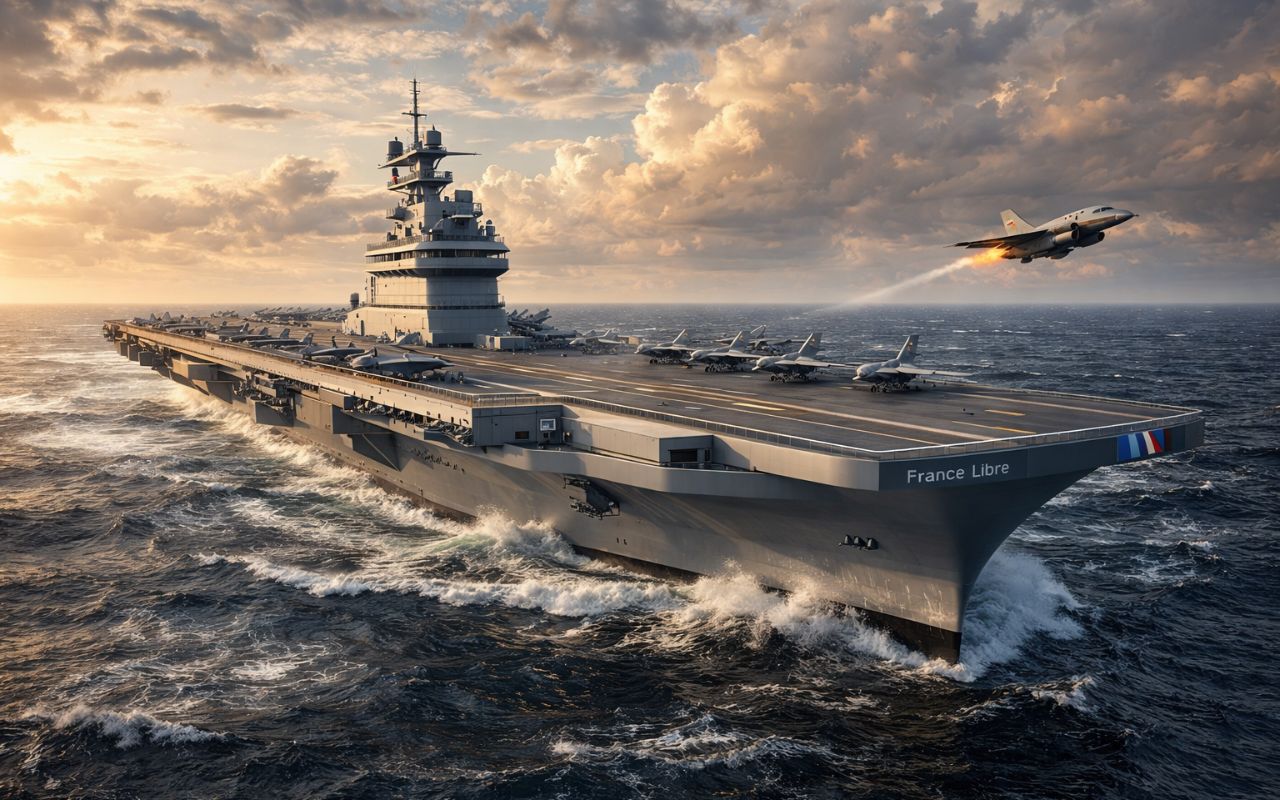
With 310 meters, 80 thousand tons, and capable of operating for 45 years, the new nuclear aircraft carrier France Libre will be the largest in France and will enter service in 2038.

Stealth Architecture Reduces Radar Signature and Transforms the Orca into an Invisible Sentinel
The JARI-USV-A was designed with a priority for stealth operations in high-threat environments. The hull geometry employs angled surfaces that drastically reduce the radar cross-section. Absorbent materials applied to the superstructure further reinforce the reduced signature.
The compact height of the superstructure maintains a low profile on the horizon, making visual detection difficult. The integrated mast houses sensors and antennas in an aerodynamic shape, eliminating external structures that would increase radar visibility.
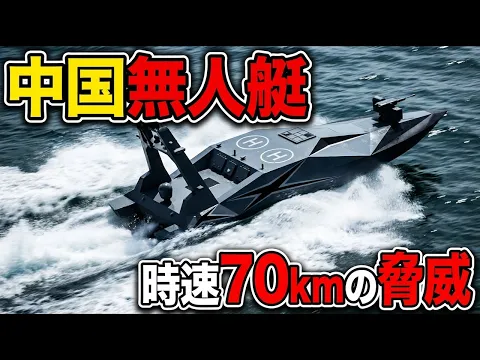

The dual-mode diesel-electric propulsion system operates quietly when necessary, reducing acoustic signature detectable by sonars. The platform can operate independently or integrated with the fleet, functioning as an advanced picket ship positioned hundreds of kilometers ahead of the main formation.
AESA S-band and X-band Radars Ensure 360° Coverage and Advanced Situational Awareness
The radar system of the JARI-USV-A is one of the platform’s main differentiators. Four fixed panels of AESA radar with active electronic scanning provide full 360-degree coverage without moving parts.
The arrangement combines S-band and X-band radars with conformal antenna technology. The S-band provides long-range detection for aerial and surface targets, while the X-band offers high resolution for accurate tracking.
Infrared and electro-optical sensors complement the radar with passive detection. The system processes over 600 batches of information simultaneously, performing real-time data fusion — a central feature of modern network-centric warfare.
Vertical Launch System (VLS) Allows Deployment of Air-to-Air and Anti-Ship Missiles
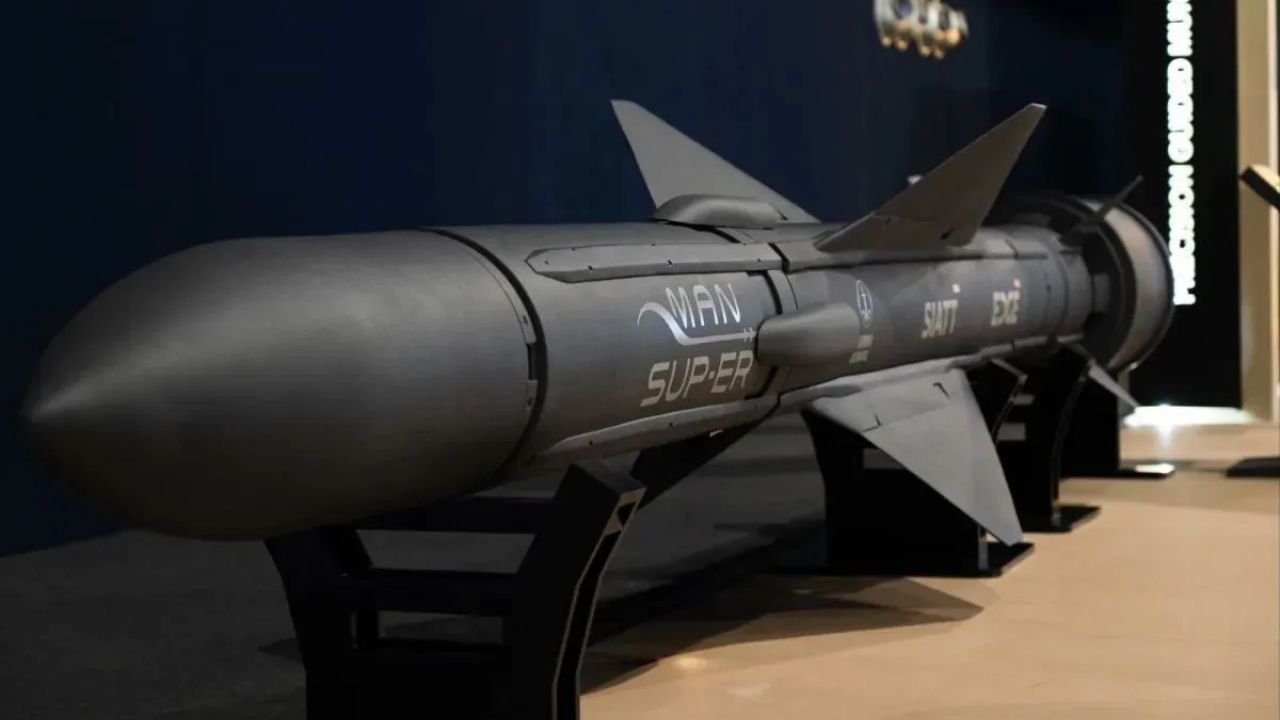
The main armament is concentrated in the Vertical Launch System (VLS), installed in front of the integrated mast. Displayed models show capacity for up to 12 cells, although versions in testing operate with four.
The VLS can carry:
- HHQ-9 air defense missiles (range over 200 km)
- YJ-18 anti-ship missiles (range up to 540 km)
- HQ-10 point defense missiles
This layered defense architecture brings the Orca closer to modern destroyers, but without crew on board.
Light Torpedoes and Retractable Gun Enhance Anti-Submarine and Close Defense Capability
Two side-mounted light torpedo launch tubes provide anti-submarine capability. The torpedoes, speculated to be the ET52 model, have a range exceeding 7 km.
A remotely operated retractable weapon station at the bow accommodates a gun estimated between 30 mm and 57 mm. The system retracts completely into the hull when not in use, preserving stealth characteristics.
Optional rocket pods enhance versatility for engaging light surface targets.
Platform for Unmanned Helicopters Expands Surveillance Beyond the Horizon
The aft deck houses a VTOL platform for drones and unmanned helicopters. These systems significantly extend reconnaissance range, allowing detection beyond radar horizon.
Drones equipped with sonar buoys can conduct distributed anti-submarine missions, deploying acoustic sensors in coordinated patterns. The integration between the autonomous ship and UAV represents a significant technical advance in military automation.
The opening at the stern allows for the installation of active and passive towed sonar. It also enables the launch of autonomous underwater vehicles for underwater surveillance.
This three-dimensional sensor architecture — aerial, surface, and submerged — positions the Orca as a mobile node for data collection and processing in distributed operations.
Autonomous Operation Based on Military Artificial Intelligence
The JARI-USV-A operates via advanced artificial intelligence systems that control navigation, sensors, and armaments.
The platform performs:
- Automatic target identification
- Mission planning
- Weapon control
- Multisensory data processing
A reduced bridge allows for crewed operation when necessary. The system can also be remotely controlled via a ground station or mothership.
Comparison with Sea Hunter Reveals Chinese Advantage in Displacement and Armament
The JARI-USV-A surpasses the Sea Hunter in virtually all dimensions.
With 420-500 tons versus 145 tons of the Sea Hunter, the Orca carries almost three times more displacement and significantly more armament.
While American platforms focus on sensors and support, the Orca presents a configuration of fully armed autonomous warship.
Strategic Applications in the South China Sea and Expansion of PLAN
The Orca can operate in patrols around disputed islands in the South China Sea, functioning as a force multiplier for the People’s Liberation Army Navy.
The persistent unmanned presence eliminates human limitations of fatigue, allowing for prolonged missions.
With Chinese plans to expand the aircraft carrier fleet by the 2030s, unmanned platforms like the Orca offer a strategic solution to the demographic shortage of military personnel.









-

-

-

-

-

-

187 pessoas reagiram a isso.