





 Portuguese
  English
  Spanish
  5 min of reading
  0 comments


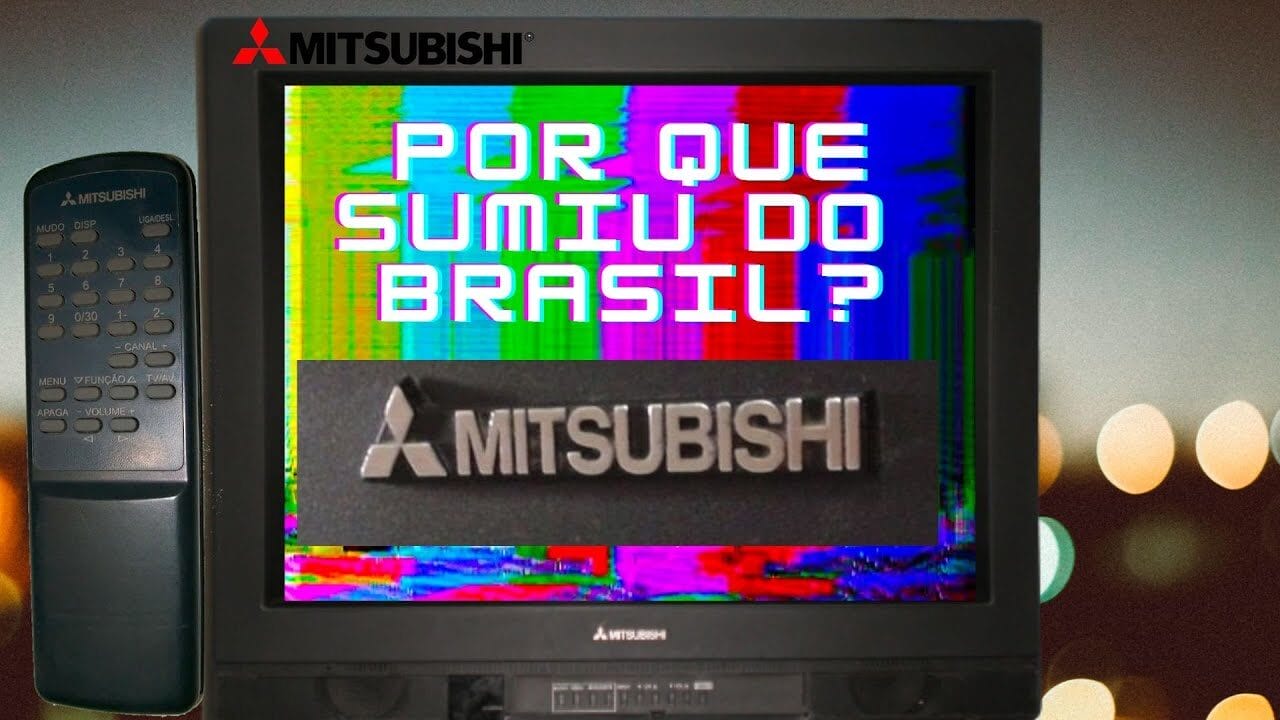
A Sudden Change in the Electronics Market That Left Many Consumers Perplexed. Discover How Mitsubishi Stepped Away from a Sector That Made It Famous in Brazil, But Not Without Leaving Legacies.
When the name Mitsubishi is mentioned, most people quickly associate it with the Japanese giant with its tradition in the automotive sector.
Models like the Pajero Sport SUV and the Triton pickup trucks are the most remembered by Brazilians.
However, Mitsubishi was once a well-known brand in the electronics market as well, especially in the 1980s and 1990s, when its televisions won the national audience.
-
These living root bridges and ladders are over 700 years old and help indigenous people survive in one of the rainiest regions in the world.

-
From sertanejo star to international investor: Ana Castela invests millions in a mansion in the USA, creates a themed accommodation in Orlando, and shows that the “boiadeira” also wants to grow away from the stage.

-
The 10 most stunning motorhomes in the world: a $3 million trailer with a rooftop nightclub and garage for a Ferrari, “palaces on wheels” with Italian marble, private cinema, and five-star hotel luxury for billionaires.
-
Trump wanted to spend $400 million on the White House, but the courts prohibited the million-dollar construction.


However, for some time, we haven’t seen Mitsubishi TVs in Brazilian stores.
If you have also noticed this absence, you may be wondering: what happened to the Mitsubishi televisions that were so successful in Brazil for decades?
Next, we will explain how the brand went through significant changes and what led to the end of its trajectory in the electronics market in the country.

The Origin of the Mitsubishi Conglomerate
The history of Mitsubishi dates back to 1870, when it was founded by Yataro Iwasaki, a visionary Japanese who started the company’s activities as a shipping company.
The name “Mitsubishi”, which means “three diamonds”, refers to the logo that represents the company to this day.
Mitsubishi was a pioneer in the Japanese automotive industry, manufacturing Japan’s first car, the Model A, in 1917.
In the following years, the company also stood out for its innovation, creating the first four-wheel-drive vehicle, the PX-33, in 1937.
With the impact of World War II, Mitsubishi had its structure drastically altered.
The conglomerate was forced to dissolve after Japan’s surrender, with its assets divided among several smaller companies.
During the post-war period, some of these divisions reunited, creating the current structure of Mitsubishi, with several companies operating independently, such as Mitsubishi Motors, Mitsubishi Electric, and Mitsubishi Estate.
The Arrival of Mitsubishi TVs in Brazil
Mitsubishi did not start its activities in Brazil with its own electronics division but established strategic partnerships.
It was in the 1960s, through a collaboration with the national brand Evadin, that Mitsubishi products reached the Brazilian market.
This partnership, initiated in 1978, allowed Evadin to sell radios, sound systems, and later, televisions from the Mitsubishi brand.
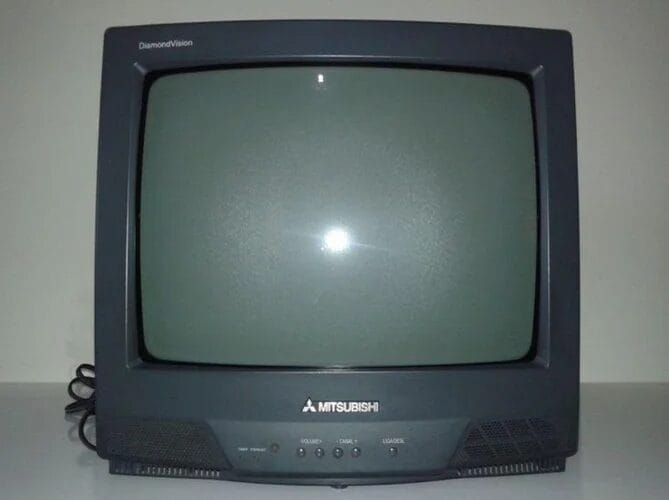
Mitsubishi televisions, especially CRT (tube) models, became a significant presence in Brazilian homes.
With the popularization of DiamondVision TVs, Mitsubishi gained a large consumer base.
Older models, which even featured wooden cabinets, were popular for their image quality and innovative features for the time, such as manual image adjustment panels.
Marketing and the Relationship with the World Cups
Mitsubishi stood out not only for the quality of its products but also for its marketing strategy.
During the World Cups of the 80s and 90s, the brand took advantage of the event to promote its televisions.
The marketing included advertising campaigns featuring Brazilian football icons, such as Zagallo and Telê Santana, which helped solidify the brand’s image in the national market.
Another differentiator that attracted many consumers was the generous warranty offered by Mitsubishi.
During the 1990s, the brand promised a four-year warranty for its televisions, which corresponded to the interval until the next World Cup.
This confidence in product durability was one of the factors that contributed to the good acceptance of Mitsubishi televisions in Brazil.
The Decline of Mitsubishi TVs
In 1999, Mitsubishi decided to end its partnership with Evadin.
The Japanese brand chose not to renew the licensing contract for the production and sale of its electronics in Brazil, providing a two-year deadline for Mitsubishi televisions to be withdrawn from the market.
However, Evadin continued to sell products under the Mitsubishi brand, violating the agreement, which led to a lengthy legal process.
The legal dispute culminated in 2007 when Mitsubishi filed a lawsuit against Evadin for trademark infringement.
After losing the case in 2012, Evadin was ordered to pay substantial damages.
From that moment on, Mitsubishi televisions disappeared from the shelves and never returned to the Brazilian market.


Mitsubishi in the International Market
Despite the end of Mitsubishi TVs in Brazil, the company’s electronics division remained active in other countries.
In Japan and some international markets, Mitsubishi continued to invest in cutting-edge technology for its televisions.
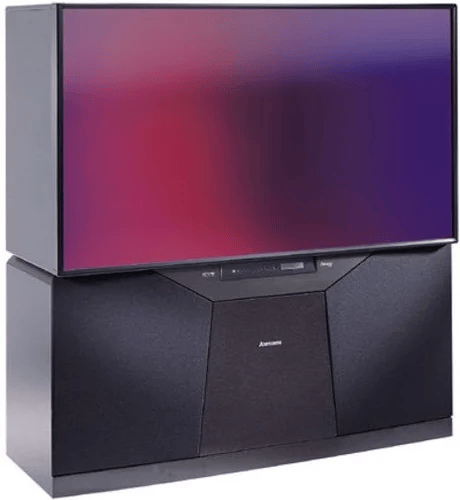
One of the milestones of this phase was the launch, in 2010, of a 149-inch OLED TV, considered a breakthrough in terms of size and image quality.
Mitsubishi also distinguished itself by launching a 3D model with Full HD resolution and the ability to record Blu-rays on an internal hard drive.
However, technological evolution and changes in the television market brought challenges for Mitsubishi.
The company announced in 2010 that it would cease production of tube TVs, being the last manufacturer to do so.
With the growing popularity of new technologies like LED and OLED, Mitsubishi struggled to compete with giants in the electronics market, such as Samsung and LG.
The End of the TV Division
The last chapter of Mitsubishi TV’s story was written in 2021 when Mitsubishi Electric announced that it would cease production of LCD televisions.
The company stated that it had not sold its TV division to a competitor but instead was shutting down the line due to the difficulty of remaining competitive in an increasingly dynamic and saturated market.
With this decision, Mitsubishi definitively exited the television market, which was already facing challenges with the arrival of new technologies and fierce competition.
The Legacy of Mitsubishi in Brazil
Today, Mitsubishi is remembered in Brazil primarily for its cars, which continue to be a prominent presence in the automotive market.
But the Japanese brand also made history in the electronics segment, especially in the 1980s and 1990s, with its tube televisions that were part of many Brazilians’ lives.
With the extinction of its TV line and the focus on other areas, Mitsubishi leaves a mark on the electronics market, but with the feeling that it could have continued to innovate in the sector.
What will be the future of traditional electronics brands in the face of the dominance of new technologies and industry giants? What do you think about Mitsubishi’s shift in focus? Share your opinion in the comments!






Seja o primeiro a reagir!