





 Portuguese
  English
  Spanish
  5 min of reading
  0 comments


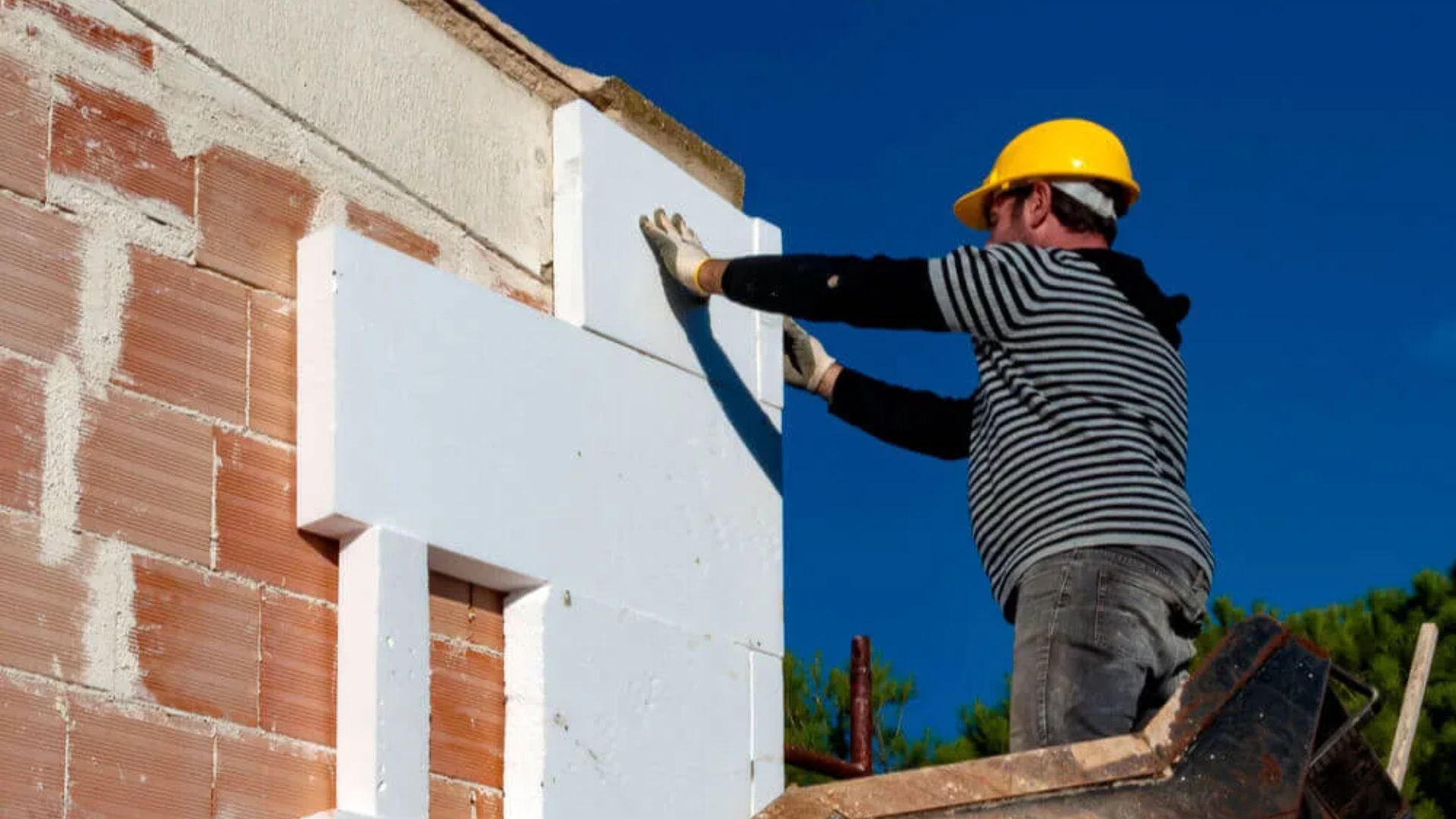
Practical Comparison of Thermal Insulators Shows How Common Choices in Renovations Can Increase Costs, Compromise Comfort, and Generate Rework While Analyzing Performance, Installation, and Price of Popular Materials Used in Converting Warehouses Into Functional Offices.
Transforming a simple warehouse into a comfortable office relies less on “quick fixes” and more on well-made basic choices.
In a practical test shown by Scott from the Everyday Home Repairs channel, three popular insulation solutions for walls were placed side by side to measure which provides more comfort for less money: fiberglass, rock wool, and expanding foam applied in spray.
The experiment also exposes a recurring pitfall in renovations: using foam as if it were a cheap “shortcut” to cover large areas.
-
Home environment can influence the brain, mood, and well-being: studies indicate an increase of up to 15% in productivity, a reduction of 12% in stress with plants, and a direct impact of the circadian rhythm on the 24 hours of the day.

-
A Brazilian millionaire couple restores a farm over 150 years old in the interior of São Paulo and transforms the historic property with Portuguese tiles, antique furniture, and new spaces into a refuge that blends tradition, comfort, and sophistication.

-
Submerged city in a lake in Minas reveals intact streets, preserved vehicles, and houses after more than 60 years, impressing divers.

-
Yellowstone has started to rise again in an area of the caldera, and the movement rekindles fears surrounding the U.S. supervolcano, as scientists monitor the deformation and try to understand what is happening underground.


Thermal Insulation in a Small Warehouse: A Common Challenge in Residential Renovations
The test scenario is a warehouse of about 12 by 6 feet, typical of a storage space, that needs to function as an office throughout the year.
The proposal was to compare materials under similar conditions, observing both thermal gain and cost per insulated area.
The central point is not just “to warm up in winter” or “to keep heat in summer”, but to understand which solution is more rational when the goal is to renovate without blowing the budget.
In organizing the comparison, Scott presents thermal insulation values known as “R” and estimates how much it costs to cover an area equivalent to a panel used in walls, around 32 square feet.
From there, the video draws attention to installation and planning errors that, in the end, can leave the environment uncomfortable even after the investment.

Fiberglass in Wall Insulation: Low Cost and Frequent Installation Error
Fiberglass appears as the most common and accessible option.
In internal walls, it is often found in blankets with R-13, a value mentioned in the test as a performance reference for this type of application.
The appeal is straightforward: it is easy to find in hardware stores and usually has a competitive price.
However, fiberglass relies on the air trapped between the fibers to work well.
When the blanket is compressed too much within the space, performance tends to drop.
The video also highlights a mistake that many people only realize afterward: installing the paper face of the material on the wrong side of the wall.
This flaw can hinder the finish and require rework.
In practice, the initial savings can be lost if the material is poorly applied.
Still, when the installation follows the manufacturer’s recommendations and the fit is correct, fiberglass remains an efficient way for those looking to cut costs.
Rock Wool in Thermal Insulation: Performance, Durability, and Ease of Application
In the test, rock wool, known by brands like Rockwool, comes in as an alternative with R-15, slightly above fiberglass in the presented comparison.
The difference is not just in the number.
The material is described as stiffer, with a firmer fit between rafters and studs.
This behavior can reduce waste and facilitate work in small jobs, such as adapting a warehouse.
Another highlighted point is the comfort of handling.
While fiberglass can irritate the skin in some situations, rock wool tends to be less irritating during installation, according to the experience shown in the video.
In addition, it is often associated with greater resistance to moisture and mold.
This characteristic is relevant when the environment is subject to temperature variations and imperfect ventilation, common in annexes, workshops, and external structures.

The cost, however, increases. Scott mentions something around US$ 40 to cover 32 square feet.
The test calculation suggests that the material costs nearly double that of fiberglass but delivers a more robust package for those seeking a long-term solution.
Expanding Foam in Spray: Why the “Shortcut” Can Be Expensive
Expanding foam in spray often sells the promise of convenience.
The idea is to apply, let it expand, and done.
In the video, Scott tests popular kits, like Great Stuff and a kit from Stanley, to evaluate the results in cavities and walls.
The main warning is not that the foam “doesn’t work”. The problem is treating it as a material for large surfaces. Consumption appears as the main hurdle.
When trying to fill larger areas, the actual coverage may fall well below what the owner imagines when looking at the kit size.
The consequence is direct: purchase of more units, increased cost, and the need for careful application to avoid flaws and waste.
There is also an important difference between products.
Canned foams, sold as sealants for gaps and openings, usually have modest insulation values per inch, around R-3.7 per inch, according to specifications released by major retailers.
On the other hand, closed-cell foam kits designed for insulation can have higher performance per thickness.
These kits, however, tend to cost more and require careful application.
In the Everyday Home Repairs test, Scott presents approximate numbers for the kits used, as a way to translate performance for those planning the budget.
The central point emphasized in the video is practical: foam is efficient for sealing gaps and specific points, but becomes an expensive choice when used to replace traditional blankets in large wall areas.
Cost per Insulated Area: How Each Choice Affects the Budget
When the calculation goes beyond “guesswork” and enters the covered area, the cost difference becomes more visible.
In the account presented by Scott to cover about 32 square feet, fiberglass appears around US$ 18.
Rock wool is close to US$ 40.
Other solutions mentioned in the comparison, such as rigid foam board, come in around US$ 58.
Expanding foam in kits can vary approximately between US$ 120 and US$ 150, depending on the set and coverage.


When converting these values to reais using the average USD/BRL exchange observed in September 2025, close to 5.37 reais per dollar, the numbers look approximately like this:
- Fiberglass: about R$ 96.57.
- Rock wool: about R$ 214.60.
- Rigid foam board: approximately R$ 311.17.
- Expanding foam in spray: between R$ 643.80 and R$ 804.75.
The conversion helps to visualize why foam, when used as the main solution in large areas, can cost several times more than traditional blankets.
In this context, the preference expressed in the video for rock wool appears as a balanced choice.
It is not the cheapest, but combines good thermal performance, predictable installation, and resistance to common conditions in external structures.
Fiberglass, in turn, remains an economical alternative when the execution is well done.
Meanwhile, foam and rigid boards appear as reinforcement in specific points, mainly where sealing and continuity of insulation are harder to achieve with blankets.
What matters more to you when insulating a workspace at home: saving at the start of the project or reducing the chances of rework and discomfort over time?








-

-

-

-

11 pessoas reagiram a isso.