





 Portuguese
  English
  Spanish
  5 min of reading
  0 comments


Comparison Highlights Performance, Technology, and Daily Cost Between Honda CG 160 Start, Haojue DK 160, and Bajaj Pulsar N150, Revealing Relevant Differences for Those Seeking a Low-Displacement Urban Motorcycle.
The competition among street motorcycles of 150cc and 160cc has entered a new chapter with the arrival of the Bajaj Pulsar N150, which brings advanced technology and safety face to face with the tradition of the Honda CG 160 Start and the balanced package of the Haojue DK 160.
In this comparison, the CG still stands out for its agility in acceleration and recoveries, while the Pulsar N150 takes the lead in electronic features and brakes.
The DK 160, on the other hand, seeks its place with careful finishing, comfort, and a focus on economy.
-
The car stored for 38 years: when opening the barn door, what appears is breathtaking and looks like a scene from a movie!

-
Fiat works miracles in the Brazilian market, lowers the price of its 0 km hatch to R$ 69,990, reestablishes the model as the cheapest car in the country, and reignites the battle against Kwid and C3.
-
Chevette with cooking gas: How the gas cylinder ends up being used in cars clandestinely and why this makeshift solution can result in leaks, explosions, damaged engines, and seized vehicles.
-
Fiat launches the new 2027 Toro hybrid with 48V, 176 hp, an electric motor of 15.5 hp, a 0.85 kWh battery, up to 7% fuel savings, 8% fewer emissions, and possible exemption from IPVA.


Low-Displacement Motorcycle Segment in Brazil
Low-displacement street motorcycles remain the foundation of daily mobility in the country, both for urban commuting and professional use.
In this range, acquisition cost, fuel consumption, maintenance, and resale value are as important as performance or style.
The Honda CG 160 Start continues to be the market reference, sustained by years of reliability and high liquidity in resale.

It is the most recognized option for those seeking robustness and ease of maintenance, in addition to having a well-distributed network of dealerships throughout the national territory.
At the same time, the Haojue DK 160 has established itself as a niche alternative, betting on a competent technical package, good finishing, and a focus on comfort.
Meanwhile, the Bajaj Pulsar N150 has arrived more recently in Brazil with the goal of redefining the level of technology in this segment, offering features that until recently were reserved for larger and more expensive motorcycles.
Comparison of Engines and Urban Performance
In terms of mechanics, all three motorcycles use single-cylinder, four-stroke engines with electronic fuel injection, designed for economy and durability for intense daily use.
Still, there are important differences in how each delivers power and torque.
The Honda CG 160 Start features an OHC engine of 162.7cc, solely powered by gasoline, without a flex-fuel system.
According to the latest technical data, the engine develops about 14.4 hp at 8,000 rpm and 1.41 kgf.m of torque, numbers sufficient to ensure quick starts and efficient recoveries in urban traffic.
The simplicity of the setup aids maintenance and favors fuel consumption, which remains one of the strong points of the CG line.
The Haojue DK 160 uses a 162.4cc engine, also powered only by gasoline, with 15 hp and 1.43 kgf.m of torque.
In practice, this results in smooth and progressive responses, with good strength at low and medium RPM, a characteristic valued by those who ride with cargo or spend many hours daily navigating congested areas.

Another frequently cited point in reviews is the reduced level of vibration, which contributes to comfort over time.
On the other hand, the Bajaj Pulsar N150 bets on an engine of 149.68cc, air and oil-cooled.
The engine delivers 14 hp at 8,500 rpm and 1.38 kgf.m of torque at 6,000 rpm, showing how a more recent project can balance efficiency and performance.
The response is livelier at higher RPMs, combining good willingness to climb revs with competitive fuel consumption for its size.
In terms of feel at the handlebars, the CG 160 Start tends to stand out in stoplight starts and recoveries at low speed.
The DK 160 prioritizes smoothness and economy, while the Pulsar N150 offers a more modern and agile riding experience.
Chassis, Brakes, and Safety in the Three Motorcycles
When it comes to chassis and brakes, the difference between tradition and technological updates becomes even more evident.
The Honda CG 160 Start adopts a disc brake in the front, a drum at the rear, and CBS (Combined Brake System), which distributes part of the braking force to the front wheel when the rear pedal is activated.
The solution is simple and reliable, but still falls short of ABS in preventing more sudden lock-ups, especially on wet surfaces.
In the Haojue DK 160, the cycling package combines telescopic fork, dual rear suspension, and brakes with a disc in front and drum at the back, also with CBS.
The focus is on providing stability and safety for daily use, without excessive sophistication.
The automatic distribution of braking helps to reduce pilot errors in emergency situations.
The Bajaj Pulsar N150 positions itself above its rivals in safety technology.
The model features a front disc brake with ABS, drum at the rear, and perimeter frame.
The front ABS significantly reduces the risk of locking, making braking more predictable.
Additionally, the Pulsar uses 17-inch wheels, fitted with sport profile tires, which favors quick directional changes and increases rider confidence.
While the CG 160 Start and Haojue DK 160 maintain 18-inch wheels, more focused on robustness, the Pulsar N150 bets on the agility of the 17-inch setup.

Daily Use, Comfort, and Maintenance Cost
In daily life, what matters is not only performance but also comfort, service network, parts, and depreciation.
The Honda CG 160 Start retains an advantage in dealership network and ease of resale.
The technical assistance structure is extensive, the cost of parts is lower, and the bike depreciates little.
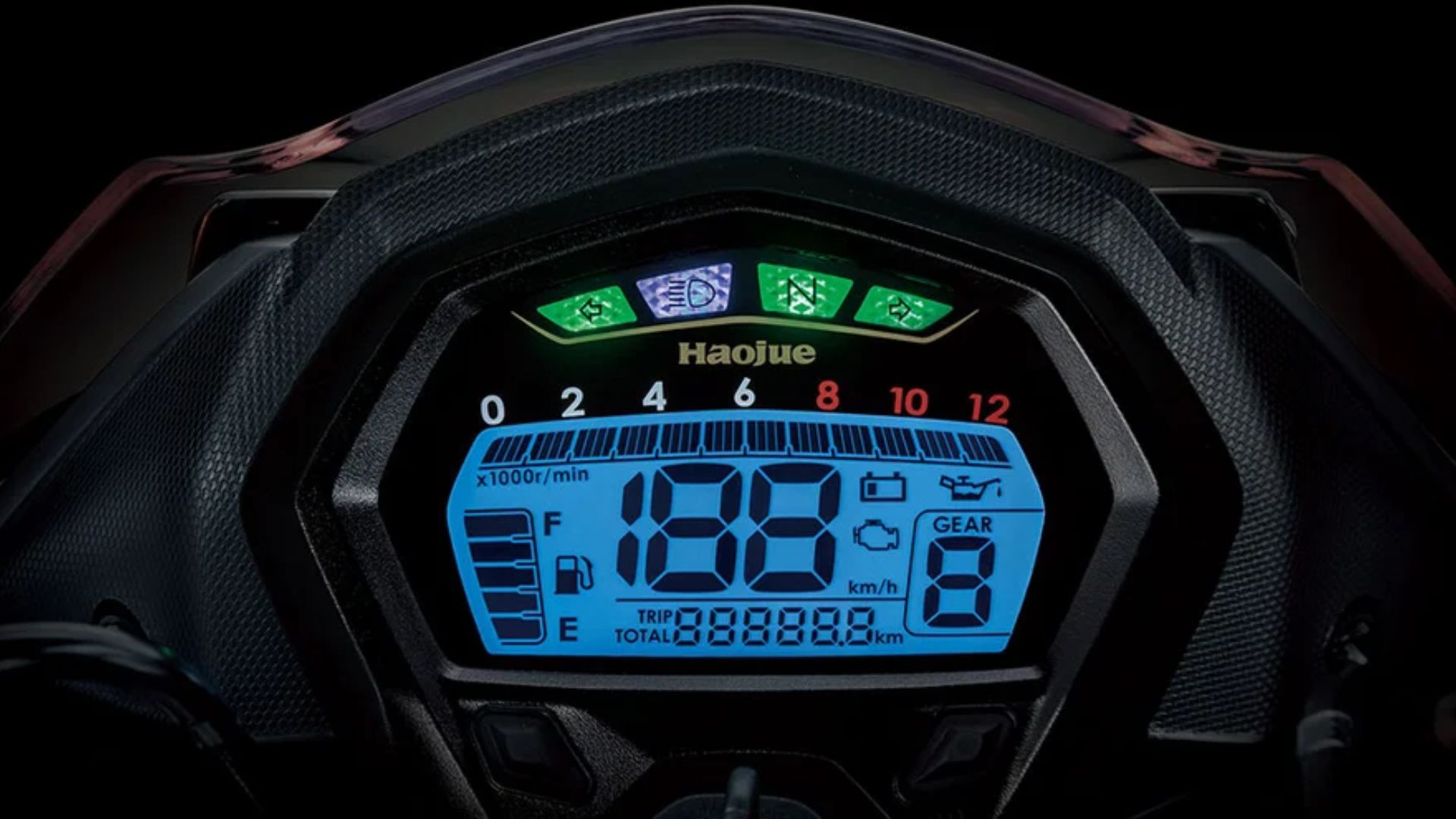
In terms of equipment, the Start follows a simple line, with a digital LCD dashboard, gear indicator, and functional focus.
The Haojue DK 160 stands out for its finishing, with well-fitted plastics and a wider seat.
The suspension prioritizes comfort, which helps those who spend many hours daily on the bike.
The dashboard is fully digital, though without advanced connectivity.
The network is smaller than Honda’s but continues to expand.
The Bajaj Pulsar N150 is the most technological among the three, with Bluetooth connectivity, a full dashboard, full LED headlight, and USB input for charging.
The visual is sportier, appealing to the younger audience.
Bajaj and Haojue are still expanding their operations in Brazil, which may influence cost-benefit for some consumers.
Which of the Three Motorcycles Offers the Most Complete Package?
In practice, the answer depends on each rider’s priorities.
For those who value extensive network, low maintenance costs, and liquidity, the Honda CG 160 Start remains a rational choice.
For those who prefer comfort and more careful finishing, the Haojue DK 160 is a strong alternative.
Meanwhile, for those seeking technology, ABS, and a connected dashboard, the Bajaj Pulsar N150 offers the most modern set in the category.
From these differences, the central point for the consumer emerges: which of these profiles fits better into the routine and budget of those who depend on a motorcycle every day?







-

-

-

-

10 pessoas reagiram a isso.