





 Portuguese
  English
  Spanish
  6 min of reading
  1 comment


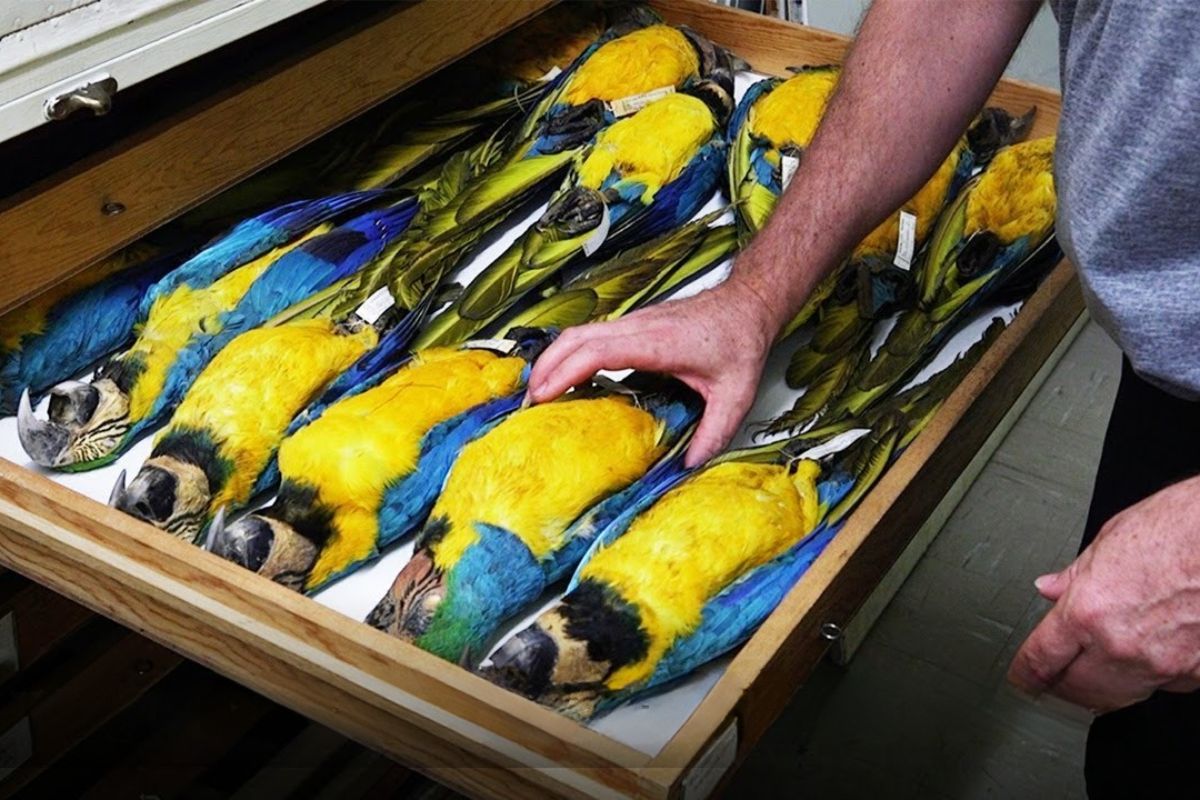


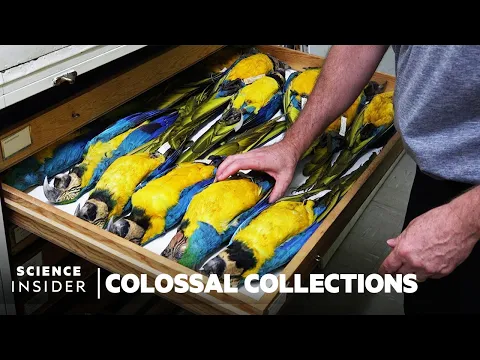
In The Smithsonian National Museum Of Natural History In Washington, The Collection Of Frozen And Taxidermied Birds Exceeds 600,000 Specimens Gathered Over 200 Years. Most Never Go On Display Because They Serve For Expertise On Aircraft Collisions, Beak Measurements, Feather Studies, Organs, Wings, And Microbiomes For Decades.
In The Smithsonian National Museum Of Natural History In Washington, The Routine That Sustains Frozen And Taxidermied Birds Lacks The Aesthetic Of An Exhibition Hall And The Urgency Of Daily News. What Dominates Is A Continuous Flow Of Acquisition, Freezing, Skin Preparation, And Standardization, Designed So That Each Specimen Remains Useful For Hundreds Of Years.
The Result Is A Gigantic Collection, With More Than 600,000 Bird Specimens Gathered Over Approximately 200 Years, Growing Month By Month. Most Of This Collection Does Not Go On Display Because The Main Objective Is Applied Research, Forensic Identification And Long-Term Comparisons That Depend On Technical Consistency And Impeccable Preservation.
600 Thousand Birds And A Central Rule: Preserve For Uses That Don’t Even Exist Yet

The Smithsonian Follows A Practical Principle That Explains Why So Many Birds Are Kept And Why Care Needs To Be Extreme. This Is Not About Preparing A Specimen For Tomorrow, But For Hundreds Of Years. This Horizon Changes The Logic Of Work: The Focus Becomes Durability, Traceability, And Repeatability, So That Future Researchers Can Compare Today And Yesterday With The Same Standard.
-
He started running at 66 years old, broke records at 82, and is now a subject of study for having a metabolic age comparable to that of a 20-year-old, in a case that is intriguing scientists and inspiring the world.

-
Oldest tree on the planet reappears after 130 years of searches: Wattieza, 385 million years old, was 10 meters tall and had no leaves or seeds; Gilboa fossils in New York solved the mystery in 2007.

-
A 48-square-meter house assembled in hours with 4,000 bricks made of recycled plastic that does not absorb moisture, has natural thermal insulation, and costs less than 90,000 reais in a complete kit.

-
Luciano Hang revealed that Havan’s air fleet has already accumulated more than 20,000 landings, 10,000 flight hours, and 6 million kilometers traveled, and he says that without the planes, the company would never have grown so quickly.


That’s Why The Collection Grows Even When Few Visitors See The Entire Collection. The Bird Division Works With Specimens That Come Through Donations And Are Incorporated With Labels, Records, And Histories, Forming A Biological Archive That Functions As Scientific “Evidence.” A Bird Collected In 1878 Can Help Solve A Modern Problem, Even In A Context That Did Not Exist When It Was Collected.
From Donation To Freezer: How A Specimen Enters The Scientific Circuit

The Chain Starts With Acquisition. There Are Specimens That Arrive Through Donations From People And Organizations. The Script Includes Specific Stories: An Ostrich Sent By King Menelik As A Gift To President Roosevelt, A California Condor Donated By The U.S. Fish And Wildlife Service, Birds From The Personal Collection Of President Theodore Roosevelt, And Recent Cases Like A Hawk That Died After Colliding With A Building’s Window And Was Donated In 2017.
Before Any Preparation, Freezing Enters As An Operational Step. A Specimen Can Go Into The Freezer, Waiting Its Turn In The Laboratory. The Freezer Is Not A Detail; It Is A Link In The Conservation Control Because It Keeps The Body Stable Until The Skin Preparation Work Begins.
The Preparation Laboratory And The Meticulous Work That Transforms Body Into Durable Skin

In The Laboratory, Preparation Follows A Manual And Technical Script. Specialists Thaw, Weigh, And Measure The Bird. Next, Scalpel, Precision, And A Guiding Objective Enter Each Movement: To Remove As Much Muscle And Fat As Possible So That The Result Is A Dry Specimen That Does Not Rot And Lasts For Many Years.
Soft Tissues And Glands Are Discarded To Avoid Deterioration. Fat, Especially, Becomes The Main Enemy Because If It Remains, It Can Rancid, Acidify, And Leak Through The Skin, Compromising The Material. The Removal Requires Method And Delicacy, With Clear Technical Guidance: Push The Skin Instead Of Pulling, Moving Slowly To Avoid Tears.
During The Process, A Little Intuitive But Decisive Tool Appears: Corn Cob Powder, Used To Absorb Body Fluids And Keep The Sample Clean. There Is A Difference In Practice Over Time: Beginners Tend To Use Less, While Experienced Preparers Abundantly Cover With Powder To Control Moisture And Dirt.
When The Bird Has More Intense Fat On Its Skin, An Additional Cleaning Occurs. A Wide-Wheel Machine Removes Fat Until The Feather Traces Become Visible, Requiring The Right Pressure So As Not To Tear. After That, The Routine Returns To Moisture Absorption With More Powder, Washing, Drying, And Visual Finishing.
Drying, Sewing, And Resistance: Why The Skin Needs To Withstand Handling For Decades

The Preparation Does Not End With Cleaning. To Make The Specimen More Resistant To Handling, The Wings May Be Tied To Limit The Range Of Movement, Preventing Someone From Opening It Too Much And Causing Damage When Observing The Underside. Next, The Body Regains Shape With Cotton Filling, Rebuilding The Original Volume.
Sewing Enters As A Functional Step, Not Aesthetic. The Goal Is To Create A Strong, Durable, And Consistent Specimen, With Feathers Organized To Facilitate Future Readings. Finally, The Bird Is Attached To A Board To Dry And Secure Its Final Position. This Position Becomes Permanent, Which Makes Every Choice In The Laboratory A Long-Term Decision.
Complete Drying Can Take About 10 Days. In Parallel, The Experience Itself Is Treated As A Progressive Training: Many Specimens Are Needed For Someone To Gain Autonomy, And A Preparer With Thousands Of Specimens Accumulated Carries A Repetition Standard That Keeps The Collection Comparable Over The Decades.
Why Most Never Go On Display: Research, Air Safety, And Measurable Evolution
The Central Reason To Keep So Many Preserved Skins Is Research. One Of The Most Direct Uses Is In Bird Collisions With Aircraft. There Is An Identification Laboratory That Works With Government Agencies To Recognize Species From Remains, Mainly Feathers, Sent After Impacts. The Described Volume Is High: About 10,000 Collisions Per Year, With Peaks In Autumn And Spring.
The Collection Is Valuable Because It Brings Together A Vast Variety Of Reference. The Bird Division Claims To Have 80% Of The World’s Bird Species Represented, Increasing The Chances Of Finding A Comparable Specimen When A Collision Occurs Anywhere. The Procedure Involves Comparing Specific Feathers, Such As Tail And Wing, Until The Identity Is Confirmed, And The Result Is Sent To Aerodrome Biologists And Engine Manufacturers, Who Use The Identification To Adjust Measurements And Reduce Accidents.
Another Axis Of Use Is The Observable Evolution In Characteristics Such As Beaks. Research Analyzes Changes In Size And Structure, Including In Contexts Of Crossbreeding Between Domestic And Wild Ducks. The Advantage Of The Collection Is That It Allows Historical Comparison: A Standardized Collection Provides A Temporal Scale To Detect Real Change Over Decades.
Collections Beyond Skins: Wings, Organs In Ethanol, Numbered Skeletons, And Retired Birds
The Smithsonian Does Not Rely Solely On Skins. There Is A Separate Collection Of Wings That Facilitates Detailed Analyses Of Feathers, Providing Access To Regions Under The Wing And Points Of The Body That Would Be Difficult To Obtain In Traditional Formats. This Expands The Type Of Research Possible Because It Changes The Geometry Of Observation And The Set Of Feathers Accessible.
There Is Also A Collection Of Organs Preserved In Ethanol, In Addition To Skeletons With Meticulously Numbered Bones. And There Are Taxidermied Birds That Were Once On Display And Have Been Retired, Maintaining Scientific Value As Dated Records Of What Existed At A Given Moment.
The Concept That Ties Everything Together Is The Temporal Record. Each Set Functions As A Biological Stamp Of Time, Allowing Future Researchers To Compare Populations And Environmental Conditions With Preserved Physical Evidence.
Microbiomes And Extreme Heat In The Wings: When A Bird Becomes A Laboratory Of Resistance
The Wings Also Serve For Less Intuitive Research, Such As Microbiomes. One Described Example Involves Vulture Wings And The Presence Of A Bacterial Group Called Deinococcus, Described As Highly Resilient And Capable Of Withstanding High Levels Of Radiation.
The Physical Environment Of The Wing Under Full Sun Appears To Be Part Of The Explanation. On A Day With About 90 Degrees, The Temperature On The Wing’s Surface Can Exceed 160 Degrees In About Three Minutes. This Scenario Would Favor Organisms Capable Of Surviving And Reproducing Under Thermal Stress And Intense Exposure, Transforming A Biological Structure Into An Investigation Platform For Microbial Resistance.
A Collection Prepared For A Future That No One Can Predict
The Strategic Value Of Keeping Frozen And Taxidermied Birds For Centuries Lies In The Unpredictability Of Future Use. Preparers From The Past Did Not Know What DNA Was, But The Consistency Of The Method Opened Doors For Researchers Decades Later. The Same Logic Repeats Itself Now: The Collection Is Assembled So That Someone In The Future Can Ask Questions That Do Not Even Exist Today.
This Is Why The Display Is Secondary. The Collection Functions As Scientific Infrastructure, With Practical Application In Air Safety, Comparative Studies Of Form And Function, Feather Analyses, Microbiomes, And A Physical Archive Of Global Biodiversity.
From Your Perspective, Is Keeping So Many Frozen And Taxidermied Birds More Important To Reduce Aircraft Collisions Or To Understand Evolutionary Changes Over Centuries?









Muito interessante o assunto, pois é uma matéria que leva o leitor a lugares que muita gente nem imagina que exista.
Parabéns…