





 Portuguese
  English
  Spanish
  8 min of reading
  0 comments


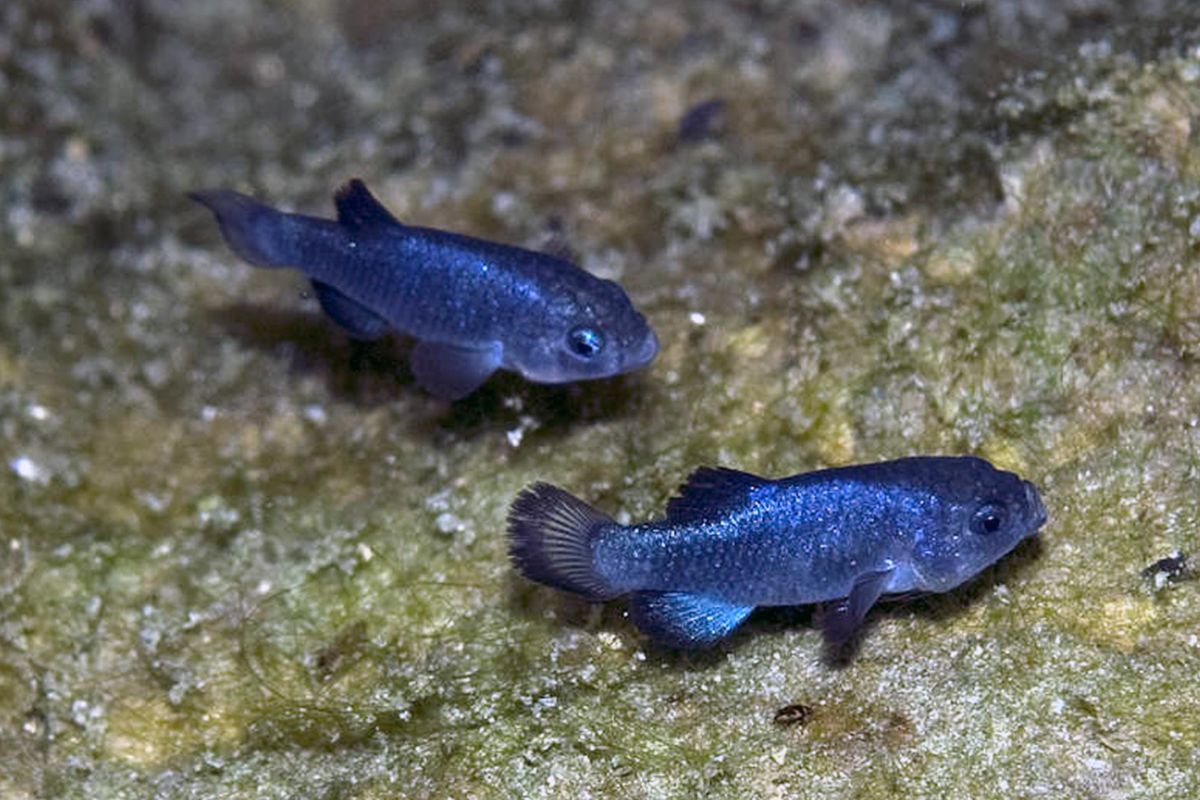
In The Mojave Desert, In Nevada, The Rarest Fish In The World Lives Trapped In The Devil’s Hole, A Geological Fault In The Death Valley With Constant Water At 93°F And Little Dissolved Oxygen. With Less Than 40 Individuals, It Suffered Collapse From 200 In September 2024 To 20 In February After Seiches
The rarest fish in the world lives in a place that seems designed to kill fish, not to house them. In the Devil’s Hole, a geological opening associated with Death Valley National Park, the water remains at 93°F all the time, there are lethally low levels of dissolved oxygen, and the area where the Devil’s Hole pupfish feeds receives little light, reducing algae and, consequently, available food.
This extreme scenario occurs in the Mojave Desert, within the Ash Meadows National Wildlife Refuge, in Amargosa Valley, Nevada, about a mile from the Devil’s Hole and with a cave system below 85 feet that extends with no known bottom. Even with less than 40 individuals in the wild, the rarest fish in the world still persists, trapped at a single point on the planet and dependent on a narrow shelf of habitat.
The Devil’s Hole And Why It Is Described As A Toxic Place For Fish

The Devil’s Hole is portrayed as one of the worst possible places for a fish to live. The combination of dissolved oxygen at lethal levels, critically high temperature, and little sunlight on the shelf limits algae and invertebrates, which form the available food base. Almost any fish that entered there would die, which places the rarest fish in the world in a permanent biological limit.
-
With a cost per shot close to zero, the DragonFire laser could change naval warfare in 2027 and provide British ships with nearly unlimited defense against drones.

-
A British startup creates tires that generate electricity in electric vehicles when passing over potholes, speed bumps, and cracks.

-
Scientists have created robots made with living cells that have their own nervous system, swim on their own, explore the environment, and self-organize without any genetic engineering, and now they want to do the same with human cells.

-
Students create a solar-powered ambulance that operates without a plug, without fuel, and still keeps medical equipment running in remote areas.


The formation of the Devil’s Hole is associated with a geological fault, functioning as a “window” to the aquifer or groundwater. The depth is unknown. Divers have reached 436 feet, approximately 133 meters, without finding the bottom, and describe that below 85 feet, the environment transforms into a cave system. This architecture heightens the sense of isolation because the habitat is not a common lake; it is a deep, irregular system connected to underground waters.
Constant Temperature, Little Oxygen And Survival With “Nearly Boiling” Water

The repeated key fact is that the water is at 93°F all the time. This keeps the environment constantly warm and imposes continuous stress, without “seasons” of relief. At the same time, there is very little oxygen in the water, which would be enough to eliminate many fish species in a short period.
The rarest fish in the world is described as an extremophile, living on the edge of what a fish can endure. Still, it is called relatively delicate, which creates a paradox: it survives at the extreme, yet is sensitive to changes in the balance of the little that exists there, such as food on the shelf and fluctuations in dissolved oxygen.
The Fish, The Curious Behavior And The Isolation In A Single Point Of The Planet

The animal is called the Devil’s Hole pupfish, described as curious and with behavior similar to “puppies,” chasing each other. In counts made by divers, the fish approach, as if investigating the diver, suggesting low escape behavior and high curiosity, a striking characteristic in a habitat with very few individuals.
The isolation is absolute: this fish is not found anywhere else “in the wild” outside the Devil’s Hole. With such a small population and in such a limited area, the rarest fish in the world depends on a specific microenvironment, and any alteration in the shelf, availability of algae and invertebrates, or water quality becomes a direct threat to the species’ continuity.
How Long Have They Been There And How Science Tries To Estimate

The time spent in the Devil’s Hole is described as uncertain on a broad scale. Geneticists have estimated from hundreds of years to tens of thousands of years. This large range reflects the challenge of accurately dating an isolated population in an extreme underground environment where direct historical records are nonexistent.
Counts began in 1972, including the use of diving equipment and “surface counters” to estimate population size. Historically, the maximum number mentioned was around 540 fish. This reference creates a relevant line of comparison: the known peak is in the hundreds, but the present is in the tens or less, which amplifies the sense of risk.
Rapid Decline: From Over 200 To 20 In A Few Months
The most dramatic event cited is the recent collapse. The population is said to have fallen from over 200 fish in September 2024 to just 20 at the end of February. It is a sharp decline, in a short interval, in a system where each individual counts.
This decline is connected to a physical mechanism of the Devil’s Hole itself: due to its depth and connection to a larger body of water, earthquakes can generate large internal waves called seiches. They are not tsunamis, but oscillations of water that sweep across the shelf. When the shelf is swept, the food disappears, and the population feels it.
Seiches, Earthquakes And The “Blackout” Of Food On The Shelf
The Devil’s Hole is described as susceptible to seiches caused by earthquakes, often associated with the Ring of Fire, citing locations like Chile, Mexico, Alaska, and Japan, in addition to the western Pacific. The central idea is that large-magnitude earthquakes, depending on depth, magnitude, and location, can generate enough movement to create waves that pass over the rock and sweep the area where algae and invertebrates accumulate.
In the winter cited, the site reportedly experienced seiches resulting from two “poorly timed” earthquakes. The effect was the back-and-forth of water washing away algae, food, invertebrates—everything that was available on the shelves. This caused food scarcity and harmed the fish, helping to explain the drastic decline described in the period.
The Biological Trick That Allows Living Without Oxygen: Ethanol In The Body
One physiological detail mentioned is attributed to a finding by UNLV: when dissolved oxygen decreases, the fish begin to produce ethanol. The description is straightforward and almost surreal: the fish become “a little drunk,” and this helps them survive a complete blackout of oxygen.
This mechanism is presented as part of the reason why the rarest fish in the world endures in an environment where other species would die. Rather than relying solely on available oxygen, the organism would have a metabolic strategy to navigate critical periods, making it a vertebrate of interest for studies on life in heat, low oxygenation, and environmental extremes.
Where Is The Conservation Structure And Why Has It Become A Lifeboat
The operational response to the risk includes a facility designed to maintain a population of “lifeboats” of the Devil’s Hole pupfish. The site is described within the Ash Meadows National Wildlife Refuge, in Amargosa Valley, Nevada, approximately a mile from the Devil’s Hole.
The declared goal is to recreate, in captivity, a “very bad” ecosystem, meaning to copy the extreme of the natural environment. The logic is to maintain a reserve population without relying solely on the natural system, which can be shaken by seiches and other factors that eliminate food or deplete oxygen.
“Collecting Fish Without Collecting Fish”: Strategy With Eggs And Seasonality
A described solution was to collect eggs instead of directly collecting fish. The initial collection occurred during peak summer and peak winter, when it was known that eggs produced during these periods had survival rates close to 0% until adulthood. This data shows that not every time of the year offers the same chances and that reproduction is sensitive to environmental conditions.
Additionally, there were adjustments to feeding: increasing the amount and frequency of certain frozen foods, selecting benthic macroinvertebrates, and using macroinvertebrates as part of the regimen. The explicit aim was to sustain a population capable of serving, when necessary, as a replacement for the natural habitat.
Repopulation: 43 Fish Returned To The Devil’s Hole
At a point described as decisive, the program used the fish “for the first time in ten years” for its original purpose as a lifeboat population, stocking 43 fish in two different events in the Devil’s Hole to help the population.
After that, the situation reportedly stabilized largely, with encouraging signs: newborns, egg production, and signs of recovery. The passage insists that the lifeboat is functioning and that the structure plays an important role in providing both data and materials to guide the process.
Why Bother With Such A Small And Isolated Fish
The justification presented goes through moral responsibility and applied science. The rarest fish in the world would have survived well in the wild for the last 10,000 years, but since human interventions and activities in the region, especially from the 1950s, the population has faced difficulties and has been “almost extinct” at least three times.
The analogy used is strong: it acts as a “canary in the coal mine,” indicating that problems in the Devil’s Hole may foreshadow challenges for other fish in the region. Furthermore, there is the idea that many human medicines come from extreme environments, and learning how a vertebrate lives in warm water with low oxygen may open doors to biomedical and ecological knowledge that has yet to be fully understood.
What Makes This Case Unique On The Planet
The uniqueness combines geology, climate, biology, and population scale. A single hole connected to a geological fault, unknown bottom depth, cave system, constantly warm water at 93°F, dissolved oxygen at lethal levels, shelf with little light and limited food, distant earthquakes capable of sweeping food through seiches, and a population that once numbered in the hundreds but is now in the tens.
The result is a rare portrait: the rarest fish in the world does not live “in the desert” in a generic sense; it lives in the Mojave Desert, in Amargosa Valley, Nevada, linked to Death Valley, in a microhabitat so restricted that an internal wave can change the survival chances of an entire species.
Do you think the rarest fish in the world should receive maximum conservation priority even with less than forty individuals, or should nature proceed without human intervention in such an extreme case?








-

-

3 pessoas reagiram a isso.