





 Portuguese
  English
  Spanish
  5 min of reading
  16 comments


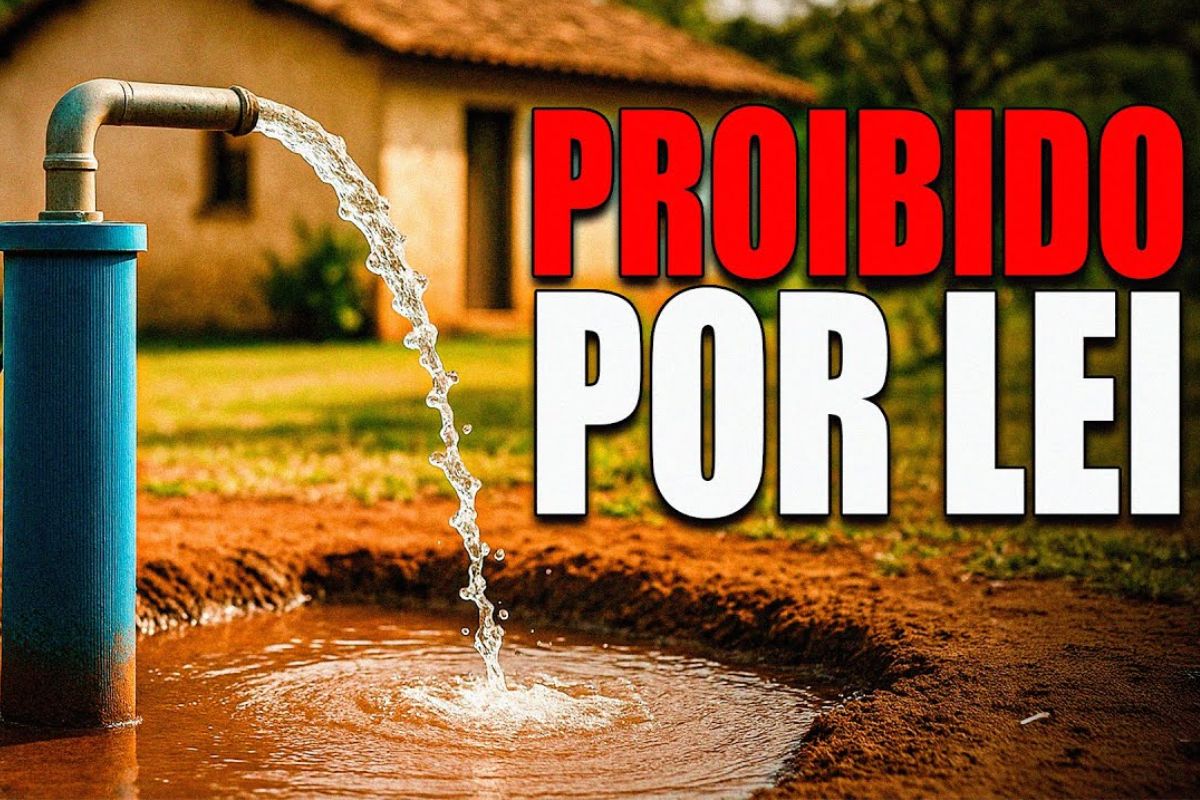


Between Basic Need And State Control, Drilling A Well Today Means Facing Confusing Rules About Groundwater, Expensive Water Use Authorization, Unequal Enforcement, Mass Illegal Wells And Decisions That Leave Millions Of Families Between Impossible Legality And The Daily Need For Water Across Brazil Today
In the minds of many, it’s simply a matter of having a piece of land, calling a driller, and drilling a well to permanently solve the supply issue. But, in practice, wells have become synonymous with expensive licenses, the risk of fines, and direct confrontation with a complex and opaque regulatory system.
After water began to be treated as a public good, every pump connected to a wells came under the state’s radar. Amid rules about groundwater, the requirement for water use authorization, and restrictive court decisions, millions of Brazilians continue operating illegal wells out of necessity, not defiance.
From Right To The Subsoil To Public Good: When The Well Stopped Being Simple

Before the 1988 Constitution, those who owned land usually considered the water beneath it as a natural part of their property.
-
The new Civil Code could revolutionize marriages in Brazil with “express divorce” and changes that could exclude spouses from inheritance.
-
Banco do Brasil sues famous influencer for million-dollar debt and intensifies debate on delinquency, risks of seizure, and direct impact on Gkay’s credibility.

-
The Senate approves a bill that criminalizes misogyny, hatred, or aversion towards women, and includes the crime in the Racism Law with a penalty of up to 5 years.

-
Chamber Approves Bill That Allows Pepper Spray for Women Over 16 and Imposes Strict Rules for Purchase, Possession, and Use as Self-Defense


With the new constitutional order and the Water Law, groundwater began to be treated as a resource of public domain, subject to control and planning.
This means that drilling a well ceased to be a private decision and now depends on state authorization, even when the use is within one’s own property.
The official rationale is to protect aquifers, prevent over-exploitation, and ensure that groundwater remains available and of quality for future generations.
Because of this, in almost all states, any well that draws significant volumes requires water use authorization, technical studies, and registration in specific systems.
In some cases of very small withdrawals, the use is classified as insignificant, but still requires registration, which keeps citizens tangled in bureaucracy.
Water Use Authorization, Technical Studies, And The Cost Of Legalizing A Well
In theory, control over wells seeks to balance environmental protection and access to water. In practice, legalizing a well can cost tens of thousands of reais and take months to process.
Drilling licenses, hydrogeological studies, quality reports, signed projects, formal requests for water use authorization, and registrations with different agencies are required.
With each new requirement, more people give up on the formal path.
The direct result is a scenario in which illegal wells multiply. Estimates suggest that about 88 percent of wells in Brazil operate outside the rules, often without any proper monitoring.
It’s not that users necessarily want to break the law, but the financial and bureaucratic costs of drilling a well according to regulations deter small producers, condominiums, and even public agencies.
Examples Of States: Limits, Registration, And Illegal Wells As A Rule
In several states, agencies managing water resources set limits to waive water use authorization for small withdrawals, but still require registration.
There are cases where even a public square, using water from a well only for restrooms and irrigation, needs formal authorization. This helps explain why illegal wells end up being the rule, especially where access to conventional networks is expensive or unstable.
In rural areas, many families depend solely on wells for their supply.
Even so, opening a well requires a project, technical oversight, and processing through the water resources agency.
In some states, there are estimates of hundreds of thousands of households supplied by illegal wells, not by choice but due to a lack of viable alternatives within the law.
When The Dispute Leaves The Aquifer And Enters The Political Arena
The discussion surrounding wells is not just technical.
In cities where the public network is operated by concessionaires, municipal laws attempting to liberalize the domestic use of groundwater clash with state and federal regulations.
Recent cases show sanitation companies contesting local laws and arguing that only the state can authorize withdrawals, always with formal water use authorization.
Court decisions also reinforce this view.
In rulings involving condominiums seeking better quality water from wells, judges prioritized the public network when it already existed in the area, arguing that the collective interest and protection of water resources must prevail.
In practice, even those trying to follow all the rules may see their well shut down and be forced back to the network entirely.
Real Technical Risks: A Well Is Not An Automatic Synonym For Safe Water
Behind the bureaucracy, there are legitimate technical concerns.
Wells that are too close can interfere with each other, reducing flow and impacting the aquifer.
In areas with a history of industrial waste, poorly constructed septic systems, pesticides, or fuels, groundwater drawn by a well may carry heavy metals, nitrates, or coliforms.
Contaminated water can turn a domestic solution into a public health problem.
During periods of severe drought, water resources departments even restrict the use of wells even when there is water use authorization, prioritizing essential activities, such as food production, and cutting what are considered superfluous uses, like washing cars and sidewalks.
This reinforces the idea that access to groundwater is treated as a strategic issue, not just as an individual option for those who decide to drill their own land.
Right To Water, Illegal Wells, And The Deadlock Brazil Has Not Yet Solved
Ultimately, the wells have become a symbol of a permanent tension between the right to access water and the weight of the State in everyday life.
On one hand, there are concrete reasons to control drilling, require water use authorization, and monitor groundwater.
On the other hand, the excess of steps, fees, and requirements turns ordinary citizens into responsible parties for a vast map of illegal wells scattered throughout the country.
Meanwhile, drilling a well under official rules remains a privilege for those who can afford studies, projects, and consultancy services.
For the rest of the population, especially in areas without reliable network service, the shortest path continues to be ignoring bureaucracy.
The result is a country where the well is both a survival solution and a target of prohibitions, political disputes, and legal insecurity.
And you, faced with this scenario where wells, illegal wells, groundwater, and water use authorization intersect constantly, do you think the priority should be to simplify the rules or to further tighten oversight on those who decide to drill?










Excelente artigo. Ajudinha à reflexão: o poder público, em que pese a necessária norma, deve exigir CREA e ART de um profissional habilitado. Assim, muitas das exigências da norma podem ser simplificadas.
Está situação é um verdadeiro absurdo, além da Cia responsável pelo fornecimento da água potável não ter projetos para atender a população em determinados lugares por falta de planejamento e condições agora vem está tamanha burocracia e custos que somam mais despesas pesadas a população s
Água de graça? Brasil Não! Energia Solar barata? Não! Não me surpreende se no futuro nos cobrarem o Ar!