





 Portuguese
  English
  Spanish
  3 min of reading
  0 comments


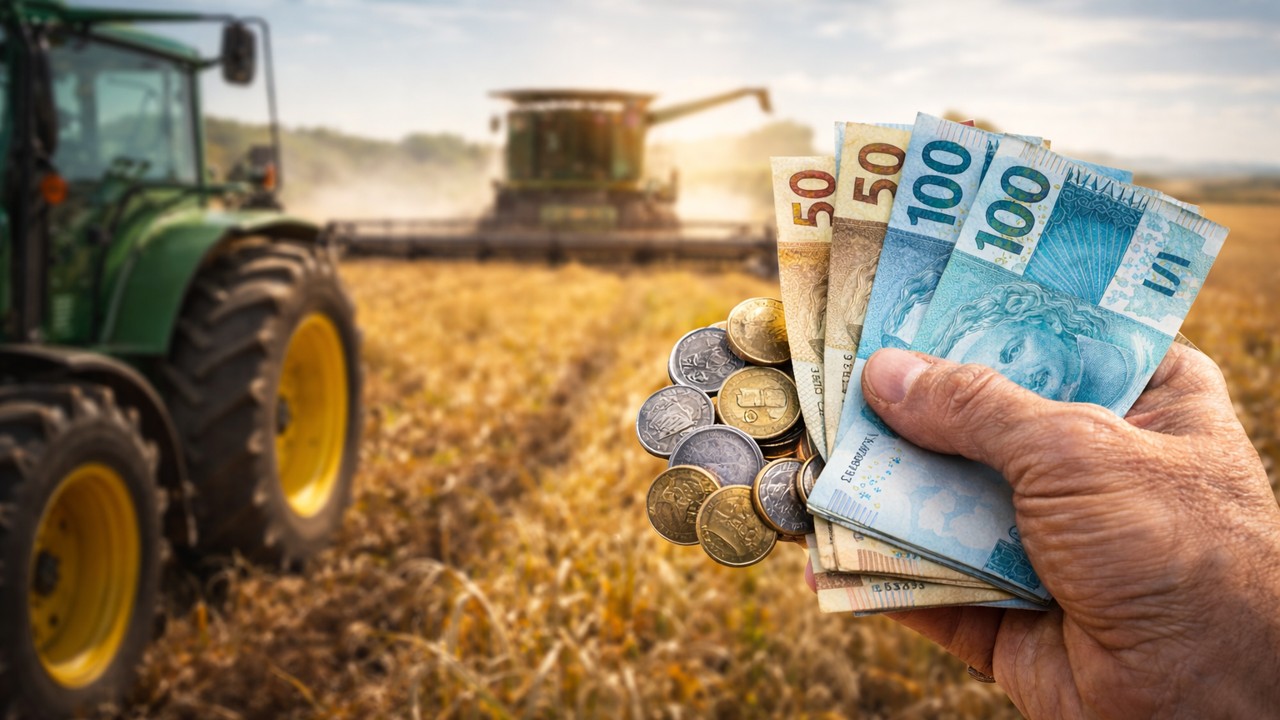
While Companies Pay More Than 18% A Year, Producers Access Lines Starting At 3%
In a Brazil marked by expensive credit and high financial costs, rural producers still find rural credit to be one of the most accessible ways to finance production and investment. Even with recent adjustments in economic policies, the lines aimed at agribusiness continue to offer rates significantly lower than those practiced in urban business credit.
While companies outside the field face annual interest rates that easily exceed 18%, rural producers can secure financing with costs starting at 3% per year, depending on the classification and purpose of the funds. This difference helps explain why rural credit remains a key component in the expansion of national agricultural production.
Why Does Rural Credit Cost Less?
The explanation lies in the strategic weight of agribusiness for the country. The sector sustains a significant part of the GDP, exports, and food security, justifying specific financial incentive policies. Part of the interest is subsidized by the government, reducing the final cost for producers.
-
“No one will make us change the Pix,” says Lula after the US report.

-
Lula responds directly to Trump and says that Pix is from Brazil and will not change under pressure from anyone, after a report from the United States pointed out the Brazilian payment system as an American trade barrier.

-
Amazon has just announced a new fee on all deliveries, and your online purchases will become more expensive starting April 17, including for those buying from the United States here in Brazil.

-
He sold his share for R$ 4 thousand, saw the company become a giant worth R$ 19 trillion, and missed the opportunity of a lifetime.


Moreover, the production cycle itself acts as a risk mitigator. Crops, livestock, and future contracts provide revenue predictability, allowing financial institutions to work with lower rates.

How Much Does The Producer Really Pay In Interest?
In practice, the cost of credit varies according to the size of the producer and the type of operation. Here’s how this translates into real numbers.
Pronaf: Accessible Credit For Family Farming
Targeting small producers, Pronaf has the lowest rates in the system.
- Average Interest: between 3% and 6% per year
- Simulation: A financing of R$ 100,000 generates an annual interest cost that can range from R$ 3,000 to R$ 6,000.
This funding is typically used for basic crop financing, ensuring capital to navigate the production cycle.
Pronamp: Balance Between Cost And Volume
Aimed at medium-sized producers, Pronamp combines higher amounts with still controlled interest.
- Average Interest: between 7% and 8% per year
- Simulation: In a credit of R$ 300,000, the annual interest ranges between R$ 21,000 and R$ 24,000.
It is one of the most commonly used lines in grain cultures and more intensive production systems.
Rural Credit Outside Official Programs
Large producers who do not fit into subsidized programs still enjoy competitive rates.
- Average Interest: from 9% to 12% per year
- Simulation: A financing of R$ 1 million can result in annual interest between R$ 90,000 and R$ 120,000.
Even at this level, the cost is still usually lower than traditional corporate lines.
Rural Investment: Credit That Pays Off With Productivity
When the goal is to invest in infrastructure, rural credit becomes even more strategic. Machinery, storage, irrigation, and technology increase efficiency and reduce costs in the medium term.
- Average Rates: between 6% and 10% per year
- Terms: up to 10 years, with initial grace periods
- Simulation: Equipment financed for R$ 500,000 can generate annual interest between R$ 30,000 and R$ 50,000, with installments adjusted to the property’s cash flow.
In many cases, the productivity gain covers a significant part of the annual installment.
Green Lines Gain Strength In The Field
Projects linked to sustainability have been gaining space and come with differentiated conditions.
- Average Interest: between 5% and 7% per year
- Simulation: A solar energy system costing R$ 200,000 may incur annual financial costs between R$ 10,000 and R$ 14,000.
With recurring savings on the electricity bill, the return tends to be quick.
Rural Credit Versus Urban Credit
The cost difference is significant. While urban business lines frequently operate above 18% per year, rural credit can cost up to half of that, preserving the producer’s margin and cash flow.
This scenario explains why many producers choose to finance part of the operation even when they have their own resources, using credit as a growth lever.

Planning Is What Defines Success
Before contracting, it is essential to analyze:
- payment capacity;
- return period of the activity;
- climatic and market risks;
- impact of financing on cash flow.
When well-structured, rural credit ceases to be a cost and becomes an instrument of expansion.








-

Uma pessoa reagiu a isso.