





 Portuguese
  English
  Spanish
  5 min of reading
  0 comments


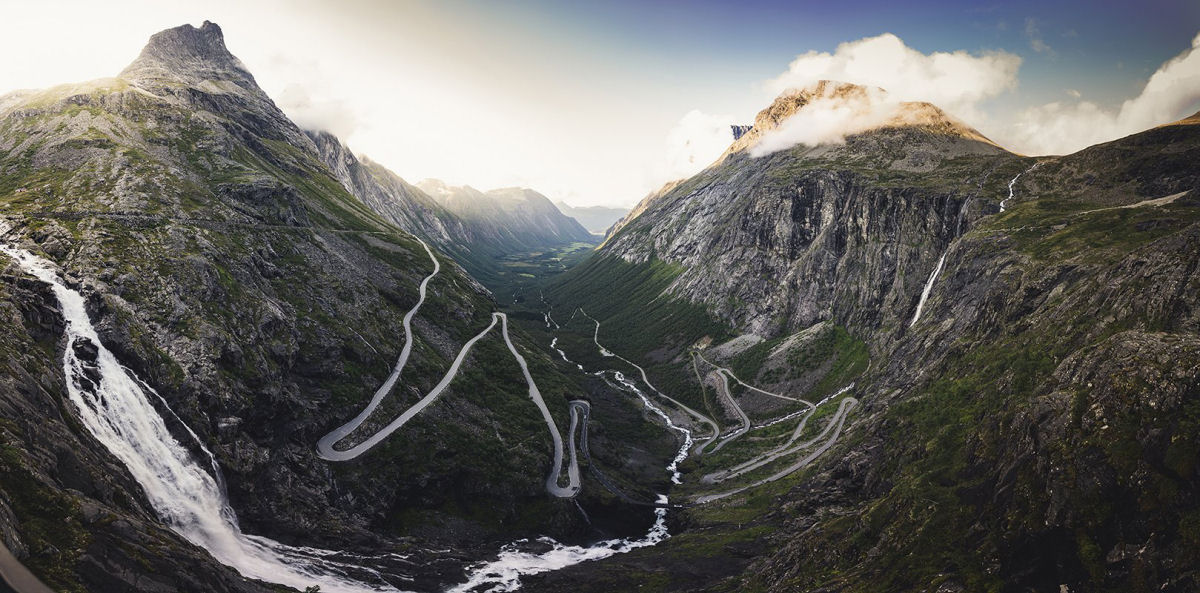
With 11 Hairpin Turns and 4.7 Km Over Cliffs, Trollstigen Is One of the Most Impressive and Challenging Roads in Norway.
In the heart of the mountains of Møre og Romsdal county, in western Norway, there is a road that defies geography, climate, and drivers. In just 4.7 kilometers, the road plunges down the slopes of a cliff, weaves through 11 hairpin turns, maintains a constant incline of 10%, and runs alongside waterfalls that tear through the valley during spring. The name of this stretch is Trollstigen, and it has become not just a tourist attraction but a test of skill, attention, and absolute respect for the Norwegian mountains.
The feeling of descending or climbing this stone staircase — the literal meaning of “Trollstigen” — is the precise mix of fascination and caution. Each narrow turn, just centimeters from the drop, reminds you that this road was not built to be ordinary. It was constructed to reach the improbable.
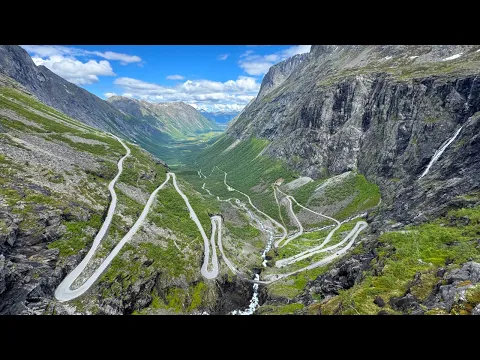

Norway opened the highway in 1936, after years of construction on steep rocks, severe weather, and sections that could only be excavated for a few months of the year. The result was a road that became a symbol of Norwegian engineering and a postcard for the country.
-
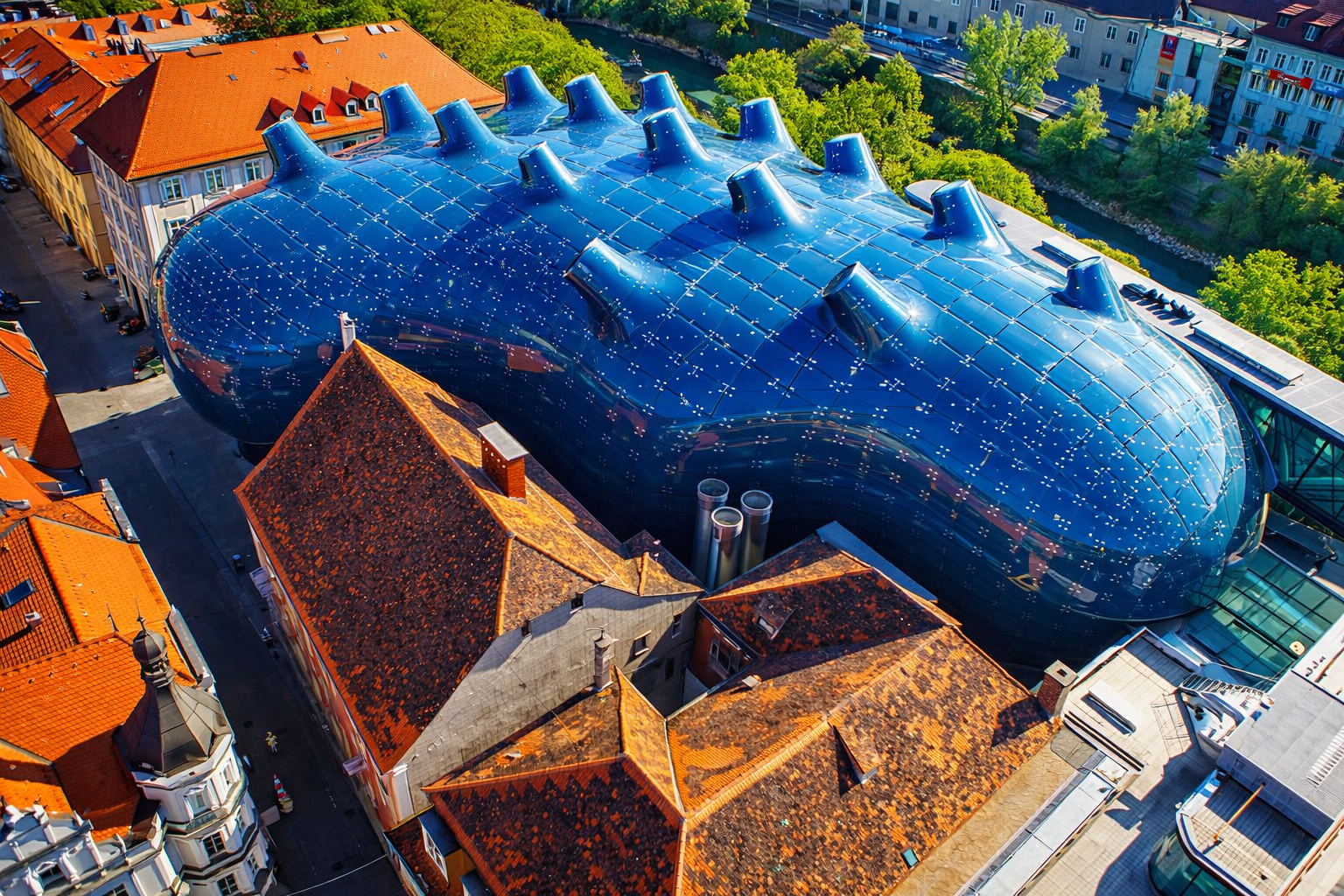
With 1,066 acrylic panels, the building known as the friendly alien is supported by a steel skeleton, has a façade that functions as a giant screen, and impresses the world without any internal columns.
-
Scientists warn that a comet about 1 km in size that has started to release gases may actually change direction in space. It was spotted by NASA and surprises with potential impacts near Earth.

-
These living root bridges and ladders are over 700 years old and help indigenous people survive in one of the rainiest regions in the world.

-
From sertanejo star to international investor: Ana Castela invests millions in a mansion in the USA, creates a themed accommodation in Orlando, and shows that the “boiadeira” also wants to grow away from the stage.

Even so, the road remains open only between May and October because, outside this period, ice turns every turn into an extreme risk. In winter, avalanches make it impossible to keep the road safe, forcing its annual closure.
A Descent That Requires Calm, Control, and Perfect Reading of the Road
Unlike modern roads, where the generous width allows for overtaking, Trollstigen demands respect for rules that arose out of necessity: do not accelerate, do not brake abruptly, do not underestimate the road.
The narrowest sections were designed in the early 20th century, when trucks were smaller and vehicle flow was minimal. Today, cars and vans share the same meters that were carved for much more compact vehicles.
Each hairpin turn rests on stone walls built stone by stone, many of which have been preserved since the original construction. The average width of the track is just over 4 meters, enough for two cars to pass, but too narrow for any daring maneuver.
Drivers need to anticipate the oncoming vehicle based on the incline of the track, the shadow of the mountains, and the points where sudden fog reduces visibility to just a few meters.
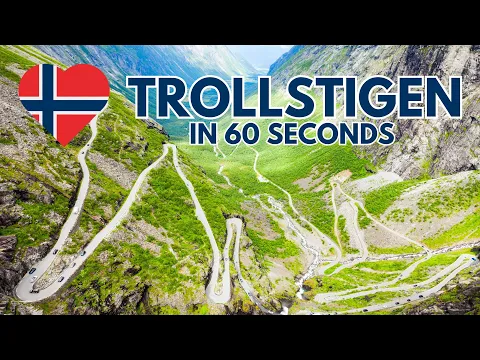
The road follows the waterfalls of Stigfossen, one of the most impressive waterfalls in the country, with its 320 meters of height. It is impossible to traverse the route without seeing the cold mist that rises from the fall and creates a natural curtain over some turns.
On humid days, this mist can make the asphalt slippery, requiring extra caution from those passing through the stretch.
A Route Shaped by Gorges, Ice, and Norwegian Geology
Trollstigen is the result of a harsh territory. The deep valley that supports the road was carved by glaciers that receded thousands of years ago, leaving exposed rocks, steep cliffs, and formations that remain damp throughout the year. Therefore, maintaining the pavement requires constant attention from the Norwegian government, especially after the snow melts at the beginning of each spring.
And even with all the rigidity of engineering, it is still nature that dictates the pace. In some years, the road opens only in June because large blocks of ice insist on remaining in the upper turns. In others, the road needs to be closed for several hours due to the risk of avalanches — even post-summer, when heavy rains increase soil instability.

Even so, millions of visitors travel the road every year. Norway has transformed Trollstigen into part of the “Geiranger–Trollstigen National Tourist Route”, which connects valleys, mountains, and fjords.
Corten steel and glass viewpoints have been installed along the top of the ridge so that visitors can observe the entire descent — a winding line drawn across the mountain, resembling a metallic serpent sliding between the rocks.
The Challenge for Drivers: Controlling the Vehicle on a Continuous 10% Descent
The incline of the road is one of the greatest challenges of the route. The 10% slope for nearly 5 kilometers requires drivers to use low gears, control their speed, and avoid overheating the brakes, a common mistake among those unfamiliar with alpine highways.
Larger trucks face even more complications. Although they are allowed, they need to make turns with millimeter precision, many of them done at the limit of the available space.
In some situations, drivers must wait in small pullouts until traffic organizes to allow two large vehicles to pass at the same time.

At the top of the mountain, the wind can reach speeds sufficient to shift lighter vehicles. It is not uncommon for authorities to recommend that drivers wait in nearby parking lots when gusts over 70 km/h are registered.
In Trollstigen, every stage of the journey demands total attention. And perhaps that is why it has become one of the most symbolic roads in Norway: a stretch where landscape and danger balance each other in an almost cinematic way.
A Norwegian Heritage That Blends Geology, Engineering, and Nature
As it approaches almost a century of existence, Trollstigen remains a reference work.
Not only for the spectacular descent but for its capacity to withstand an ever-changing environment.
It is a road that exists only because Norwegian engineering agreed to work at the limits: limits of space, climate, and altitude.
And it is also a reminder that some highways are not made to connect cities, but to connect people to the very geography of the planet. Trollstigen is one of them. Each turn, each stone wall, each meter of the track reveals the delicate relationship between human intervention and the wild territory of Northern Europe.
The road is not just a path. It is an experience. It is a story written in rock, snow, and vertigo.







-

-

-

-

-

16 pessoas reagiram a isso.