





 Portuguese
  English
  Spanish
  4 min of reading
  0 comments


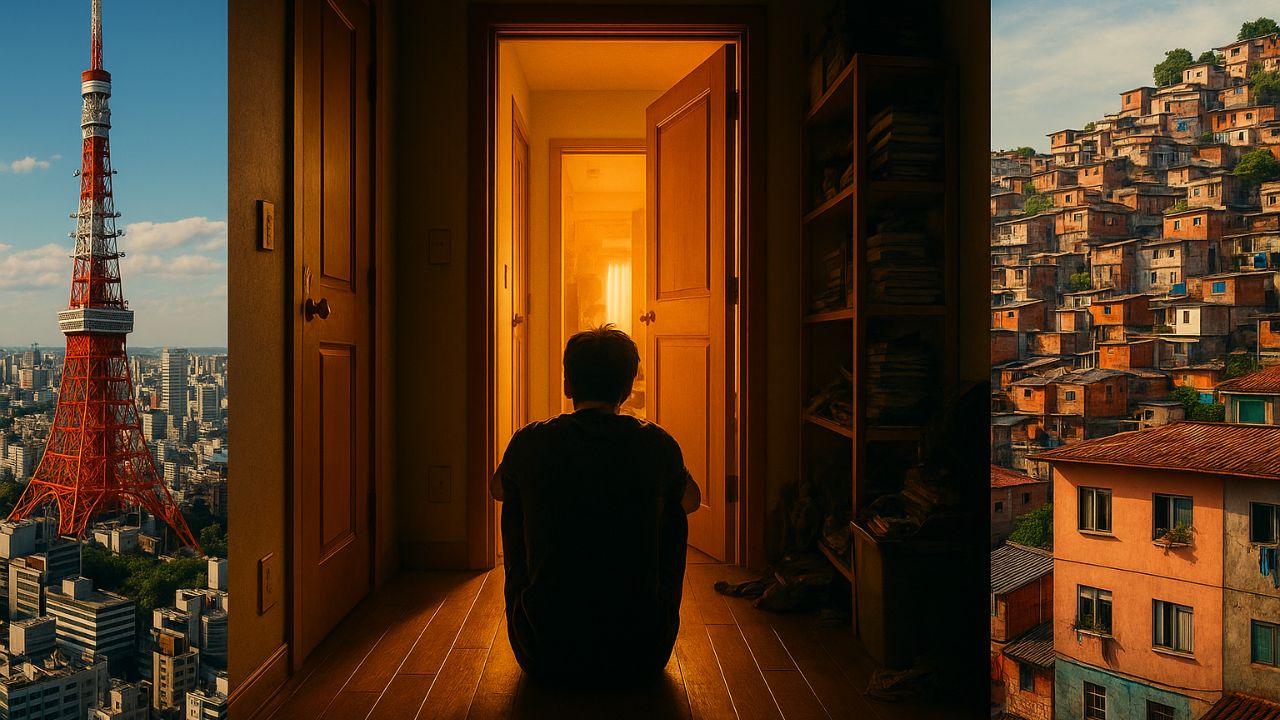
From a Crisis in Japan to Cases in Brazil, the Social Phenomenon Hikikomori Challenges Psychiatry by Confined Millions of People in Deep and Painful Isolation
The social phenomenon Hikikomori represents one of the most complex and disturbing psychosocial challenges of contemporary times. The term derives from the combination of the Japanese verbs hiki (to retreat) and komoru (to shut oneself in) and describes a condition of acute isolation that goes far beyond the stereotypical image of technology-addicted teenagers. It involves a refusal to participate in society that can last for decades, challenging the traditional boundaries between clinical psychiatry and sociology. Although it gained visibility during Japan’s “Lost Decade,” experts point out that it is not a cultural exclusivity, but a syndrome linked to liquid modernity and its universal pressures.
The emergence of the social phenomenon Hikikomori cannot be dissociated from the collapse of narratives of industrial success. Initially identified by psychiatrist Tamaki Saito in the late 1990s, the issue was seen as “endless adolescence.” However, research has evolved to understand that we are dealing with a paralysis of development. Unlike classical social phobia, where there is fear of judgment, many of these individuals experience an existential anomie or exhaustion, remaining in a state of dependence that requires coordinated and urgent intervention.
The Biology and Family Dynamics Behind Isolation
The search for a single cause has proven ineffective, as the current consensus points to a multifactorial origin. In the Japanese context, concepts such as Sekentei (social reputation) and Haji (shame) pressure the individual to maintain a facade of success. When a deviation from these norms occurs, such as unemployment, the individual physically withdraws to avoid exposing their shame. This process is often facilitated by the family dynamic known as Amae, an expectation of indulgence where overprotective parents provide basic needs without demanding reciprocity, creating the so-called Hikikomori System.
-
A Japanese mason transforms raw granite into small cups and handcrafted utensils, collects giant stones, cuts with precision, and impresses with detailed manufacturing and finishing.
-
With 1,066 acrylic panels, the building known as the friendly alien is supported by a steel skeleton, has a façade that functions as a giant screen, and impresses the world without any internal columns.
-
Scientists warn that a comet about 1 km in size that has started to release gases may actually change direction in space. It was spotted by NASA and surprises with potential impacts near Earth.

-
These living root bridges and ladders are over 700 years old and help indigenous people survive in one of the rainiest regions in the world.


In addition to social factors, modern science has begun to uncover the biological roots of the problem. Research from Kyushu University identified measurable physiological changes in the blood of patients. Altered levels of long-chain acylcarnitines and inflammatory markers were found, suggesting that prolonged isolation may induce or be aggravated by a state of systemic inflammation. This creates a vicious biological cycle that affects motivation and neuroplasticity, making recovery much more difficult than just a matter of “willpower.”
The Drama of Aging and the 8050 Problem
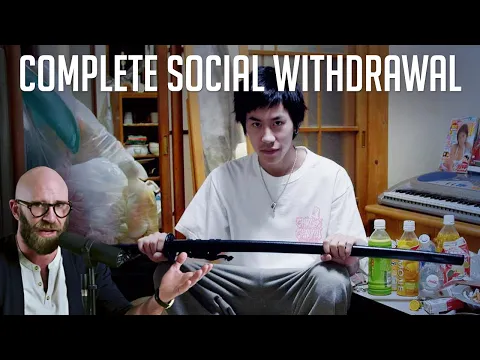

What began as a youth issue has transformed into an intergenerational tragedy known as the “8050 Problem.” This term refers to parents in their 80s who still support reclusive children in their 50s. Statistics from the Japanese government indicate that the number of middle-aged recluses has already surpassed that of young people. With the death of parents and the collapse of the financial safety net, many cases end catastrophically, with reports of elderly individuals found dead alongside children who, unable to ask for help, subsequently die from starvation.
Another crucial point is the gender invisibility within the social phenomenon Hikikomori. Although 80% of registered cases are male, there is believed to be a massive underreporting of women. The culture often camouflages female isolation under the label of “domestic help” or preparation for marriage. These women may face distinct pressures, linked to relational traumas, and require therapeutic approaches that consider these complex gender dynamics.
The Situation in Brazil and the Effect of the Pandemic
The expansion of the problem to countries like Brazil confirms that this is a pathology of modern society, not just a Japanese peculiarity. In the Brazilian context, isolation is doubly stigmatizing, as the culture values extroversion and human warmth. It is essential to distinguish the social phenomenon Hikikomori from the “Kangaroo Generation.” While the Brazilian kangaroo youth delays leaving home for comfort or financial reasons, they maintain an active social life. In contrast, the hikikomori exhibits severe social aversion. Urban violence in large Brazilian cities also acts as an aggravating factor, providing a rational justification for confinement.
The COVID-19 pandemic served as a global turning point, legitimizing the behavior of staying home. For many who were already in a “pre-hikikomori” phase, the lockdown removed social pressure, validating the reclusive lifestyle. However, reopening generated the “Cave Syndrome,” making it difficult to detect new cases and deepening the chasm between the room and the outside world for those who were already vulnerable.
Innovative Treatment Strategies
Faced with patients’ refusal to seek help, controversial and innovative approaches have emerged. In Japan, there are the “Rental Sisters,” social workers who visit the homes of recluses to build gradual bonds, ranging from speaking through the door to persuading them to go out. Despite reports of success in reintegration, the method faces ethical criticism due to the lack of regulation and high cost.
In the clinical realm, a multimodal approach has proven effective. The CRAFT protocol trains family members to alter communication patterns, focusing on positive reinforcement and non-confrontation. Furthermore, technology is being repurposed for rehabilitation. Augmented Reality games and Virtual Reality (VR) platforms are used to train social skills in controlled environments, serving as a safe bridge for individuals affected by the social phenomenon Hikikomori to eventually face the real world again.
Have you ever known someone who lived in such extreme isolation or noticed similar behaviors increasing after the pandemic?






-

-

3 pessoas reagiram a isso.