





 Portuguese
  English
  Spanish
 6 min of reading
  0 comments


In Itapororoca, In the Zona da Mata of Paraíba, Water Remains Free for the Population, But the Spring That Sustained the City for Decades Is Under Pressure. The Advancement of the Water Crisis, Urban Growth, and the New Sanitation Framework Raise the Question of How Long the Free Model Will Be Sustainable.
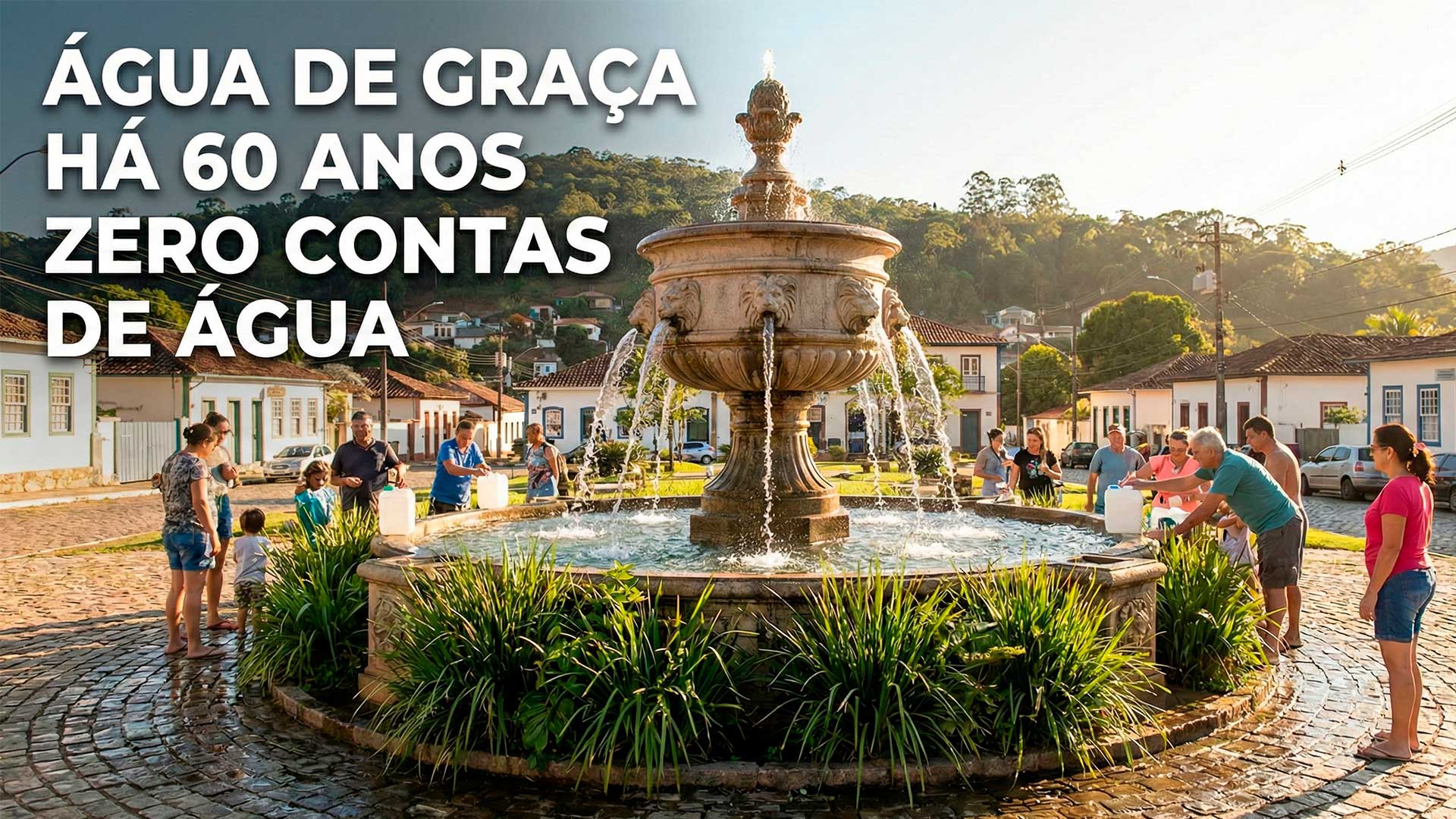
The small Itapororoca, on the north coast of Paraíba, is still known as the city where residents have not paid a water bill since the 1960s. Urban supply continues to be based on a protected spring in the area of Parque da Nascença, which carries water by gravity to the distribution tanks.
The model is considered a historical right of the itapororoquenses and has become almost a symbol of local identity. Free water is guaranteed by municipal legislation and reinforced in plans and technical studies on water supply.
In recent years, however, the mark of “free water” has started to coexist with a growing problem. Frequent rationing, reduced flow, and doubts about water quality have brought the term “water crisis” into the city’s everyday vocabulary.
-
Finland, the happiest country in the world, wants to hire 140,000 technology professionals and is eyeing Brazilians: visas are issued in just two weeks and salaries with a 37-hour workweek are surprising.

-
Mr. Mário reveals the technique of the caipira papaya: he cuts the fruit in half, discards the seeds from the tip, and plants the ones from the back to increase the chance of a productive female tree.

-
Few remember, but the submarine that disappeared in 1968 with 52 crew members was found after 51 years at the bottom of the sea at more than 2,000 meters, intriguing the entire world.

-
With 1,200 tons suspended, the Japan mega-structure in a grid shape with a floating sphere from Fuji TV features two 25-story towers connected by elevated walkways, titanium panels, and impresses the world with its ability to reduce wind impact.


At the same time, the advancement of the new legal framework for sanitation and the creation of micro-regions for water and sewage in the state have reignited the debate about the definitive entry of the Companhia de Água e Esgotos da Paraíba (Cagepa) into local management.
For some residents, this may mean more security. For others, it represents the fear of finally receiving a water bill at the end of the month.
City Grows, Spring Remains at the Center of the System
Itapororoca currently has around 18,300 residents, according to data from the 2022 Census compiled from information from IBGE.
When the free system was conceived, the structure of the spring was designed to serve approximately a thousand families in the urban area.
Today, there are over 5,000 residences just in the urban zone, which directly pressures the available volume in the source, as previous academic studies about the region have indicated.
Recent reports from regional outlets confirm that the model remains the same: water is captured at the spring, flows by gravity to the city, and even supplies the pools of the Parque da Nascença resort, without charging residents directly.
Water Crisis Makes Rationing More Frequent
The combination of population growth, environmental degradation around the spring, and changes in rainfall patterns has been described in studies as a situation of “hydrogeological anomaly”.
In other words, an area with great water recharge potential, but which has become vulnerable due to intensified use.
In practice, this translates into dry faucets in several neighborhoods part of the week and rationing schedules that have become routine for residents. In some areas of the downtown, reports indicate that water comes only once a week, forcing families to monitor the flow’s arrival to fill tanks and reservoirs.
According to academic studies and field surveys, many households have started seeking alternatives such as artesian wells, cisterns supplied by tanker trucks, and buying bottled water.
In a survey conducted last decade, a significant portion of the population already reported consuming bottled water for drinking and using the tap water only for domestic purposes.
Water Quality, Old Plumbing, and Health Risks
Another sensitive point is the quality of the water that reaches homes. Although analyses included in the Municipal Basic Sanitation Plan indicate that the spring meets drinking water standards, the path to the faucet is considered critical.
The system still uses sections of old piping, with asbestos pipes installed when the municipality was founded.
Studies and technical opinions highlight that asbestos-based materials are associated with serious illnesses, including cancer, with prolonged exposure. This concern has already prompted recommendations and actions from regulatory bodies.
In 2016, the Public Ministry of Paraíba filed a civil lawsuit requiring the municipality to ensure improvements in water quality, including proper cleaning of sources and maintenance of water tanks, after inspections pointed out sanitary problems.
Data compiled by the Instituto Água e Saneamento based on the 2022 Census shows that only 52.5 percent of the population of Itapororoca receives potable water through the general distribution network, while almost 29 percent depend on deep or artesian wells, and a smaller portion relies on springs, other sources, or tanker trucks.
These numbers help explain why the rhetoric of “a city rich in water” coexists with the daily experience of many residents who still need to seek the resource outside their homes or pay for alternative solutions, even in a municipality officially exempt from charges.
New Sanitation Framework and Pressure for Regionalization with Cagepa
The situation in Itapororoca needs to be understood within a broader context. With the new legal framework for basic sanitation, approved in 2020, states and municipalities were encouraged to organize service provision through regionalized structures, with goals for universalizing water and sewage access by 2033.
In Paraíba, the state government created the Water and Sewage Micro-regions, including the Coastal Micro-region, of which Itapororoca is a part. These collegiate authorities decide by voting who will be the regional provider and how contracts, targets, and investments will be defined.
In much of the state, Cagepa already operates as the main operator.
According to regional reports, the grant for Cagepa to take over Itapororoca’s supply has already been approved, but there is still no operational contract or announced date for the transition.
Meanwhile, the municipality continues with its own system, facing the water crisis and without official information about tariffs or costs passed on to users in national databases.
Recent reports from the Court of Accounts and state technical documents also indicate that municipalities in the micro-region need to align their local plans with the regional model, which tends to pressure historical arrangements like that of Itapororoca.
Population Divided Between Maintaining Free Water and Ensuring Water Security
Field research conducted by academics in the city shows that the population is divided over the future of the system. Some advocate for the preservation of the spring and the maintenance of the free model, seen as a historical achievement and a relief factor in domestic budgets.
Another portion, however, understands that the entry of Cagepa, with tariff charges, could bring benefits such as more comprehensive water treatment, replacement of old pipes, and greater regularity in supply. For these residents, “water is health,” and paying a monthly bill would be an acceptable price to reduce sanitary risks and rationing.
There are also those who fear a kind of “double charging.” Scholars point out that even today, many residents are already spending on bottled water, private wells, and cisterns.
The perception that water is “free” clashes with the reality of families who spend significant amounts to ensure quality and regularity.
At the same time, state water management agencies discuss environmental recovery actions, such as projects for recovering riparian vegetation around water sources in the region, which may contribute to the safety of the spring but will require investments and coordination between the municipality, the state, and providers.
Do you think it’s worth preserving free water at any cost or accepting to pay a fee in exchange for water security and better sanitation infrastructure? Leave your comment and tell us which side you would take in this dispute that affects wallets, health, and the identity of an entire city.








-

-

-

-

6 pessoas reagiram a isso.