





 Portuguese
  English
  Spanish
  5 min of reading
  0 comments


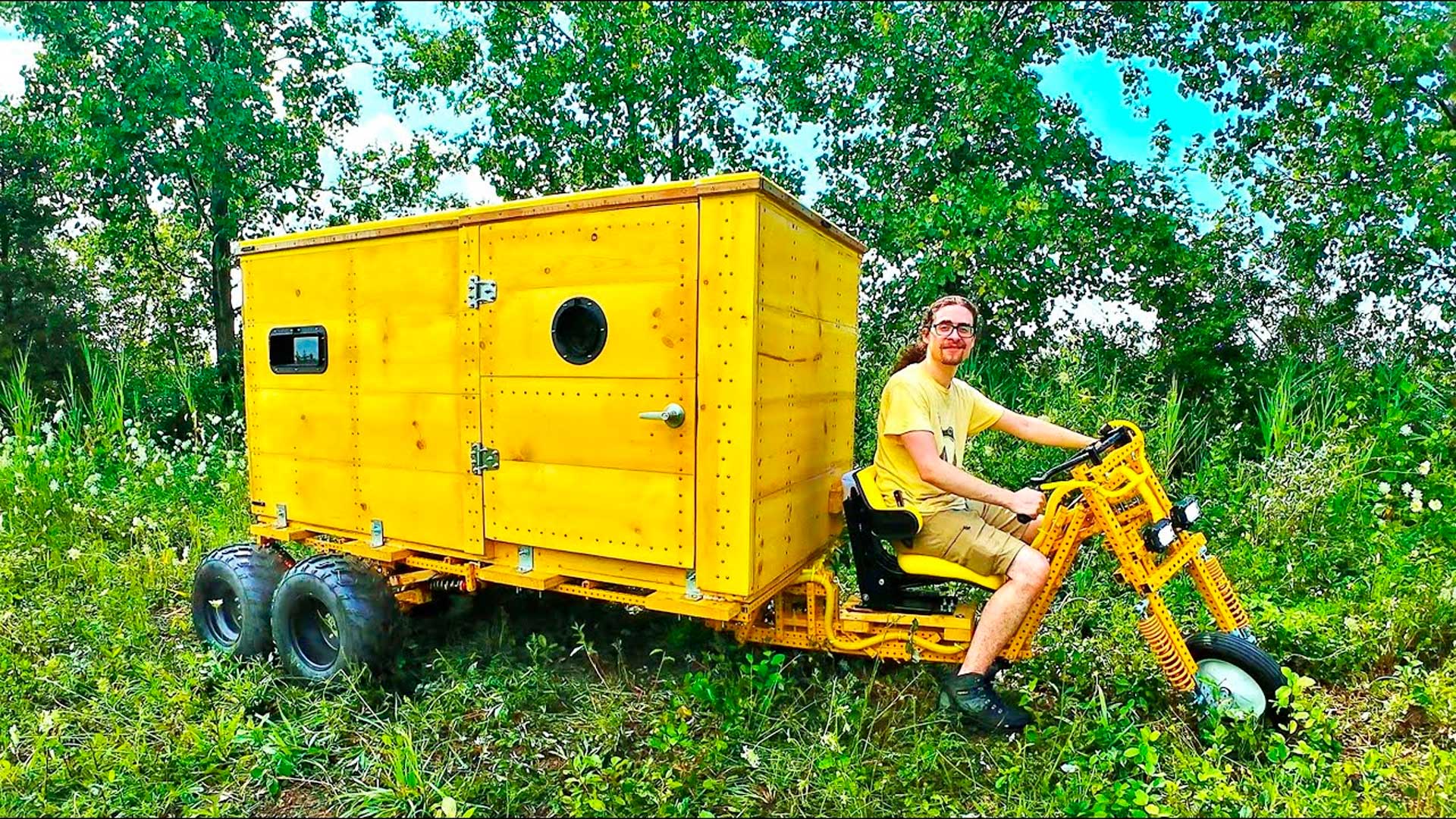
Project Combines Wood, Metal, and 4 Thousand Watts of Power in Fully Functional Homemade Electric Vehicle Tested Under Extreme Conditions During Overnight Camping
A content creator transformed piles of wood and metal tubes into a fully functional camper electric vehicle, documenting each step of the construction in video.
The project, which took approximately three weeks of intensive work, resulted in a wheeled structure capable of transporting one person and all the necessary camping equipment, powered by four 1000W brushless motors.
The construction began with square metal tubes joined by bolts and nuts, forming the base structure of the chassis. The key feature of the project is the propulsion system: four 48-volt electric motors connected on two axles, totaling 4 thousand watts of power.
-
He started running at 66 years old, broke records at 82, and is now a subject of study for having a metabolic age comparable to that of a 20-year-old, in a case that is intriguing scientists and inspiring the world.

-
Oldest tree on the planet reappears after 130 years of searches: Wattieza, 385 million years old, was 10 meters tall and had no leaves or seeds; Gilboa fossils in New York solved the mystery in 2007.

-
A 48-square-meter house assembled in hours with 4,000 bricks made of recycled plastic that does not absorb moisture, has natural thermal insulation, and costs less than 90,000 reais in a complete kit.

-
Luciano Hang revealed that Havan’s air fleet has already accumulated more than 20,000 landings, 10,000 flight hours, and 6 million kilometers traveled, and he says that without the planes, the company would never have grown so quickly.


Each motor had its differential modified through welding to turn them into locked differentials, ensuring better traction.
Robust Electrical System Ensures Autonomy for Off-Grid Adventures

The energy core of the vehicle is a 48V and 100A lithium iron phosphate battery, the same one used in previous projects. According to information from the video, during the journey to the camping location, the system consumed only 8% of the battery charge, demonstrating surprising efficiency considering the total weight of the structure.
The complete electrical installation includes an 800W inverter that converts the battery’s 48 volts into 120 volts AC, allowing the use of conventional household appliances. A DC-DC converter transforms part of the energy into 12 volts to power the internal and external lighting system.
The man installed individual brushless controllers for each motor, all protected under the chassis with yellow divided tubing.
For control, the system uses a trigger-type throttle mounted on the handlebars, along with switches to activate the axles separately or together. The hydraulic ATV-type brakes were adapted to the front steering system, providing sufficient braking power for the vehicle’s weight.
Adaptable Suspension and Reinforced Structure After Initial Challenges
The project underwent significant modifications during construction. Initially, the creator planned to use the front structure of a scooter as the steering system, reinforcing it with cement to increase strength.
However, during testing, the piece cracked and broke completely, compromising safety.
The solution came through the manufacture of a new front suspension using square tubes of different thicknesses that slide into each other. Side shock absorbers were installed to provide controlled vertical movement. The young man described this forced change as positive, resulting in a more robust and reliable system.
Eight heavy-duty shock absorbers, each with a capacity of 450 kilograms, connect the upper cabin to the lower chassis. Four additional shock absorbers were installed later to eliminate unwanted lateral movements, keeping the vehicle stable even on uneven terrain.
Wood Cabin Offers Protection Against the Elements and Basic Comfort
The habitable structure was built with 2×4 inch beams joined by L-shaped metal brackets, creating a sturdy box. The double floor combines 2×12 inch boards on the lower layer, fixed directly to the metal chassis, with 1×12 inch boards on the upper surface, all treated with marine wood sealer for moisture protection.
The walls and roof followed the same wooden construction pattern, with porthole-style windows installed on the sides and a circular window on the front door. The roof received a waterproof membrane made of fire-resistant plastic material, secured with stainless steel clamps and cedar wood strips to ensure complete waterproofing.
The interior comfortably accommodates a mattress, camping gear, a suspended storage net, and various hooks for organization.
12-volt LED lights with individual switches illuminate the interior space, while the tractor-type seat with its own suspension provides comfort during driving.
Extreme Test Under Tropical Storm Proves Project Efficiency
During the documented camping adventure, the vehicle faced adverse weather conditions. A heavy storm hit the location shortly after arrival, with heavy rains testing the waterproofing of the structure. According to the creator’s report, not a drop of water penetrated inside the cabin.
An incident during the journey tested the maintenance capability in the field: the tubeless front tire slipped off the rim during a reverse maneuver on wet terrain. The man had to walk back to his support vehicle to get a hydraulic jack and a spare tire, taking about two hours to resolve the issue.
During the night, the electrical system successfully powered a 700-watt electric kettle to cook tortellini with pesto and peppers.
The total consumption to prepare the meal was only 6% of the battery capacity, proving the system’s autonomy for prolonged off-grid use.
Night Driving with Powerful Lighting System
The most remarkable experience of the adventure was night driving through the trail back. The vehicle is equipped with high-power LED headlights in the front and rear, controlled by a switch on the handlebars.
According to the creator, the headlights illuminated the path ahead with surprising intensity, allowing safe speeds even in total darkness.
Night driving revealed an interesting aspect: swarms of insects were attracted to the lights, creating an impressive visual effect as the vehicle passed through wooded areas. The man described the experience as “extremely fun” and mentioned he smiled throughout the journey.
According to brushless motors used in electric vehicles, experts indicate that this technology offers efficiency greater than 90% compared to conventional brushed motors. The absence of friction between moving parts results in longer life and lower maintenance needs, making it ideal for DIY projects.
Lessons Learned and Future Plans for Improvements
Upon returning to base, the creator discovered a new structural problem: the excessive weight had warped the metal tubes of the rear chassis, creating a misalignment of approximately 2.5 to 4 centimeters between the upper and lower sections. This indicates that additional reinforcements will be needed to better distribute the load.
The project consumed significant resources, including 192 screws just to secure the floor, as well as hundreds of other fastening components throughout the structure.
The creator used yellow paint specifically for agricultural equipment on all metal parts, providing protection against corrosion and a striking aesthetic.
Would you build your own homemade electric vehicle or prefer to buy a ready-made model? Considering that electric mobility is on the rise and that DIY projects like this demonstrate the technical feasibility of alternative solutions, what would be your biggest concern: safety, cost of components, or complexity of assembly? Share your thoughts in the comments.









-

-

-

-

-

-

22 pessoas reagiram a isso.