





 Portuguese
  English
  Spanish
  6 min of reading
  0 comments


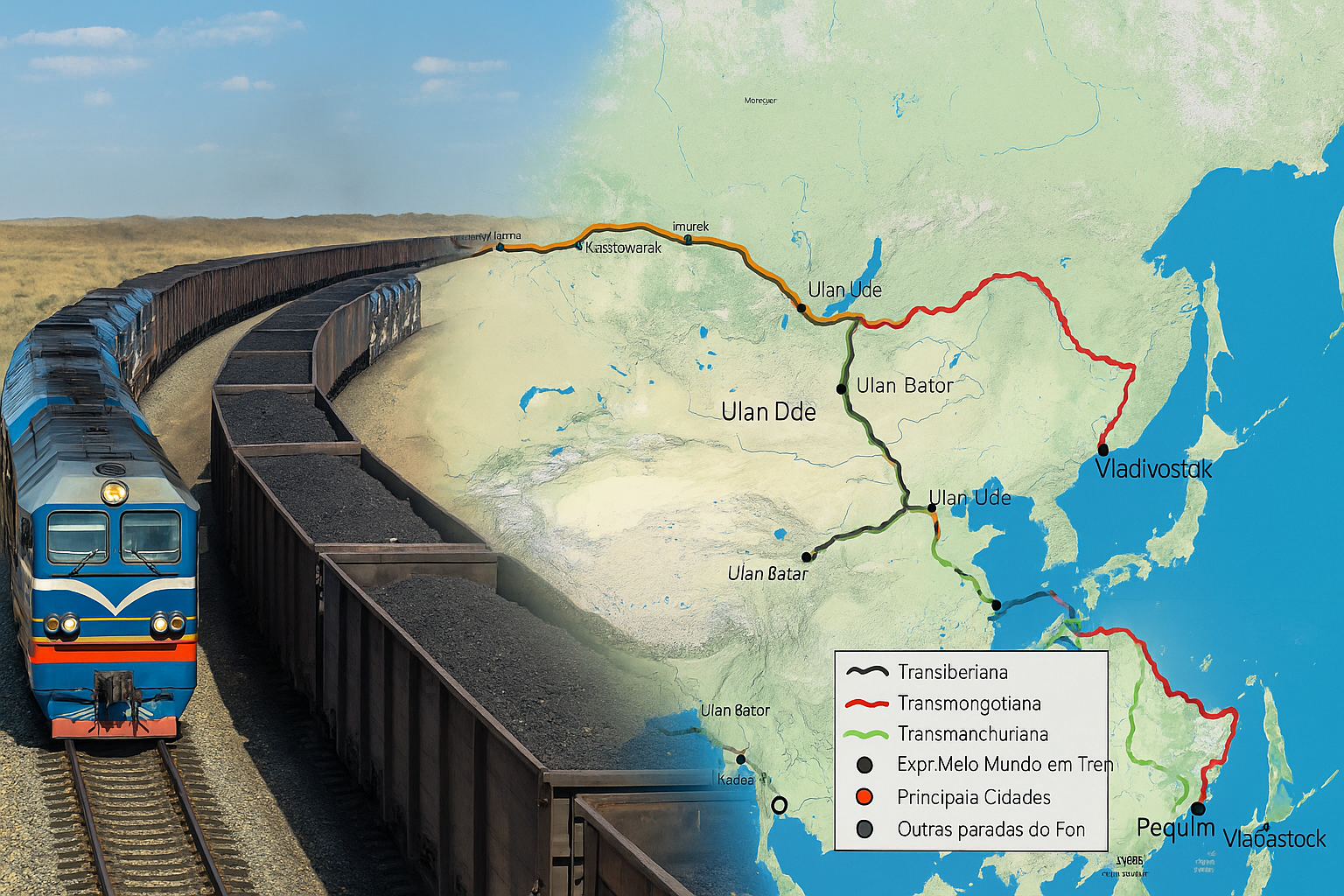
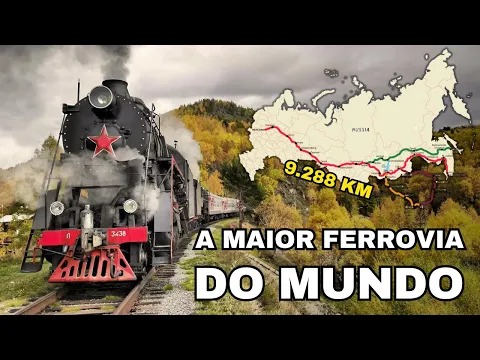
The Trans-Siberian is the longest railway in the world, with 9,289 km of extension. Connecting Moscow to Asia, it crosses 87 cities and 12 regions on one of the most epic and longest train journeys on the planet.
Over more than 9,000 kilometers of continuous tracks, the Trans-Siberian stands as a monumental engineering feat and a symbol of continental integration. Built to connect the Russian capital, Moscow, to the eastern port of Vladivostok, the railway traverses Eurasia, linking cities, cultures, and borders through the longest train route in the world. More than just impressive numbers — 12 administrative regions, 87 cities, 8 time zones, and 9,289 km in length — the longest railway in the world is also a geopolitical, historical, economic, and tourist landmark. Today, you will understand why the Trans-Siberian occupies a unique place in the global railway landscape.
How the Trans-Siberian Became the Longest Railway in the World
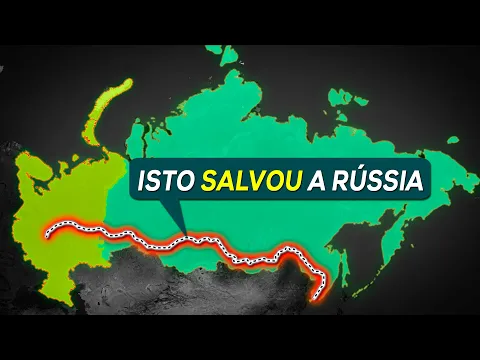

The Trans-Siberian Railway was born out of a strategic need for the Russian Empire at the end of the 19th century. In a country of continental dimensions, with vast uninhabited areas far from power centers, it was urgent to create a network that ensured territorial cohesion, resource circulation, and military defense. Construction officially began in 1891 by order of Tsar Alexander III and took 25 years to complete.
Official data from Russian Railways indicates that the cost of the project exceeded 350 million rubles in gold, with labor from more than 84,000 workers, including prisoners and peasants.
ARTICLE CONTINUES BELOWSee also
He started running at 66 years old, broke records at 82, and is now a subject of study for having a metabolic age comparable to that of a 20-year-old, in a case that is intriguing scientists and inspiring the world.

Oldest tree on the planet reappears after 130 years of searches: Wattieza, 385 million years old, was 10 meters tall and had no leaves or seeds; Gilboa fossils in New York solved the mystery in 2007.

A 48-square-meter house assembled in hours with 4,000 bricks made of recycled plastic that does not absorb moisture, has natural thermal insulation, and costs less than 90,000 reais in a complete kit.

Luciano Hang revealed that Havan’s air fleet has already accumulated more than 20,000 landings, 10,000 flight hours, and 6 million kilometers traveled, and he says that without the planes, the company would never have grown so quickly.

Completed in 1916, the Trans-Siberian became the longest continuous railway segment on the planet, linking Western Europe to Eastern Asia. Although there are other longer connections between countries (such as Moscow-Pyongyang, with 10,267 km), none of them operate under a single national and linear railway network, as happens with the Trans-Siberian within Russian territory.

The Geography of the Longest Railway in the World
The longest railway in the world starts in Moscow, in the heart of European Russia, and ends in Vladivostok, a port city in the Russian Far East, near the Sea of Japan. During the journey, it crosses:
- 12 oblasts (administrative regions)
- 87 Russian cities
- 16 large rivers (including the Volga, Ob, and Amur)
- 8 different time zones
In some sections, the railway touches borders with China, Mongolia, and North Korea, allowing access to these countries via alternative routes integrated into the network.
The Three Main Routes of the Trans-Siberian
The Trans-Siberian is more than just a line: it offers three main routes, each with distinct experiences. They are:
Classic Route: Moscow – Vladivostok
- Distance: 9,289 km
- Travel Time: 6 to 7 days without stops
- Highlights: Siberian boreal forests, Lake Baikal, Ural Mountains
This is the original and 100% Russian route, ideal for those who wish to cross Eurasia without leaving the territory of the Russian Federation.
Trans-Mongolian Route: Moscow – Beijing (via Mongolia)
- Distance: 7,621 km
- Countries: Russia, Mongolia, China
- Highlights: Ulaanbaatar, Gobi Desert, Great Wall of China
This option follows the Ulan-Ude line and crosses into Mongolia until reaching the capital of China.
Trans-Manchurian Route: Moscow – Beijing (via Manchuria)
- Distance: 8,986 km
- Countries: Russia and China
- Highlights: Harbin, Imperial Beijing
Here, the train avoids Mongolia, passing through the Chinese province of Manchuria before reaching Beijing.
Onboard the Longest Train Route in the World: Types of Trains and Experiences
The Trans-Siberian offers experiences for all budgets and profiles. The trains are classified into regular (regional and express), tourist, and luxury categories.
Luxury Tourist Trains
Golden Eagle
- Operated by British
- Suites with private bathrooms, panoramic windows, bar, and live music
- Travels through Russia, Central Asia, and China
Zarengold
- Inspired by the luxury of the tsars
- Cabins of various categories, European and Asian menu
- Route Moscow–Beijing via Mongolia
Imperial Russia
- 5-star hotel train with cultural stops
- Imperial era decoration
- Ideal for historical immersion
Regular Trains
Operated by Russian Railways, they are more affordable and authentic, used by thousands of Russians daily. They offer:
- 1st, 2nd, and 3rd class cabins
- Carriages with bunks
- Simple meals and local interaction
Technical and Operational Aspects
- Track Gauge: 1,520 mm (Russian gauge)
- Average Speed: 60 to 90 km/h (may vary depending on the train)
- Travel Time: up to 30 days with stops; 6 to 7 days direct
- Extreme Temperature: from -50 °C in Siberia to +35 °C in Asian summer
The entire railway is electrified and operated by modern locomotives with digital monitoring, including Wi-Fi signal and satellite control, depending on the service contracted.
The Economic and Logistical Impact of the Trans-Siberian
The longest railway in the world is a strategic pillar of the Russian economy and Euro-Asian logistics. Among its main impacts:
Cargo Transport
- Transports coal, gas, timber, grains, and ores from Siberia to Pacific ports.
- In 2023, the transported cargo exceeded 120 million tons, according to data from Russian Railways.
Silk Road Integration
- The Trans-Siberian is an integral part of the logistical corridors of the Belt and Road of China.
- Reduces delivery time between Asia and Europe to up to 15 days, compared to 45 by sea.
International Tourism
- Attracts more than 400,000 tourists/year, according to the Russian Ministry of Tourism.
- Generates local jobs and stimulates the economy of small towns along the line.
The Trans-Siberian as a Cultural and Political Heritage
Historical Legacy
The railway was vital for the Soviet industrialization, troop movement during World War II, and for controlling Siberia.
Culture and Literature
It has been immortalized by authors such as Anton Chekhov, Tolstoy, and Blaise Cendrars. It also inspired films like Transsiberian and documentaries from the BBC.
Geopolitics
Controlling this railway means controlling the intercontinental flow of goods, energy, and influence. It is a strategic asset in the balance of Euro-Asian power.
The Longest Railway in the World and the Future
With investments in modern logistical corridors, the Russian government aims to transform the Trans-Siberian into an alternative to the Suez Canal. The expansion of connections with China and Central Asian countries is strategic to reduce dependence on international maritime navigation.
Additionally, there are plans for:
- High-speed trains on selected sections (such as Moscow–Yekaterinburg)
- Station modernization focusing on tourism
- Logistical digitization and use of AI for cargo management
What If Brazil Had Its Own “Trans-Siberian”?
Despite its continental size, Brazil still lacks a railway that links the territory in a continuous and strategic way like the Trans-Siberian.
Projects like the Northern-Southern Railway, Grain Railway, and New Transnordestina are moving in this direction but face decades of political and logistical hurdles. Experts argue that, with coordinated public-private investment, it would be possible to create a railway network connecting:
- Manaus to the Port of Santos
- Recife to the Midwest
- South to North via BR-163 on tracks
The lesson from the Trans-Siberian shows that a strategic railway integrates the territory, reduces inequalities, and boosts development.
The Trans-Siberian is much more than the longest railway in the world. It is the backbone of Russia, a bridge between Europe and Asia, a monument to engineering, and a living testament to history.
Whether for transporting grains, soldiers, tourists, or dreams, its tracks remain active more than 100 years later. And as the world rethinks its logistics in light of wars, climate change, and trade disputes, the longest railway in the world shows that the path on rails can still be the most reliable.








Seja o primeiro a reagir!