





 Portuguese
  English
  Spanish
  4 min of reading
  0 comments


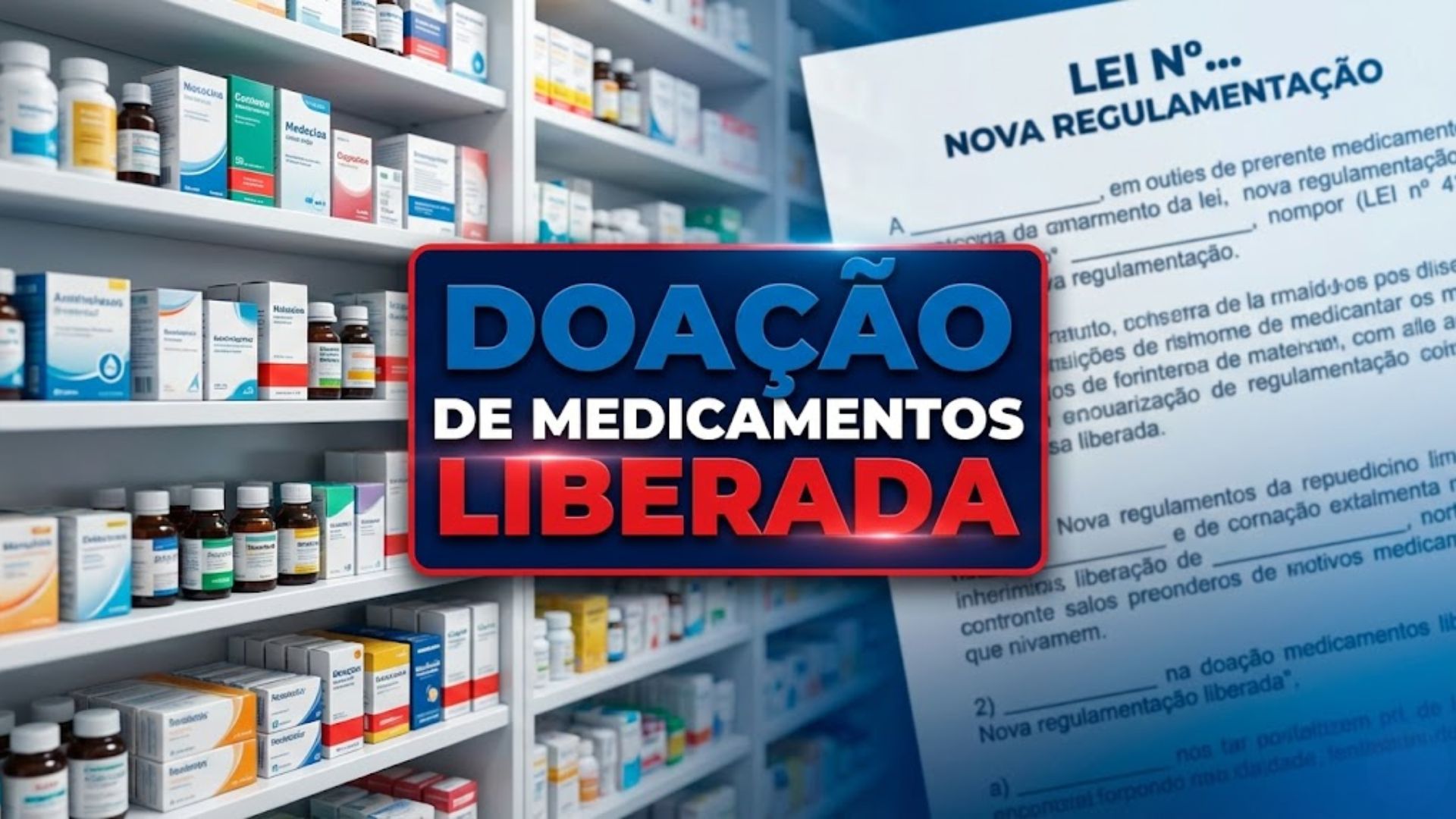
Permission To Donate Medications With Tax Exemption Expands Access To Health Services And Can Reduce Stocks Discarded By The Industry.
President Luiz Inácio Lula da Silva signed Law No. 15,279/2025, which exempts federal taxes on the donation of medications to public entities and organizations recognized as being of public utility.
Published in the Official Gazette on December 3, the regulation authorizes the donation of medicines with at least six months of remaining validity without tax incidence.
According to the government, the measure aims to reduce the disposal of medications and expand supply to hospitals and charitable organizations.
-
The institute that trained the greatest aerospace engineers in Brazil has just opened its first campus outside São Paulo after 75 years: ITA Ceará will have R$ 445 million, new courses in energy and systems, and classes are expected to start in 2027.

-
Luciano Hang, owner of Havan, goes to Juiz de Fora after the tragedy in February, brings R$ 1 million, hands out R$ 2,000 cards, and donates up to R$ 15,000 to victims in the region.

-
The Brazilian passport allows legal residence in dozens of countries without the need for a prior visa, and most Brazilians are unaware that they can apply for residency directly upon arriving in nations in South America, Africa, and even Europe.

-
Petrobras sends a message to Brazilian truck drivers after fuel collapse and reveals plan to have 100% domestic diesel.


The proposal originated from Bill 4,719/2020, presented by former Congressman General Peternelli and approved in November of this year by the National Congress, under the rapporteurship of Congressman Moses Rodrigues.
The Senate adjusted points in the text before returning it to the Chamber for a final vote.
Tax Exemption On The Donation Of Medications
The law establishes exemption from PIS/Pasep, Cofins, and IPI for donations that meet legal criteria.
The exemption applies only to transfers made to authorized entities and with medications that meet the defined conditions.
The understanding of parliamentarians and entities that supported the bill is that the exemption from taxes can facilitate donations by the industry and distributors.
The government claims that the measure tends to reduce costs associated with the disposal of still-valid stocks.
Criteria For Donation And Sanitary Requirements

The legislation stipulates that only medications with at least six months of remaining validity at the time of donation may be transferred with tax exemption.
According to technicians who participated in discussions in Congress, this period was included to allow distribution under adequate sanitary conditions.
The use must be exclusively non-profit and aimed at charitable activities.
The law prohibits any commercial exploitation of donated medications.
Control of validity after receipt will be the responsibility of the receiving entity, which must monitor storage and expiration dates.
Individuals are not authorized to receive products directly under the exemption.
The regulation also prohibits the distribution of medications whose labeling references companies without legal authorization to operate in the pharmaceutical industry.
Authorized Public And Private Entities
The text broadened the categories of beneficiaries.
In addition to federative entities, the direct and indirect administration of these spheres, such as autarchies and foundations, can also receive donated medications without taxation.
Among private entities, the law includes institutions certified under Complementary Law No. 187/2021, Holy Houses of Mercy, and the Brazilian Red Cross.
Social organizations authorized by Law No. 9,637/1998; Oscips governed by Law No. 9,790/1999; and civil society organizations that enter partnerships provided for in Law No. 13,019/2014 were also included.
These entities frequently execute management and cooperation contracts with the government.
Disposal Of Medications And Potential Impact Of The Law

Surveys by specialized entities estimate that about 14 thousand tons of medications are discarded in Brazil annually, often still within the validity period.
Experts claim that donation incentive policies can help reduce this volume, provided they are accompanied by monitoring and sanitary criteria.
Public managers and representatives of the third sector indicate that the new law could increase the supply of medications in health units, provided it boosts the number of stocks intended for donation.
According to organizations that participated in discussions on the topic, removing the tax burden tends to reduce financial barriers for companies that choose to donate rather than dispose of medications.
Environmental researchers highlight that improper disposal of medications requires specific treatment and can pose environmental risks.
Extending the useful cycle through donation is cited by professionals in the field as a feasible strategy to reduce volumes designated for incineration.
Implementation, Monitoring And Operational Adjustments
Although already in effect, the law requires regulation to define control procedures, proof of exemption, and monitoring.
The Executive still needs to detail the steps for recording operations and the role of sanitary and tax agencies.
Public agencies and entities that work in social assistance state that logistical adjustments will be necessary to ensure the receipt and distribution of medications within the useful time frame.
The assessment of state and municipal managers is that operational capacities vary across regions, which may require additional support.
With these points still being implemented, the question remains: will the new rules lead to an effective increase in the volume of medications donated by the industry and distributors?









-

2 pessoas reagiram a isso.