





 Portuguese
  English
  Spanish
  5 min of reading
  3 comments


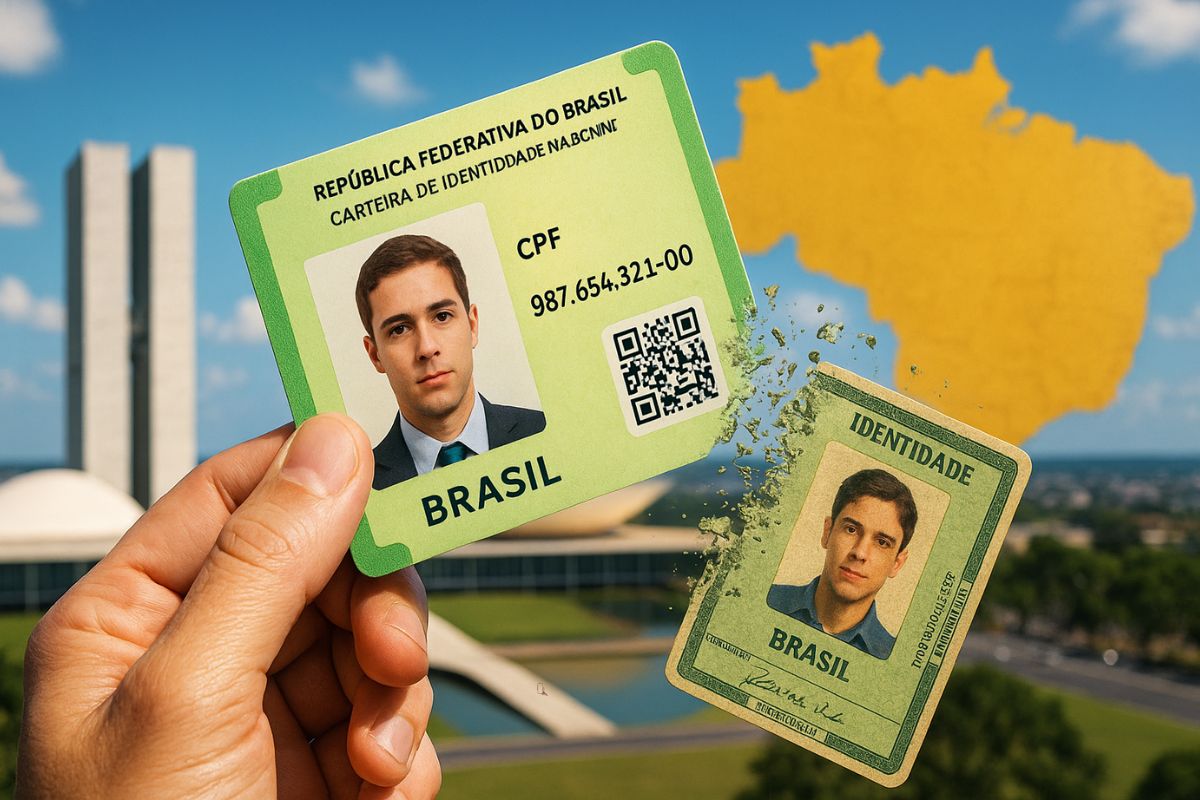


With CPF as National Identifier, QR Code, Digital Version on gov.br, and New Security Layers, the New Identity Card Starts a Broad and Planned Transition Throughout the Country, with a Deadline for the Traditional ID.
The new identity card marks a structural change in the Brazilian civil identification system. With the creation of the National Identity Card (CIN), the country adopts the CPF as a unique registration number, integrating databases, reducing loopholes for fraud, and aligning the document with international security standards.
At the same time, the government set a transitional period for coexistence between the old model and the new one. The traditional ID will continue to be accepted until 2032, allowing citizens to gradually organize the exchange of the new identity card, without an immediate rush to service points and with attendance capacity distributed over the coming years.
What Changes with the New Identity Card
The new identity card replaces the old model based on state ID numbers with a national registry anchored in the CPF.
-
These living root bridges and ladders are over 700 years old and help indigenous people survive in one of the rainiest regions in the world.

-
From sertanejo star to international investor: Ana Castela invests millions in a mansion in the USA, creates a themed accommodation in Orlando, and shows that the “boiadeira” also wants to grow away from the stage.

-
The 10 most stunning motorhomes in the world: a $3 million trailer with a rooftop nightclub and garage for a Ferrari, “palaces on wheels” with Italian marble, private cinema, and five-star hotel luxury for billionaires.

-
Trump wanted to spend $400 million on the White House, but the courts prohibited the million-dollar construction.


In practice, this means that citizens will no longer have multiple numbers across different states and will have a unique identifier valid throughout the national territory.
In addition to the number change, the new identity card features a redesigned layout, cleaner and standardized, with essential information highlighted and organized fields to facilitate visual and electronic verification.
The goal is to make identity verification faster, less susceptible to human error, and integrated into public and private systems.
Available Formats and Security Features
The new identity card can be issued in two physical versions: polycarbonate card or paper model.
The first issuance in paper remains free, while the physical polycarbonate card has a value defined by each state, according to local regulations.
In both formats, the new identity card incorporates updated security technologies, such as:
QR Code for instant authentication by official applications
machine-readable zone (MRZ), similar to passports
graphic and printing elements that hinder counterfeiting
Additionally, the document will have a digital version integrated into the gov.br application.
In practice, citizens can carry the new identity card on their cell phones, with the same data and legal validity as the printed version, provided access is through official channels.
Practical Advantages for Citizens
The adoption of CPF as a unique identifier in the new identity card reduces registration inconsistencies and improves interoperability among federal, state, and municipal agencies.
This simplifies access to public services, social benefits, healthcare systems, education, and even banking operations.
Authentication via QR Code and MRZ also facilitates checks at borders, public agencies, and businesses that need to validate identity quickly and securely.
The trend is that the new identity card will become the reference document in registrations, avoiding duplications and reducing attempts at fraud with multiple IDs.
Deadline: Until When Will the Old ID Remain Valid
According to Decree No. 10.977/2022, the traditional ID will continue to be accepted until 2032.
This means that the transition to the new identity card will occur in a phased manner, with no immediate obligation to swap for those who have the document in good condition and within validity.
In practice, citizens have years to adapt to the new model, schedule appointments, and request the new identity card as needed, such as renewals, data updates, or issuance in case of loss.
This timeline alleviates pressure on identification institutes and allows the system to absorb demand in a planned manner.
Where and How to Request the New Identity Card
To issue the new identity card, citizens must schedule an appointment at a State Identification Institute or the Federal District, according to the structure provided in each federation unit.
On the scheduled day, it is necessary to present the birth or marriage certificate, which serves as a basis for verifying civil data.
The first issuance of the new identity card in paper is free, supported by Law No. 7.116/1983. Those opting for the polycarbonate card will pay the price set by the respective state.
After issuance, the digital version can be accessed in the gov.br application, using the same identification associated with the CPF.
New Identity Card is Already a Reality in Most of the Country
The implementation of the new identity card is already underway in practically all of the national territory, with active issuance in 24 states and the Federal District.
This coverage expands the standardization of the document and unifies the way data is registered, consulted, and shared among agencies.
This large-scale adoption indicates that the new identity card is likely to quickly consolidate as the main document, especially among those who renew documents more frequently, such as travelers, beneficiaries of social programs, and heavy users of digital government services.
Thus, the country moves closer to a more modern, traceable civil identification structure that meets global standards.
What This Change Represents for the Future of Identification in Brazil
The new identity card symbolizes a turning point in the Brazilian identification model, replacing a fragmented system with a national arrangement based on the CPF and supported by digital technology.
This reorganization should facilitate audits, data cross-checking, and public policies guided by qualified information.
For citizens, the new identity card means less bureaucracy in daily life, greater predictability in document validation, and more security in sensitive operations, such as opening accounts, contracts, and accessing government services.
The expectation is that by 2032, the transition will be completed and the traditional ID will be fully retired, leaving behind a dispersed and vulnerable model.
In your case, do you intend to expedite the exchange and request the new identity card soon, or will you wait until the deadline approaches to update the document?








O sinal da **** chegando….
NA DÉCADA DE 1980,SUGERÍ POR DIVERSAS VEZES NA CARTA DOS LEITORES DO JORNAL O GLOBO,A CARTEIRA ÚNICA DE IDENTIDADE ,QUE SUBSTITUIRIA 5 OU 6 DOCUMENTO.POR DUAS VEZES ESTEVE PARA SER IMPLANTADA.EM 2022,ENFIM,ENTROU EM VIGOR.
Como. Agenda pra tirar