





 Portuguese
  English
  Spanish
  4 min of reading
  0 comments


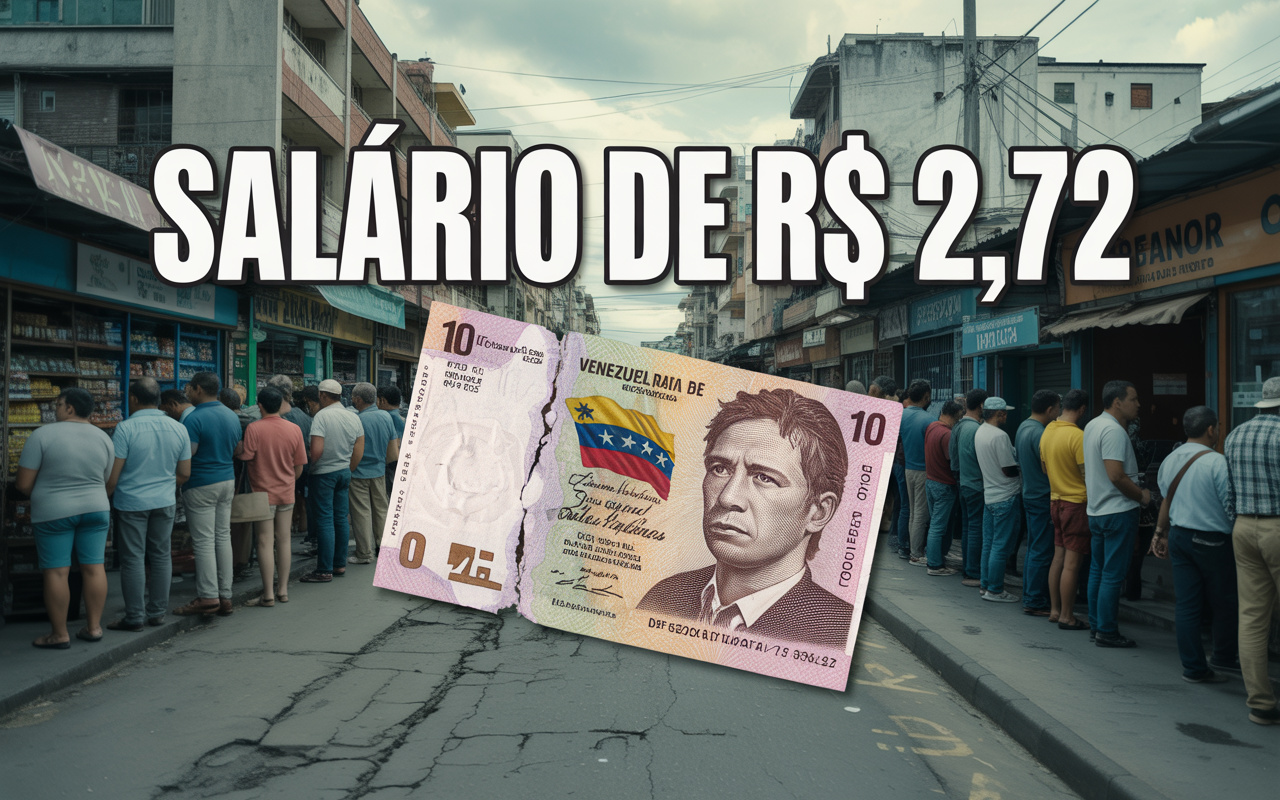
With A Minimum Wage Of Just US$ 0.50 Per Month, Venezuela Faces A Collapse Of Purchasing Power, Persistent Inflation And Dependency On Off-The-Books Bonuses.
The number is striking not only for its international comparison, but for what it reveals about the economic reality of an entire country. In 2025, Venezuela’s official minimum wage remains fixed at US$ 0.50 per month, equivalent to about R$ 2.72, a figure that has been frozen since 2022. It is one of the lowest formal minimum wages in the world, unable to cover any basic expense and symbolizing the depth of the Venezuelan economic crisis.
More than an isolated figure, the value exposes the mismatch between formal income, inflation, cost of living and the improvised mechanisms created by the government to try to maintain some consumption capacity among workers.
A Salary That Cannot Even Buy A Basic Item
To gauge the real impact, one only needs to look at the average cost of essential products within the country itself. Even with the informal dollarization of the economy, a single item of basic food costs multiple times the official monthly minimum wage.
-
The Federal Revenue issues a good alert for Brazilian taxpayers: 60.9% are already using the pre-filled tax return, automatic refunds via Pix reach millions, and the government plans for a fully automated income tax in the coming years.

-
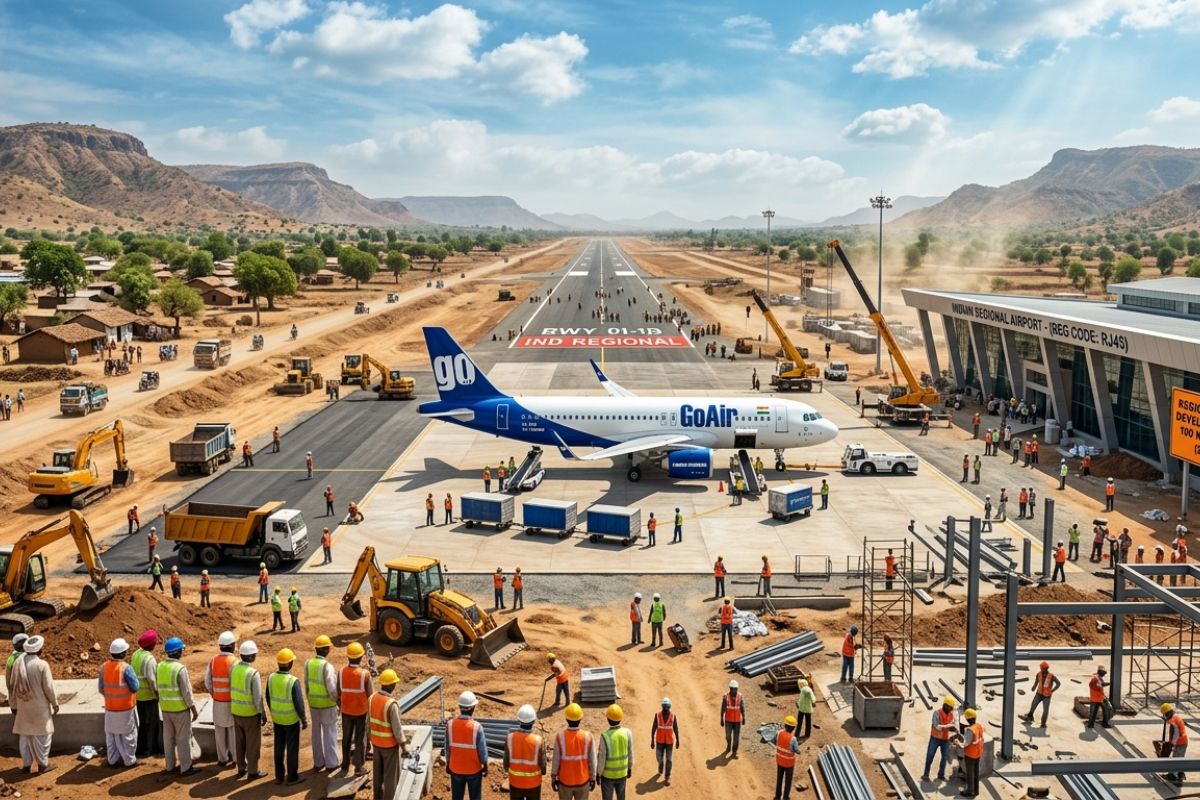
India announces a plan of $3.06 billion to bring aviation to forgotten regions: 100 new airports, $1.07 billion in subsidies, and regional routes guaranteed for 10 years, from 2026 to 2036, away from the centers.
-
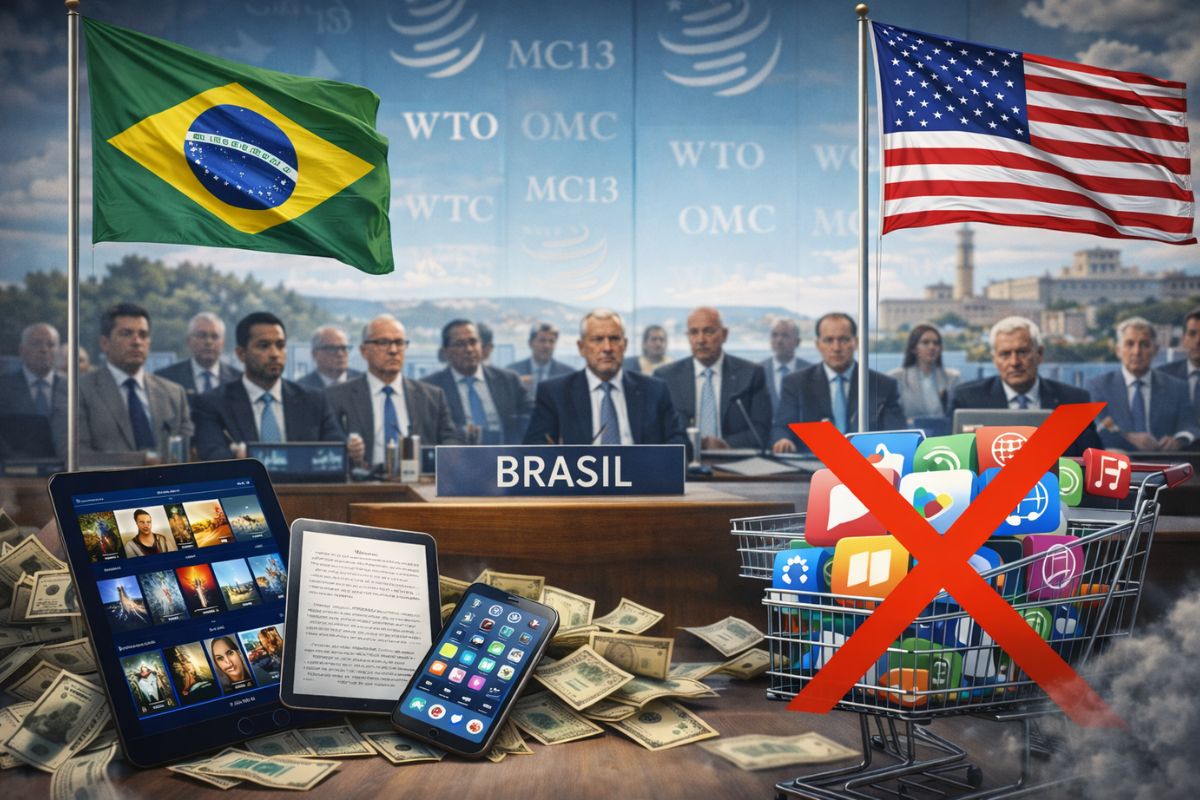
Brazil blocked a proposal from the United States at the WTO that would make the exemption from tariffs on digital products like streaming and ebooks permanent, favoring American tech giants at the expense of developing countries.
-
IPTU exemption for seniors in 2026: see how to secure the benefit.


In practice, the salary of US$ 0.50 cannot buy a kilogram of rice, a liter of oil or a loaf of bread in urban markets. The value has completely lost its economic function and now exists only as a legal reference, detached from everyday reality.
This freeze since 2022 occurs in a scenario of chronic inflation, currency devaluation and productive contraction, which have eroded the purchasing power of the population over more than a decade.
Bonuses Replace Salary, But Do Not Guarantee Rights
To mitigate the social impact, the Venezuelan government created a system of monthly bonuses, paid through state digital platforms. These supplements can reach US$ 160 per month, a figure far surpassing the official minimum wage.
However, these payments are not incorporated into the formal salary. They are considered assistance benefits, paid “off the books” from the payroll. This creates a profound distortion in the country’s labor system.
In practice, pensions, retirement benefits, vacation pay, severance, and other rights continue to be calculated based on the official minimum wage of US$ 0.50, not on the bonuses. The result is a structural precariousness of formal income, even for those who receive monthly supplements.
The Difference Between US$ 0.50 And US$ 160 Reveals Institutional Collapse
The gap between the official salary and the bonuses highlights more than an emergency policy. It reveals the collapse of the very concept of minimum wage as a tool for social protection.
In stable economies, the minimum wage serves as a dignity floor. In Venezuela, it has become a symbolic number, while survival depends on extraordinary, informal, and unstable transfers.
These bonuses lack permanence guarantees, may vary according to administrative decisions, and do not create financial predictability. For millions of workers, this means living without any long-term economic security.
Direct Impacts On Social Security And The Future Of Workers
One of the most serious effects of this structure is the impact on retirees and pensioners. As pension benefits are tied to the official minimum wage, a large part of retirees receives equally trivial amounts, also close to US$ 0.50 per month, supplemented only by occasional bonuses.
This completely undermines the social function of Social Security. Workers contribute throughout their lives, but upon retirement, they depend on discretionary government transfers to survive.
Experts point out that this model destroys the link between contribution, salary, and benefit, weakening trust in the labor and social security system.
Persistent Inflation And Continuous Loss Of Purchasing Power
Despite periods of inflationary slowdown, Venezuela still deals with high inflation, dollarized prices, and insufficient local income. The minimum wage, frozen since 2022, has not kept up with any of these variations.
Even public sector workers, who traditionally relied on the state salary, have begun seeking supplemental income in informal activities, parallel trade, or family support abroad.
The Venezuelan economy today operates with a combination of symbolic wages, assistance bonuses, and international remittances, a typical scenario of countries in prolonged crisis.
International Comparison Exposes Economic Isolation
When compared to other countries in Latin America, the Venezuelan minimum wage distanced itself from any regional benchmark. Even the region’s weakest economies maintain minimum wages dozens or hundreds of times higher.
This chasm makes it difficult to retain skilled labor, encourages emigration, and reduces internal competitiveness. It is no coincidence that millions of Venezuelans have left the country in recent years in search of minimal survival conditions.
More than a monetary value, R$ 2.72 per month has become a symbol. It condenses years of hyperinflation, productive collapse, financial isolation, and emergency policies that have replaced structural reforms.
While the bonuses attempt to put out immediate fires, the official minimum wage exposes the fragility of the economic model and the difficulty of institutional reconstruction.
A Floor That No Longer Fulfills Its Social Function
In essence, the minimum wage should guarantee dignity. In Venezuela, it has not fulfilled this function for years. It has become a formal number, disconnected from real life, while the population depends on parallel mechanisms to survive.
The Venezuelan case is now studied internationally as an extreme example of devaluation of formal income, where the salary exists on paper, but subsistence depends on improvised and unstable solutions.






-

-

-

-

18 pessoas reagiram a isso.