





 Portuguese
  English
  Spanish
  5 min of reading
  1 comment


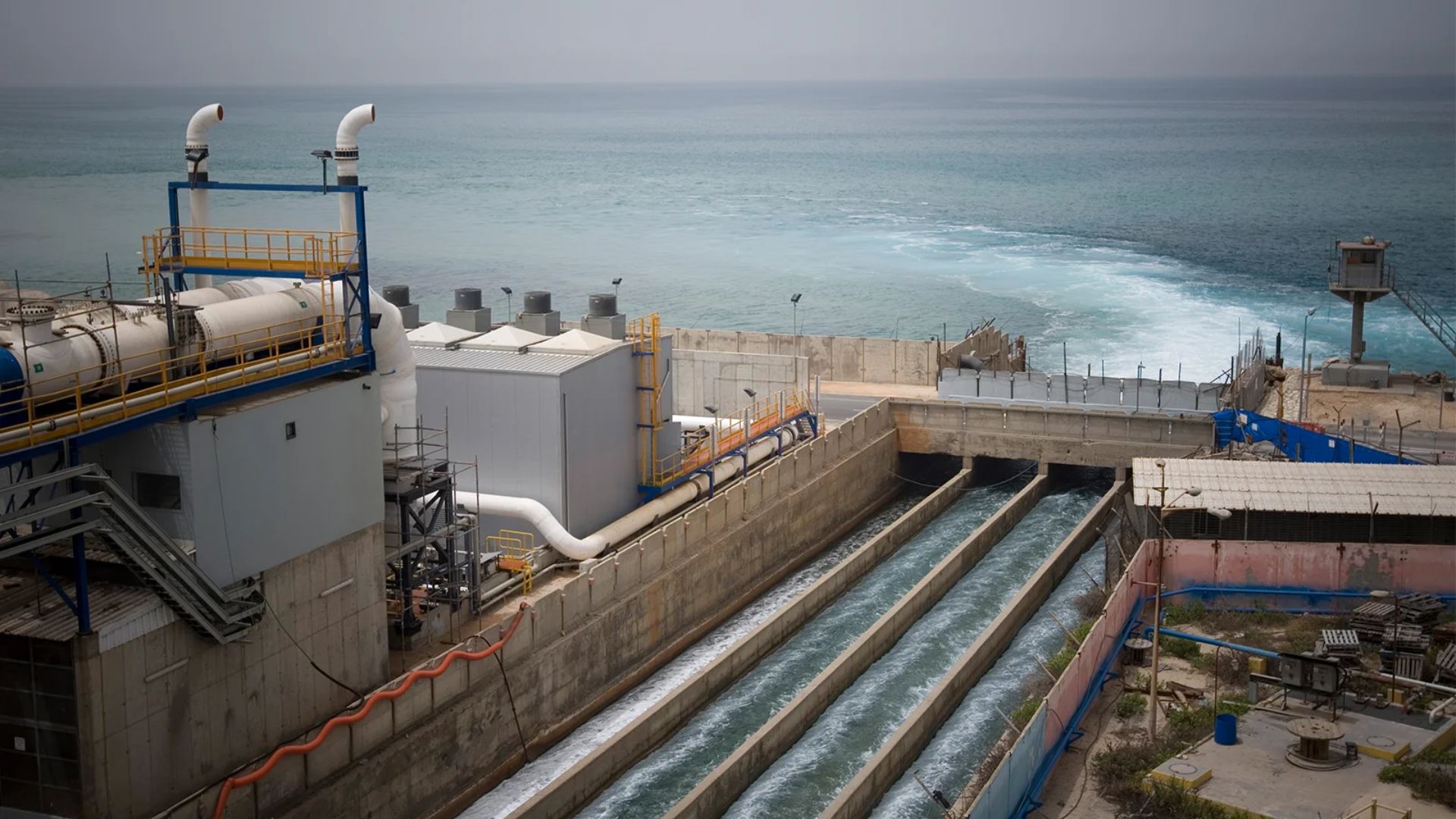


Moroccan Plant Expands Desalination With Renewable Energy Amid Regional Water Scarcity.
The desalination plant of Agadir–Chtouka, in southern Morocco, is operating at an initial capacity of 275 thousand cubic meters of water per day, equivalent to about 275 million liters, distributed between urban supply and agricultural irrigation.
The project, structured with significant support from renewable energies and presented by Moroccan authorities as the largest plant in the world designed for combined use of drinking water and irrigation, is part of the national strategy to address prolonged drought.
Located in the Souss-Massa region, near the Atlantic coast, the unit employs reverse osmosis to desalinate water intended for the city of Agadir and the agricultural plain of Chtouka.
-
These living root bridges and ladders are over 700 years old and help indigenous people survive in one of the rainiest regions in the world.

-
From sertanejo star to international investor: Ana Castela invests millions in a mansion in the USA, creates a themed accommodation in Orlando, and shows that the “boiadeira” also wants to grow away from the stage.

-
The 10 most stunning motorhomes in the world: a $3 million trailer with a rooftop nightclub and garage for a Ferrari, “palaces on wheels” with Italian marble, private cinema, and five-star hotel luxury for billionaires.

-
Trump wanted to spend $400 million on the White House, but the courts prohibited the million-dollar construction.


According to official documents, the plant was organized in a “mutualized” regime: about 150 thousand cubic meters per day supply human consumption, while 125 thousand cubic meters daily go for irrigation.
The model aims to simultaneously meet urban and agricultural demands in an area marked by reduced rainfall and declining aquifers after decades of intensive pumping.
The project responds to a history of water pressure in the region. In recent years, Agadir and neighboring municipalities have faced a sharp drop in dam levels and risk of supply interruptions.

The agricultural plain of Chtouka, according to reports from international organizations, has recorded significant impacts from the reduction of groundwater levels.
In this context, Moroccan authorities have begun to treat desalination as a strategic solution to reduce vulnerabilities in the agricultural sector and urban consumption.
Public-Private Partnership and Investments
From an institutional perspective, Agadir–Chtouka was structured as a public-private partnership bringing together the Office National de l’Électricité et de l’Eau Potable (ONEE), the Ministry of Agriculture of Morocco, and private companies.
The Spanish company Abengoa led the development in a build-operate-transfer model, with local investors integrated into the consortium.
The project has received international awards in categories related to water and infrastructure, awarded by specialized sector entities.
Regarding investment, official estimates and market analyses indicate a total cost close to 4.4 billion Moroccan dirhams, including the desalination plant and the associated irrigation network.
In dollars, the values vary according to the scope considered in the sources: approximately US$ 360 million for the initial phase and figures close to US$ 480 million when including expansions and complementary works.
According to water sector specialists, the difference arises from whether or not the agricultural infrastructure integrated into the project is included.

Agricultural Irrigation and Regional Impact
The agricultural aspect has a central role in the design of the plant.
The system was planned to supply between 13,600 and 15,000 hectares of crops in the Chtouka plain, a hub recognized for producing fruits and vegetables for the domestic market and export.
About 1,500 producers are part of the associated irrigation program, according to government data.
Economic studies indicate that the hub employs tens of thousands of workers and plays a significant role in regional income.
In the urban area, the 150 thousand cubic meters daily of desalinated water intended for human consumption were sized to reinforce the supply of Agadir and neighboring cities.
The region recorded critically low levels in reservoirs during years of severe drought and the need for temporary adjustments in water distribution.
The planned expansion, which aims to raise total production to 400 thousand cubic meters daily, has been announced in official documents as part of an effort to increase water security in the urban area.
Solar and Wind Energy in the Plant’s Supply
The energy component has been one of the most highlighted aspects of the project.

The plant was designed to operate with significant participation from solar energy, linked to a dedicated photovoltaic park.
This integration, according to technical reports, aims to reduce greenhouse gas emissions associated with the desalination process.
However, public documents do not detail the exact proportion of solar energy in the current electrical supply of the plant, information considered by specialists as important for assessing the extent of the energy transition in the sector.
In recent years, the energy strategy has also included wind generation, with plans to install a park exceeding 150 megawatts to meet the increase in consumption resulting from the expansion to 400 thousand cubic meters per day.
According to company statements, this integration follows the “Energy Follows Water” concept, where water production is accompanied by equivalent renewable generation.
The works for the expanded phase are expected to be completed by the second half of this decade.
Desalination Process and Environmental Monitoring
During operation, the flow follows the traditional stages of a reverse osmosis plant. Water is drawn from the sea.

It then undergoes physical-chemical pre-treatment, pressurization for passage through semi-permeable membranes, and subsequent remineralization and disinfection.
Quality standards follow norms defined by Moroccan authorities, both for drinking water and irrigation.
The process generates a concentrated brine, which returns to the ocean after dilution and environmental monitoring.
According to technical documents of the project, parameters such as temperature, salinity, and flow are monitored to mitigate impacts on the marine ecosystem.
Researchers analyzing the expansion of desalination in Morocco monitor the cumulative effects of brine discharge on the Atlantic coast.
National Role of the Plant and Transparency Gaps
The plant is part of a national water security program, which includes the construction and expansion of other reverse osmosis units in cities like Casablanca and Rabat.
The Moroccan government describes Agadir–Chtouka as a reference for the integration of water infrastructure and renewable sources and as a model for new concessions in the sector.
According to public policy analyses, this is the first desalination project contracted by ONEE in PPP under the new legal framework for water, adopted to increase private participation in investment and operation.








Gratidão pela matéria querido.