





 Portuguese
  English
  Spanish
  5 min of reading
  0 comments



With Total GDP (Nominal) Above US$ 500 Billion, Ireland Became the European Base for Big Tech Thanks to Low Taxes, Aggressive Industrial Policy, and Record Attraction of Foreign Capital.
For much of the 20th century, Ireland was synonymous with a fragile rural economy, chronic unemployment, and mass emigration. Millions of Irish left the country over the decades in search of work in the UK, the United States, and Australia. The country, which today boasts one of the highest GDPs per capita in the world, was once referred to as the “nation that exported its own youth”. This cycle of stagnation began to break definitively only after the late 1980s, when Ireland adopted an aggressive strategy to attract multinational corporations, mainly in the technology sector. Today, the reality is completely opposite. The Irish economy operates with a GDP above US$ 500 billion, hosts European headquarters of Google, Meta, Apple, and Microsoft, in addition to dozens of giants in the software, semiconductor, data, pharmaceuticals, and digital services sectors.
The country has ceased to be an exporter of labor and has transformed into a net importer of talent from around the world.
Poor, Agricultural, and Dependent on Emigration Ireland Until the 1980s
Until the early 1980s, the economy of Ireland was based on low-productivity agriculture, small local industries, and basic services. Unemployment was high, public revenue was limited, and the state’s ability to invest was extremely reduced.
-
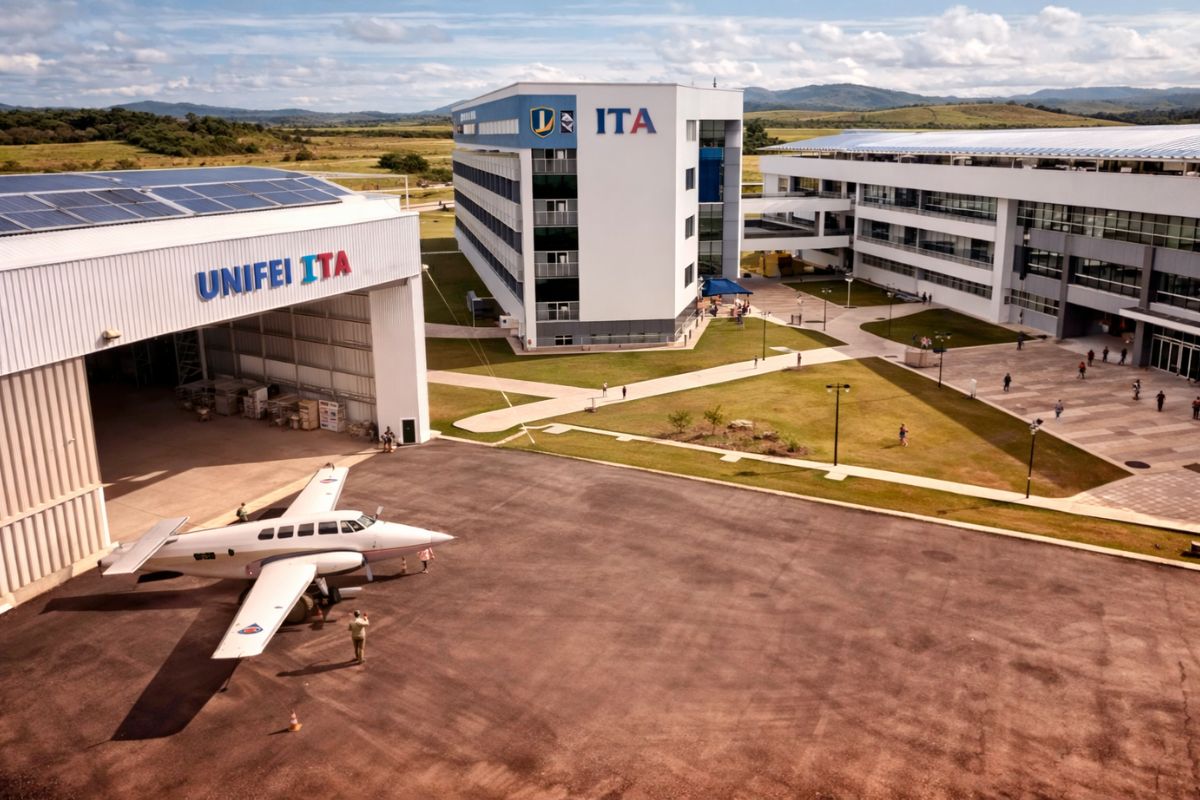
The institute that trained the greatest aerospace engineers in Brazil has just opened its first campus outside São Paulo after 75 years: ITA Ceará will have R$ 445 million, new courses in energy and systems, and classes are expected to start in 2027.
-
Luciano Hang, owner of Havan, goes to Juiz de Fora after the tragedy in February, brings R$ 1 million, hands out R$ 2,000 cards, and donates up to R$ 15,000 to victims in the region.

-
The Brazilian passport allows legal residence in dozens of countries without the need for a prior visa, and most Brazilians are unaware that they can apply for residency directly upon arriving in nations in South America, Africa, and even Europe.

-
Petrobras sends a message to Brazilian truck drivers after fuel collapse and reveals plan to have 100% domestic diesel.


The country relied heavily on remittances sent by emigrants to support entire families remaining in Irish territory.

The crisis peaked in the early 1980s when public debt exploded, unemployment surpassed 15%, and the country suffered a new wave of mass emigration. At that time, Ireland was seen as a peripheral economy in Europe, without significant industrial or technological relevance.
The Strategic Turn: Low Taxes, Education, and Foreign Capital
The Irish turnaround began with a clear political decision: to transform the country into a global platform for attracting multinational companies. The government drastically reduced the corporate tax rate, which solidified at 12.5%, one of the lowest in Europe, and created an aggressive policy of tax incentives, regulatory stability, and legal security.
At the same time, there was heavy investment in technical education, universities, science, and the training of highly skilled labor, with a direct focus on engineering, information technology, data science, and industrial chemistry. The country started to train professionals tailored to meet the demand of global companies.
This model began to be coordinated by a specialized state agency, IDA Ireland, responsible for attracting and negotiating the establishment of multinationals in the country.
The Arrival of Big Tech and the Definitive Transformation of the Economy
From the 1990s onward, Ireland began to receive operational centers from American technology companies. First came software and hardware companies. Then, internet giants started choosing Dublin as their European base for financial, commercial, and data operations.
Today, companies like Google, Meta, Apple, and Microsoft not only have offices in the country but also use Ireland as a nerve center for their operations in the European Union, concentrating revenue, legal structure, engineering, data centers, financial areas, and development teams.
This movement completely transformed the economic profile of the country. Ireland began to export digital services, software, high-value-added products, and data solutions, leaving behind the nearly exclusive dependence on the agricultural sector.
GDP Growth and the Leap to the Global Economic Elite
The impact of this process directly reflects on the Gross Domestic Product. Today, Ireland’s total GDP exceeds US$ 500 billion, an extremely high number for a country with just over 5 million inhabitants. Ireland’s GDP per capita ranks among the highest in the world, surpassing that of several traditional great powers.
Part of this growth is explained by the massive presence of multinationals, whose financial results are accounted for in Irish territory. This creates statistical distortions, but does not eliminate the fact that the country has become one of the largest financial, technological, and productive centers in Europe.
The Role of Data, Cloud, and Digital Infrastructure
Ireland has become one of the leading data hubs in the world. Large data centers from technology companies, cloud storage, and information processing are concentrated in Irish territory. This has placed the country at the center of the European digital economy.
This infrastructure supports services used daily by billions of people, from social networks, search engines, video platforms, artificial intelligence, corporate applications, and financial systems.
In practice, a significant portion of the European Union’s data traffic passes through servers installed on Irish soil.
The Social Impact: Qualified Jobs and Talent Importation
The massive presence of big tech companies has completely changed the job market. Ireland has transitioned from a country with high structural unemployment to an economy with high demand for qualified professionals, high salaries, and competition for talent.
The migratory flow has also reversed. Today, thousands of professionals from Europe, Latin America, Asia, and Africa move to Dublin and other Irish cities to work in technology, engineering, science, and innovation.
This movement has increased the cost of living, put pressure on the housing market, but also dramatically increased tax collection and the average consumption standard of the population.
The Sensitive Side of the Model: Dependence on Multinationals and Fiscal Risks
Despite the success, the Irish strategy is not without risks. The country’s economy has become highly dependent on multinationals, especially in the technology and pharmaceutical sectors. Any abrupt change in international tax policy, such as global agreements on minimum corporate tax, directly impacts government revenues.
Furthermore, the concentration of revenues in a few companies creates fiscal vulnerabilities. A decision to relocate by a multinational can affect billions of dollars in revenue in a short time.
Ireland as a Laboratory for Globalized Capitalism
The Irish case has become the subject of study at universities around the world. It shows how a small, poor, and peripheral country managed to position itself as one of the most strategic centers of the global digital economy using a combination of aggressive fiscal policy, technical education, institutional stability, and attractiveness to foreign capital.
Ireland did not dominate a natural resource, such as oil or minerals. It dominated the infrastructure of informational capitalism: data, software, engineering, cloud, digital services, and computational intelligence.
If Ireland once exported its own inhabitants in search of survival, it now exports technology, digital services, software, and high-value corporate solutions to the entire planet. The transformation is profound, structural, and historical.
The country that was once seen as poor, agricultural, and dependent on external aid now occupies the center of economic, technological, and financial decisions in the European Union.










Seja o primeiro a reagir!