





 Portuguese
  English
  Spanish
  6 min of reading
  0 comments


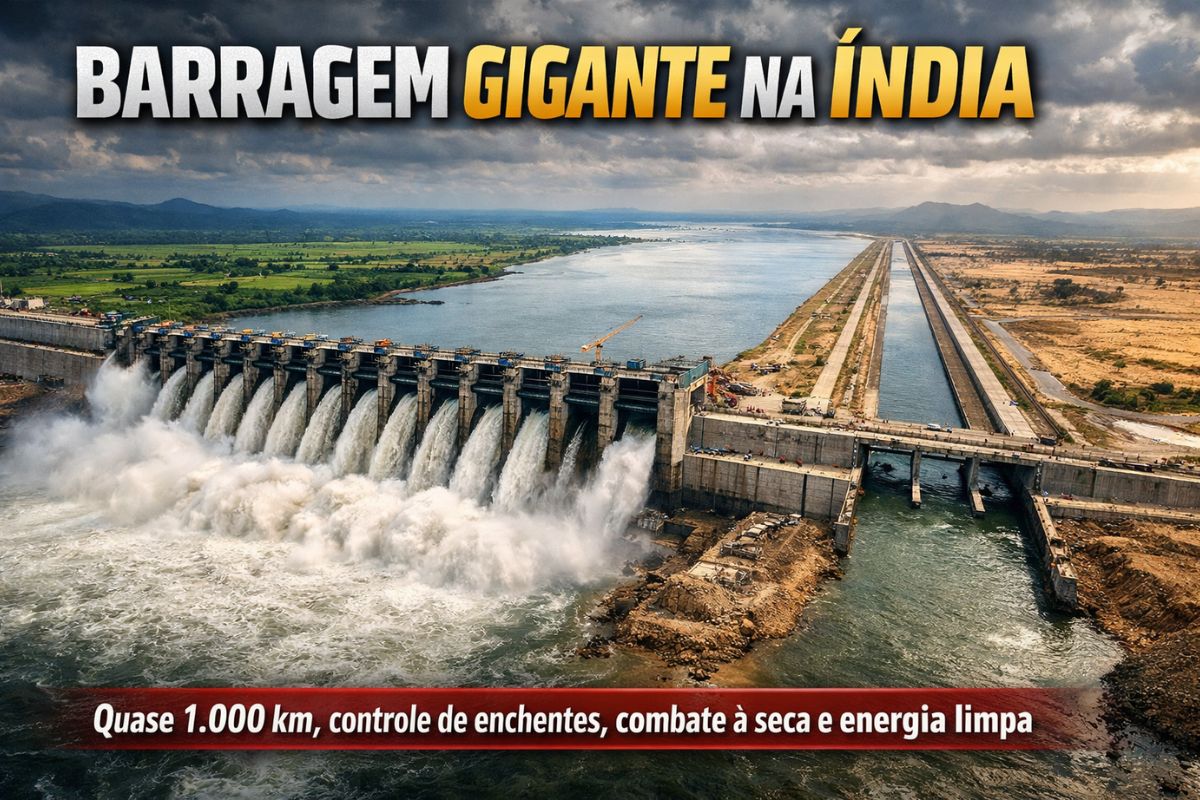
The Giant Dam in India, in the State of Andhra Pradesh, Was Designed to Form a New Water Corridor with Almost 1,000 km in Length Between Canals, Reservoirs, and Pumping Structures, Controlling Floods, Facing Severe Droughts, Generating Clean Energy, and Altering the Agricultural Map of the Region.
At the heart of the project is the Polavaram Dam, built over the Godavari River in one of the most vulnerable areas to extreme weather in the country, where millions of people face recurring floods and water shortages just months apart. The proposal is simple in concept and gigantic in practice: move water from where there is surplus to where there is a deficit.
A State Caught Between Floods and Droughts
Andhra Pradesh is one of the largest states in India, with about 50 million inhabitants, strong agricultural production, and two major rivers, the Godavari and the Krishna.
The monsoon climate brings very hot and humid summers, with heavy rainfall between June and September. In recent years, almost 800,000 hectares have been subjected to regular flooding, while entire districts have faced drought and reduced crop productivity.
-
The lack of welders, electricians, and operators becomes a structural threat in 2025, with the construction industry and manufacturing already suffering from delays, cost pressures, and labor shortages in Brazil.
-
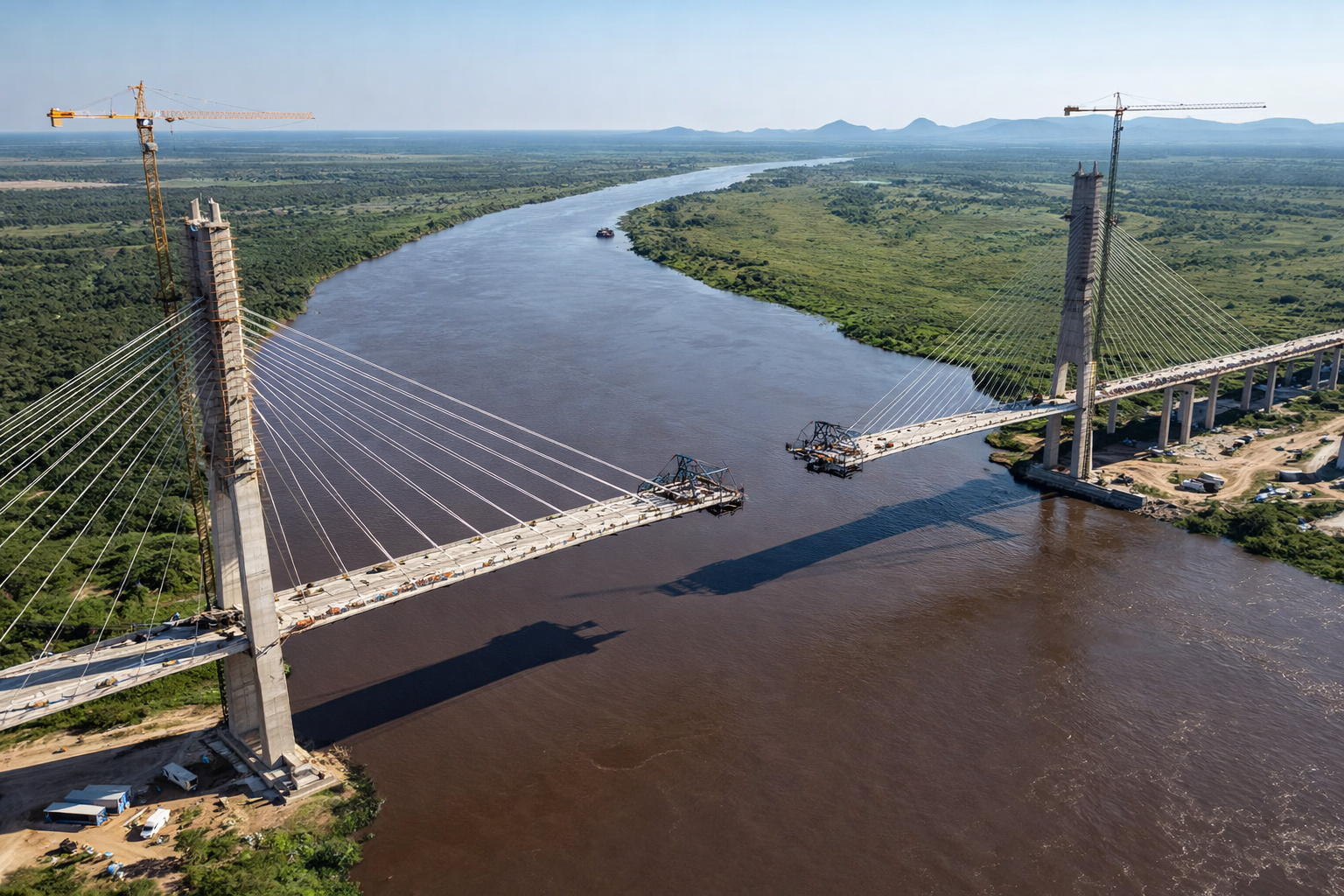
Brazil and Paraguay are just 46 meters away from a historic union on the bioceanic bridge that promises to revolutionize trade between the Atlantic and the Pacific.
-
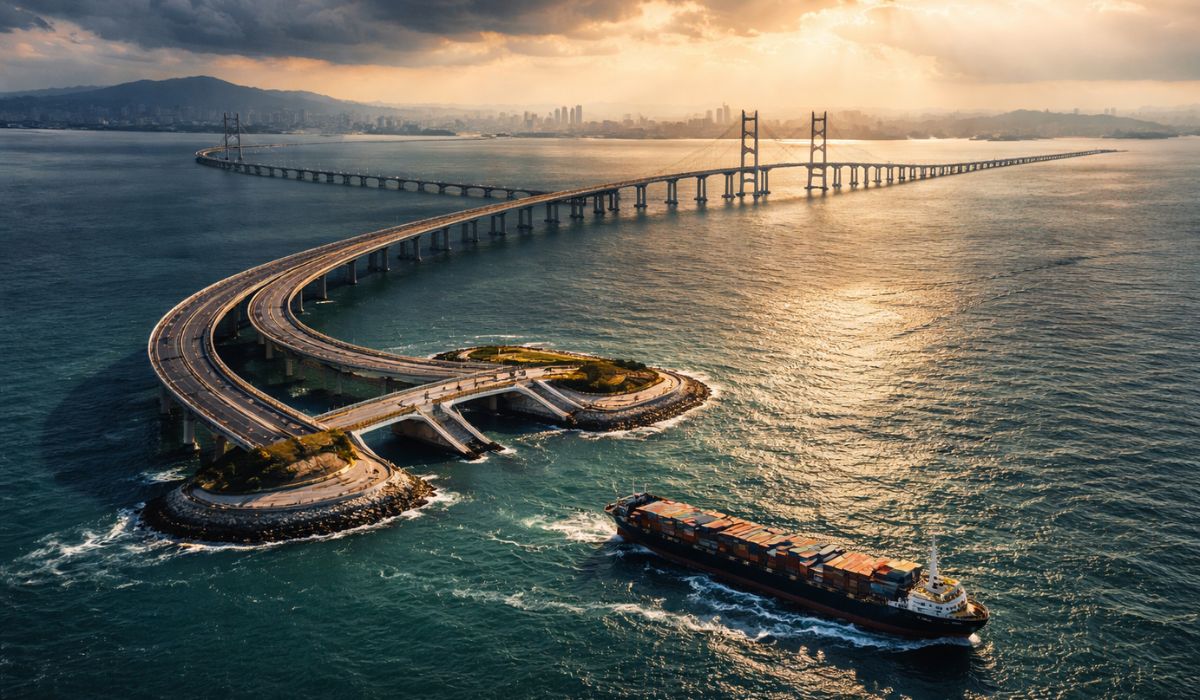
With 55 km over the sea, a cost of US$ 20 billion, and enough steel to build 60 Eiffel Towers, China’s largest project has connected Hong Kong, Zhuhai, and Macau in a colossal bridge that defies the logic of engineering.
-
A trick with joint compound transforms a Styrofoam ceiling into a plaster-like ceiling: leveled panels, wires and mesh at the joints, sand, paint, and change the environment while spending little today.


In this scenario, engineers and governments have spent decades discussing a structural solution. In 1941, the first proposal to build a large reservoir in Polavaram on the Godavari River for irrigation and power generation emerged.
The idea was to collect water during times of abundance and create infrastructure capable of transferring some of that volume to regions that are chronically dry in the state.
From the First Idea to the Mega Construction Site
Although the conception of the giant dam in India is old, the works took a long time to get started. The project gained new momentum only in 1980, when the foundation stone was laid, and advanced effectively from 2004 onward, with an initial budget of 8,261 crore rupees.
At that moment, the construction of the right and left canals, essential for delivering water to different agricultural regions, was authorized.
By 2014, about one-third of the project was completed; however, political disputes, changes in government, administrative restructuring, and the bankruptcy of contractors delayed the schedule.
Contracts were terminated and reassigned, leading to disruptions in execution and increased costs.
The giant dam in India has become a classic example of a mega-project that combines technical ambition and political turbulence.
An important milestone came in 2019 when the dam’s diaphragm wall was completed, and the project entered the Guinness Book by pouring more than 32,000 cubic meters of concrete in just 24 hours, breaking a previous record held by Dubai.
How the Giant Dam in India Works
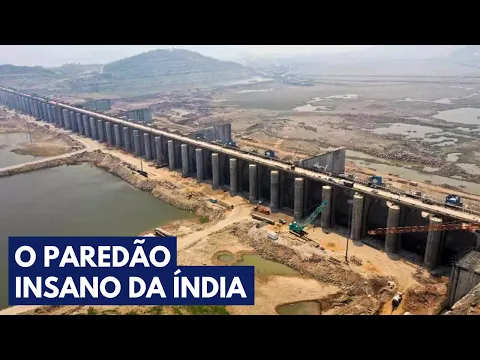

The Polavaram Dam forms the core of the project’s main structure. It is about 2.3 km long, supported by a diaphragm wall 1.5 meters thick that extends 40 to 120 meters below the riverbed to stabilize the soil and resist the enormous pressure of the water.
The spillway, one of the most impressive elements of the giant dam in India, spans approximately 900 meters and is equipped with 48 hydraulic gates capable of releasing up to 140 million liters of water per second during floods.
This controlled flow reduces the risk of downstream flooding and protects cities and agricultural areas along the river.
The main reservoir has an active capacity of about 93 billion liters and a total storage capacity of around 240 billion liters.
This volume is sufficient to irrigate up to 940,000 hectares of agricultural land in various districts, in addition to supporting lift irrigation schemes that supply water to higher areas.
To channel all of this, access and discharge canals approximately 5.5 km long and 1 km wide were constructed, requiring the movement of about 70 million cubic meters of earth and rock.
Together with the dam, the spillway, and the main canals, these elements make up a water complex that, in total extension, approaches 1,000 km.
Transfer Water, Control Floods, and Face Droughts
The central function of the giant dam in India is to create a large water “buffer.” In times of excess, water from the Godavari River is stored and redistributed to dry areas through a network of canals and pumping systems.
Two large irrigation canals are the backbone of this network. The right canal, stretching 173 km, connects the system to the Krishna River and can transport about 14 billion liters of water per day.
The left canal, at 182 km, has the same daily capacity and supplies various agricultural regions.
Additionally, lift irrigation schemes utilize large pumping stations to move water to areas with higher terrain.
Projects like Dummugudem, Purushottam, and other systems in northern Andhra Pradesh allow water to reach districts that previously relied almost exclusively on rainfall, reducing vulnerability to drought.
Clean Energy and Security for Millions of People

The giant dam in India was not conceived solely for irrigation. The project includes a hydropower plant with 12 turbines of 80 megawatts each, totaling 960 MW of installed capacity.
This clean energy generation can supply millions of people and enhance the energy security of Andhra Pradesh.
Although the plant still relies on the removal of temporary structures to operate at full capacity, the combination of flood control, large-scale irrigation, and hydroelectricity makes the dam an example of multifunctional infrastructure.
In practice, water and energy come together as pillars of regional development.
The Social, Environmental, and Financial Cost of the Mega Project
Behind the grandeur of the giant dam in India lies a hefty cost. To enable the reservoir and the flooding of the area, thousands of families were displaced, directly affecting around 200,000 people, many of them from indigenous communities that had lived there for generations.
Ensuring new housing, basic infrastructure, and means of livelihood turned resettlement into a long and delicate process.
The flooding also submerged extensive forest areas, raising environmental concerns about ecosystem loss and the need for compensation.
This combination of social and environmental impact fueled criticism and lawsuits, adding new layers of complexity to a project that was already challenging.
On the financial side, the initial budget of about $1.5 billion has multiplied over the years.
At one point, the estimated cost exceeded $6 billion before being readjusted to approximately $13.5 billion, amidst inflation, engineering revisions, and regulatory changes.
Today, the state government is working towards the goal of completing the first phase of the dam by 2026 and finishing the entire project in 2027, with the promise that there will be no further delays in the schedule.
The political pressure to deliver the giant dam in India is proportional to the volume of resources and expectations already invested.
Why Even China is Looking at the Polavaram Dam
The scale and complexity of the giant dam in India have caught the attention of countries accustomed to mega-projects, especially China, which already hosts works like the Three Gorges Dam.
The Chinese interest lies less in the concrete record and more in the integrated model that combines irrigation, flood control, and renewable energy generation within the same infrastructure.
Foreign engineers highlight the sophistication of the spillway, with 48 gates capable of releasing millions of liters of water per second, and the speed at which mass concreting phases were completed.
To outside observers, the giant dam in India is a living laboratory of how a developing country tries to address water, food, and energy security issues simultaneously.
In the end, the Polavaram project encapsulates a classic dilemma of mega-infrastructure projects. If it succeeds, it can transform an entire region and inspire similar solutions in other countries vulnerable to floods and droughts.
If it fails, it will leave a billion-dollar bill, deep social impacts, and a reservoir short of what was promised.
And you, considering the benefits and risks of this giant dam in India, do you think mega-projects like this are the solution to the water crisis or do they create even bigger problems in the long run?








-

-

-

-

5 pessoas reagiram a isso.