





 Portuguese
  English
  Spanish
 5 min of reading
  0 comments


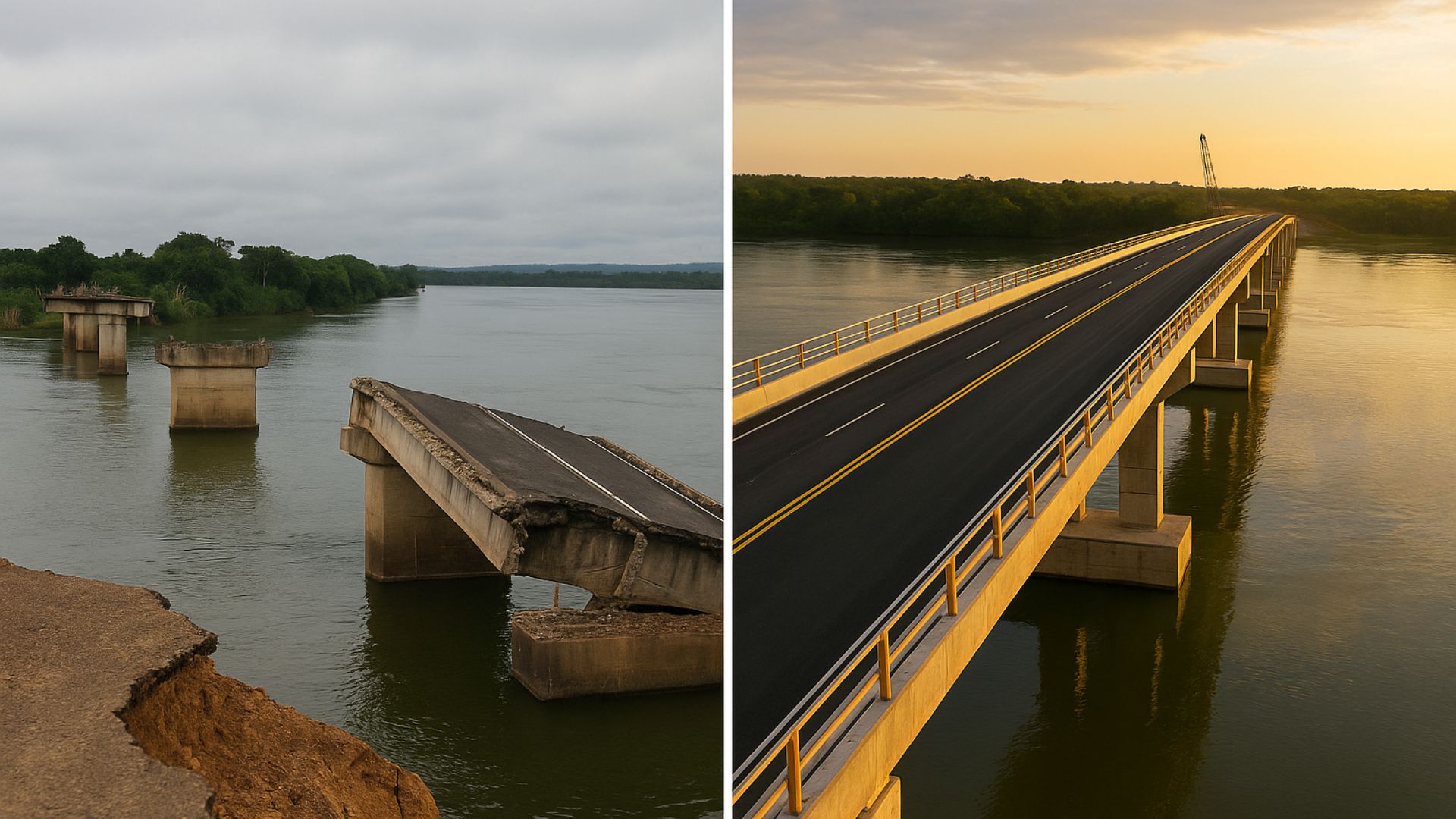
New Bridge Over the Tocantins River Advances to Final Stage and Integrates One of the Most Strategic Highway Corridors in the Country, Bringing High Federal Investment, Construction Technologies, and Direct Impact on Regional Mobility.
The reconstruction of the bridge over the Tocantins River, on BR-226, between Aguiarnópolis (TO) and Estreito (MA), has entered its final phase and has already achieved about 90% of the services completed, according to the National Department of Transport Infrastructure (DNIT).
The new structure, built after the collapse of the old Juscelino Kubitschek de Oliveira Bridge in December 2024, received federal investment of approximately R$ 171 million and was classified as an emergency work to restore the road connection between the North of the country and other regions.
Although the title mentions 1,700 meters, official DNIT projects inform that the crossing, known as the Estreito Bridge, will be about 630 meters long and 19 meters wide, with a clear span of 154 meters over the river.
-
The institute that trained the greatest aerospace engineers in Brazil has just opened its first campus outside São Paulo after 75 years: ITA Ceará will have R$ 445 million, new courses in energy and systems, and classes are expected to start in 2027.
-
Luciano Hang, owner of Havan, goes to Juiz de Fora after the tragedy in February, brings R$ 1 million, hands out R$ 2,000 cards, and donates up to R$ 15,000 to victims in the region.

-
The Brazilian passport allows legal residence in dozens of countries without the need for a prior visa, and most Brazilians are unaware that they can apply for residency directly upon arriving in nations in South America, Africa, and even Europe.

-
Petrobras sends a message to Brazilian truck drivers after fuel collapse and reveals plan to have 100% domestic diesel.


The bridge is part of a stretch of BR-226, considered one of the main traffic axes between the Midwest, Northeast, and North.
Economic and Logistical Impact of the Bridge Over the Tocantins River
The reconstruction of the crossing is treated by authorities and transport sector technicians as an essential element to reorganize the logistical flow of BR-226.

The direct connection between Tocantins and Maranhão enables the flow of agricultural production, regional supply, and reduction of operational costs along the Brasília–Belém corridor, according to infrastructure specialists consulted by official agencies.
Before the rupture of the old bridge, the stretch operated as a route for loads of grains, inputs, and consumer goods.
After the collapse, detours increased travel time and freight costs, affecting carriers and merchants.
The implementation of the new structure aims to restore the original circulation conditions.
In the municipalities of Aguiarnópolis, Estreito, and neighboring areas, local managers state that the expectation is for a resumption of movement in sectors related to transport, such as gas stations, restaurants, and accommodations.
The improvement in access tends to facilitate daily commutes, which, according to municipal authorities, impacts public services and economic activities.
Technologies and Materials Applied in Construction
The progress of the project is associated with federal resource injection and the work of teams mobilized in intensive mode.
DNIT states that more than 300 workers are working in two shifts, supported by a budget estimated at R$ 171 million.
To reduce the execution time, the agency adopted pre-cast elements, manufactured simultaneously with other stages.
Among the components produced are 2,062 pre-slabs and 45 pre-fabricated beams, installed to accelerate assembly and standardize execution.
The project includes two traffic lanes of 3.6 meters, three-meter shoulders, New Jersey-type barriers, sidewalks, and metal guardrails.

These items follow current engineering parameters for road works.
Progress of Construction and Final Stages of Implementation
With the superstructure practically installed, teams are executing the physical connection between the banks through ducts, prestressing, and structural finishes.
The installation of expansion joints, metal guardrails, and protection barriers also continues.
The following phases encompass paving, signage, and load testing, necessary tests to verify the structural behavior of the bridge before opening to traffic.
DNIT’s forecast is for completion by the end of this year.
BR-226 and the Resumption of the Connection Between the North and Other Regions
BR-226 connects Northeastern states and reaches the northern region of Tocantins, interconnecting with other federal highway corridors.
In the stretch between Estreito and Aguiarnópolis, the bridge over the Tocantins River is considered a strategic point.
Without the crossing, trucks are directed to longer routes, which, according to carriers, increases operational costs and compromises deadlines.
With the opening of the new bridge, the Brasília–Belém corridor regains its continuity, strengthening the movement of agricultural and industrial loads, in addition to passenger circulation.
This restoration is cited by sector technicians as relevant for road integration projects in the North of the country.
Use of the New Bridge and Expectations for Regional Mobility
The bridge was designed to accommodate cars, buses, trucks, and pedestrians, with lanes, shoulders, and sidewalks sized for this type of flow.
The expectation of public managers is that the route becomes more predictable and safe, especially when compared to the routes used after the fall of the previous bridge.


Residents of the region report that the reopening of the crossing should facilitate daily commutes related to work, study, and health services.
The direct connection between Maranhão and Tocantins, according to local authorities, tends to restore the mobility dynamics interrupted at the end of 2024.
Structural Safety and Environmental Monitoring
The project includes physical protection devices, such as barriers and guardrails, as well as structural solutions aimed at durability.
The use of prestressed concrete and pre-cast components follows engineering standards applied to large-scale bridges, aiming to reduce the need for corrective interventions.
The construction is also subject to environmental licensing.
DNIT informs that it adopts control measures to minimize impacts on the Tocantins River, such as waste management and sediment monitoring.
Agency technicians state that by replacing temporary or alternative structures, the new crossing should operate within safer parameters for the immediate surroundings.
With the approach of the delivery and the forecast of restoring direct road flow between Tocantins and Maranhão, a question arises among users and local authorities: how will the reopening of this connection alter traffic and logistics operations along BR-226 in the coming months?








Seja o primeiro a reagir!