





 Portuguese
  English
  Spanish
  5 min of reading
  0 comments


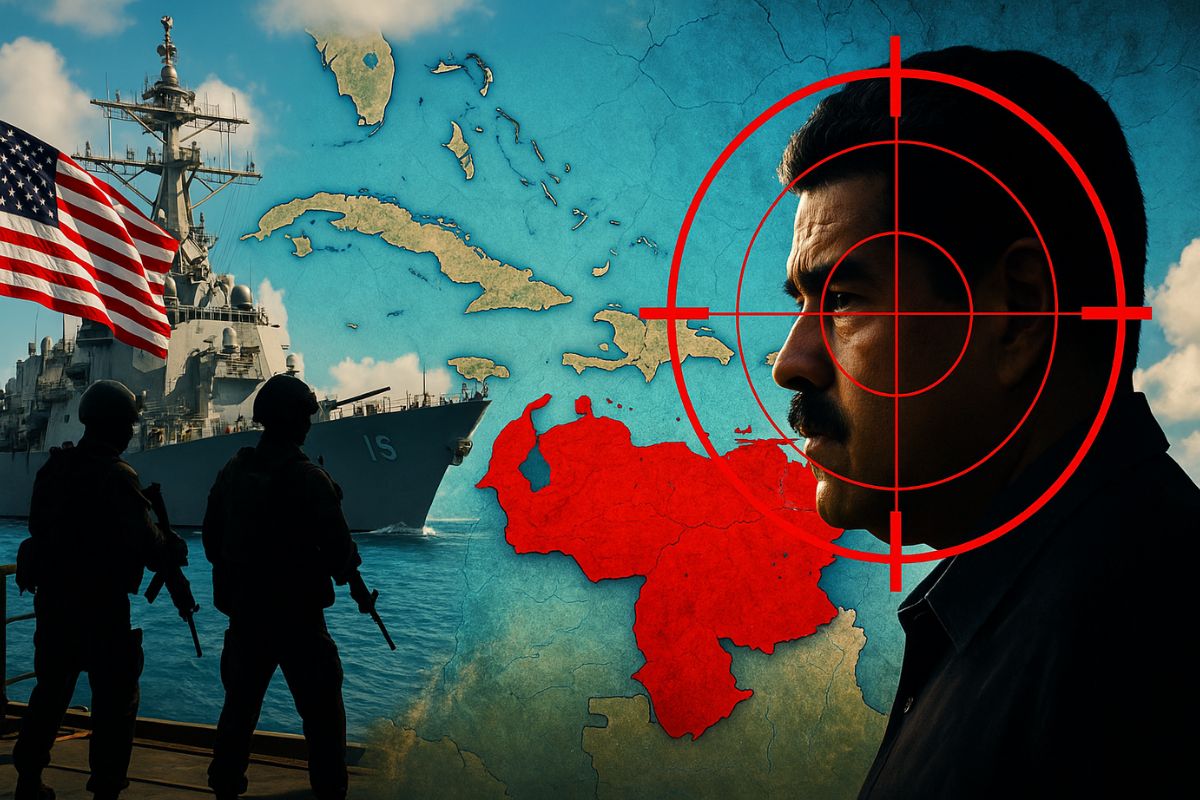
As The U.S. Military Presence Grows in The Caribbean, New Covert Operations, Terrorism Designations, and Anti-Narcotics Attacks Put Maduro Under Maximum Pressure and Push The Confrontation in Venezuela to An Unprecedented Level, With A Real Risk of Escalation, Regional Retaliation, and A Lasting Diplomatic Break That Could Affect Global Economy and Security.
The confrontation in Venezuela enters a much more delicate phase. Washington is expanding military operations, evaluating the removal of Nicolás Maduro, and preparing terrorism labels against structures linked to the regime, using the fight against drug trafficking as the central justification. In response, the Venezuelan government promises to resist and accuses the U.S. of trying to control the country’s oil.
At the same time, warships, a nuclear submarine, and advanced fighter jets are concentrating in the Caribbean, while intelligence agencies and the Department of Defense fine-tune scenarios ranging from maximum diplomatic pressure to covert actions aimed directly at the core of power in Caracas. Between public messages and secret talks, the fear is growing that the boundary between anti-narcotics operations and direct military action is becoming increasingly thin.
What Is at Stake in The Confrontation in Venezuela
At the center of the confrontation in Venezuela is a package of decisions under consideration in Washington. On one side, the Trump administration claims that Maduro plays a decisive role in the flow of illegal drugs heading to The United States. On the other, the Venezuelan government denies any link to drug trafficking and denounces an attempt at regime change.
-
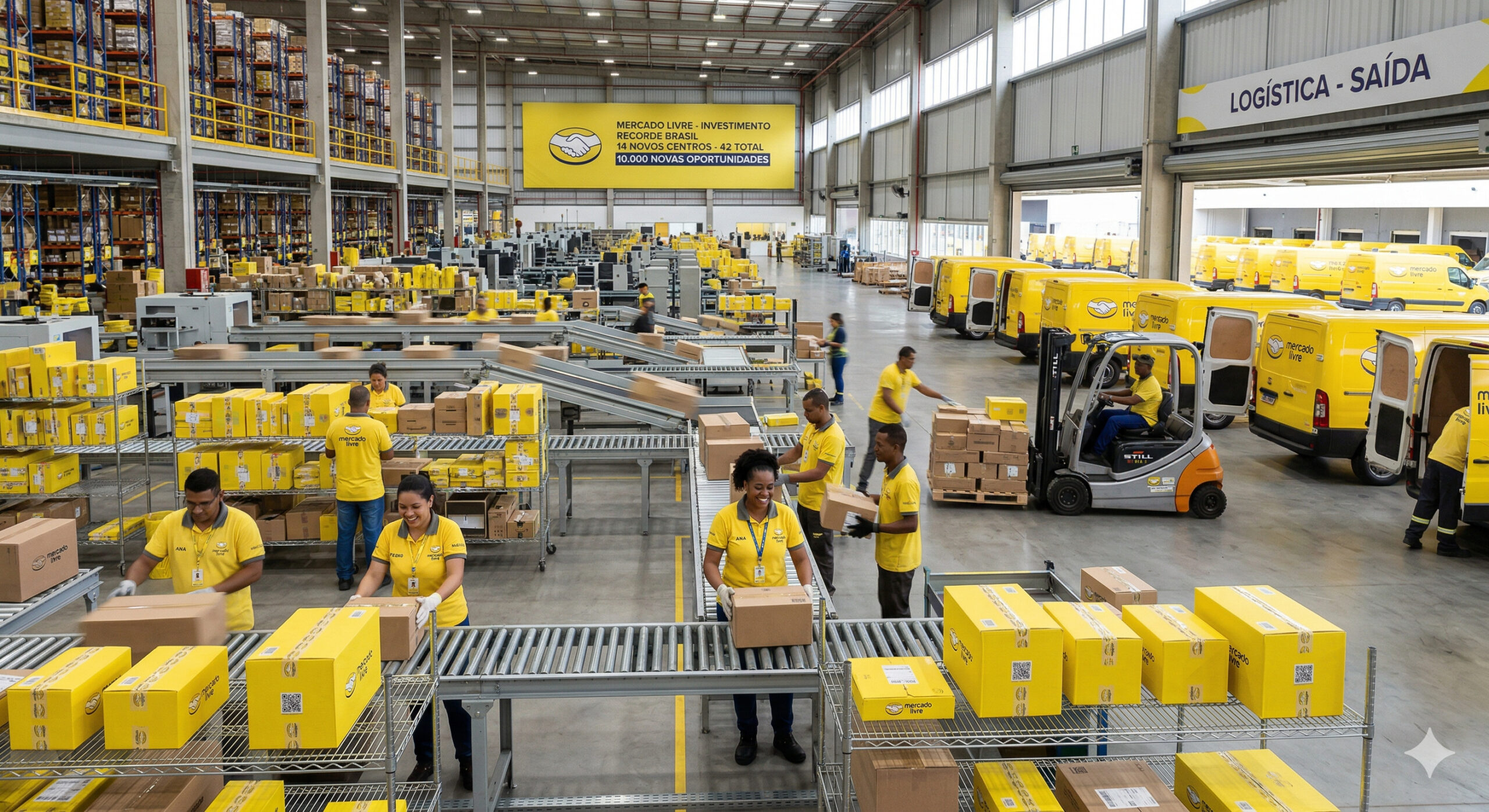
Mercado Livre “opens the vault” and announces a record investment of R$ 57 billion in Brazil in 2026, a value 50% higher than the previous year, with an expansion plan that includes 14 new logistics centers, totaling 42 units in the country and hiring an additional 10,000 employees.
-
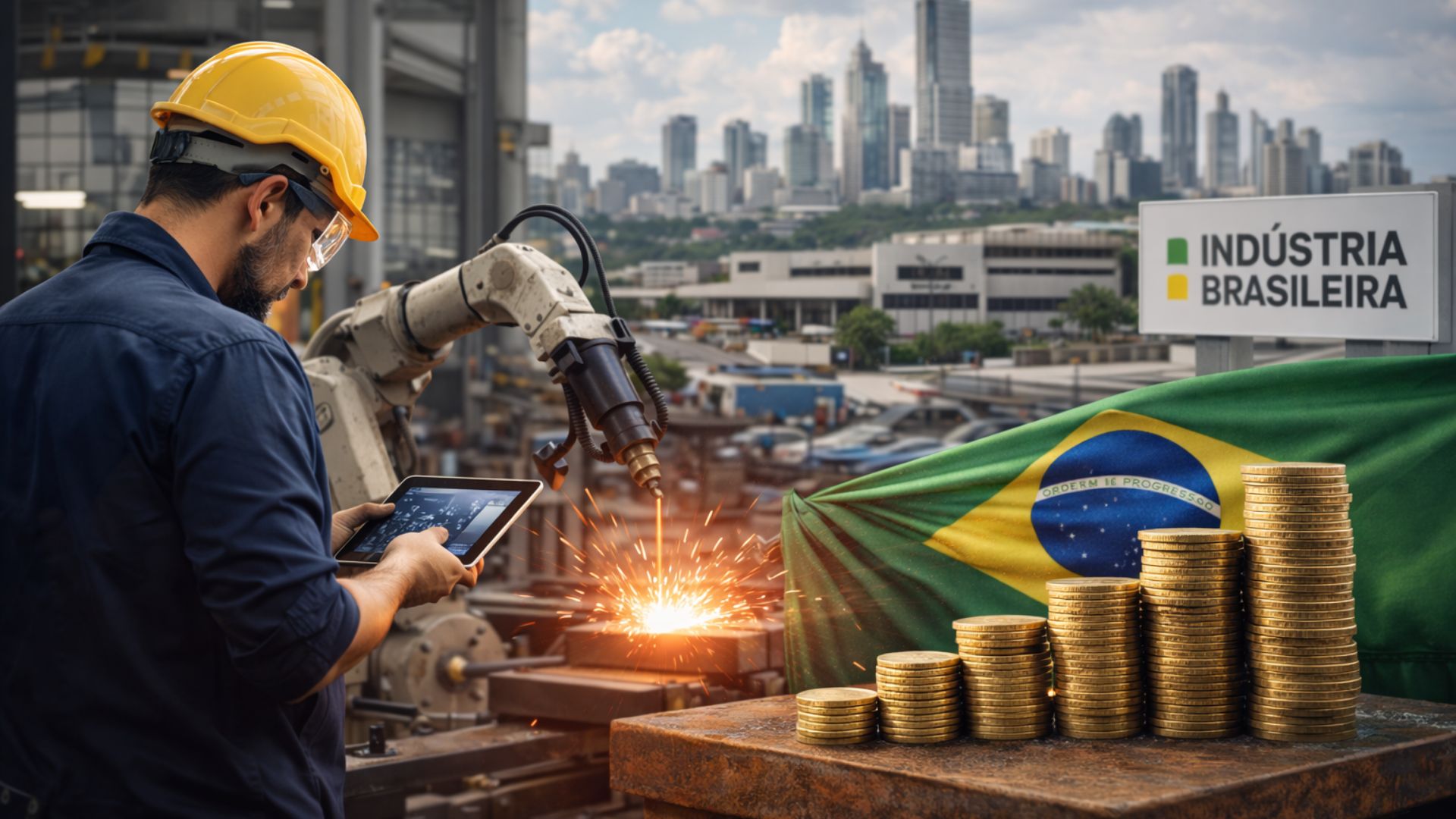
How investment in technology can revolutionize the national economy and enhance industrial gains, according to a study that highlights the direct impact on productivity, innovation, and wealth retention within Brazil.
-
The largest food company on the planet, JBS, has just opened a 4,000 square meter laboratory in Florianópolis to develop customized proteins that modulate muscle mass gain, immune response, and metabolic performance.

-
After nearly 30 bids and competition among industry giants, a Spanish company purchases one of the largest airports in Brazil for almost R$ 3 billion and takes over the management of Galeão in a concession that will last until 2039.


American officials admit, in a confidential manner, that one of the options being evaluated is to try to overthrow Maduro, combining covert actions, financial suffocation, and military operations focused on power structures linked to the Miraflores Palace.
The calculation is that constant pressure, combined with sanctions and isolation, could weaken the regime to the point of becoming unsustainable.
Military Siege in The Caribbean and Covert Operations
The confrontation in Venezuela is not only happening in speeches. The largest aircraft carrier in The U.S. Navy, the Gerald R. Ford, has arrived in The Caribbean with a full strike group, alongside at least seven warships, a nuclear submarine, and F-35 aircraft.
In theory, the mission is to combat drug trafficking. In practice, the firepower in the region goes far beyond what is necessary to intercept fast boats carrying drugs.
Since September, U.S. troops have carried out at least 21 attacks against boats accused of transporting drugs, with at least 83 dead, primarily in The Caribbean.
Human rights organizations classify some of these actions as possible extrajudicial executions, and some traditional U.S. allies express concern over violations of international law.
Moreover, the CIA has already received authorization to conduct covert operations in Venezuelan territory, further increasing the opacity of what happens away from the cameras.
The Federal Aviation Administration (FAA) has alerted major airlines to the risk of flying over Venezuelan airspace, classifying the situation as potentially dangerous.
Cartel de los Soles and The Terror Strategy
One of the most sensitive moves in the confrontation in Venezuela is the American plan to designate the Cartel de los Soles as a foreign terrorist organization. Washington accuses Maduro of leading this cartel, allegedly involved in large-scale drug importation to the U.S., something the Venezuelan president categorically denies.
The terrorism designation opens a new toolbox. By labeling the group as a terrorist entity, the U.S. can target assets, companies, financial structures, and logistics associated with the Venezuelan government, both inside and outside the country.
Furthermore, it facilitates military or cyber actions under the argument of combating terrorism, rather than just drug trafficking.
The siege becomes even more evident with the reward offered by Washington. The reward for information leading to Maduro’s arrest has been raised to 50 million dollars, an amount that turns the president into a formal target of international manhunt, while sending a political message that the ultimate goal is the overthrow of the current government.
Diplomatic Pressure, Sanctions, and Backroom Talks
Despite the tough tone, the confrontation in Venezuela also involves diplomacy. Publicly, Trump states that the terrorism designation would allow attacking Maduro’s assets and infrastructure, but does not rule out direct negotiations in search of a diplomatic solution. And
in parallel, American officials admit that talks are ongoing between Caracas and Washington, although no one knows how far they can prevent a military escalation.
Maduro, for his part, tries to present himself as a defender of Venezuelan sovereignty, stating that any disagreement should be resolved through dialogue.
He declares himself willing to hold face-to-face meetings with interested interlocutors, even while continuing to accuse the U.S. of trying to control the country’s oil reserves.
In this chessboard, each public gesture can simultaneously serve as a message to the internal population and as a piece of diplomatic bargaining.
Risk of Asymmetric War and “Prolonged Resistance”
In conventional military terms, U.S. forces are vastly superior to those of Venezuela, which are currently weakened by lack of training, low salaries, and outdated equipment.
This disparity leads the Maduro government to consider alternatives outside of direct confrontation.
Documents and sources indicate that the Venezuelan regime is working with the concept of “prolonged resistance” in case of invasion, a model of asymmetric warfare based on guerrilla tactics.
The idea would be to spread small military units across more than 280 strategic points, responsible for sabotage, precise attacks, and continuous wear against any foreign force.
In practice, this means that any American operation that goes beyond drug trafficking combat can turn the confrontation in Venezuela into a long, unpredictable, and difficult-to-end conflict, with impacts on civilians, regional borders, and trade routes.
Why The Caribbean Became The Stage for The Dispute
The Caribbean has become the visible epicenter of the confrontation in Venezuela for two central reasons. First, the region is an important route for some of the cocaine heading towards North America, even though the largest cause of overdose deaths in the U.S. today is the fentanyl produced on a large scale in Mexico.
Second, the strategic position allows for the projection of military power over Venezuela and neighboring countries quickly.
Officially, Washington insists that the priority is to contain the flow of drugs that kills Americans. However, critics point out that the concentration of military assets, the rhetoric around terrorism, and the billion-dollar reward for Maduro indicate a broader objective: to reshape the balance of power in Latin America, using the Venezuelan crisis as a catalyst.
In this scenario, each new naval movement, every covert operation, and every additional sanction increases the noise and uncertainty about the political future of Caracas, while keeping neighbors and international organizations on high alert.
In your understanding, does this escalation of U.S. operations reduce the risk of confrontation in Venezuela or merely push the conflict down an even more dangerous path?







-

Uma pessoa reagiu a isso.