





 Portuguese
  English
  Spanish
  3 min of reading
  0 comments


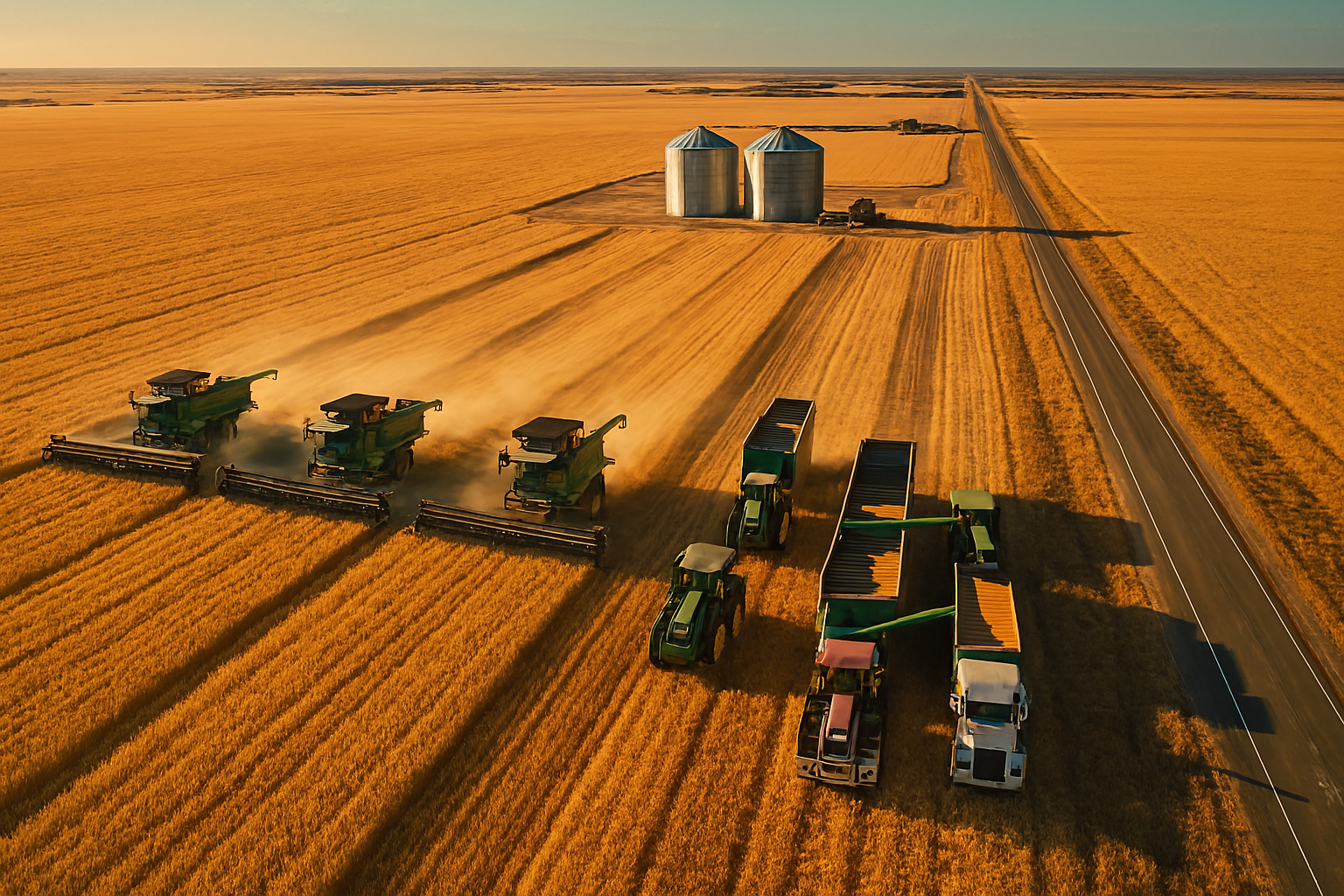
In Australia, Wheat Farms Over 100 Thousand Hectares Operate with Total Mechanization, Continuous Harvest and Agricultural Logistics on a Continental Scale.
In some regions of Western Australia, the traditional notion of a farm simply stops making sense. There, individual agricultural properties exceed 100 thousand continuous hectares, an area larger than many urban municipalities. There are no visible fences on the horizon, no nearby villages, no clear natural interruptions. What exists is an almost uninterrupted agricultural carpet, where wheat is grown on a territorial scale, not just a productive one.
This model is known as broadacre farming, a typical Australian system that relies on gigantic land areas, extreme mechanization and low population density to turn grains into continuous production.
Machines in Place of People: The Logic of Extreme Scale
On these farms, direct human labor is minimal compared to the cultivated area. Tractors, seeders, and large harvesters operate 24 hours a day during the harvest, guided by high-precision GPS and autopilot systems.
-
The eggshell that almost everyone throws away is made up of about 95% calcium carbonate and can help enrich the soil when crushed, slowly releasing nutrients and being reused in home gardens and vegetable patches.

-
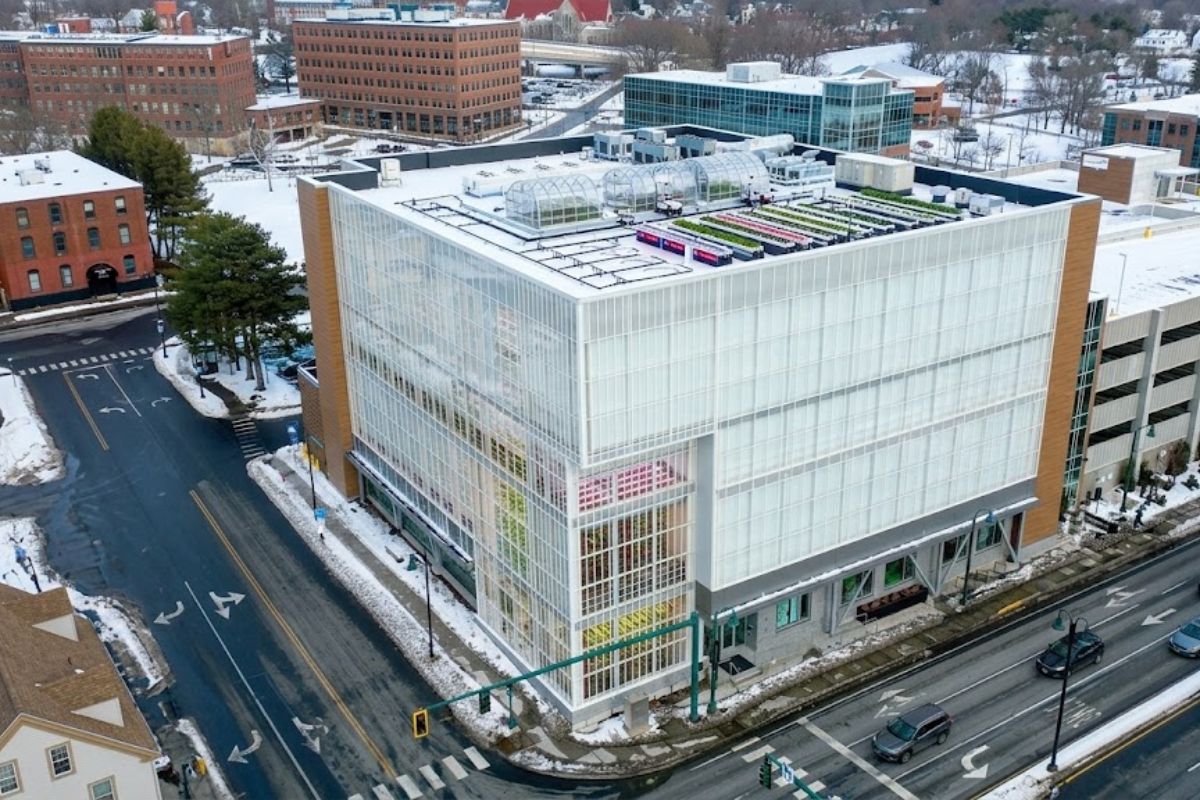
This farm in the United States does not use sunlight, does not use soil, and produces 500 times more food per square meter than traditional agriculture: the secret lies in 42,000 LEDs, hydroponics, and a system that recycles even the heat from the lamps.
-
The water that almost everyone throws away after cooking potatoes carries nutrients released during the preparation and can be reused to help in the development of plants when used correctly at the base of gardens and pots, at no additional cost and without changing the routine.

-
The sea water temperature rose from 28 to 34 degrees in Santa Catarina and killed up to 90% of the oysters: producers who planted over 1 million seeds lost practically everything and say that if it happens again, production is doomed to end.


In many cases, a single machine covers hundreds of hectares per day, something impossible in traditional agricultural models.
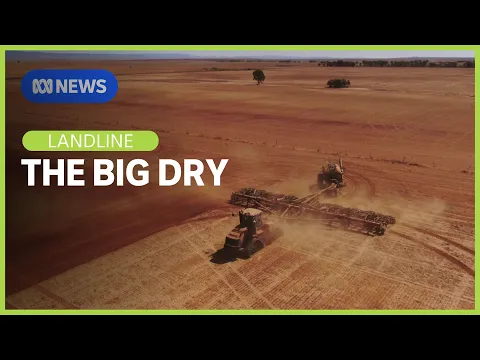

The logic is simple: in such large areas, stopping means losing productivity. Therefore, operations are planned like open-air industrial lines, with continuous shifts, scheduled maintenance, and integrated logistics.
Wheat Production in Fields Larger Than Entire Cities
Wheat is the flagship crop of this model. Australian broadacre farming produces hundreds of thousands of tons per harvest on individual properties, with yields tailored to local soil and climate conditions.
This is not about seeking records of productivity per hectare, but about adding gigantic volumes through territorial scale. Even with average yields lower than those of irrigated regions, the final volume produced per farm is colossal.
Agricultural Logistics on a Continental Scale
Harvesting wheat in such extensive areas creates its own logistical challenge. Trucks travel dozens of kilometers within the farm before even reaching a highway. Temporary silos, mobile warehouses, and transshipment points are strategically distributed to avoid bottlenecks.
After harvesting, the grain travels via dedicated railways to ports such as Fremantle and Esperance, integrating these farms directly into the global market. The farm does not end at the gate — it connects directly to international trade.
Unpredictable Weather and Technical Adaptation
A large part of these agricultural areas is subject to irregular rains, long periods of drought, and shallow soils. To cope with this, producers have adopted specific techniques such as direct planting, conservation management, and drought-resistant wheat varieties.
The result is a resilient system, designed not to maximize yield in perfect years, but to function every year, even under adverse conditions.
Few People, Lots of Land and Technology in Command
In many of these farms, fixed teams consist of fewer than 20 people to manage tens of thousands of hectares. Decision-making relies more on climate data, soil maps, and machine telemetry than on direct observation in the field.
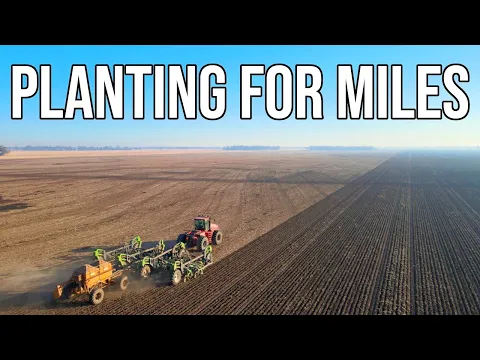
Satellites, sensors, and agricultural software allow monitoring of crops that would be impossible to follow on foot or manually.
A Model That Only Exists Where Land Is Abundant
The Australian broadacre farming is only viable because it combines three rare factors in the world: huge continuous land areas, low population density, and direct access to the global market. In denser countries, this model would be unviable due to land conflicts, land costs, and territorial fragmentation.
In Australia, it has consolidated as the foundation of grain production, transforming the country into one of the largest wheat exporters in the world, despite its harsh climate.
These farms do not operate as isolated units, but as nodes of a continental agro-industrial system, where planting, harvesting, storage, and export form a continuous chain.
Wheat ceases to be just an agricultural product and begins to be treated as industrial flow, produced in fields larger than cities, by machines that almost never stop.








-

-

-

4 pessoas reagiram a isso.