





 Portuguese
  English
  Spanish
  6 min of reading
  2 comments


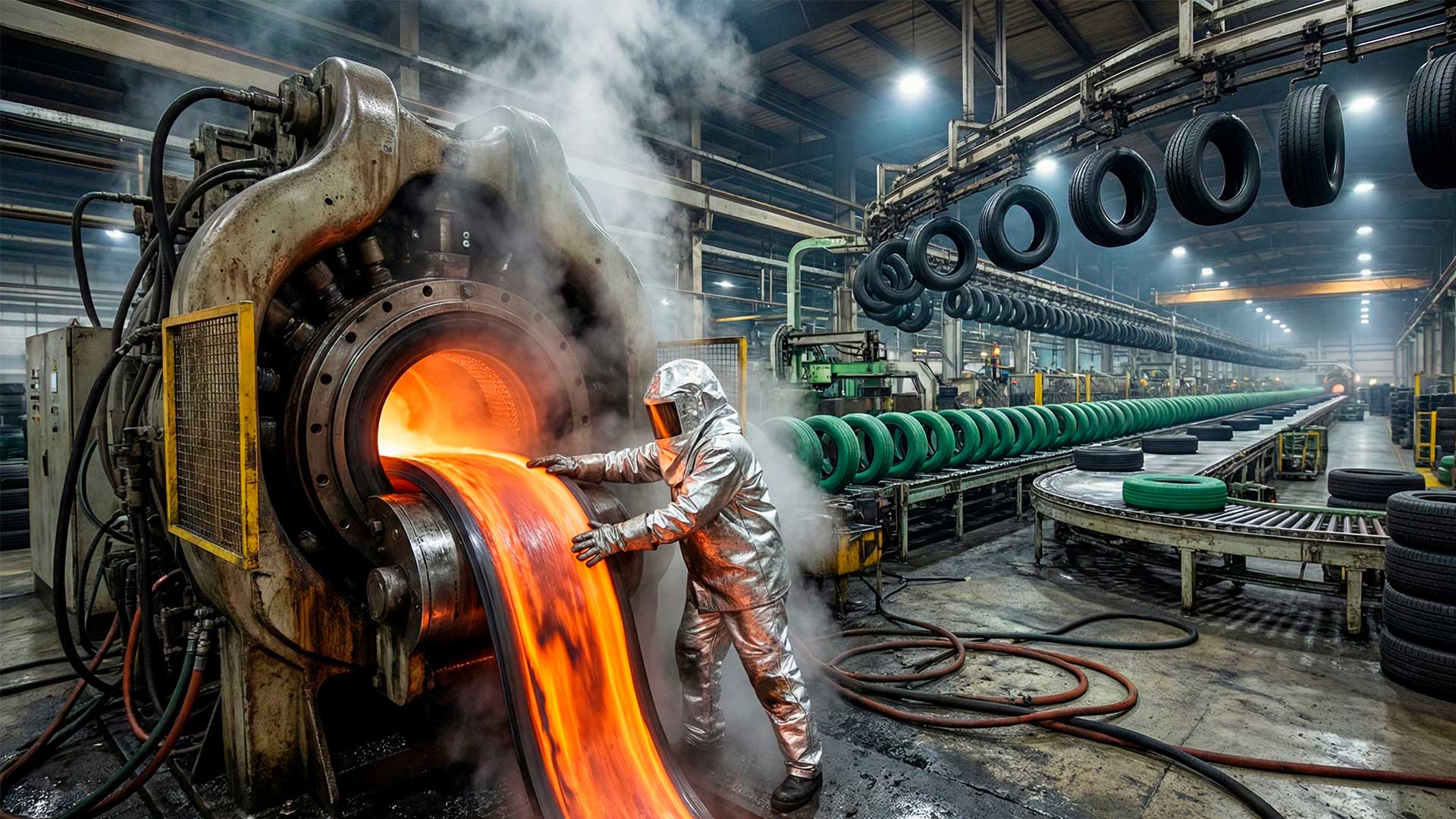


Understand, Step by Step, How Natural Rubber, Petroleum Derivatives, Steel, and Technical Fabrics Are Transformed Into Modern Automotive Tires That Ensure Your Safety, Help Save Fuel, and Are Already a Great Environmental Challenge in Brazil and the World.
The tire is the only point of contact between the car and the ground. Even so, many people have never stopped to think about how it is made, what raw materials go into the “recipe,” and why this process requires so much technology and quality control.
Globally, production already exceeds 2 billion tires per year, consuming tens of millions of tons of rubber.
In Brazil, this industry moves tens of millions of units annually. According to the National Association of Tire Industry (ANIP), about 52 million tires were sold in 2023, despite an 8.2 percent decline compared to the previous year, which highlights the sector’s significance in the economy and mobility of the country.
-
According to an analysis by NASA, only one human-made structure is visible from space, and it is not the Great Wall of China or the Pyramids of Egypt.

-
After 377 years of history, the Brazilian Army will have its first female general: Colonel Claudia Cacho has been promoted to brigadier general by Lula and will receive the sword and command baton this Wednesday in Brasília.

-
A Mercado Livre customer opened their package and found 32 resumes of people looking for jobs crumpled as protective paper inside the box, exposing names, addresses, documents, and phone numbers of dozens of candidates.

-
Iceberg A23a, one of the largest in the world, is undergoing accelerated collapse and may disappear: what explains the end of the ice giant?


Behind every tire that comes off a production line, there is a precise combination of natural and synthetic rubber, silica, carbon black, steel, technical fabrics, and chemical additives, mixed in giant equipment and molded with millimeter tolerances.
The quality of this “rubber engineering” directly impacts braking, stability, and fuel efficiency of the vehicle.
See how the modern tire emerged, what the main raw materials are, and what stages make up the manufacturing of automotive tires, focusing on the reality of the industry and the Brazilian consumer.
From Rigid Wheel to Modern Tire: A Revolution in Mobility
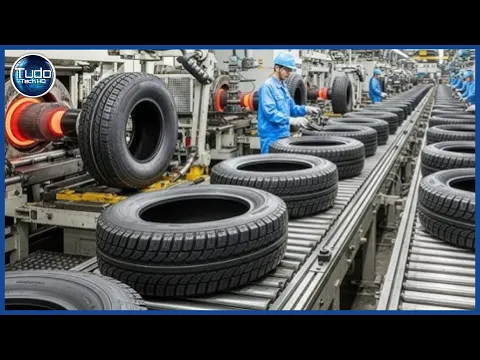

Before tires, wooden, iron, or steel wheels were common in carts and primitive vehicles. They were extremely rigid, transmitting every impact to the vehicle and the driver, and limiting speed and comfort. The idea of using a flexible structure filled with air was the step that changed the history of land transport.
At the end of the 19th century, inventors like John Boyd Dunlop created the first air-cushioned tires while attempting to improve bicycles and velocipedes.
A few years later, European manufacturers improved the concept with detachable tires that could be replaced and repaired more easily, paving the way for adoption in automobiles.
From then on, the tire became a central piece of modern mobility. Today, major global manufacturers like Michelin, Bridgestone, Goodyear, Continental, and Pirelli meet a demand that exceeds billions of units per year, driven by the increase in passenger cars, trucks, and motorcycles in emerging and developed countries.
What Goes Into the Recipe and Raw Materials of the Automotive Tire
Despite seeming like a simple “ring of rubber,” the modern tire is a high-performance composite. According to technical studies on tire engineering, it combines elastomers, fibers, steel, and various organic and inorganic additives to achieve a balance between grip, durability, and rolling resistance.
The base is rubber, which can be natural, extracted from rubber trees from latex, or synthetic, produced in petroleum refineries.
The tire industry is now one of the largest consumers of rubber on the planet, with a significant portion of the world’s total elastomer volume ending up in tire factories.
The mix also includes reinforcing fillers, primarily carbon black and silica, along with resins, oils, antioxidants, curing agents, and waxes. Carbon black gives the tires their typical black color and increases wear resistance.
Silica has become one of the most important materials in modern tires because it improves wet grip and reduces rolling resistance, helping to save fuel and energy.
Manufacturers like Continental claim that the introduction of silica in tread compounds has allowed for a significant reduction in braking distances and energy consumption, creating what are known as “green tires,” which combine safety and efficiency.
In addition to rubber, the tire contains various internal structures. Polyester, nylon, or rayon textile plies form the casing, providing controlled flexibility to the tire. High-strength steel belts reinforce the area beneath the tread, ensuring stability and uniform wear. In the beads, steel rings coated with rubber secure the tire to the rim and ensure air sealing even under high pressures.
Step by Step of How Tires Are Made in Factories
With the design defined, the process starts with the mixing of compounds. In large internal mixers known in the industry as Banbury, natural rubber, synthetic rubber, silica, carbon black, and other additives are heated and compressed until a homogeneous, dense, and sticky mass is formed. This stage is critical as it defines a large part of the final properties of the tire.
After cooling on rollers, the material is laminated and cut into sheets and strips. Each formulation goes to a specific part, such as sidewalls, inner linings, and tread.
In parallel lines, textile plies, steel belts, and beads are produced, which will later be combined in the tire building stage, using automatic machines that apply successive layers of rubber and reinforcements onto a mounting drum.
The partially assembled unit receives the tread through extrusion, as a continuous strip of raw rubber that is cut to the exact length and “wraps” around the casing. The so-called “green tire” is then created, still without tread design, which is sent to the curing mold.
There, heat in the range of up to around 180 degrees Celsius and high pressure cause the rubber to undergo a curing reaction, adhering to all layers and imprinting the tread patterns, grooves, and sidewall markings.
After curing, the tire is demolded, undergoes finishing to remove excess material, and proceeds to a rigorous inspection.
According to manufacturers and regulatory bodies, this inspection includes visual checks, leak tests, dynamic balance verification, and, in many cases, X-ray examinations to detect internal flaws. Only then are the approved tires marked and sent to automakers, distributors, and retail stores.
Tires, Safety, and Environment
If the manufacturing process is highly technological, the use and disposal of tires also present challenges. Studies on life cycle and waste indicate that the volume of unusable tires in the world could reach 5 billion units by 2030, if the growth rate of the fleet remains steady, which represents a significant environmental issue for governments and companies.
In Brazil, some of these tires are allocated to collection and recycling programs, transforming the material into alternative fuel for industrial furnaces, rubber asphalt, or sports flooring.
However, there are still logistics reverse bottlenecks, especially in areas far from major centers, which fuel discussions about the responsibilities of manufacturers, importers, and the public authorities.
From the driver’s perspective, the message is clear. Quality tires, with modern compounds and good grip, combined with proper inflation, aligned wheels, and respect for the TWI (tread wear indicator), reduce the risk of hydroplaning, improve braking, and help save fuel.
The choice between cheaper tires, retreads, or high-tech “green” models thus becomes a decision that blends price, safety, and environmental impact.
Do you think it worth saving a few reais on tires of questionable origin, risking your family’s safety and increasing illegal disposal, or does it make more sense to invest in technology, durability, and recycling? Tell us in the comments if you prioritize price, brand, performance on wet surfaces, or sustainability when you need to replace your car tires, and what you think of so-called green tires compared to traditional models.









Economia é base para ****, portanto, você economiza de verdade quando adquire produtos com qualidade e segurança.
Pneus “sching Ling” não presta