





 Portuguese
  English
  Spanish
  8 min of reading
  13 comments


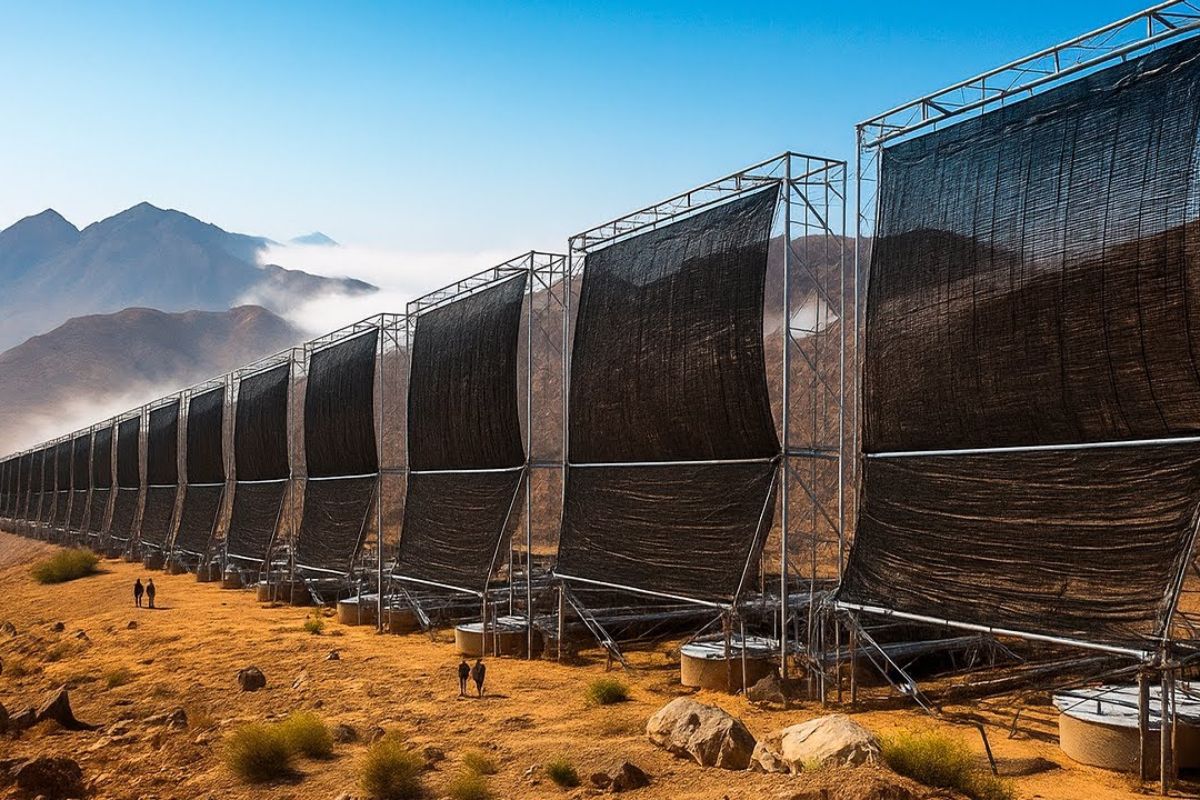


While a green wall of millions of hectares holds back the advance of deserts, giant networks capture water from fog and turn the impossible into routine, supplying whole villages and helping to protect billions of people around the world.
The planet is witnessing the birth of a new generation of works that do not raise skyscrapers, but rather forests, drinking water, roofs, and bars of soap. From the green wall in China to the fog nets in North Africa, passing through factories of TVs, tiles, and soap, engineering is using sand, sun, glass, stone, and sunflower oil as raw materials for safety, comfort, and mass survival.
The green wall, fog nets, and factories that resemble spaceships show a common point: the industry has learned to work with nature rather than just trying to control it by force. And it is from this combination of science, scale, and human stubbornness that drinking water comes from the air, forests from the desert, screens that connect us to the world, roofs that withstand decades of rain, and soap that protects our health every day.
What Is the Green Wall That Holds Back the Advance of Deserts

The so-called green wall is a gigantic belt of forests, windbreaks, and reclaimed areas created to combat desertification and the sandstorms that suffocated northern China. The project, known as the Three North Shelter Belt, was designed to function as a living barrier against the advance of the desert, using millions of trees strategically planted along thousands of kilometers.
-
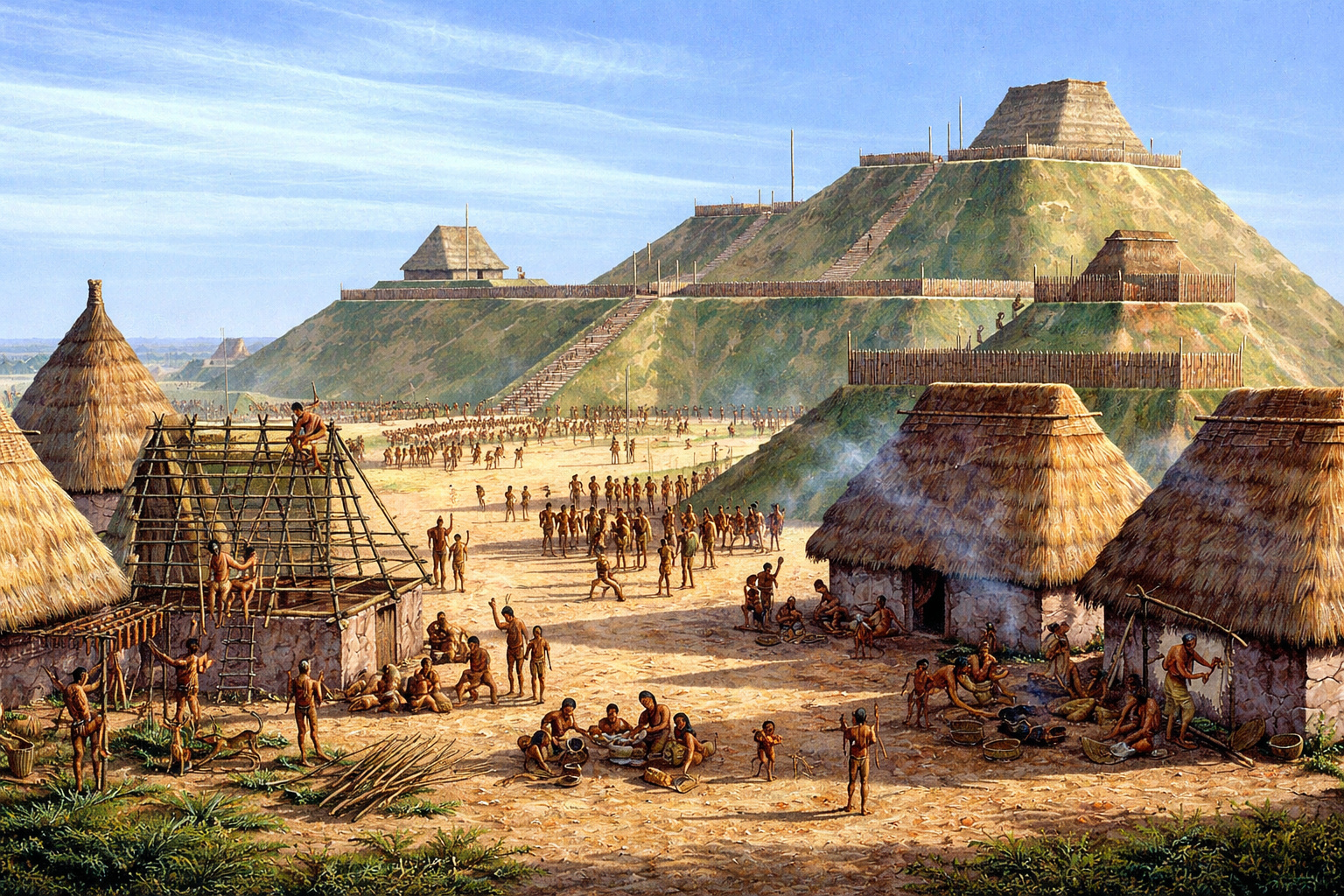
With over 14 million baskets of earth moved, an ancient North American metropolis built a monumental pyramid of 30 meters and established a city with 20,000 inhabitants nearly a thousand years ago.
-
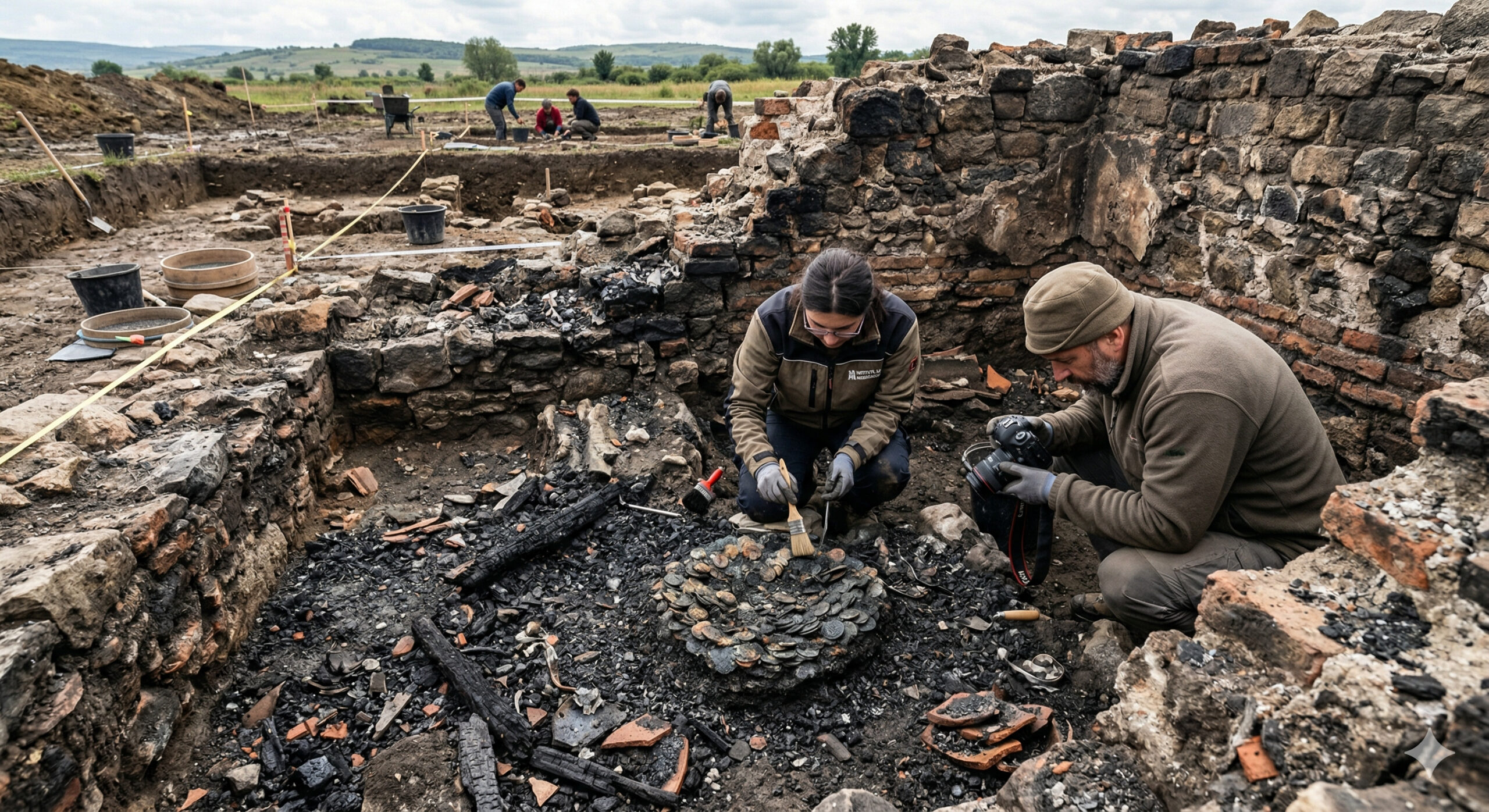
A 1,900-year-old treasure emerges from a Roman house destroyed by fire and sealed since antiquity in Romania, with coins and metals fused among the ashes.
-
The Brazilian colonial city that stopped in time and shares territory with a rocket launch base.

-
79-year-old woman challenges limits, visits 193 countries in the world after 56 years of planning and reveals the behind-the-scenes of a global journey that few have managed to accomplish.


For decades, deforestation, overgrazing, and predatory use of groundwater transformed the soil into dust. Dust storms traveled hundreds of kilometers, darkening the sky of major cities and forcing residents to live with masks for dozens of days a year. The green wall was born precisely to interrupt this cycle of degradation and restore at least a minimum of stability to the local climate.
The plan is brutally ambitious: to reach tens of millions of hectares of reforested and recovered areas by mid-century, increasing the country’s forest cover and transforming regions once seen as “the end of the world” into productive areas that are cooler and less prone to destructive storms.
How the Green Wall Transforms Sand Dunes into Forests

Planting trees in loose sand would be a recipe for failure if engineering had not invented a “pre-soil” to hold everything. The green wall relies on a simple yet brilliant technology: straw boards arranged in a chessboard pattern.
Millions of kilograms of straw are brought to the heart of the dunes, where there are no roads, shade, or comfort.
Workers draw a huge grid in the desert, burying bundles of straw and creating regular squares that, seen from above, look like a gigantic golden chessboard. This mesh has three functions at once:
- stabilizes the dunes and prevents the sand from “traveling” with the wind
- reduces the air speed at ground level
- creates protected micro-zones where moisture can be retained for longer
In the center of each square, machines and teams plant seedlings of resilient species, such as drought-adapted trees and native shrubs. The same straw that holds the sand also decomposes, becomes organic matter, and feeds the roots, helping these plants advance to deeper layers of soil.
Over time, what was once just straw and a withered seedling transforms into a green mosaic that anchors the dunes, improves the soil, and begins to alter the microclimate.
The green wall is precisely this accumulation of vegetated islands that, together, become an ecological barrier against the desert.
Sun, Panels, and a Roadway Planted in the Middle of Nothing
Just trees won’t solve the problem if there is no water. In some stretches, the green wall relies on another equally absurd work: a roadway that crosses the desert and functions as a lifeline for hundreds of thousands of trees.
Next to the asphalt, deep wells have been drilled to pull brackish water from aquifers over 100 meters deep. Instead of electric cables crossing the whole desert, the solution was to turn the problem into an ally: fields of solar panels power the pumps, using the excess sunlight to irrigate, through drip, the green corridor.
In some areas, towers surrounded by thousands of moving mirrors concentrate sunlight into molten salts, which store heat and generate electricity even at night.
Along the roadway, species adapted to drought form a forest corridor that protects the asphalt, stabilizes the soil, and also helps reduce the local temperature. The sun that once burned now supplies the green wall with energy and water.
Giant Networks That Harvest Water from Fog
While the green wall fights against the desert in Asia, another front of battle takes place on dry slopes connected to the Sahara, where huge three-dimensional mesh networks capture water directly from fog. No pumps, turbines, or reactors. Just wind, plastic fiber, and gravity working together.
In these mountains, fog coming from the ocean covers the peaks every morning but disappears without being utilized.
Engineers observed the moss on the rocks and understood the message: the air was laden with moisture. The solution was to hang structures over 6 meters high with a special mesh, resistant to wind, sun, and temperature variations.
When the fog passes through the nets, the tiny water droplets hit the fiber, condense, coalesce, and flow into V-shaped troughs.
From there, the water flows through pipes to storage tanks. On a good foggy day, a set of just over thirty of these structures can produce more than 36,000 liters of drinking water per day, enough to supply dozens of villages, schools, and thousands of animals.
The logic is similar to the green wall: using a natural phenomenon that has always been there but no one harnessed at scale. The fog nets create water where there was once only thirst.
From Desert to Living Room: Glass, LEDs, and TVs That Come from Sand
If the green wall and fog nets deal with water and forests, another part of this story lies within closed factories, where quartz sand turns into glass, glass turns into screens, and screens turn into TVs. The same engineering that tamed dunes uses silica from quarries as the base of the electronics industry.
Large blocks of sandstone rich in silica are dynamited, crushed, washed, and refined until they become pure sand. This sand enters furnaces that exceed 1500 ºC, where it remains for dozens of hours until it becomes homogeneous molten glass. Two ultra-thin sheets are joined, receiving microscopic transistors, color filters, and polarizing films.
On the back, a matrix of tiny LEDs provides the light that the LCD panel cannot produce on its own. Each LED is smaller than a grain of rice, but together they illuminate millions of pixels. Circuit boards coordinate everything, processing billions of signals per second to transform electrical impulses into images, sound, and internet connectivity.
All this construction is exhaustively tested in chambers of heat, cold, vibration, and humidity, before finally reaching your living room. The curious detail is that the beginning and end of the chain meet: without stone, there is no glass; without glass, there is no screen; and without a screen, there is no window through which we see exactly reports on the green wall, the fog nets, and the planet itself undergoing transformation.
Stone That Becomes Roof: The Engineering Behind Asphalt Tiles
On the other end of daily life, roofs that seem trivial hide a high-precision industrial process. Everything begins in quarries where silica-rich rocks are blasted, crushed, washed, and calibrated in size.
Part of this stone becomes the base for fiberglass, which will be the “skeleton” of the asphalt tiles that cover millions of homes.
The fibers are drawn from molten glass through tiny holes at absurd temperatures, cooled in seconds, and gathered into mats.
These mats receive layers of modified asphalt, often recycled from old roads, and are then covered with colored mineral granules, responsible for protecting the material from rain, sun, and fire.
What comes out of the end of the line is a flexible, durable, and uniform sheet, which is then cut into standard tiles, stacked, packaged, and sent to rooftops around the world.
The same logic of the green wall appears here on a domestic scale: a layer of protection installed with regularity and repetition, to defend structures against the weather for decades.
From Sunflower Fields to Bars of Soap
There is also invisible engineering in the bath. Millions of tons of soap produced annually depend on industrial chains as sophisticated as those of electronics.
In the case of sunflower oil, it all starts in fields illuminated by thousands of hours of sunlight each year, where plants grow with low demand for chemical inputs.
The harvested seeds go through cleaning, rigorous drying, and then high-pressure presses that extract the crude oil.
This oil is filtered, heated, refined, and prepared for the key step: saponification, a chemical reaction between the oil and a strong alkali that generates soap and glycerin.
The crude soap is washed, ground, turned into granules, and mixed with glycerin, salt, pigments, and fragrances.
The pasty mass enters vacuum extruders that remove air bubbles, ensuring dense, smooth, and crack-free bars. Molds engrave logos, and each unit is packaged with batch codes and traceability.
In the end, an apparently simple bar is the result of a long conversation between agriculture, fine chemistry, and process engineering, just as the green wall is the result of a conversation between ecology and infrastructure on a continental scale.
What the Green Wall and These Technologies Say About the Future
When we look at everything together, the story ceases to be about isolated projects and becomes about a paradigm shift.
The green wall that holds back the desert, the networks that collect water from fog, the factories that transform sand into screens, stone into roofs, and oil into soap all show the same direction: to use science and industry to protect, not just to exploit.
These solutions are not perfect or free from risk. Fragile monocultures, water consumption in dry areas, and poorly calculated environmental impacts can turn medicine into poison.
But the learning is continuous, with course corrections to diversify species, reduce consumption, and bring technology and natural processes even closer together.
In the end, the green wall, fog nets, roofs, and soap have something in common: they become invisible in daily life, but are part of the silent infrastructure that keeps billions of people safer, cleaner, connected, and protected in an increasingly unstable planet.
And you, looking at all this, imagine yourself more on the side of the green wall, working to hold back the desert, or on the side of those who only notice all this engineering when it fails?








Nada de novidade. Os indígenas já captavam água das nuvens em tempos pré colombianos.
Nós seres humanos somos capazes de consertar os estragos que já fizemos no nosso planeta, pois criatividade, inteligência não falta. A grande questão é a ganância pois a maioria se preocupa com o seu ego, lucro, e deixam de pensar que somos todos iguais, que vamos deixar gerações futuras e que eles,assim como nós, precisarão de água, ar, solo para plantar, enfim precisarão de tudo para poder sobreviver. Porque produzir armas é não comida…⁹
Tô com o povo da mudança! Viva a reciclagem!