





 Portuguese
  English
  Spanish
  5 min of reading
  0 comments



Exclusive Corridor Modifies The Landscape Of Avenida Brasil And Reorganizes Movements On The Main Expressway Of Rio De Janeiro.
Anyone crossing Avenida Brasil today finds a landscape different from the endless traffic jams and construction sites that have succeeded over the years.
The flow of trucks heading to the Port, cars from all parts of the city, and crowded buses remains intense, but has gained the company of elevated platforms, new walkways, and articulated buses circulating in their own lane in the middle of the expressway.
In this scenario, the BRT Transbrasil corridor has started to function as the backbone of a redesign of mobility on the main traffic artery of Rio.
-
Mars is accelerating, and scientists have discovered that the planet’s day is getting shorter, revealing surprising signs of internal activity.

-
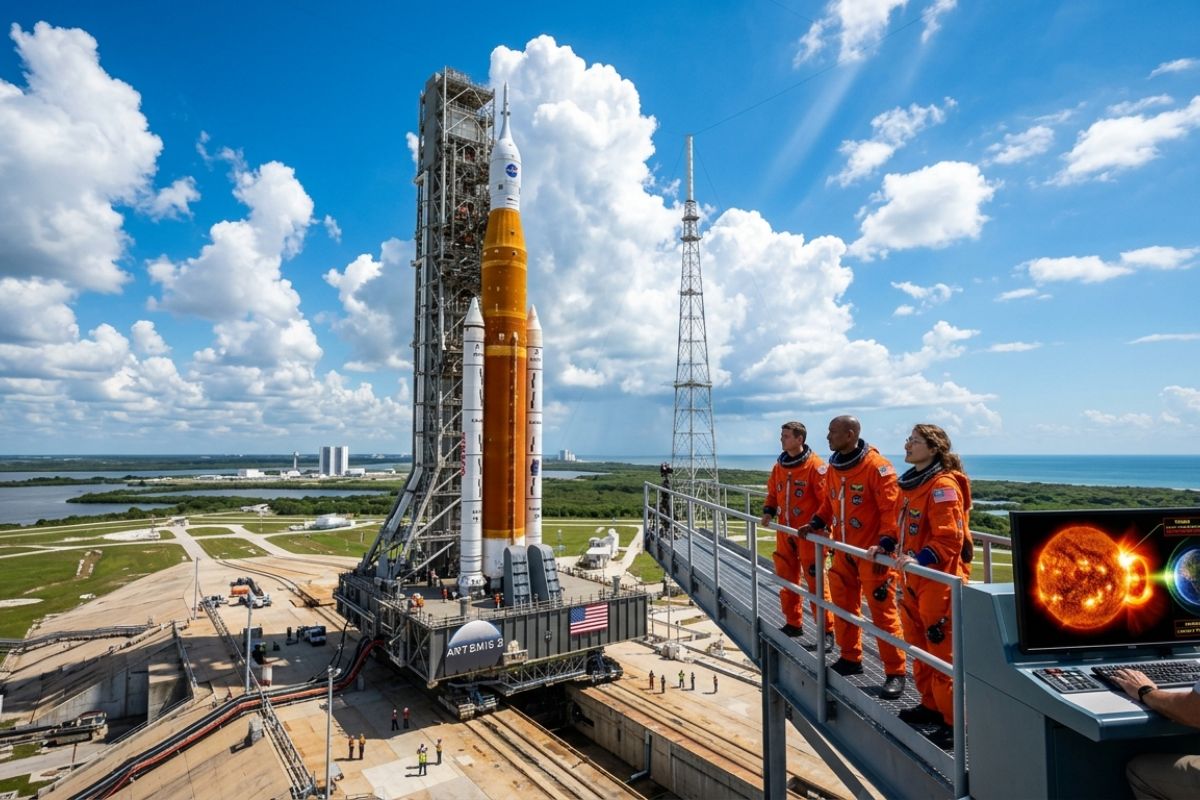
Artemis 2 is set to launch on April 1 at 7:24 PM to orbit the Moon with four astronauts, but a class X solar flare and coronal mass ejection could interfere with communications and threaten the launch.
-
The largest deposit of Vale was discovered by accident and today represents almost all the ore produced by the company.

-
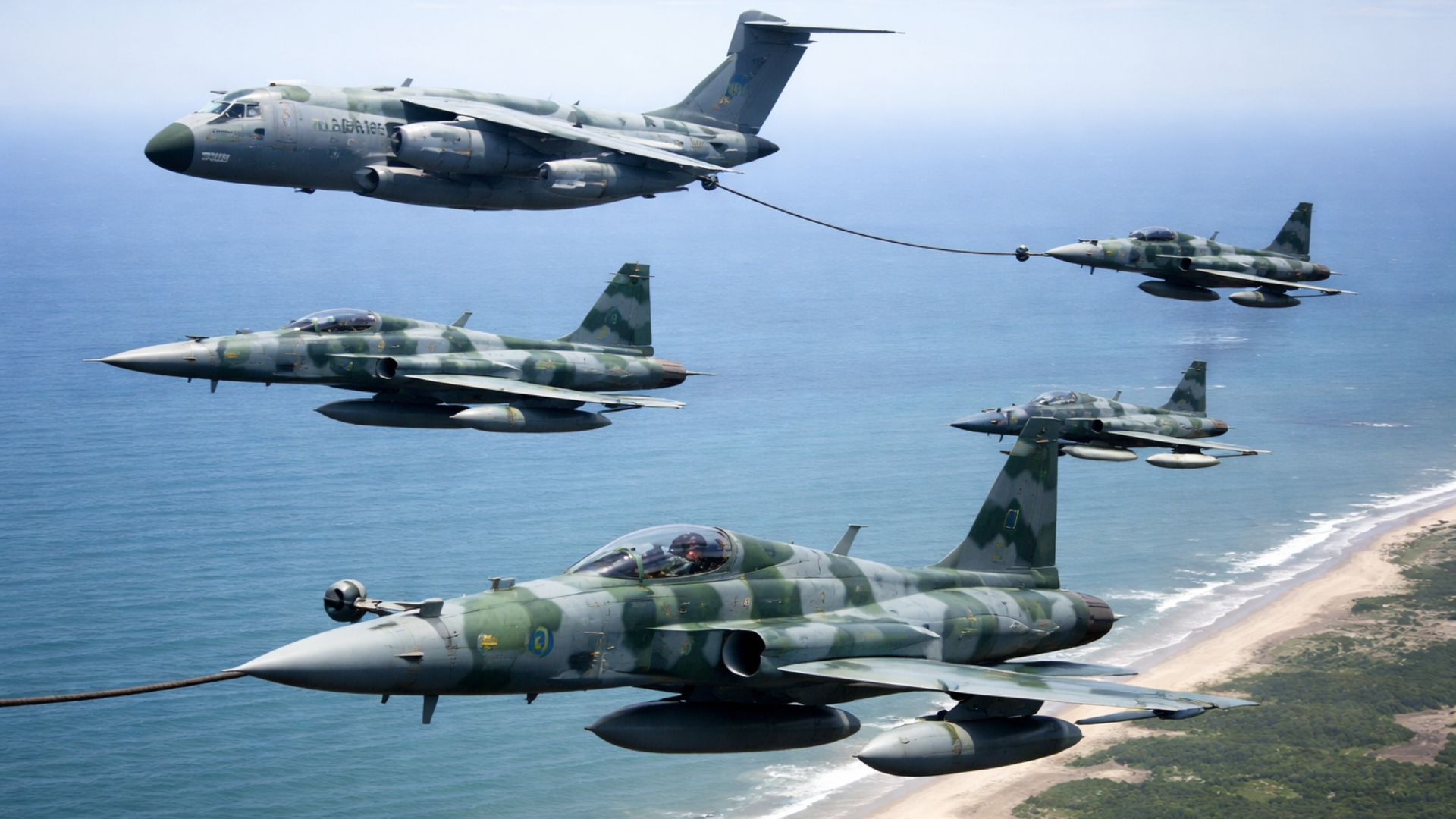
The Brazilian Army takes F-5 fighters out of the garage and stars in an air combat with support from the KC-390.

Throughout 26 kilometers, between Deodoro in the West Zone and the Gentileza Intermodal Terminal in the Port Region, the system concentrates high-capacity collective transport on an exclusive lane, aiming to relieve overall traffic and shorten the travel time for those who depend on buses every day.
Exclusive Corridor And Road Changes On Avenida Brasil
The physical axis of Transbrasil follows almost the entire layout of Avenida Brasil, but in an arrangement different from the previous model.
The lane next to the central median has become exclusively for the articulated buses of the BRT, operating on a rigid pavement, while a selective lane immediately next to it has been reserved for conventional buses, taxis, and service vehicles.
Physical separators have been installed near the stations.
The remaining lanes are reserved for private vehicles and freight transport.
In addition to the new lane division, Avenida Brasil received electronic monitoring, specific speed limits, and camera surveillance, with integrated operation by the Operations Center of Rio.
The combination of exclusive corridors, reinforced signage, and real-time control was designed to reduce conflicts between cars, trucks, and buses and ensure service regularity.
Operation Of BRT Transbrasil And Implementation Stages
The operation of the corridor was implemented in stages.
The first phase opened to the public the section between Penha and the Gentileza Intermodal Terminal, with restricted operating hours.
Subsequently, the stop service began to connect Deodoro to Gentileza, stopping at all stations and average travel time between 35 and 40 minutes between the extremes.
The project provides for two terminals – Deodoro and Gentileza – and 18 stations distributed along Avenida Brasil.
At the beginning of the full operation of the stop service, 17 of them were already receiving regular boarding and disembarking.
The main stopping line, 60 (Terminal Deodoro x Terminal Gentileza), operates continuously, functioning throughout the day.
Additionally, there is express service between Deodoro and Gentileza, connection lines to neighborhoods in the North Zone, and a direct service between Gentileza and the Tom Jobim International Airport (Galeão).
Connections With Other Modalities And Expanded Integration
Transbrasil integrates different areas of the city.
At Deodoro, the terminal connects to the Transolímpica corridor and feeder lines.
At Penha and Fundão, there is a connection with Transcarioca.
At the Gentileza Intermodal Terminal, integration is expanded through lines 1 and 4 of the VLT and a growing network of municipal buses.
The terminal acts as a redistribution point for flows arriving via Avenida Brasil, reducing the number of buses circulating without coordination in the Center and Port Region.
Gentileza Intermodal Terminal As Operational Center Of The Network
The Gentileza Intermodal Terminal occupies an area of about 77 thousand square meters, acquired by the City Hall from the Caixa Econômica Federal.
The investment in the project was close to R$ 300 million, within a public-private partnership linked to the VLT in the Center and the restructuring of the BRT system.
The structure consists of two floors, platforms for BRT, spaces for the VLT, areas for municipal buses, and walkways connecting the terminal to Avenida Brasil and the surroundings of the old bus station.
The location includes commercial areas, restrooms, information points, and spaces dedicated to security and maintenance.
The estimate is that the terminal will receive about 150 thousand people per day, making it one of the main passenger circulation centers in the city.
With this, it reorganizes the flow not only of Avenida Brasil but also of access to the Port Region, the Center, and connections over tracks and buses.
Billion-Dollar Investments And Funding Sources
Transbrasil has established itself as one of the largest urban mobility projects in the municipality.
The corridor cost approximately R$ 2 billion.
Of this total, R$ 1.1 billion came from Caixa Econômica Federal through the Pró-Transportes program.
Another R$ 97 million were provided by BNDES.
The City Hall’s contribution amounted to around R$ 838 million.
The project was also articulated with other federal initiatives aimed at renewing the BRT fleet, requalifying corridors, and constructing terminals and garages.
Resumptions, Revisions And Delays Throughout Implementation
The works began in 2015, with a delivery expected in 2017, but were interrupted in 2016.
Execution resumed in 2017 and faced further stoppages in subsequent years, motivated by project adjustments and financial challenges.
In 2021, the new city management announced the definitive resumption, promising completion the following year.
The timeline was adjusted, and public openings began to occur in stages, starting with the Penha–Gentileza section.
For almost a decade, Avenida Brasil coexisted with construction sites, detours, and partial closures.
The initial proposal, which considered extending the corridor to areas near Santos Dumont Airport, was revised, and the current layout began to prioritize reaching Gasômetro, with Gentileza as the final point.
Traffic Changes And Impacts For Those Traveling On Avenida Brasil
The immediate effect of Transbrasil is the reorganization of daily flow on a road used by drivers from the West Zone, North Zone, Baixada Fluminense, and trucks accessing the Port of Rio.
In addition to the exclusive lane, an integrated camera system covers the section between Deodoro and Caju, with action from CET-Rio, the Municipal Guard, and emergency teams.
Specific restrictions on truck circulation have been defined for certain hours and sections.
The expectation is that, with the corridor in full operation, travel time could be reduced by half for those migrating from conventional buses to BRT.
Projections indicate that the system may reach 250 thousand passengers per day by 2030.
With the Transoeste, Transcarioca, Transolímpica, and Transbrasil corridors, Rio’s BRT approaches 150 kilometers in length.
Complementary Works And Urban Requalification Around The Corridor
The construction of Transbrasil has brought a series of urban interventions.
Permanently fixed walkways have been built, LED lighting has been installed, drainage works have been expanded, and an urban art project has been created on viaducts, pillars, and stations.
These initiatives are part of a larger effort for requalification of the surroundings of Avenida Brasil, especially in the area near the old road complex, updated with the presence of the Gentileza Terminal and its connections.








-

-

2 pessoas reagiram a isso.