





 Portuguese
  English
  Spanish
  4 min of reading
  4 comments





Chinese Automakers Transform Brazil By Treating The Country As An Anchor Market For Global Expansion, With Accelerated Sales, Aggressive Discounts, And A Bet On Local Production
Chinese automakers transform Brazil because they found here a volume of demand that, in some segments, surpasses the combined European markets, in addition to a price-sensitive consumer eager for embedded technology.
The result is a rapid change on the board: brands that were once supporting players are now competing in entire segments, pressuring traditional players and raising an uncomfortable question about the future of the national automotive industry.
Why Brazil Turned Into The “Pearl” Of Chinese Expansion
The cited numbers show why Brazil entered the radar with priority. In the first half of 2025, the comparison shows 47,000 units sold in Brazil, against 10,000 in Spain, 9,500 in Italy, and 4,900 in Singapore. In practice, Brazil appears as the market that “closes the account” of the strategy outside Asia.
-
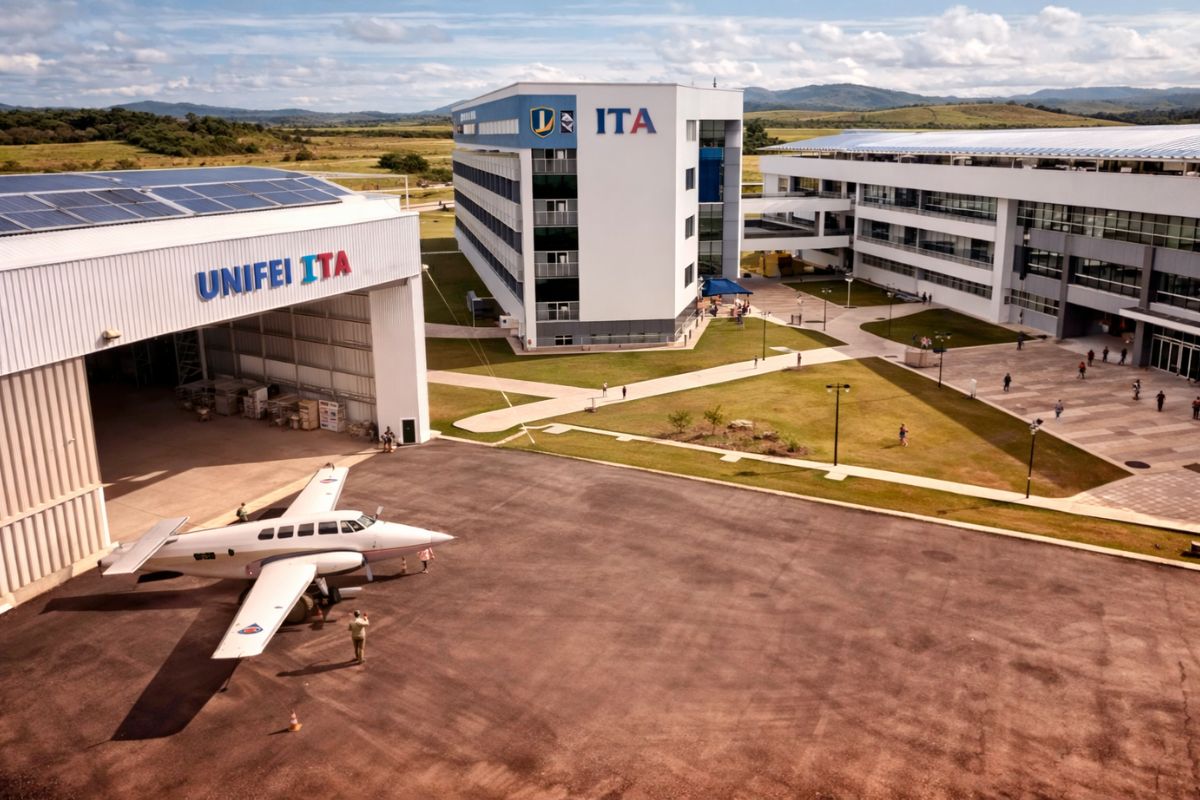
The institute that trained the greatest aerospace engineers in Brazil has just opened its first campus outside São Paulo after 75 years: ITA Ceará will have R$ 445 million, new courses in energy and systems, and classes are expected to start in 2027.
-
Luciano Hang, owner of Havan, goes to Juiz de Fora after the tragedy in February, brings R$ 1 million, hands out R$ 2,000 cards, and donates up to R$ 15,000 to victims in the region.

-
The Brazilian passport allows legal residence in dozens of countries without the need for a prior visa, and most Brazilians are unaware that they can apply for residency directly upon arriving in nations in South America, Africa, and even Europe.
-
Petrobras sends a message to Brazilian truck drivers after fuel collapse and reveals plan to have 100% domestic diesel.


This appetite is not restricted to one brand. The text states that, in the last 3 years, 12 Chinese automakers, from mainstream to luxury, aim for expansion in the country.
From The First Failed Wave To A Return With Strategy
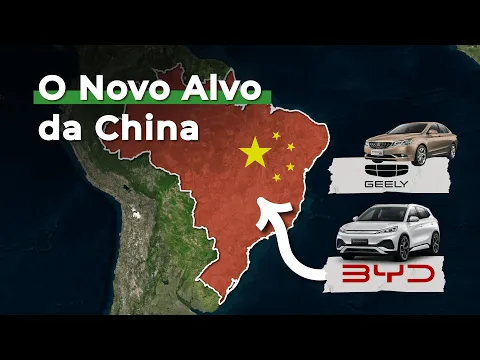

The first generation of Chinese cars in Brazil, from 2010 to 2015, is described as a commercial failure, with poor finish, inadequate suspension, nonexistent after-sales service, and catastrophic resale value.
The “trauma” deepens in 2011, when there was a 30 percentage point increase in IPI on imported vehicles, and several brands disappeared or nearly went bankrupt. The text’s take is straightforward: China learned, and the second wave, led by BYD and GWM, returns with a more robust commercial strategy and plans to produce locally, especially after 2020.
Aggressive Pricing And “All-Inclusive” Technology Change Perception

Between March 2024 and March 2025, Brazilian interest in vehicles from Chinese automakers grows by 51.4% in visits on sales platforms.
The text reinforces the logic of “value delivered”: it cites a Tiggo 7 offering intermediate features for the price of a Compass at the high-end versions, with a difference of R$ 30,000, and it also mentions a hybrid SUV with electric seats, panoramic sunroof, and parking assist at prices competing with traditional mid-sized sedans. It’s not just a list of features; it’s the feeling that the standard has shifted.
The Invisible Differential: Controlled Supply Chain And Lower Cost
The advantage is not just in the final price, but in the production structure. Unlike European and American brands, Chinese companies control more of the supply chain (batteries, semiconductors, engines, and software), which accelerates adaptation and lowers costs.
At this point, there’s the argument of scale efficiency combined with logistical control: Chinese electric and hybrid cars costing 30% to 40% less than their European counterparts, without losing quality.
The Entry Was “Surgical”: Discounts, Long Guarantees, And A Complete Portfolio
The described commercial offensive is aggressive: a 72% increase in BYD’s market share between Q4 2023 and Q1 2024, discounts of up to R$ 20,000 on GWM models, and extended warranties of up to 10 years to reduce initial distrust.
The difference in approach appears in the ambition of the portfolio. Instead of entering with “one or two models,” Chinese companies arrive with a full lineup ready to attack various segments, gaining scale, increasing presence in dealerships, and pushing rivals into smaller niches.
Ranking And Advance: When The Competition Becomes “Generalist”

By August 2025, the text places BYD in seventh place in the overall sales ranking in Brazil, with 66,419 units and 5.49% market share; CAOA Chery in 11th, with 41,727 and 3.4%; and GWM in 13th, with 23,016 units.
The movement is presented as a “controlled experiment,” with Brazil chosen as a testing ground for global expansion outside Asia.
Brazil As A Global Laboratory And Regional Platform
China sells 31.44 million vehicles in 2024, while Brazil sells 2.63 million, with a growth of 14.2% over 2023.
In this “laboratory,” the reading is that, in 2024, Chinese brands account for 82% of battery electric vehicle sales in Mexico, Brazil, Argentina, and Chile, and that if it works here, the strategy is exportable to other emerging markets. Brazil Becomes A Showcase And Proof Of Concept.
Local Investment And The Dilemma Of The Future Of The National Automotive Industry
There is mention of an investment of R$ 5.5 billion in an industrial complex in Bahia, with operations expected to start in 2025, producing hybrids and electrics and chassis for electric buses, with Brazil as a hub for Latin America.
At the same time, the warning is that electrification accelerated: by August 2024, 40,500 100% electric models were sold in Brazil, a growth of 617% compared to the same period in 2023, with BYD and GWM accounting for 84% of sales.
Thus comes the most sensitive point: as electrification advances, traditional companies may lose local decision-making capacity, with the closure of R&D centers and less investment in new platforms, pushing the country into the role of assembler and importer of “automotive intelligence” from abroad.
What Governments Do Abroad And What It Signals For Brazil
Other countries have already chosen paths of containment: the United States imposed tariffs of up to 100% on Chinese electric cars, and the European Union opened investigations and is considering trade barriers.
In Brazil, the crossroads is clear: protecting with tariffs and subsidies may delay innovation and increase costs for consumers, but opening up completely may accelerate the loss of industrial sovereignty, with an erosion that is difficult to reverse when technological capacity is lost.
And for you: do Chinese automakers transforming Brazil represent a definitive good news for consumers, or a risk alert for the national industry in the medium term?








Se a BYD e GWM produzirem os veículos no Brasil pode dizer adeus as carroças da Stellantis e GM e a Toyota que se cuide também com o Corolla hybrido fake de R$200.000,00.
Comprei um geely Ex2 e estou achando um custo/benefício nunca visto antes.
Quem comprar um carro ching ling vai se arrepender futuramente.
Produto ching ling só capinha de celular e utilidades domésticas.
O ditador xixi pinga está retribuindo o favor dos brasileiros taxando a carne em 55% e diminuindo a compra de soja.