





 Portuguese
  English
  Spanish
  4 min of reading
  37 comments





Change Under Discussion in the Civil Code May Alter Historic Inheritance Rules in Brazil and Directly Impact Couples Without a Will, Bringing Asset Risks, Legal Uncertainty, and Possible Family Conflicts if the Proposal Advances in Congress.
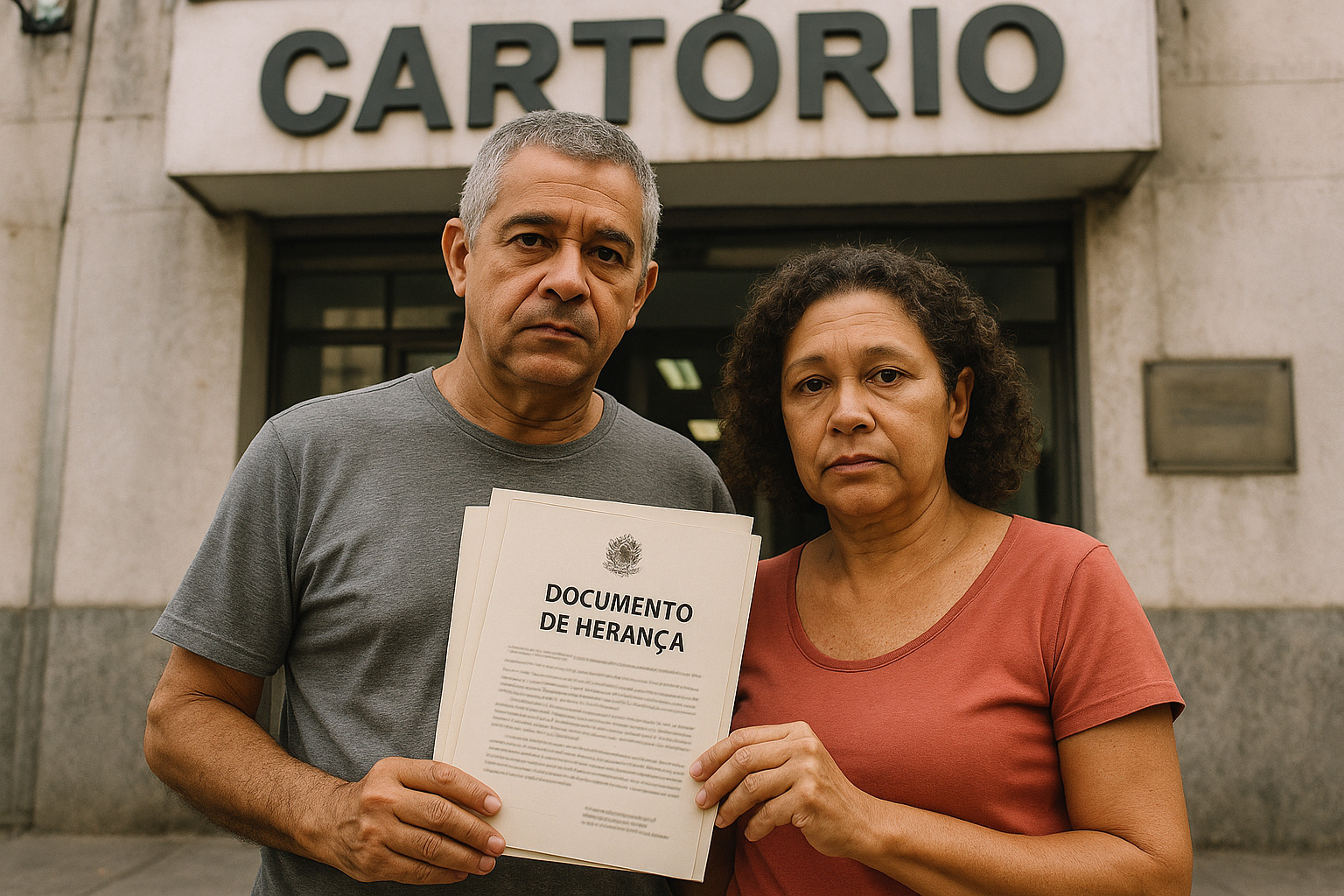
A change under discussion in the reform of the Civil Code may directly alter the asset situation of millions of couples in Brazil.
The proposal, currently in the Senate, removes the spouse from the list of necessary heirs in certain situations, which means that husbands and wives may not have an automatic right to inheritance if there is no will.
The warning was made by attorney Simone Calili, a family law specialist, in a publication that gained significant traction on social media.
-
The Chamber opens a debate on driver’s licenses at 16 years old as part of a reform that includes around 270 proposals to change the Brazilian Traffic Code and may redesign rules for licensing, enforcement, and circulation in the country.

-
The new Civil Code could revolutionize marriages in Brazil with “express divorce” and changes that could exclude spouses from inheritance.
-
Banco do Brasil sues famous influencer for million-dollar debt and intensifies debate on delinquency, risks of seizure, and direct impact on Gkay’s credibility.

-
The Senate approves a bill that criminalizes misogyny, hatred, or aversion towards women, and includes the crime in the Racism Law with a penalty of up to 5 years.


Currently, legislation guarantees minimum protection for the surviving spouse.
Regardless of a will, husband or wife are part of the group of necessary heirs alongside children and parents.
This legally ensures a portion of the deceased’s assets.
The reform under discussion changes this central point.
When there are living descendants or ancestors, the spouse may stop inheriting automatically.
Who Faces More Risk With the Change in Inheritance Rules
The impact does not affect everyone in the same way.
The greatest risks fall on very common profiles in Brazil.
Couples in which only one spouse concentrated assets in their name throughout life are the most vulnerable.
This group also includes blended families, with children from previous relationships, and stable unions without detailed asset formalization.
Another sensitive point involves the elderly.
In long marriages, it is common for properties, investments, or businesses to be registered in the name of only one partner.
Without a will, the surviving spouse may lose the economic security built over a lifetime, becoming dependent on heirs or even subject to legal disputes.
What Changes in Practice If There Is No Will
If the proposal is approved, the will ceases to be just an instrument for asset organization.
It becomes essential to ensure protection for the spouse.
Only through the document will it be possible to clearly ensure that the husband or wife receives an inheritance.
Without a will, there will be no automatic right, even if the couple has built assets together.
Attorney Simone Calili highlights that the change requires immediate attention.
She explains that many people believe they are protected merely by marriage.
This perception may not reflect the current legal reality.
According to her, the absence of estate planning may result in the total exclusion of the spouse from the inheritance, including the portion that is currently reserved by law.
Asset Regime Does Not Guarantee Total Protection
A point that often causes confusion is the asset regime.
Even in regimes like partial or universal communion, inheritance refers to the deceased’s private assets.
The reform does not alter the division of the couple’s common assets.
However, it may exclude the spouse from the succession of assets that are solely in the name of the deceased.
This means that relying solely on the asset regime may not be enough.
Without a will, a significant part of the assets may take a different path than the family envisioned.
Estate Planning Becomes a Necessity
Data from registries indicate that only a small portion of the Brazilian population has a formalized will.
With the change under discussion, this number becomes strategically significant.
Planning the inheritance ceases to be a distant theme and becomes a measure of family protection.
Especially for those who wish to ensure financial stability for the spouse after death.
In addition to wills, there is a growing demand for antenuptial agreements and other forms of asset organization while still alive.
Experts warn that the lack of information may generate conflicts, legal insecurity, and increased litigation.
Warning for Families That May Be Caught by Surprise
The text has not yet become law and may undergo changes during the legislative process.
Even so, the debate raises a red flag.
Family law sectors are advocating for adjustments that preserve some level of protection for the spouse.
Meanwhile, there is growing concern for families that do not follow the topic.
Without a will, the inheritance reality may change drastically for widows and widowers across the country.
The topic involves not only legal technique.
It encompasses economic security, family expectations, and the role of marriage as a structure for asset protection in Brazil.
Credit for the information and alert: Simone Calili, family law specialist, through a social media publication.








Essa reportagem me chocou! Sou casada há 43 anos, 2 filhas bem formadas em Universidades em B.Horizonte, casadas, lindos Netos. Lamentável ler uma matéria assim.
O que é para mudar no Brasil não ponham em pauta, tantas violência e mortes feminicidioe **** tomando conta da cidade,vem senadores querer discutir herança de cônjuge,onde a ganância do homem é de preferência deixar a mulher que cuidou dele na doença, sofreu com homens machista e uma vida juntos para agora , é dar ousadias a homem que não respeita uma mulher e é ganancioso por bens e deixar uma mulher desamparada na morte de um cônjuge,vamos lutar contra isso Brasil , tem coisas mais importantes a ser feito nesse Brasil de corrupção, ladroagem, assassinatos, e senadores se preocupando em tirar direito de mulher viúva , que faz tudo pela família, ficam doentes e mesmo assim é quem é o alicerce de um homem que por muitas das vezes são ingrato, desrespeitoso com sua esposa.
A meta é clara enfraquecer a instituição do casamento e fortalecer o lucro do governo e dos cartórios.