





 Portuguese
  English
  Spanish
  3 min of reading
  0 comments


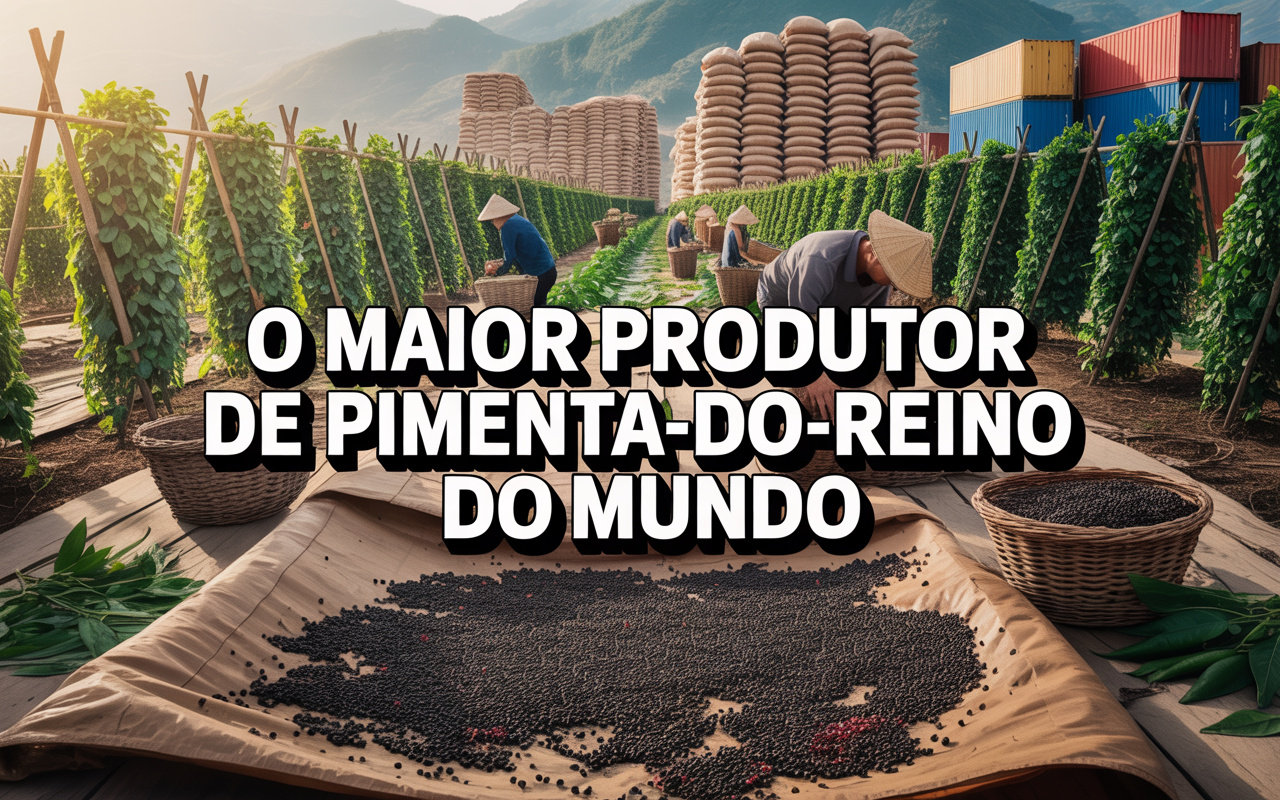
Vietnam Dominates Over 35% of World Black Pepper Production with Up to 160 Thousand Tons, While Brazil Consolidates Its Position as the Second Largest Global Producer.
The global dominance of black pepper, one of the most valuable and consumed spices in the world, is concentrated in two countries far from each other, but connected by million-dollar figures, agricultural technology, and export chains that move entire markets. At the top of this system is Vietnam, which has transformed the cultivation of piper nigrum into an agricultural powerhouse capable of supplying more than a third of all the pepper consumed on the planet. And right behind, advancing strongly, is Brazil, increasingly solidified in the second position.
Vietnam and Its Leadership in the Black Pepper Market
The explosion of Vietnam in the global market is relatively recent. Three decades ago, the country was still crawling in this sector; today, it easily surpasses all competitors. According to data compiled by FAO and international spice market entities, Vietnamese production fluctuates between 150 thousand and 160 thousand tons annually, representing over 35% of the entire global market.
This volume was not reached by chance. The country invested in high planting density, controlled irrigation, community drying systems, precise soil management, and a logistics standard focused on export. While other countries distributed their production between domestic consumption and foreign trade, Vietnam structured almost everything to sell and sells a lot.
-
The water that almost everyone throws away after cooking potatoes carries nutrients released during the preparation and can be reused to help in the development of plants when used correctly at the base of gardens and pots, at no additional cost and without changing the routine.

-
The sea water temperature rose from 28 to 34 degrees in Santa Catarina and killed up to 90% of the oysters: producers who planted over 1 million seeds lost practically everything and say that if it happens again, production is doomed to end.

-
An Indian tree that grows in the Brazilian Northeast produces an oil capable of acting against more than 200 species of pests and interrupting the insect cycle, gaining ground as a natural alternative in soybean, cotton, and vegetable crops.
-
The rise in oil prices in the Middle East is already affecting Brazilian sugar: mills in the Central-South are seeing their margins shrink just as ethanol gains strength.

The strategy has transformed regions such as Dak Lak, Dak Nong, and Gia Lai into agricultural giants, with landscapes marked by thousands of aligned cultivation stakes as if they were industrial pepper plantations.
How Vietnam Controls Over a Third of the Global Market
The secret lies in the hybrid model between small farmers and large processors. Thousands of families cultivate pepper using traditional techniques combined with modern agricultural technology, while large exporters standardize grading, drying, selection, and packaging, ensuring quality and volumes compatible with international demand.
The country has also refined the cultivation of green, black, and white pepper, each with specific niches and prices. With this total chain control, Vietnam has become the nervous center of the spice and the main price setter in international markets.
Brazil: The Second Largest Producer in the World and Key Player in the Global Market
In second place in this ranking is Brazil, which consolidated its position especially from the 2000s onwards. The plantations in states like Pará, Espírito Santo, Bahia, and Amapá make the country a giant in agriculture that exports to the United States, Europe, and the Middle East.
Although it has faced fluctuations due to fungal diseases and changes in management, Brazil maintains a robust production, often exceeding 40 thousand tons per year, with sustainable expansion projects.
Today, the country is considered essential for the global market balance. When Vietnam faces poor harvests, it is Brazil that holds part of the supply and stabilizes prices. When the market heats up, it is also Brazil that absorbs the additional demand.
Why Is Black Pepper So Valuable?
The market has grown driven by the food industry, but also by the pharmaceutical industry, as the compound piperine is used in supplements, medications, thermogenic products, and even cosmetics.
The spice has become so strategic that some countries treat the production chain as a geopolitical asset.
Furthermore, it is one of the few crops capable of generating high value in relatively small areas, becoming essential for small producing families — especially in Vietnam.
The Future of Global Leadership
With increasing technology, expansion of nurseries, and advanced post-harvest systems, Vietnam is expected to maintain its top position for many years.
Meanwhile, Brazil, with favorable climate and good investment prospects, may expand its share in the global market.
The fact is that black pepper, despite being common on the shelves of any Brazilian kitchen, hides a billion-dollar international dispute, led by two countries that have transformed a historic spice into an economic engine.





-

-

-

11 pessoas reagiram a isso.