





 Portuguese
  English
  Spanish
  7 min of reading
  0 comments


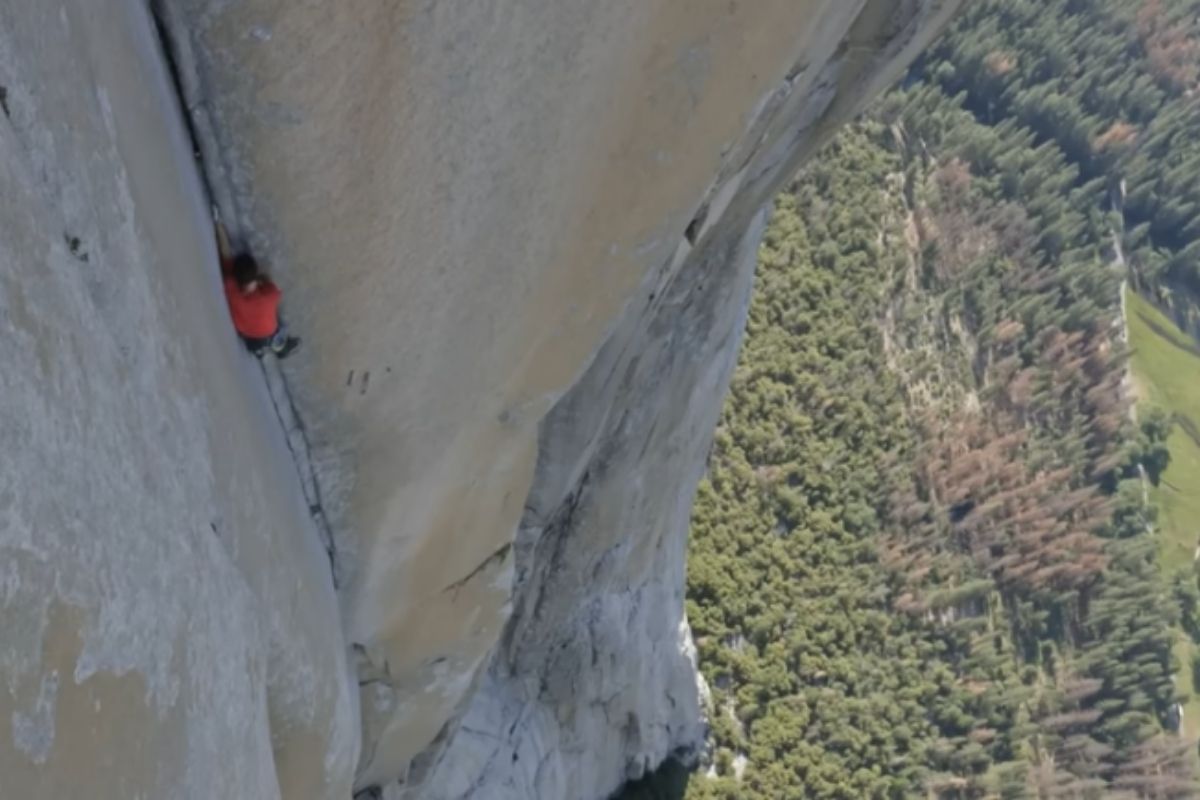
Documentary Detalhes Alex Honnold’s Historic Solo Ascent, Reveals Ethical Dilemmas of the Filming Team and the Tension of Nearly Four Hours on a Giant Granite Wall.
The historic solo ascent of Alex Honnold on El Capitan was not just an extreme athletic feat, it was a brutal test of focus, coldness, and emotional control on nearly 900 meters of vertical wall, with no ropes or any protective gear. A single slip would mean death, and every movement was executed with the full awareness of that risk.
As Alex mentally mapped each foot and handhold, a film crew specializing in climbing prepared to document everything without interfering with his concentration. The director and co-director, professional climber Jimmy Chin, faced a double challenge: to film a historic solo ascent while also managing to sleep at night knowing that any mistake could cost the protagonist his life.
Initially, the film’s premise was a character portrait, a study of who Alex is and why he is so extraordinary in solo climbing. But everything changed when he revealed his big dream: to climb El Capitan without ropes, turning the project into a much more dangerous and radical mission. From that moment on, the team knew they were facing something that could either go down in climbing history or end in tragedy in front of the cameras.
-
He started running at 66 years old, broke records at 82, and is now a subject of study for having a metabolic age comparable to that of a 20-year-old, in a case that is intriguing scientists and inspiring the world.

-
Oldest tree on the planet reappears after 130 years of searches: Wattieza, 385 million years old, was 10 meters tall and had no leaves or seeds; Gilboa fossils in New York solved the mystery in 2007.

-
A 48-square-meter house assembled in hours with 4,000 bricks made of recycled plastic that does not absorb moisture, has natural thermal insulation, and costs less than 90,000 reais in a complete kit.

-
Luciano Hang revealed that Havan’s air fleet has already accumulated more than 20,000 landings, 10,000 flight hours, and 6 million kilometers traveled, and he says that without the planes, the company would never have grown so quickly.

Who is Alex Honnold and What Does It Mean to Climb Solo?

Alex Honnold is presented as the world’s greatest free solo climber, someone who has ascended routes that no other athlete has been able to repeat in this style.
Climbing solo means ascending without ropes, without safety equipment, and with no margin for error. In solo climbing, the consequence of failure is simple and brutal: falling means dying.
This context helps explain why this historic solo ascent evokes both fascination and discomfort at the same time.
The very definition of solo carries enough emotional weight to keep any viewer in a constant state of tension, even when sitting on the couch.
For Alex, however, it all comes down to obsessive preparation, cold risk analysis, and absolute confidence in his own abilities.
The Dream of Conquering El Capitan Without Ropes

For Alex, “freeing” El Capitan in solo has always been the ultimate dream, the peak of everything he could imagine in climbing. The granite wall, standing at about 3,000 feet high and nearly 900 meters vertical, is described as monumental, a maximum symbol of physical and mental challenge. Climbing El Capitan in traditional style is already reserved for a few; doing it in a historic solo ascent is entering territory that no one has ever stepped on.
He knew this wouldn’t just be “another project.” In his own words, it would only make sense to accept a film if it were to document something he could truly be proud of. This ambition raised the stakes of the documentary and placed everyone – climber, team, and cameras – in front of an achievement that could become a milestone in the history of the sport.
The Ethical Dilemma: Is It Right to Film Someone Risking Their Life?
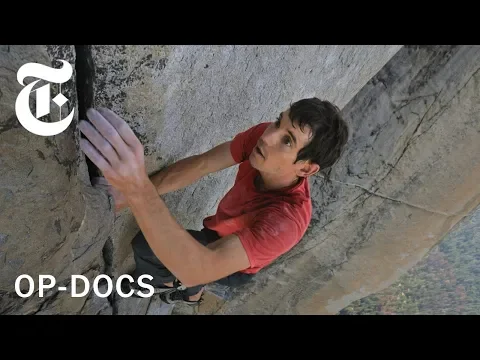

When they learned that Alex was seriously considering the historic solo ascent on El Capitan, the filmmakers had to pause and reflect.
The central question was uncomfortable: is it ethical to film someone while they are risking their life on such a fine line between success and death?
They feared that the presence of cameras would increase pressure on Alex, disrupt his routine, or distract him at critical moments.
The question was straightforward: would he have a higher chance of falling because the crew was there? A simple click of a camera, a rope movement above him, or a look at the wrong moment could unbalance a mind that needed to be 100% focused.
To proceed, the team established strict rules. First, Alex’s safety would always come before the film’s needs.
Second, it would be essential to protect the integrity of his experience, avoiding turning the climb into a show for the camera. They knew that no visual record would be worth a friend’s life.
An Elite Team Hanging on the Same Wall

The solution was to assemble a film crew made up of elite climbers, professionals capable of working on the same vertical walls where Alex trained and climbed.
These cameramen needed not only cinematic vision but also high-level climbing skills, the ability to endure hours of tension, and not make mistakes in an environment where a single misstep could trigger rockfall or a serious accident.
Over two years, as Alex trained route by route on El Capitan, the crew developed what they called the “choreography” of the shooting.
Every camera position, every movement on the wall, and every framing were tested and refined for the day of the historic solo ascent.
In some sections, they realized it was better to give Alex more space, minimizing the physical presence of people around him.
A decisive example was the “boulder problem,” the most challenging section of the route. The issue was not just the difficulty of the climb, but Alex’s fear of dying in front of his friends.
To ease this psychological burden, the team opted for remote cameras, out of his line of sight, leaving him as “alone” as possible at that critical point.
Extreme Fatigue, Intimacy, and Psychological Pressure
Filming Alex’s preparation meant spending six to eight hours a day on the wall, doing heavy physical work, carrying equipment, and dealing with constant exposure.
When the climbing team descended exhausted, the “second round” of filming would begin, now on solid ground, focused on the emotional part.
It was at this moment that another, rested team would turn on the cameras to talk with Alex, exploring his fears, doubts, and most intimate thoughts.
For him, often the greatest challenge was not just the climb itself, but opening his mind and heart after an exhausting day.
Still, everyone understood that these were the key moments to reveal who the man behind the feat was.
Throughout this process, the film depicts a character uncomfortable with intimacy but forced to face very personal issues just when preparing for the greatest challenge of his life. The result is a portrait where physical performance and emotional vulnerability walk hand in hand.
June 2017: The Decision to Climb Without Return
After two years of training and adjustments, June 2017 arrives. The team realizes that Alex is at his physical and mental peak, ready to attempt the historic solo ascent. Everything was planned: camera positions, team routes, timings, movements.
Even so, there was a line that the filmmakers refused to cross; no one would directly ask when he would make the attempt, to avoid creating additional pressure.
The guidance for the team was clear: only appear in Alex’s line of sight when it was truly necessary to film, keeping his experience as pure as possible.
The idea was to document the climb, not direct it. When, on June 3, 2017, he decides that the moment has come, the team discovers essentially along with that moment.
As Alex climbs, all possible scenarios run through the cameramen’s minds: what would happen if he fell, what sounds they would hear, how they would deal with the images and the trauma afterward.
They were there to document a historic moment, but also to face, in real-time, the risk of witnessing something irreparable.
Almost Four Hours of Tension to the Top

For almost four hours, Alex moved up the face of El Capitan, movement by movement, in silence, with only the sound of his own footsteps on the rock and controlled breathing.
The team, spread out on the wall and on the ground, watched in a state of total alertness, unsure how the story would end.
When he finally reaches the top, the relief is immediate. The sensation described by the filmmakers is that of a gigantic weight lifting off their shoulders, an exhilarating mix of euphoria, exhaustion, and disbelief at having just witnessed something that no other human being had done.
For Jimmy Chin and the rest of the team, the dominant feeling was gratitude that everything had gone well after so much time shadowed by real risk.
From that point on, the ascent ceased to be merely a personal dream for Alex and became a permanent record of a historic solo ascent, serving as a reference for the limits of what is possible in the sport, both physically and mentally.
The Legacy of This Historic Solo Ascent
The film does not answer all the questions about why someone chooses to take such a high risk voluntarily, but it powerfully showcases the combination of discipline, calculation, and acceptance of danger that defines Alex Honnold’s mindset.
He does not see himself as a suicidal person, but as a professional who identifies risks, minimizes what he can control, and only then takes action.
At the same time, the work exposes the other side of heroism: the emotional burden placed on friends, family, and the film crew, who must cope with the very real possibility of witnessing a tragedy.
In the end, what remains is a profound discussion about courage, responsibility, and the ethical limits of documenting such feats.
After getting to know the behind-the-scenes of this historic solo ascent, do you think it’s worth taking such an extreme risk in the name of a dream, or do you believe that no goal justifies putting one’s life so close to the edge?







-

-

-

-

-

13 pessoas reagiram a isso.