





 Portuguese
  English
  Spanish
  4 min of reading
  0 comments



Woman Builds Wooden Cabin From Scratch Using Only Forest Resources, Reveals Primitive Techniques, Hand Engineering, and Self-Sufficient Housing.
In the midst of dense forest, far from any road, machine, or modern infrastructure, a woman begins a project that contradicts almost everything understood today about civil construction. There is no industrial concrete, no rolled steel, no electric tools. What exists is soil, stone, wood, bamboo, clay, and time. A lot of time. Each step of the project is born from direct observation of the environment and adaptation of techniques to what the forest provides, revealing a type of silent engineering that is barely found in modern manuals but has sustained entire societies for thousands of years.
The starting point is not the wall, nor the roof. It is the ground. She begins by digging a deep hole in the forest soil, carefully removing the earth and shaping the sides to be stable. This is not random digging. The shape of the hole is designed to distribute weight, prevent collapses, and take advantage of the natural compaction of the soil. The removed earth is not discarded. It will be reused later as structural material.
The Invisible Engineering Behind a Camouflaged Trap
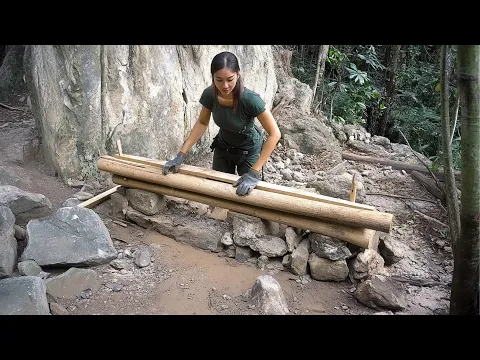
Next, the construction advances to a stage that reveals a little intuitive technical knowledge. Using bamboo and wood, she assembles a structural trap inside the hole. Thick poles are fitted into the edges, creating a rigid perimeter.
-
The largest treated water reservoir in Latin America, made with double steel technology, is completed in Curitiba, receives an investment of R$ 40 million, and promises to strengthen the supply for 130,000 residents in five neighborhoods of the capital.

-
Goodbye rent could become a reality for families in Gaspar: the city in SC will build 43 affordable homes in three neighborhoods, invest R$ 5.7 million, and pave the way for those hoping to achieve homeownership with dignity.

-
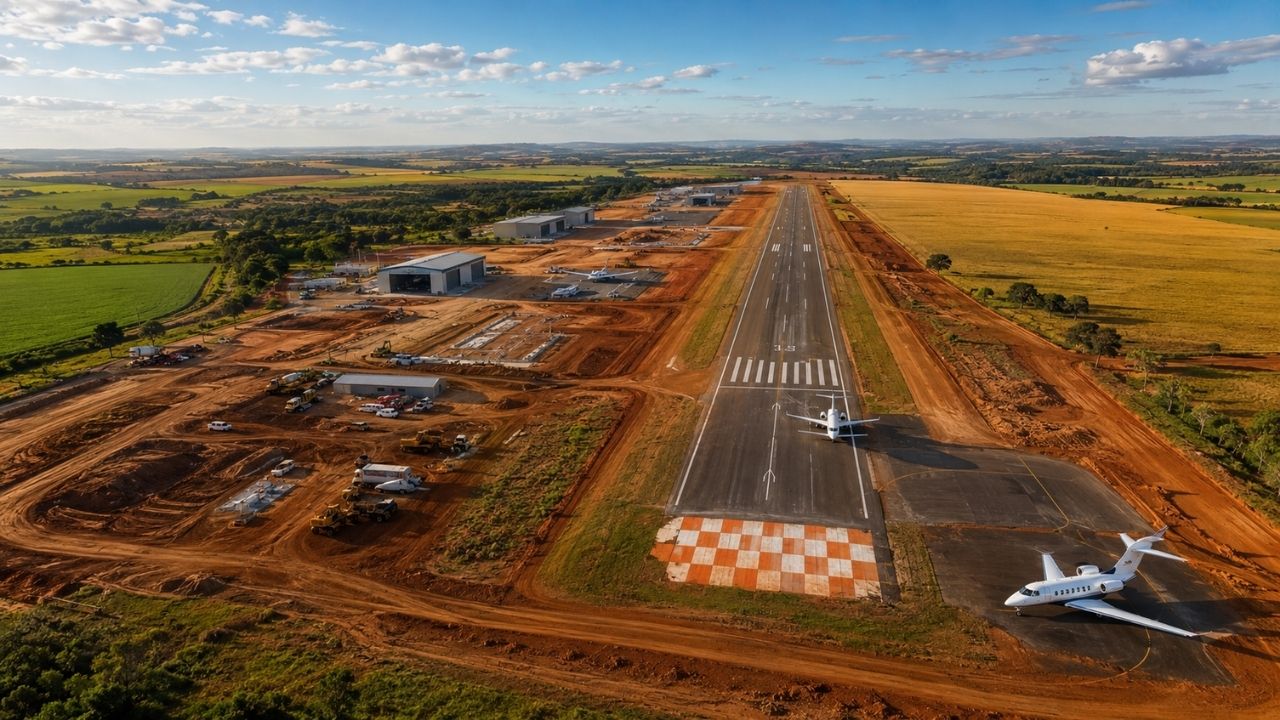
The largest private airport under construction in Brazil is progressing in Goiás with a 2 km certified runway, support for executive jets, and a promise to be operational in 2028, but the project reveals how agribusiness and luxury aviation are reshaping the country’s interior.
-
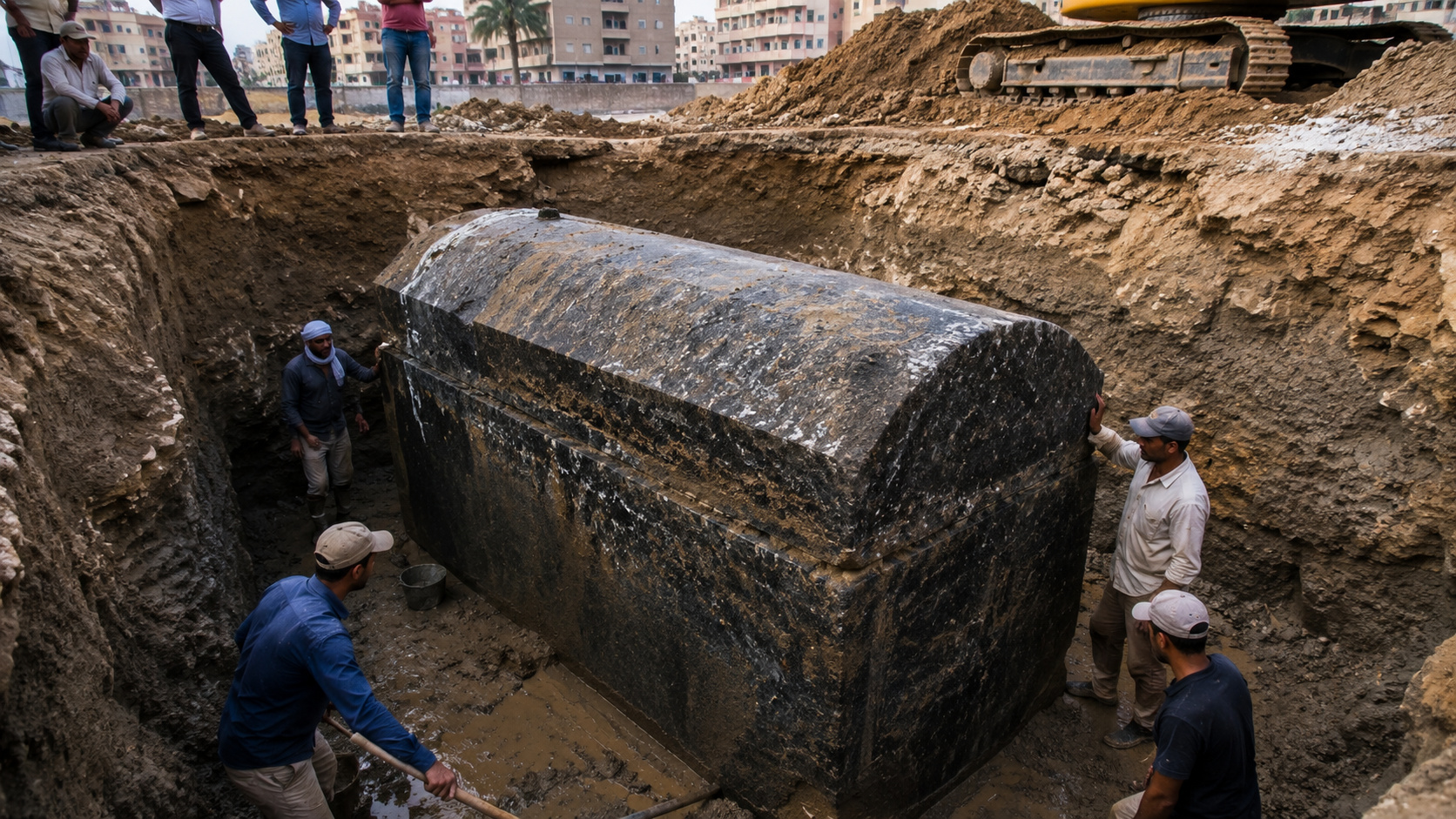
Workers opened the ground at a construction site in downtown São Paulo and found tram tracks buried under the concrete, revealing a forgotten city from the time when the capital still relied on rail transport.



On top of them, a reinforced grid is formed with carefully adjusted strips of bamboo. Each joint is made under tension, utilizing the natural flexibility of the material to create strength without the need for nails or screws.

The structure is capable of supporting considerable weight, even though it is composed only of plant elements. On top of this grid, crossed poles are positioned, and finally, everything is covered with branches, banana leaves, and a thick layer of dry leaves.
The result is a false floor totally integrated into the environment. Visually, it disappears into the landscape. Structurally, it functions as a camouflaged and resilient base, demonstrating mastery of basic principles of load, force distribution, and tension.
Stone, Clay, and the Construction That Rises from the Ground
As the work progresses, the project makes it clear that it is not just about improvisation. Large rocks present on site are incorporated into the structure. Instead of removing them, she builds around them. Using clay mixed with soil previously removed from the excavation, small walls begin to emerge.

The material is manually shaped, compressed layer by layer to eliminate voids and increase cohesion.
This type of construction is based on ancient principles of thermal mass. When well compacted, clay stores heat during the day and slowly releases it at night, helping to stabilize the internal temperature.

The stones serve as structural anchoring and thermal inertia elements, reducing sharp temperature variations. Without any formal calculations, the construction reproduces solutions present in earthen houses, troglodyte shelters, and traditional homes spread across different continents.
The Elevated Platform and the Smart Use of Bamboo
With the base defined, an elevated platform made entirely of bamboo arises. The poles are cut to size, aligned, and tied with precision.
There is no waste. Each piece of material has a defined function. Bamboo, besides being lightweight, offers excellent tensile and compressive strength when well used, making it ideal for suspended structures.

On top of this platform, the space begins to take the form of a dwelling. It is not just a shelter against the rain. It is an environment designed for prolonged stays. The elevation helps to keep moisture away from the ground, insects, and small animals, in addition to improving natural ventilation.
Handcrafted Furniture Made with Your Own Hands
Contrary to popular belief, the project does not end with walls and a roof. The next stage reveals a rare care: the crafting of handmade furniture. Benches, chairs, and support surfaces are assembled with properly cut poles.
Each joint is tied strategically to ensure stability without compromising the flexibility of the structure.
This type of furniture does not seek industrial aesthetics or standardized finishes. It arises from the logic of use. Each bench is designed to the correct height for the body, each support respects the material’s structural limit.
The result is functional, resilient, and integrated into the space, reinforcing the idea that housing is not just a built space but a complete system adapted to the environment.
A Functional Refuge That Challenges the Logic of Modern Construction

In the end, what is seen is not an improvised cabin, but a functional refuge built entirely from the resources available in the forest. There is no waste, no external dependence, no break with the environment. Each construction decision directly responds to the conditions of the terrain, the climate, and the availability of materials.
This type of project exposes a contradiction of contemporary construction. While cities depend on complex logistics chains, energy-intensive processes, and industrialized materials, a single person, with practical knowledge and persistence, can create a stable, thermal, and functional dwelling from what nature offers locally.
More than just a cabin, the project becomes a silent lesson in primitive engineering, real sustainability, and constructive autonomy. It shows that, before software, technical standards, and reinforced concrete, construction has always been, above all, a direct response between human beings and the environment in which they choose to live.







-

-

-

-

-

-

50 people reacted to this.