





 Portuguese
  English
  Spanish
  8 min of reading
  0 comments


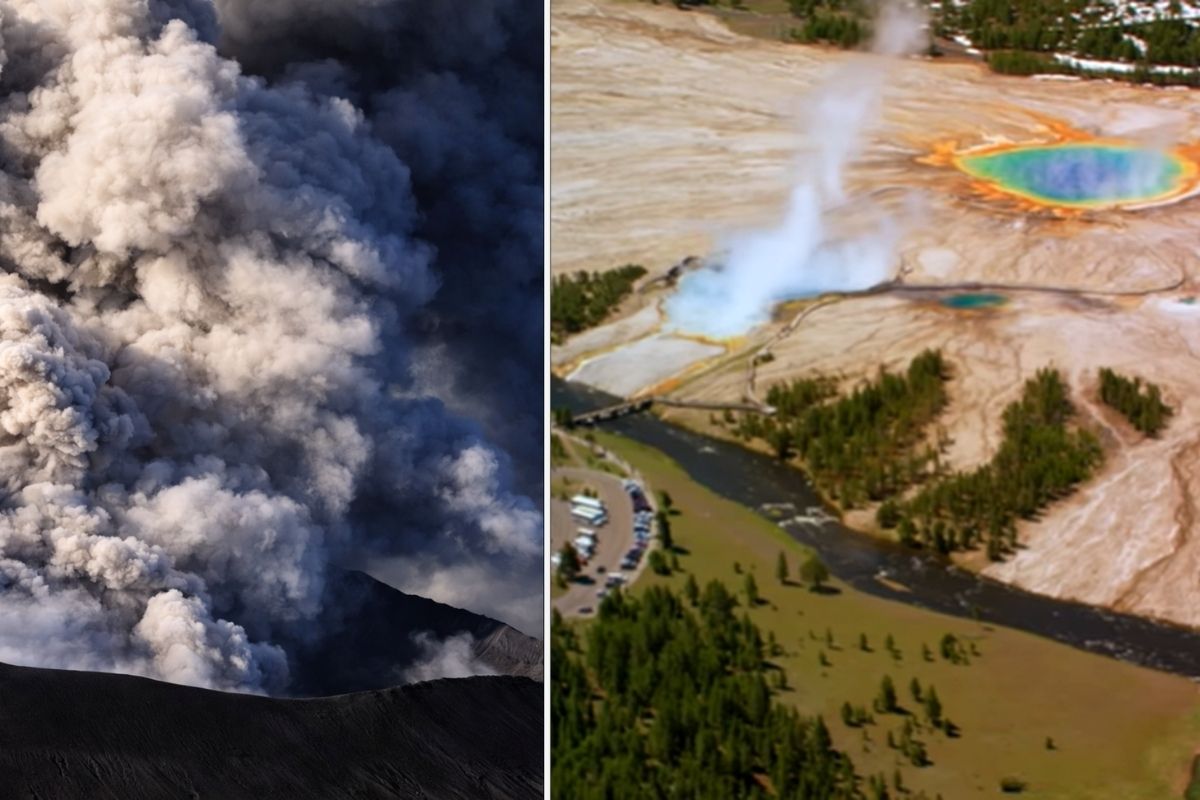
Scientific Simulations Show That A Supereruption In Yellowstone Could Destroy Entire Cities With Ash And Pyroclastic Flows, Plunge The Planet Into A Multi-Year Winter, Bring Down Power Grids, Halt Harvests, And Cause Famine On A Global Scale
Yellowstone is today one of the most beautiful places on the planet, but also one of the most unsettling. Underneath the hot water pools, geysers, and fumaroles lies a supervolcano capable of releasing energy equivalent to millions of Hiroshima bombs at once. The same region that enchants tourists with exotic landscapes harbors a gigantic magma chamber, fed by a deep flow of hot rock rising from the Earth’s interior. If Yellowstone were to erupt on a maximum scale, it would not just be another active volcano; it would be an event comparable to an asteroid impact.
Scientists use geological records, models, and seismic data to imagine this extreme scenario. In a worst-case scenario, a supereruption of Yellowstone would launch hundreds of cubic kilometers of ash into the atmosphere, cover much of the United States, bring down power grids, halt air travel, and trigger a multi-year volcanic winter.
In just a few weeks, crops would be destroyed, grain stocks would run out in about three months, and famine would spread across the planet.
-
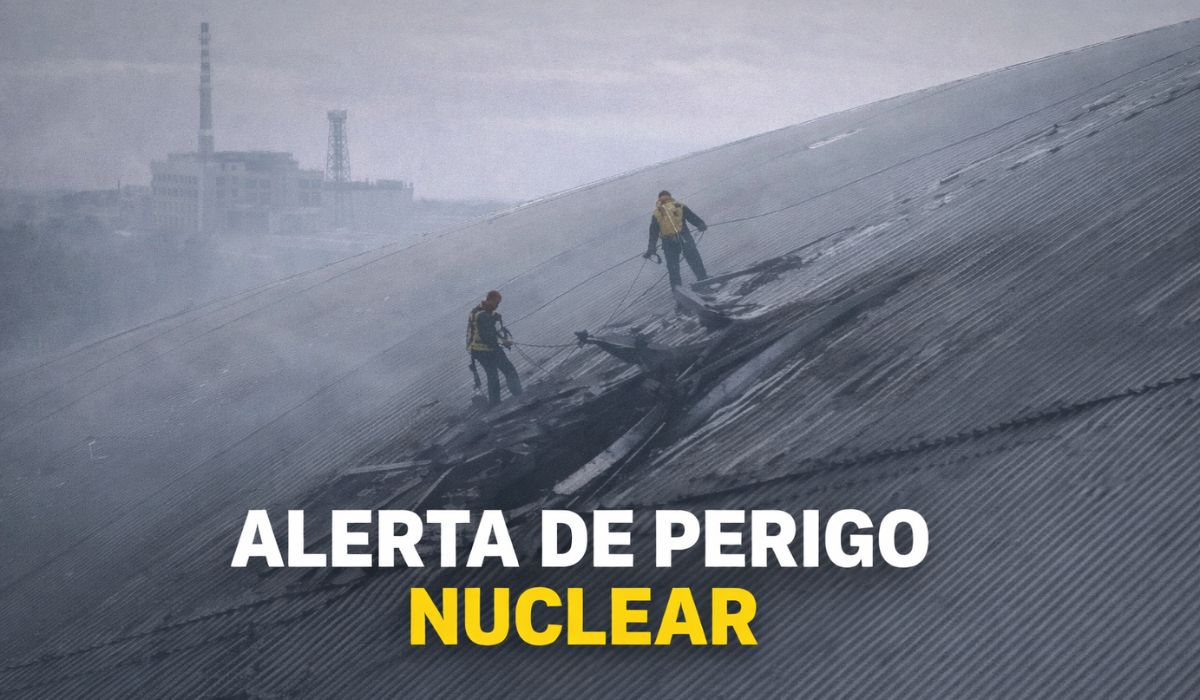
The gigantic steel shell built to contain Chernobyl for a century has been pierced by a drone, exposing a critical system and creating a hole that could cost over 500 million euros to repair.
-
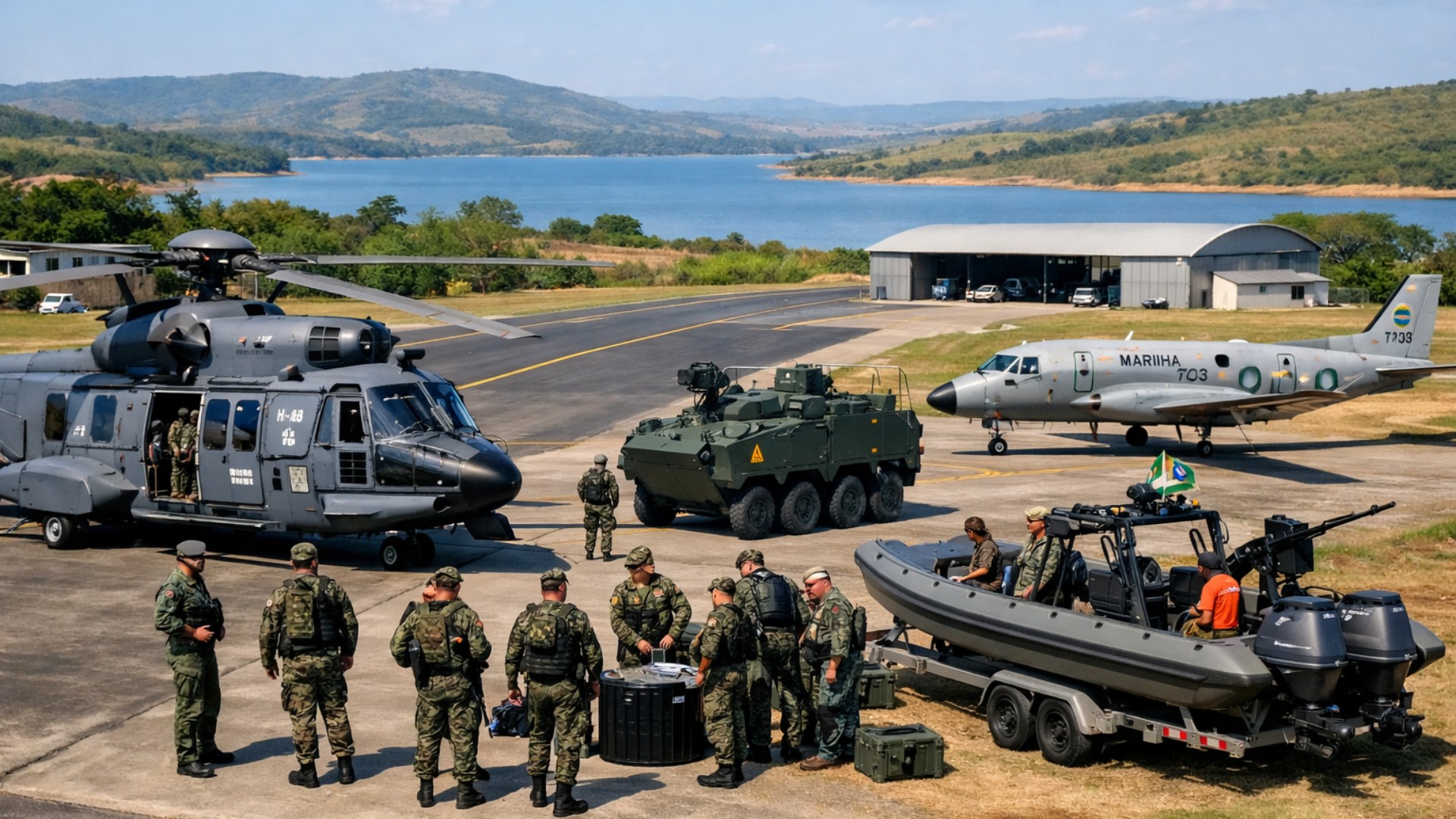
Brazilian Navy reaches a new level by taking over an airport with a 1,600-meter runway used by 1,800 military personnel and autonomous attack drone testing.
-
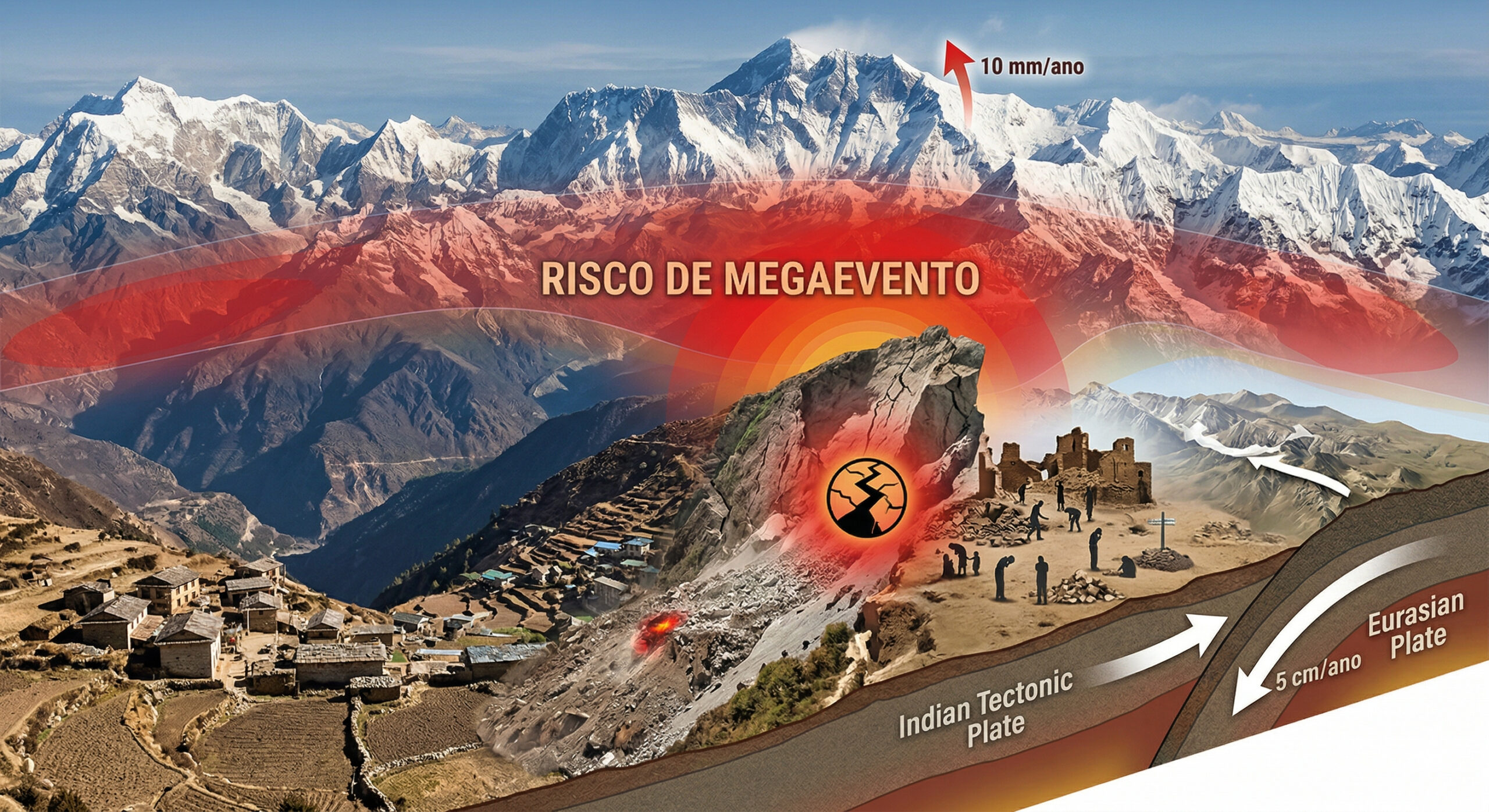
The Himalayas continue to grow to this day, with tectonic plates advancing 5 cm per year, mountains rising up to 10 mm annually, and the 2015 earthquake that killed 9,000 people may have increased the risk of an even larger seismic mega-event.
-
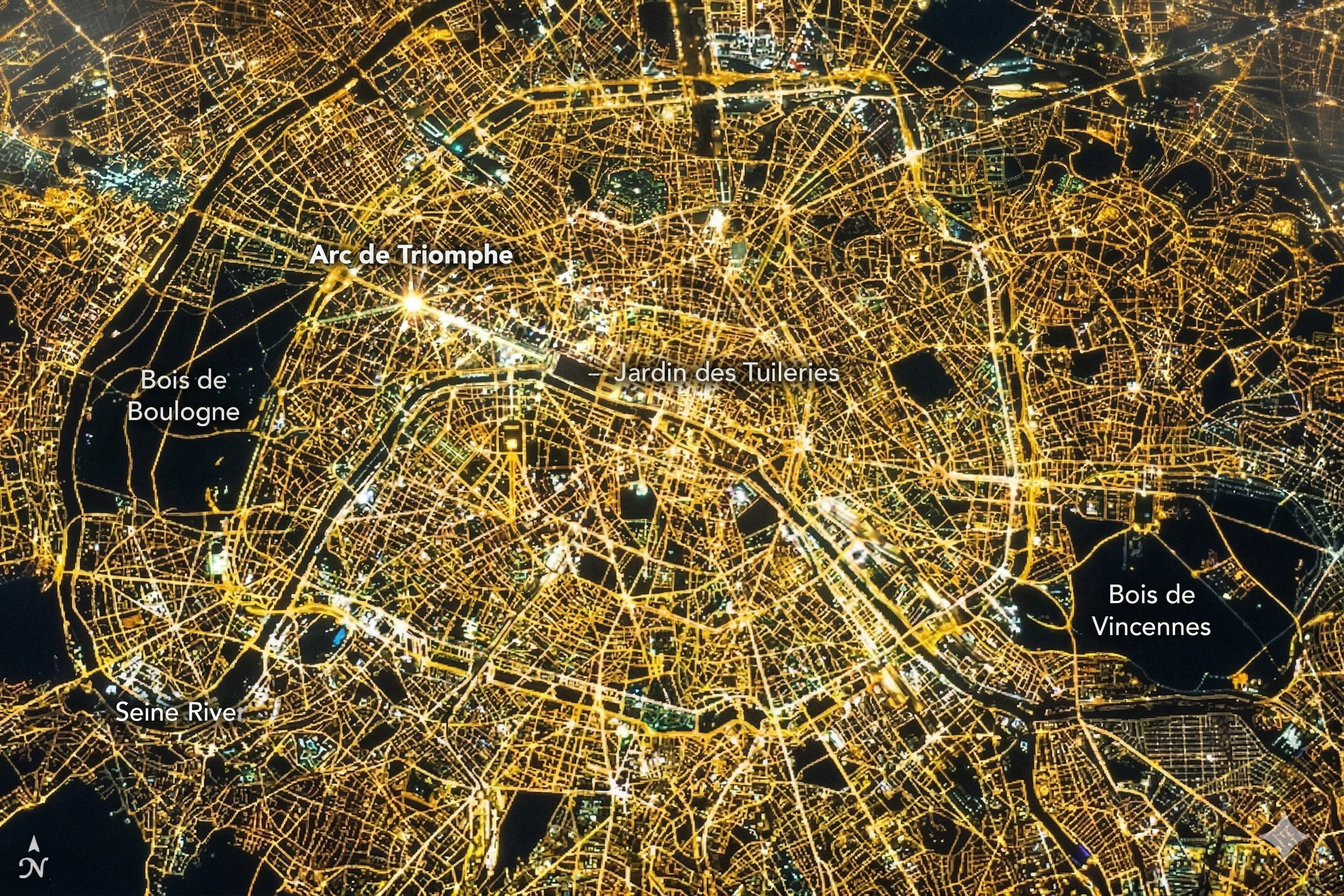
At an altitude of 400 km by astronauts from the International Space Station, Paris transforms at night into a golden mesh so precise that it reveals the outline of the Seine River, avenues, and entire neighborhoods like a luminous map drawn over the Earth.

The good news is that the annual probability is extremely low, but the risk exists on a geological scale, and the question is unavoidable: what would happen if Yellowstone actually exploded at that level?
Why Yellowstone Is More Than Just A National Park

At first glance, Yellowstone is “just” a spectacular park in the Rocky Mountains, spread across three U.S. states.
What is seen on the surface are boiling mud pots, hot springs, and giant geysers like Steamboat, which shoots water over 90 meters high. All of this is the visible sign of an extremely hot system underground.
Researchers have installed networks of seismometers and other instruments in Yellowstone to understand where this heat comes from.
The data revealed a massive chamber of partially melted rock beneath the park, extending for tens of kilometers, with a volume larger than that of the Grand Canyon and enough heat to fuel thousands of geysers.
Further down, seismic images also showed a second magma body, several times larger, connected to a “mantle plume” that rises like a column of hot rock from the deep interior of the Earth.
How We Know Yellowstone Is A Supervolcano
The answer is recorded in the rocks. In cliff faces and deposits around the park, geologists find thick layers of ignimbrite, a type of rock formed by massive pyroclastic flows, avalanches of ash, and incandescent fragments that sweep across the landscape at hundreds of kilometers per hour.
Dating these deposits, scientists have discovered that Yellowstone has experienced at least three colossal supereruptions: one about 2.1 million years ago, another around 1.5 million years ago, and the most recent about 630,000 years ago.
Each of these events dug a massive depression in the ground, a caldera that was then partially filled with new lavas over time.
Today, using drilling, rock samples, and “X-ray” seismic analysis, it is possible to map an hidden caldera with tens of kilometers in diameter, nearly filled and difficult to see with the naked eye.
These records make it clear that Yellowstone is not an ordinary volcano; it is a supervolcano with a history of eruptions capable of reshaping continents and affecting global climate.
What Would Trigger A Supereruption In Yellowstone

As scary as it may sound, the magma chamber beneath Yellowstone is not a homogeneous lake of liquid lava.
Studies indicate that it behaves more like a “slushy”: most of it is crystallized, with only around 15% of liquid material, well below the roughly 50% needed for truly eruptive magma.
To turn this system into an immediate threat, a large pulse of new, hotter magma would need to rise from the mantle plume and inject heat into the upper chamber.
Preserved crystals in ash deposits from Yellowstone’s last supereruption act like time capsules and suggest that, in the past, the interval between the arrival of this fresh magma and the eruption may have been on the order of a few decades.
On a geological scale, this is almost the blink of an eye, but on a human scale, it means that the “clock” can run within a lifetime.
The good news is that this process would not happen silently: Yellowstone would give clear signs, such as specific seismic swarms, large-scale ground deformations, and increased volcanic gases.
High-precision GPS monitoring already shows that the park rises and falls a few centimeters over the years, evidence that the system is restless but still far from the breaking point.
Yellowstone Erupts: The First Impact On The United States
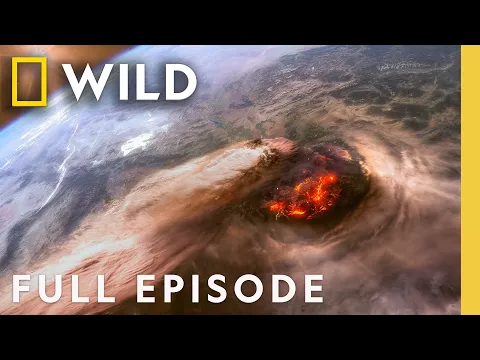
In the extreme scenario, magma in Yellowstone reaches the critical point, and the supereruption begins. A colossal column of ash, gases, and rock fragments would be launched into the atmosphere, rising into the stratosphere and reaching altitudes equivalent to tens of kilometers.
We are talking about something on the order of hundreds of cubic kilometers of material, far exceeding historical eruptions like Tambora or Eyjafjallajökull.
As the column grows, it becomes too heavy and begins to collapse on itself, generating pyroclastic flows with temperatures near 1,000 degrees Celsius and speeds that can exceed 600 km/h.
Everything within a radius of about 160 kilometers of Yellowstone would be destroyed in minutes: forests, cities, roads, infrastructure, people, and animals.
Further from the center, volcanic ash would begin to fall in thick layers over much of the United States, especially the Midwest and the central part of the country.
In nearby areas, estimates point to deposits sufficient to crush roofs, block doors, and literally bury cities and farms.
The fine ash, which behaves like microscopic glass, would enter engines, filters, and machines. Power grids would be affected by highly charged dust, causing short circuits and large-scale blackouts.
Ash In The Sky, Networks On The Ground, And Transportation In Collapse

The eruption of a relatively small volcano in Iceland was enough to paralyze air traffic in Europe for days.
In a supereruption of Yellowstone, the ash and aerosol cloud could shut down airspace across an entire continent, affecting flights in multiple regions of the planet.
On the ground, volcanic ash would accumulate on highways, roofs, and transmission lines, making streets impassable, contaminating water reservoirs, and damaging heavy vehicle engines and agricultural machinery.
Power generation and distribution systems would be under enormous stress. Without stable electricity, refrigeration chains, hospitals, telecommunications, and urban supply would be severely compromised.
In the short term, the direct effect of Yellowstone’s ash would be a country trying to move through a toxic and abrasive dust, with millions of people exposed to respiratory issues and numerous domestic and farm animals dead from suffocation or structural collapse.
From “The Year Without A Summer” To A Multi-Year Volcanic Winter
Even more concerning than the ash is the effect of gases released by a supereruption in Yellowstone.
Historical events like Tambora in the 19th century showed that the sulfur released into the stratosphere reacts with water and forms sulfuric acid droplets, creating a kind of veil that reduces incoming sunlight.
In the case of Tambora, this generated the famous “year without a summer,” with snow in summer months in the Northern Hemisphere, unseasonable frosts, crop losses, and famine in various regions.
Supereruptions like those of Yellowstone, as far as we know, would be at least ten times more powerful than Tambora in terms of material volume.
Models suggest that a supereruption in Yellowstone could lower the global average temperature by about 5 degrees Celsius, a difference comparable to that which separates the current climate from an ice age.
The likely result would be a multi-year volcanic winter, with shortened or nonexistent growing seasons, altered rainfall, and intense cold waves.
In a world where global grain stocks cover only a few months of consumption, the combination of failed harvests, disorganized trade, and broken logistics chains would pave the way for widespread famine, political instability, conflicts, and forced migrations.
Yellowstone, Famine, And The Limit Of Civilization
The immediate effects of a Yellowstone supereruption would be devastating, but the deeper impact would come in successive waves.
Widespread crop failures, combined with collapsing transportation and energy systems, could trigger severe food shortages across different continents. Countries more dependent on agricultural imports would be especially vulnerable.
Famine brings along other specters: protests, violence, collapse of fragile governments, the spread of diseases, and prolonged humanitarian crises.
Some experts assess that such an event would not eliminate humanity but could represent a civilizational shock, with decades of recovery and a profound global rearrangement.
In parallel, distant regions of Yellowstone would face their own challenges, from regional climate changes to the arrival of fine ash at altitude, affecting health and infrastructure. It would not be just an American disaster but a planetary event.
What Is The Real Risk Of Yellowstone Exploding Like That
Given such an extreme scenario, the obvious question is: what is the chance of Yellowstone actually erupting at that level during our lifetime? Current studies indicate that the annual probability is on the order of one in a million, extremely low on a human scale.
Furthermore, constant monitoring of Yellowstone shows an active and restless volcano, but far from an immediate supereruption threshold.
The upper chamber is in a partially crystallized state, well below the liquid fraction needed for a large event, and any significant change would require a new pulse of magma coming from greater depths, something that would leave clear signs decades before the worst-case scenario.
Even so, geoscientists insist on studying Yellowstone closely. Supereruption events are extremely rare, but inevitable on a geological scale, somewhere on the planet and at some point in the future.
Understanding how Yellowstone works, how it responds to magma influxes, how the ground deforms, and how the hydrothermal system reacts is a way to better prepare ourselves not only for a major event but also for smaller eruptions, earthquakes, and associated risks.
In the end, Yellowstone is both a natural laboratory and a reminder of the massive power of the Earth. The same place that seems peaceful today could, on a time scale much greater than ours, become the epicenter of a global transformation once again.
And you, after learning about the extreme scenario of a supereruption in Yellowstone, do you think humanity is really prepared to deal with a global disaster of such magnitude or do we still underestimate this type of risk?







-

-

-

4 pessoas reagiram a isso.