





 Portuguese
  English
  Spanish
  5 min of reading
  0 comments


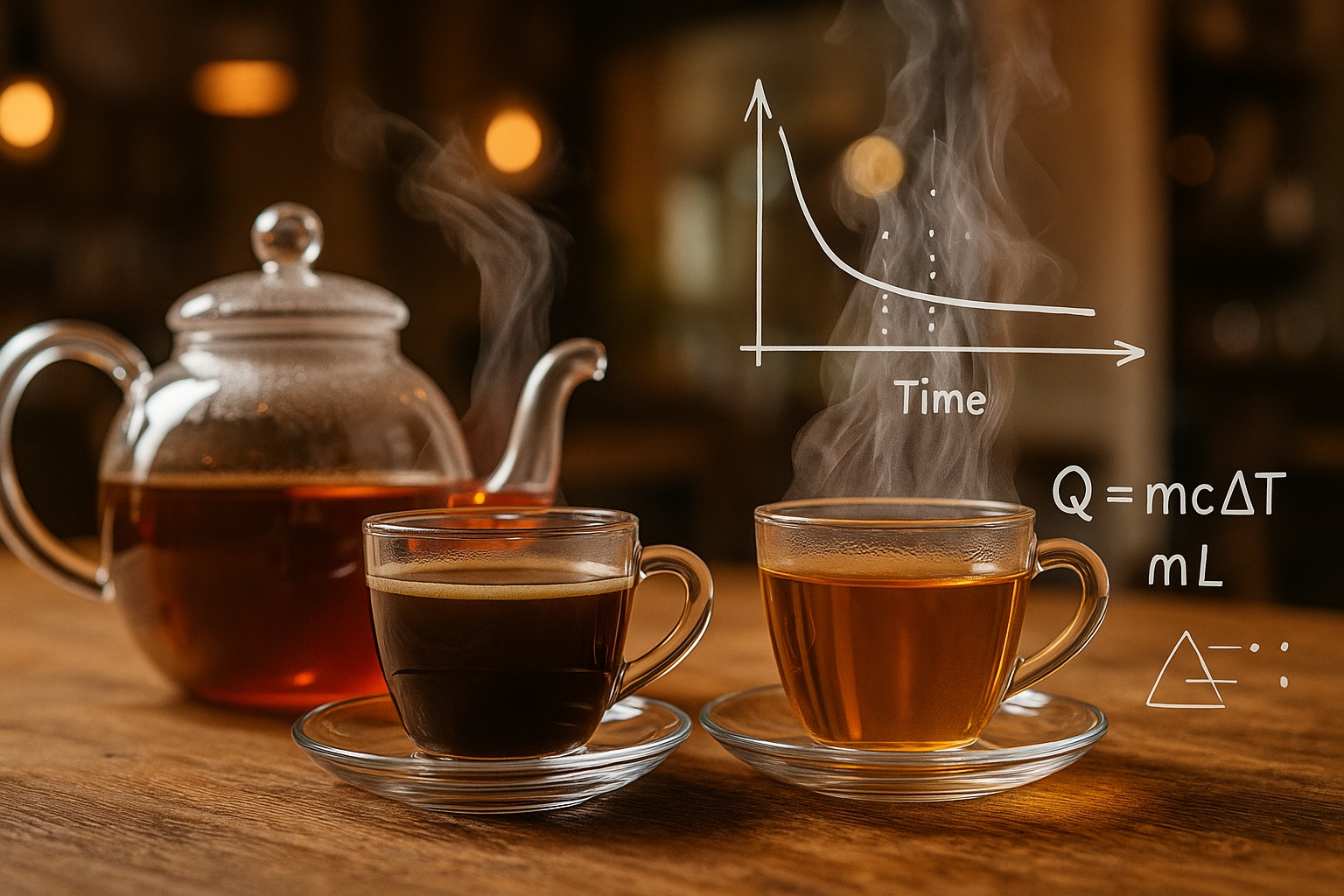
Discover Why Coffee Cools Faster Than Tea in the Same Teapot and How Factors Like Evaporation, Convection, and Chemical Composition Affect the Temperature of Coffee. Learn How Tea Retains Heat Longer
Have you ever noticed that coffee cools faster than tea, even when both are served in the same teapot? While it may seem like a simple everyday perception, there are scientific explanations that help to understand the phenomenon.
The physics of liquids and thermodynamics provide clues on how factors such as evaporation, internal circulation of the liquid, and chemical composition can influence the rate at which a beverage loses heat. Additionally, the material of the container also affects heat transfer, although its effect is secondary to the properties of the liquid itself.
In this article, we will detail why coffee cools faster than tea, using concepts from cooking physics and information based on studies published by reliable sources like Canaltech. The goal is to clarify the science behind the everyday, objectively showing what is known and what is still hypothesized.
-
The largest fortress on the planet is located in a city with 10 km star-shaped walls, 300 hectares protected, an aqueduct with 843 arches and 7 km long, strategic forts, and a UNESCO title that intrigues specialists.

-
USS Gerald R. Ford: the floating city of $13 billion where 5,000 sailors serve 17,000 meals a day, sleep in stacked bunks, take 10-liter showers, and keep 75 fighter jets ready.

-
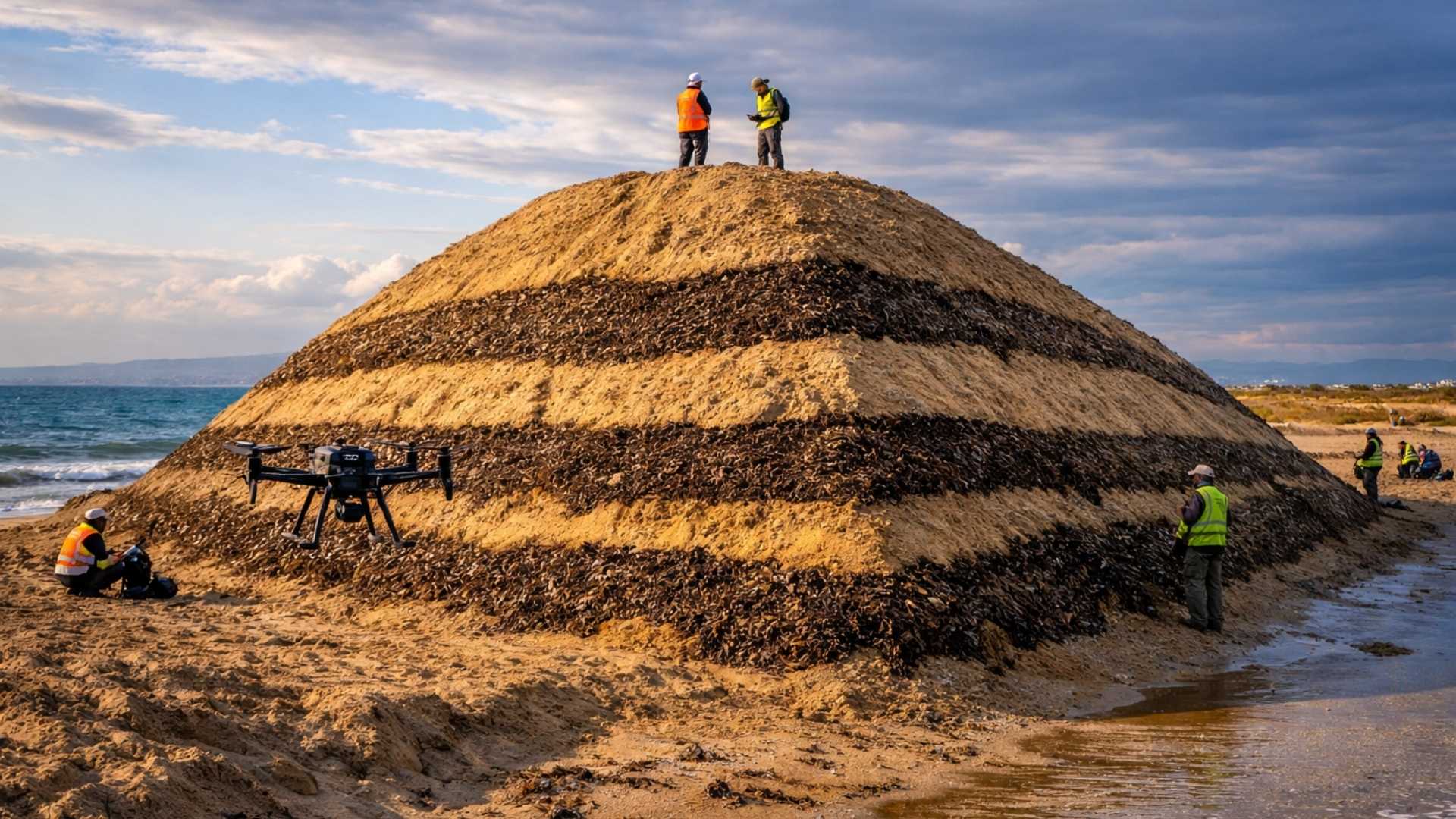
Spain surprises the world by erecting 62 artificial dunes, mixing sand with natural remains of posidonia, and causing the structure to lose only 1.4% of its volume in 1 year.
-
Meta and YouTube condemned for addiction to social media: ruling links the operation of the platforms to the worsening of anxiety and depression.


Heat Capacity: Why Does Coffee Cool Faster?
One of the factors that influence the cooling of a beverage is heat capacity. This concept refers to the amount of energy required to raise or lower the temperature of a substance.
Water, which makes up most of coffee and tea, has a high heat capacity, meaning that large volumes of water take time to change temperature. Tea, being essentially infused water, tends to retain heat longer due to this characteristic.
Coffee contains dissolved components like oils, sugars, and amino acids, which can slightly alter the thermal behavior of the liquid, but there is still no quantitative scientific data proving that this difference is sufficient to fully explain the observed phenomenon. Thus, the safest explanation is that other factors, such as evaporation and convection, also play a significant role.
Therefore, heat capacity contributes, but it is not the only determinant of the fact that coffee cools faster than tea.
Convection and Internal Circulation: Coffee Versus Tea
Another relevant aspect is convection, which describes the movement of the liquid as it transfers heat from the interior to the surface.
In tea, internal circulation tends to be relatively uniform, distributing heat consistently. In coffee, the presence of dissolved solids and oils may slightly alter the movement of the liquid, but there are no measurements that quantify this effect as a decisive factor in cooling.
What is known based on cooking physics is that natural convection helps transport heat to the surface, where it is lost to the environment. Thus, the difference between coffee and tea in the same teapot likely results from the combination of small variations in chemical composition, evaporation, and other environmental factors, rather than dramatic changes in convection.
Evaporation: Coffee and Tea in the Teapot
Evaporation is a widely accepted factor contributing to the cooling of liquids. When the surface of the beverage releases vapor, there is a transfer of energy to the air, lowering the temperature of the liquid.
Coffee contains volatile compounds that contribute to its characteristic aroma, but there are no studies that quantify the evaporation difference between coffee and tea under identical conditions.
It is accurate to state, based on observations, that coffee tends to lose heat quickly, and that tea retains heat longer due to its predominantly watery composition and the lower evaporation rate observed in cooking experiments.
Thus, evaporation is a plausible and observable factor that helps explain why coffee cools more quickly, without needing to assign specific values that cannot be verified.
The Role of the Material of the Teapot in the Temperature of Coffee and Tea
The material of the container also influences the temperature of coffee and tea, although in a secondary manner.
Metal teapots conduct heat quickly, transferring energy from the liquid to the environment. In contrast, ceramic, glass, or porcelain teapots have a greater insulation capacity, keeping the beverage hot for longer.
Still, when coffee and tea are in the same container, the difference in cooling observed between the beverages remains noticeable. This reinforces that chemical composition and evaporation have a more direct impact on cooling than the material of the teapot, but the container can modulate the rate at which heat is lost.
Practical Comparison: Temperature of Coffee Versus Tea
Everyday observations show that coffee tends to cool faster than tea, even when both start at the same temperature.
Homemade experiments and simple cooking physics tests confirm that coffee loses heat noticeably faster than tea. The explanation combines factors: composition of the liquid, evaporation, and internal circulation.
It is worth noting that the exact behavior varies depending on the type of coffee, the type of tea, the initial temperature, the volume of the beverage, and environmental conditions. Therefore, it is not possible to provide exact numbers for cooling, but the phenomenon is consistent enough to be practically noticed in daily life.
Tea Retains Heat Longer: Strategies to Preserve Temperature
For those who wish to keep coffee hot longer, there are strategies that can help:
- Preheat the Teapot: filling the container with hot water before serving the beverage reduces initial heat loss.
- Proper Lid: preventing steam escape helps maintain temperature.
- Choice of Container Material: ceramic or glass teapots insulate better than thin metal teapots.
- Avoid Excessive Stirring: stirring increases exposed surface area, accelerating evaporation.
Tea, on the other hand, naturally retains heat longer due to its predominantly watery composition and lower evaporation rate.
Why Coffee Cools: Understanding the Difference Between Coffee and Tea
In summary, the observation that coffee cools faster than tea can be explained by:
- Liquid Composition: dissolved compounds in coffee may slightly influence thermal behavior, but are not the sole cause of cooling.
- Evaporation: coffee tends to release vapor quickly, contributing to heat loss.
- Convection and Internal Circulation: the movement of the liquid helps transport heat to the surface, where it is lost.
The material of the teapot modulates the rate of cooling, but the difference between coffee and tea can still be perceived, regardless of the container.
The Science in Every Sip: Coffee Cools Faster Than Tea
Observing that coffee cools faster than tea is not just a curiosity, but an opportunity to understand how physics and chemistry operate in everyday life.
The temperature of coffee decreases more rapidly due to the combination of evaporation, internal circulation of the liquid, and chemical composition, even though the effects are not fully quantified. Understanding these factors aids in selecting suitable teapots, controlling evaporation, and enjoying the beverage at the desired temperature.
By comparing coffee and tea, we see how small differences in chemical composition and physical processes can produce noticeable effects, showing that even simple habits in the kitchen can have interesting and accessible scientific explanations.







Seja o primeiro a reagir!