





 Portuguese
  English
  Spanish
  10 min of reading
  0 comments


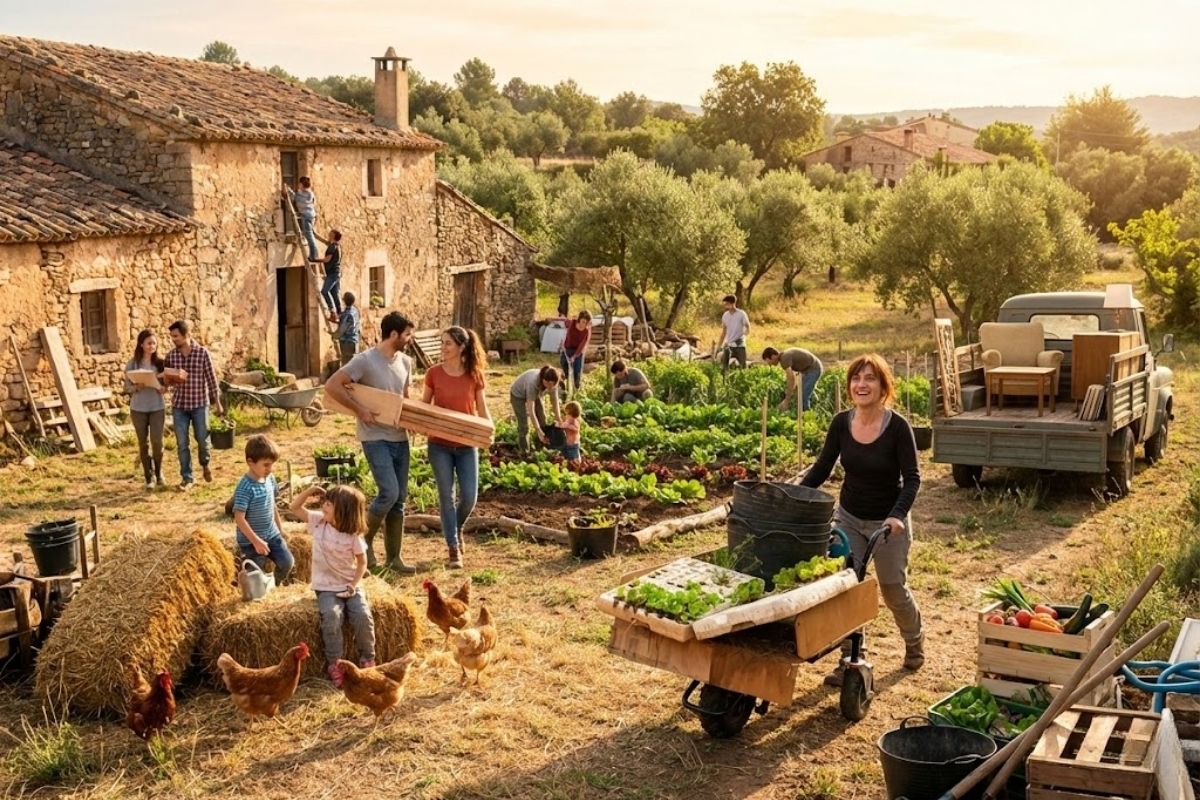
In Spain, The Migration Of Young People To The Country Has Increased Since The Pandemic. In Corterrangel, With 15 Inhabitants, A Couple Left Seville And Increased The Population By 15%. With Pressured Salaries And Rent In Madrid At 22.37 Euros Per M², Villages Are Reviving, But Still Face A Housing Shortage.
In Spain, the pressure of the cost of living in large cities is pushing a generation to a decision that, until recently, seemed unlikely: exchanging expensive urban centers for nearly empty villages. The most visible impetus comes from the pocket, with rents at historic levels and home purchases becoming distant for those living on unstable contracts, but the shift also has an intimate part, tied to silence, nature, and raising children.
According to the BBC portal, this change is being called the “neorrural” movement, a trend that gained strength during the pandemic and remained alive even after the retreat of remote work for some people. In a Spain marked by the so-called empty Spain, where depopulation has closed services and weakened communities for decades, new inhabitants are beginning to repopulate small villages, opening businesses, restoring old houses, and reactivating local ties.
Corterrangel, 15 Inhabitants And A 15% Jump In A Single Decision

In southern Spain, in the province of Huelva, the village of Corterrangel has become a practical example of what it means to repopulate empty Spain on a real scale.
-
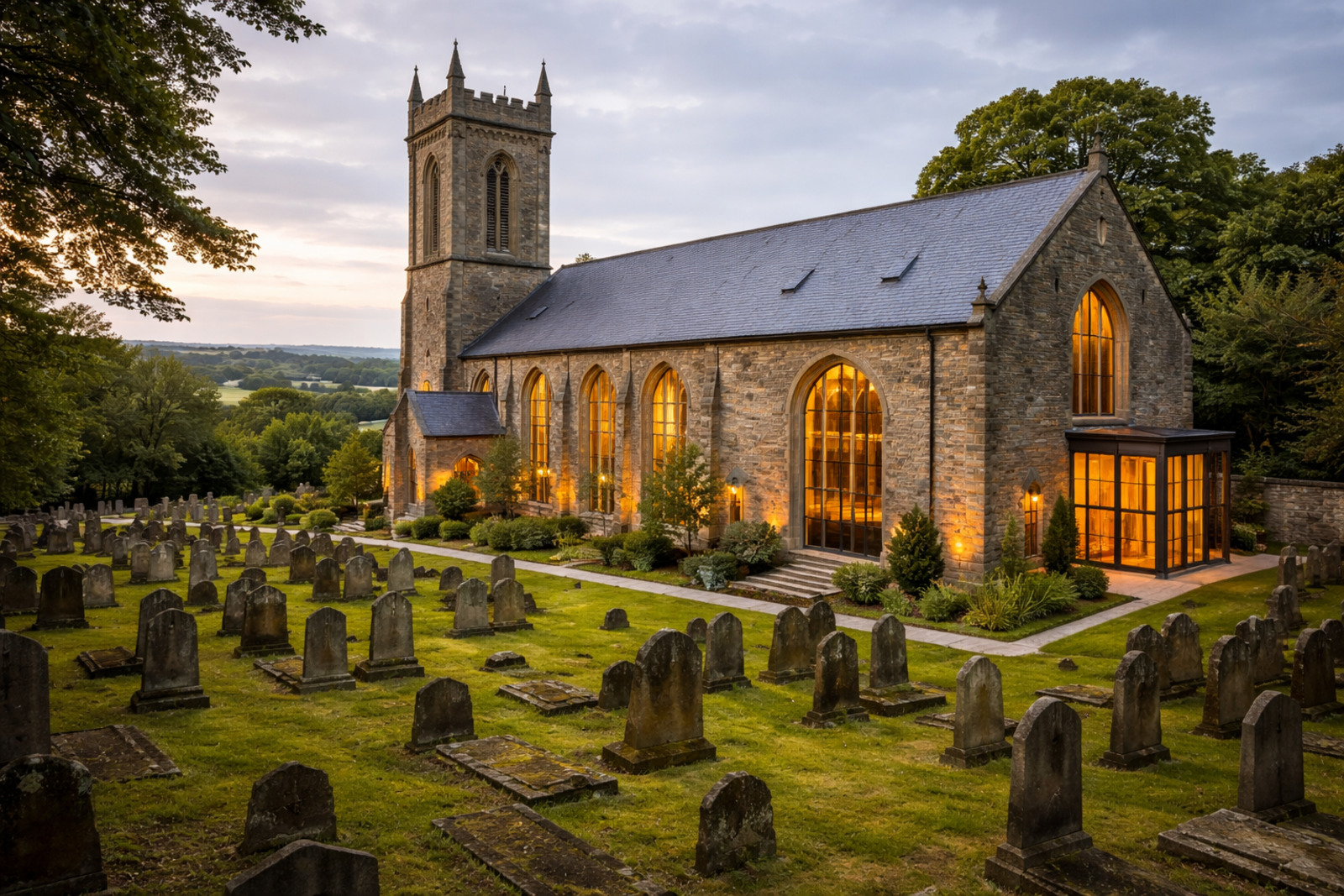
Couple buys 1846 church in ruins for R$ 660,000, invests R$ 3.2 million in renovations, transforms it into a millionaire mansion, and even preserved a historic cemetery with over 300 graves.
-
He started running at 66 years old, broke records at 82, and is now a subject of study for having a metabolic age comparable to that of a 20-year-old, in a case that is intriguing scientists and inspiring the world.

-
Oldest tree on the planet reappears after 130 years of searches: Wattieza, 385 million years old, was 10 meters tall and had no leaves or seeds; Gilboa fossils in New York solved the mystery in 2007.

-
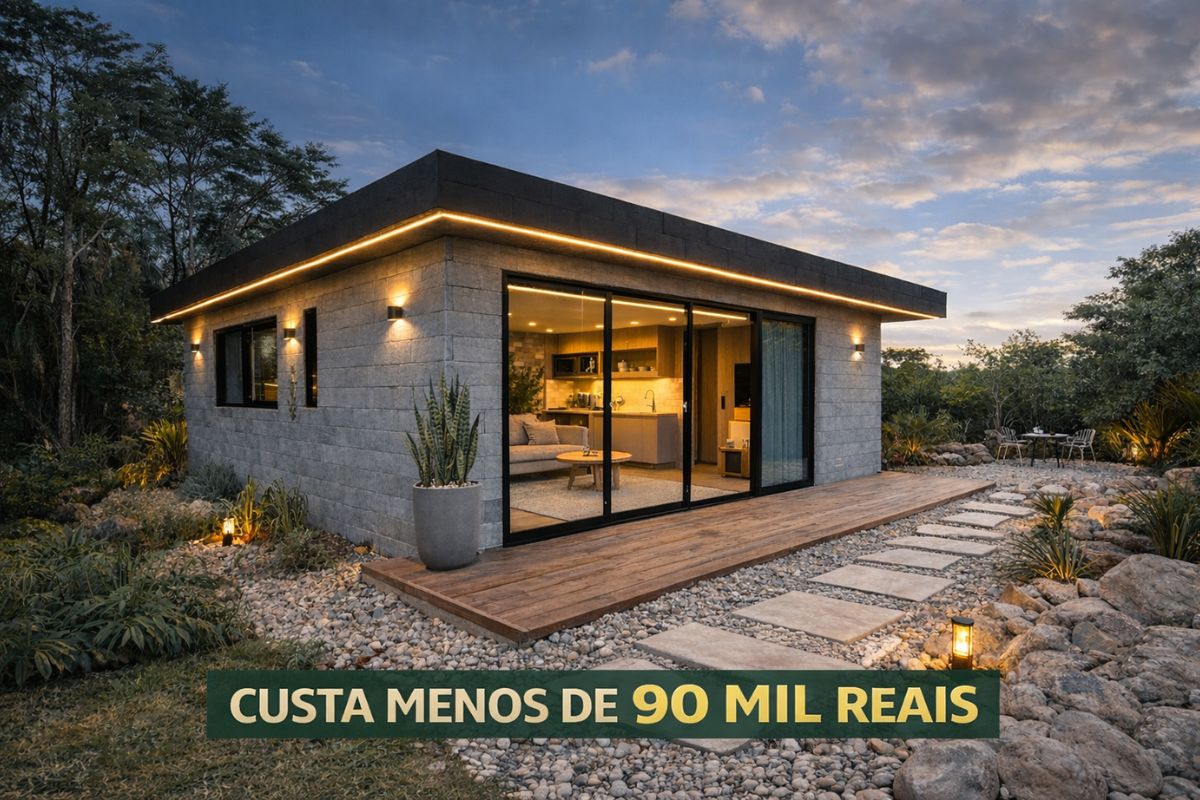
A 48-square-meter house assembled in hours with 4,000 bricks made of recycled plastic that does not absorb moisture, has natural thermal insulation, and costs less than 90,000 reais in a complete kit.

The village had 15 inhabitants when Ainara and Roger decided to leave Seville, where they lived for 15 years, and move to the countryside. The result is straightforward and symbolic: the couple’s arrival increased the local population by about 15%.
The contrast is huge. On one side, Seville with about 700,000 inhabitants, with an urban routine, soaring rent, and constant noise.

On the other, a tiny village within the natural park of Sierra de Aracena and Picos de Aroche, surrounded by chestnut forests, as well as holm oaks, typical Mediterranean species resistant to aridity, and cork oaks, from which cork is extracted. It is a setting where the landscape dictates the rhythm, not traffic.
The couple’s daily life in Corterrangel is built around what was lacking in the city: silence, contact with nature, and space to raise their daughter, Irati, along with their dog, Eska, chickens, and a garden.
The region still hosts birds of prey and animals such as genets, small mammal similar to cats, and badgers, robust and short-legged, related to otters and weasels. For them, this is not tourism, it’s the backyard.
Cash In Hand In The Country And Expensive Rent In The City As A Deciding Trigger
The migration to the interior of Spain cannot be explained solely by the romanticization of rural life. In Corterrangel, the couple sums up a decisive difference: the house was purchased in cash with their savings.
The same plan was practically unfeasible in Seville, where rent had become increasingly expensive and buying a property seemed distant.
The central blockage appears in the relationship with banks. Without a fixed work contract, mortgage financing was not forthcoming. Ainara and Roger are scientists working at the Higher Council for Scientific Research, the Csic, the country’s main public research institution.
It is a sector where contracts often depend on variable funding and are renewed every few years, which increases formal instability even for highly qualified professionals.
Ainara researches the Egyptian vulture, described as the smallest vulture species in Europe, while Roger studies the mites that live on birds’ wings.
Even with scientific careers, the contractual structure and urban cost tightened the equation. In the countryside, the cost of the property was within reach of what was accumulated over time.
Work In The City, Life In The Country And The Commuting Routine That Is Worth It
A crucial part of this new pattern in Spain is the combination of rural residence with still urban professional ties.
For eight years since the move, Ainara and Roger travel just over an hour by car to the office in Seville. It is a time cost accepted as a trade-off for improved quality of life.
This routine helps explain why the “neorrural” movement is not just an escape but also an adaptation. The house changes, but the job does not always change along with it.
For many people, migration to the interior relies on the ability to maintain income, even if it means long commutes and a more complex weekly logistics. In the couple’s case, the assessment is clear: living in the countryside offers peace, and the commute is worth it.
Neorrurales: Pandemic, Intent To Stay And The Decision That Becomes Identity
The term “neorrurales” has come to name the trend in Spain precisely because it reflects a choice that goes beyond improvisation.
The movement began to take shape during the pandemic when the search for space and tranquility grew, and although some people returned to cities with the reduction of remote work, others have already built lives in the countryside or plan to settle permanently.
Roger directly identifies with the label and sees the change as a conscious and desired move. This self-definition is relevant because it shows that the movement is not just a reaction to price but also a change in values.
The idea of progress is no longer tied to urban addresses and starts to connect with routine, community, and nature.
Prices At Historic Levels And The Discrepancy With Salaries In Spain
The economic basis of the phenomenon is the housing crisis. In Spain, property values have already surpassed those of the real estate bubble that burst in 2008, while rents have risen in many autonomous communities at double-digit rates.
The result is what many describe as a discrepancy between remuneration and housing costs.
The numbers help gauge the pressure. In 2024, the average gross salary in Spain was 2,385 euros per month. Among those under 25, the figure was 1,372.8 euros monthly.
This age-based breakdown is central since it is precisely this group that is attempting to emancipate and feels the shock of rent most acutely.
In Madrid, the capital and the country’s largest city, the average rent per square meter reached 22.37 euros. In a standard 80 m² property, this leads to an average monthly cost of 1,789.60 euros, a massive burden compared to the average salary and even tougher for young people with lower incomes.
The comparison with São Paulo, presented to illustrate the shock, also highlights the size of the gap. In December 2024, the average rent per square meter in the São Paulo capital was R$ 57.59, or R$ 4,607.20 for 80 m².
In the same month, the average entry-level salary in Brazil was R$ 2,162. The comparison underscores a common point: when housing skyrockets and income does not keep pace, the geography of life changes.
Survey: 63% Want Rural Area And 70% Of Young People Dream Of The Countryside
The desire to move to the countryside in Spain appears as a major aspiration among those seeking housing. A summer survey indicated that 63% of people looking for property, to rent or buy, would like to move to a rural area.
The desire was more pronounced among low-income individuals and more vulnerable groups, including young people, who see the countryside as a hope for emancipation.
In the age group of 18 to 24, the number rises: 70% want to live in the countryside. At the same time, many recognize the difficulty of making the move due to the type of employment, which does not allow flexibility.
This detail reinforces that the neorrural migration in Spain is not just desire but also practical possibility, and therefore tends to advance more rapidly where work allows for commuting, hybrid contracts, or some autonomy.
Madrid As A Limit: Indirect Eviction, Airbnb And The Break That Becomes A New Beginning
The story of Anaí Meléndez illustrates the urban face of the crisis in Spain. A native of Valladolid, she worked for years in major advertising agencies in Madrid, with salaries described as negligible in light of increasingly high rents.
The breaking point came when she had to leave an apartment because the owner claimed to need it for a child, a justification provided under Spanish law to terminate a lease.
Later, she found that the same apartment was being advertised on Airbnb. For her, this synthesized a feeling of indirect expulsion, where long-term housing gives way to short-term rentals.
Amidst low salaries, high rents, and a personal break, she decided to make a radical change: she left her job and restarted in the countryside.
Nava Del Rey, Less Than 2 Thousand Inhabitants And Entrepreneurship As The Engine Of Return
Anaí’s return was not only residential but also economic. With the money from unemployment benefits, she spent two years traveling the region of her town, Nava del Rey, a municipality with fewer than 2,000 inhabitants, seeking suppliers, creating networks, knowing the territory, and connecting people with the same philosophy.
The final point was the opening of the Caín restaurant, specializing in grilled meats, using local and seasonal products.
The trajectory reveals an important pattern: living in the countryside requires creating work, not just finding work. In villages, the demand exists, but often needs to be organized, activated, and transformed into a business.
Anaí states that she was not alone. She mentions young people who returned to open a physiotherapy clinic and others who took over their grandparents’ old vineyards, starting to produce wine with new techniques and improving inherited production.
This type of return creates an economy of reoccupation that blends tradition and innovation.
Empty Spain: The Vicious Circle Of Depopulation And The Effort To Reactivate Services
The so-called empty Spain is described as the set of rural areas marked by significant depopulation, especially due to the exodus to cities in the 1950s and 1960s.
The accumulated effect is profound: loss of public services and imbalances in social, economic, and cultural development.
The mechanism is known and cruel. Population loss closes services, shops, bars, and restaurants, creating a vicious circle that makes the region less attractive and encourages new departures.
That is why the arrival of families, even a few, can have a disproportionate impact, not only by population but by maintaining schools, justifying transportation, sustaining commerce, and reactivating community life.
Extremadura And The Vale De Ambroz: How Organizations Are Trying To Unlock The Change
To tackle the problem, local initiatives seek to revitalize territories in Spain, generate jobs, and attract residents.
In the Vale de Ambroz, in Extremadura, an association focused on integral development works to make the change practically viable.
Among the measures are a bank of properties and lands available for rent and the provision of information about existing services such as hospitals, health centers, schools, and daycare facilities.
This type of support reduces the insecurity of those thinking about migrating because the change does not depend solely on housing but on basic infrastructure, especially for families with children.
The movement also attracts new profiles. The association has been approached by Latin American families interested in job opportunities in the region.
Many report that they have been in Madrid or Valencia for years and would like to move, creating a crossover between international migration and rural repopulation within Spain.
The Barriers: Lack Of Housing, Stereotypes, And The Shock Of Life Without Conveniences
Even with prices lower than in large cities, housing in the interior of Spain is not always abundant.
In many villages, there is scarcity, which limits the potential for repopulation. The assessment is straightforward: the lack of housing is one of the reasons why more people do not move.
Add to that a recurring criticism: public housing projects almost always concentrate in cities or large urban centers.
Demographic pressure increases the problem. Spain received more than 500,000 people in the last year and there is a deficit of almost 150,000 housing units per year, which accumulates and amplifies demand. This deficit pushes prices throughout Spain and makes the competition for housing a structuring factor.
Furthermore, there is a cultural barrier. Stereotypes about the countryside push away people who could adapt well. Ainara describes how many viewed rural life as a setback, but she reports having found people with different and interesting lives.
Still, there are real sacrifices: there is no logic of “everything at any hour”, you can’t go to a minimarket like a Carrefour Express at 2 AM, there is no Glovo, and giving up this urban standard is hard for many.
At the same time, it is precisely here that neorrurales point out gains: more tranquility, stronger social ties, less noisy routine, and raising children with nature nearby, instead of a daily life dominated by traffic and housing pressure.
Empty Spain begins to change when a few decide to stay, but do you think the biggest brake on this movement in Spain is the price of rent in cities or the lack of available housing in villages?








-

-

-

4 pessoas reagiram a isso.