





 Portuguese
  English
  Spanish
  5 min of reading
  0 comments


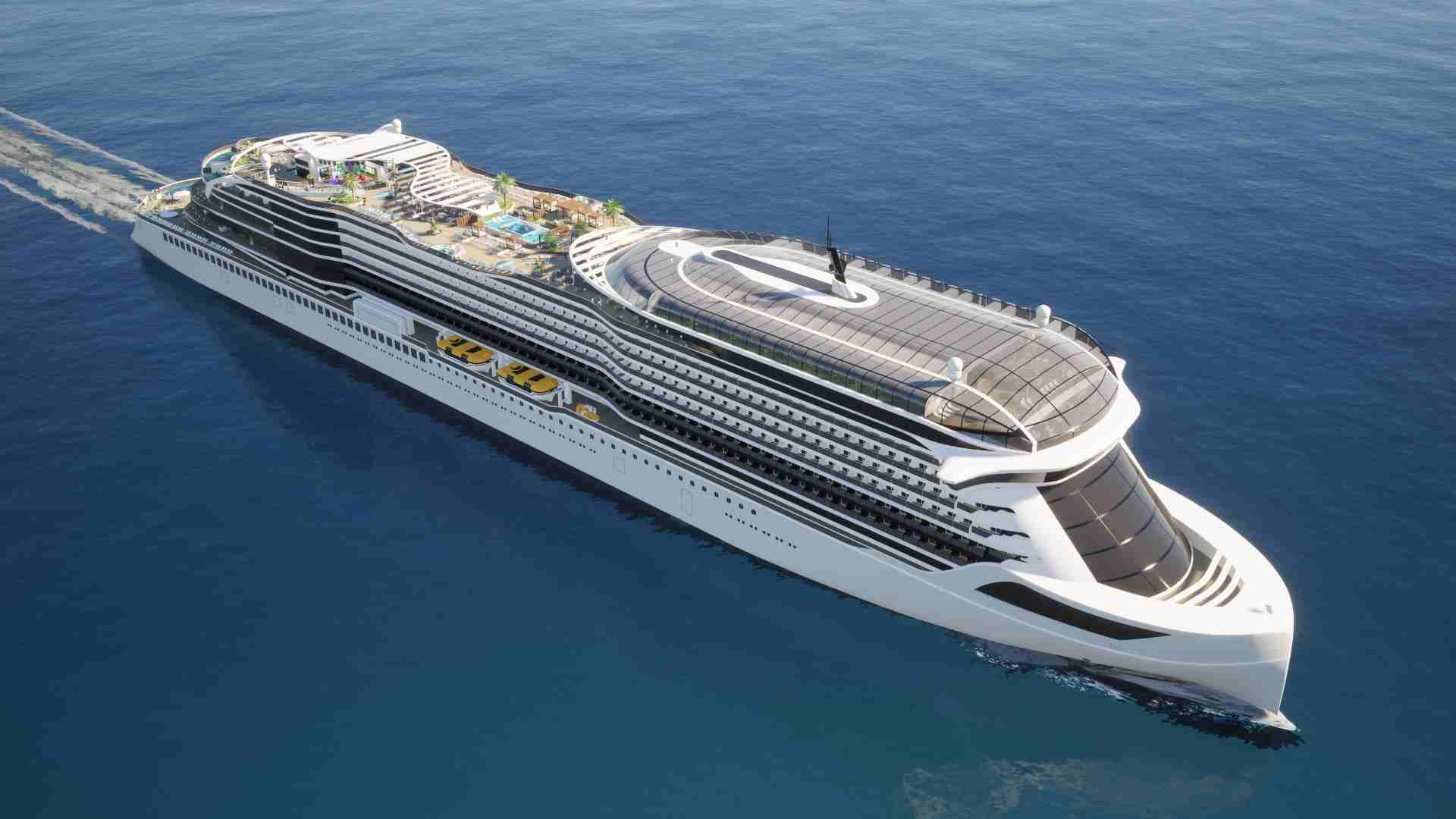
Designed by the German shipyard MEYER WERFT, the 100% electric cruise ship for 1,856 passengers eliminates engines and chimneys, promises to reduce emissions by up to 95%, and bets on the advancement of European port infrastructure to operate routes like Barcelona-Civitavecchia by the end of the decade
A 100% electric cruise ship for 1,856 passengers, without traditional engines or chimneys, has been designed by the German shipyard MEYER WERFT as a proposal to reduce emissions by up to 95% on European routes. The concept, called “Vision,” relies on large-scale batteries, lower noise, and less vibration to redesign the operation and experience on board.
The proposal targets one of the most sensitive points of maritime transport: the environmental weight of vessels, especially in coastal regions. In cruises, this impact appears in the intensive fuel consumption and the emission of CO₂, nitrogen oxides, and sulfur, concentrated in areas of high sensitivity.
The MEYER WERFT project is based on a complete structural change in the traditional ship model. Instead of combustion systems, the concept uses electricity stored in batteries to move a vessel of approximately 82,000 gross tons.
-
Ocean Giant Could Change Everything: Nuclear Container Ship Project Promises to Transport 16,000 Containers Without Using Fossil Fuels
-
Hormuz Strait: Hundreds of Ships and Oil Tankers Stranded After Attacks in the Middle East
-
World’s Largest Electric Ship, China Zorrilla, Will Connect Argentina and Uruguay Across the Río de la Plata with a $200 Million Investment and Operations Planned for 2026
-
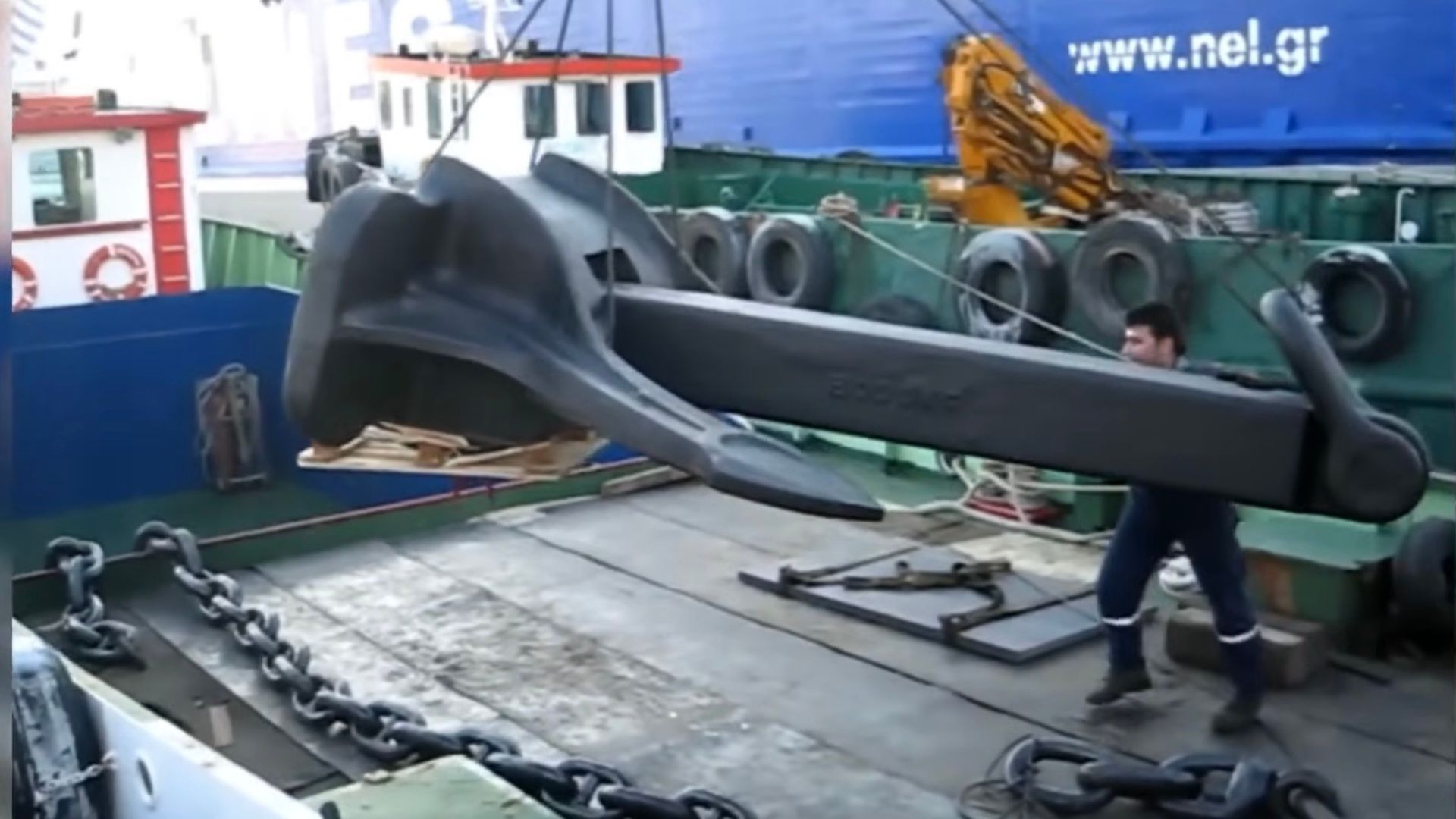
How A 20-Ton Anchor Holds 200,000-Ton Ships Even Under Extreme Winds And Why It Fails In The Deep Ocean
Electric cruise ship bets on unprecedented scale
The “Vision” has not been presented as an idea disconnected from the technical reality of the sector. The concept relies on technologies that already operate in ferries, short-distance vessels, and regional maritime services but expands this use to a much larger scale.
The central difference lies precisely in the size of the designed cruise ship. Bringing total electrification to a vessel with a capacity for 1,856 passengers requires a leap in energy scaling, safety systems, and integration among all ship components.
The batteries planned for the project are supplied by Corvus Energy. The proposal does not depend on the creation of a new technology but on the use of existing systems, integrated, expanded, and optimized to meet the demands of a much larger operation.
Batteries and ports determine the viability of the project
The operation of a ship of this size requires several hundred megawatt-hours to complete entire routes. This imposes the need for advanced thermal management systems, redundant electrical architectures, and fast charging strategies at ports.
At this point, port infrastructure becomes decisive for the viability of the concept. MEYER WERFT estimates that by 2030, around 100 European ports could have suitable charging systems for this type of vessel.
This advancement connects to the ongoing process of port electrification in Europe. Initiatives like Onshore Power Supply, which allow ships to connect to the electrical grid while docked, pave the way for the next stage: charging large batteries for navigation in different weather conditions.
Some routes appear to be especially compatible with the model. The route between Barcelona and Civitavecchia, in Rome, is cited as an example for its average distance, favorable infrastructure, and strong tourist demand.
For longer journeys, the concept itself envisions hybrid versions. This solution is treated as an intermediate alternative, capable of broadening the practical application of the proposal without requiring an immediate complete transition in all scenarios.
Redesign eliminates chimneys and expands useful areas
The removal of the main engines profoundly alters the architecture of the ship. Without combustion and chimneys, classic elements of cruises disappear, and new possibilities arise for the organization of internal and external spaces.
The concept takes advantage of this change to expand the useful area on deck and improve panoramic views. The elimination of large vertical ducts also allows for a more flexible distribution of areas on board.
This redesign is also reflected in details aimed at making the operation more adaptable to European routes. An indoor water park, for example, is incorporated as part of a logic geared towards different weather conditions and less dependence on favorable weather.
The passenger experience also changes in another important aspect. Without high-power diesel engines, the environment tends to have less vibration and less structural noise, bringing the journey closer to a quieter and more stable atmosphere.
Less acoustic impact and regulatory pressure accelerate change
The reduction of noise not only affects the experience on board. The concept also points to a lower acoustic impact on the marine environment, a topic directly linked to the presence of species like cetaceans.
This movement does not happen in isolation within the maritime industry. The sector operates under increasing regulatory pressure, while the use of fossil fuels becomes more expensive and new requirements for clean energy begin to gain weight in operations.
The European Union has included maritime transport in the Emissions Trading System. At the same time, initiatives like FuelEU Maritime encourage the use of cleaner energy sources in the sector.
In this scenario, shipping companies and shipyards have been exploring various alternatives. Hydrogen, green methanol, liquefied natural gas as a means of transition, and partial or total electrification appear among the paths under study.
The proposal from MEYER WERFT fits into this transformation with a clear guideline: electrify where it is already feasible. Instead of betting on a complete and immediate change across the entire industry, the project focuses efforts on regional routes with growing infrastructure and clearer application.
In the short term, this model can reduce emissions on busy regional routes, improve air quality in tourist ports, and decrease noise in sensitive marine ecosystems. In the medium term, it opens up space for more efficient hybrid models, combining batteries with other clean technologies.
On a broader horizon, the concept gains transformative strength if the electricity used comes from renewable sources. More than just a new cruise ship, the “Vision” represents a shift in mindset in an industry that has operated under the same logic for decades.
Via www.meyerwerft.de,









Seja o primeiro a reagir!