





 Portuguese
  English
  Spanish
  7 min of reading
  0 comments


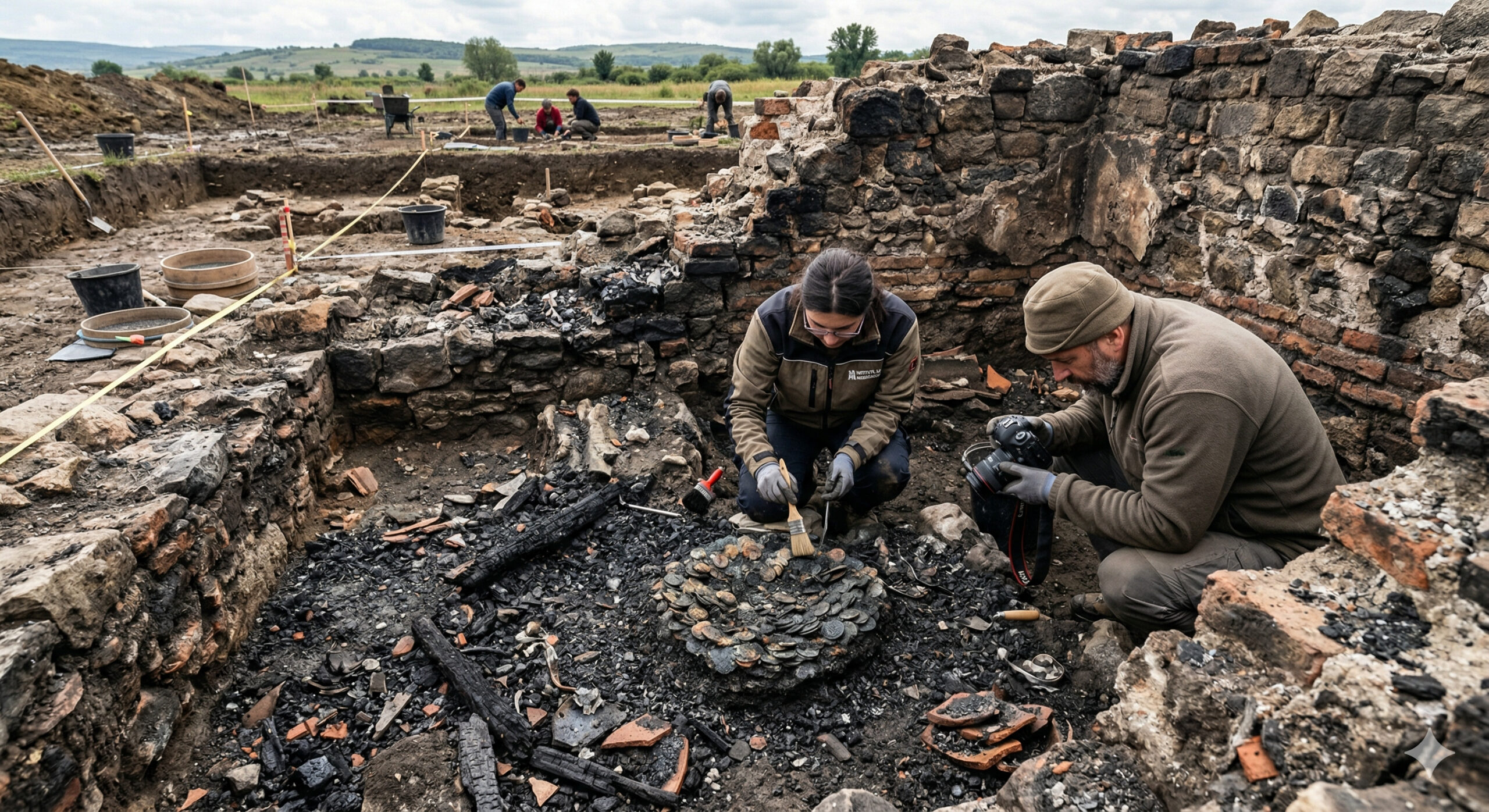
Burned Roman house held more than 40 coins and ornaments fused among ashes and debris 1,900 years ago
In 2025, archaeologists working in the ancient city of Histria, on the western coast of the Black Sea, in present-day Romania, announced the discovery of a rare set of coins and metal ornaments preserved inside a Roman residence destroyed by fire. According to Live Science, based on information from the National Museum of History of Romania, the find was located inside a high-end house that had been consumed by fire between the 2nd and 3rd centuries AD, remaining sealed under the debris for about 1,900 years.
The most striking fact is that the heat of the fire was so intense that more than 40 coins and several precious metal ornaments fused together, preserving not only the objects but also the scene of destruction that struck the residence in Antiquity. The set was found in the same archaeological layer, mixed with ashes, structural collapse, and burned materials, which gave researchers the chance to analyze a moment frozen in time, rather than just a treasure displaced from its original context.
The case draws attention because it is not about coins lost in circulation, nor about a deposit buried in open fields. It is about domestic wealth found within an elite residential environment, which allows for the reconstruction not only of the material value of the set but also of the standard of living of the ancient inhabitants, the violence of the fire, and how precious objects were stored in a Roman house in the Black Sea region.
-
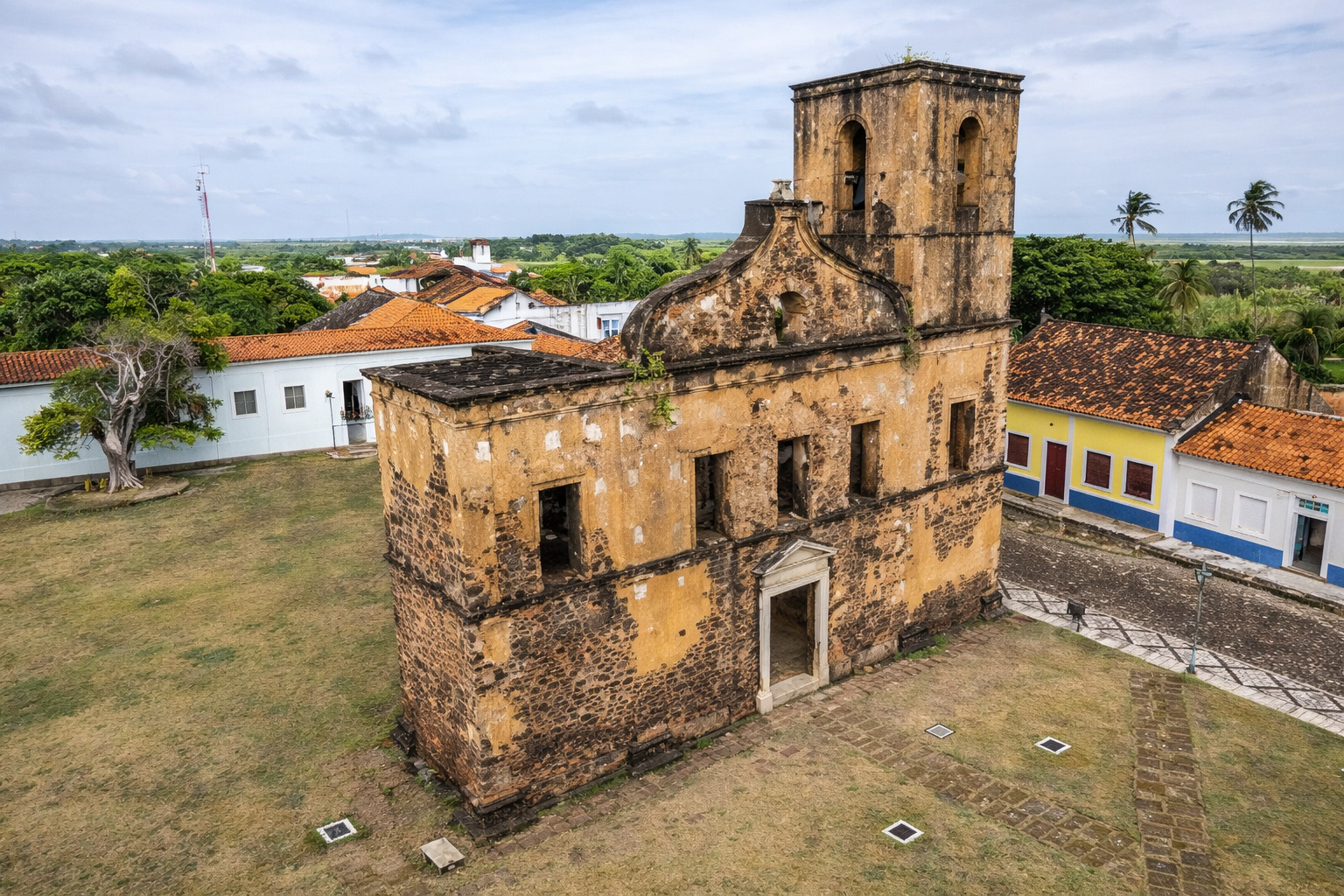
The Brazilian colonial city that stopped in time and shares territory with a rocket launch base.
-
79-year-old woman challenges limits, visits 193 countries in the world after 56 years of planning and reveals the behind-the-scenes of a global journey that few have managed to accomplish.

-
These are the drivers who may stop paying tolls on highways in a project that promises to reduce costs for those who live from transportation in Brazil.

-
(Video): Italian pilot lands plane on moving train at 120 km/h and achieves unprecedented feat in aviation, even with a narrow runway and without direct visual contact.


Histria was a strategic city long before the destruction of the house
Ancient Histria occupies a special place in the archaeology of Southeast Europe. Originally founded as a Greek colony on the Black Sea coast, the city was incorporated into the Roman world and remained active for centuries as an urban, commercial, and cultural center.
The discovery of the burned treasure occurred precisely in a sector of the city that helps to understand how the local elite lived during the imperial period.
The importance of Histria helps explain why a residence there could concentrate valuable objects. Higher-status houses in port cities of the Roman world were often spaces for wealth accumulation, circulation of goods, and storage of family wealth.
The fact that archaeologists found coins and precious ornaments in a single point reinforces the reading that this was not a common dwelling, but rather a domus belonging to a privileged social group.
Roman house had clear signs of wealth and high standard
The architectural details of the residence found in Histria indicate this elite profile. Live Science reported that the house had limestone floors and painted plaster walls, elements associated with a more sophisticated residential standard within the Roman context.
These finishes were not typical of modest constructions and suggest that the inhabitants had sufficient resources to invest in comfort, social representation, and interior decoration.


This point is essential for interpreting the find. The treasure was not found isolated in any space but within a house whose very materiality already denounces high social status. In archaeology, context is as valuable as the object.
A coin inside a precarious structure may indicate daily circulation. More than 40 coins and precious ornaments fused inside a sumptuous house suggest another scenario: that of a family with accumulated wealth, likely surprised by a fire before they could save their belongings.
More than 40 coins and ornaments fused by the heat of the fire
According to information released by the Romanian museum and reproduced by Live Science and the agency Agerpres, archaeologists located more than 40 coins accompanied by ornaments made of precious metals.
These objects were not just scattered throughout the environment. They had been physically altered by the heat, fusing or adhering to each other, something that only occurs in high-intensity fires and under conditions of rapid collapse of the domestic environment.

The result is archaeologically valuable for two reasons. First, because it preserves the set as it was at the moment of destruction. Second, because it suggests that the objects were stored together, not dispersed throughout the house.
This concentration reinforces the hypothesis that they were part of a small domestic treasure, possibly kept in a container or wooden box that was consumed by the flames. Subsequent reports on the case highlighted that researchers interpret the group as the contents of a burned container, even though the wood itself did not survive.
Fire preserved a rare domestic scene from Antiquity
In many ancient finds, objects arrive to archaeologists decontextualized. They are pieces removed, buried, looted, or repurposed in later periods. In Histria, the fire had the opposite effect.
By destroying the residence and sealing the set under layers of collapse, it ended up preserving a rare domestic scene, where the objects remain associated with the space where they were at the moment of the catastrophe.
This preservation of context is what transforms the discovery into something greater than a simple monetary treasure.
Researchers can study the position of the set, the materials found around it, the traces of burning, the sequence of wall collapse, and the chronology of the layer. This allows for the reconstruction of the destruction episode with a much higher degree of precision than would be possible in a find removed from its original environment.
Dating points to the 2nd and 3rd centuries AD
The materials found allow for dating the episode broadly between the 2nd century and the 3rd century AD, during the period known as the Roman Principate. Live Science stated that the set belongs to this phase, and the Agerpres agency reinforced the chronology by reporting that the objects came from a Roman house destroyed by fire during this interval.
This dating is important because it situates the discovery in a moment of great vitality in the Roman world, but also of increasing regional instability at various borders and peripheral zones of the empire.
Although the exact cause of the fire is not established in the reports, the destruction of the residence shows that even in consolidated cities, abrupt episodes of ruin could interrupt urban life and transform domestic wealth into an archaeological capsule.
Treasure helps understand how the Roman elite stored wealth at home
One of the strongest aspects of the discovery is the possibility of studying how wealth was stored within a Roman residence.
Instead of appearing in public vaults, temple deposits, or emergency burials, the set was found within the house itself. This suggests a domestic way of storing wealth, combining coins and ornaments in the same space, likely for quick access or family protection.
This detail helps bring archaeology closer to a human scale. We are not just facing “Roman objects,” but concrete decisions made by concrete people. Someone chose to keep those coins and those adornments inside the residence.
Someone stored them together. Someone could not remove them in time when the fire consumed the house. It is exactly this link between everyday life and sudden destruction that makes the case so strong from both a narrative and scientific perspective.
Find includes not only gold or silver, but a broader domestic set
The reports also highlight that the treasure was not the only relevant discovery in the same layer. In addition to coins and ornaments, archaeologists found ceramics, inscriptions, and objects made of glass, bronze, iron, and stone, all linked to the same layer of destruction. This greatly increases the value of the site, as it allows for the study not only of accumulated wealth but of the entire material environment of the house.
This association between precious goods and more common utensils helps to compose a more complete picture of the residence. Instead of an isolated treasure, Histria offers a scene of habitation interrupted by catastrophe. The archaeological value grows precisely because the objects can be read together, as fragments of the same episode. This includes everything from the decorative standard of the house to how utilitarian objects and valuable items coexisted in the domestic space.
House destroyed by fire preserved a rare portrait of Roman wealth
The set found in Histria allows researchers to observe a very specific slice of Roman life: the interior of an elite house surprised by destruction. This is different from finding a tomb, a military deposit, or a purposely buried monetary reserve. Here, wealth was found where it was lived. This produces a much more intimate image of the past.
The fused coins and ornaments speak not only of luxury. They speak of vulnerability. They show that even in a well-finished residence, with limestone flooring and painted walls, a fire could erase in a few hours what took generations to accumulate.
And they also show that archaeology sometimes can only see the value of everyday life because a disaster froze everything before it could be reorganized or erased.








Seja o primeiro a reagir!