





 Portuguese
  English
  Spanish
  6 min of reading
  0 comments



The popular house arrives disassembled like a giant Lego kit, takes less than a day to stand, uses blocks made of recycled plastic that create a natural exhaust against heat, do not absorb moisture, and cost a fraction of what is spent on conventional construction with brick and cement
A 48-square-meter house that rises from the ground in a matter of hours seems like a promise from an internet video until you get a close look at the construction system that Fuplastic developed in Cotia, São Paulo. According to the channel Entre Pra Morar, the company transforms recycled plastic into interlocking blocks that work like a giant Lego, and with 4,000 of these bricks, delivers a complete popular house kit for less than R$ 90,000.
What stands out is not just the speed of assembly or the price. It’s the fact that this house does not absorb moisture, has natural thermal insulation created by the design of the blocks themselves and can be finished like any conventional construction with porcelain tiles, plaster, texture, or wood. The system has already moved beyond the prototype stage and is being used in high-end homes, industrial aviaries, and even underground infrastructure projects.
Where the idea of building a house with recycled plastic came from

The story begins with a toy. The creator Bruno Frederico of the system recounts that he was in the United States with his daughters when he bought an R$ 8 Lego and said he would transform that connection into millions. A month later, he completed the largest solar project in the country using blocks inspired by that toy. The mold for the first block cost R$ 35,000, today, the molds from Fuplastic exceed R$ 1 million each.
-
Luciano Hang revealed that Havan’s air fleet has already accumulated more than 20,000 landings, 10,000 flight hours, and 6 million kilometers traveled, and he says that without the planes, the company would never have grown so quickly.

-
A historical discovery in the Andes Mountains reveals a gold deposit valued at 770 billion reais hidden over 4,000 meters above sea level on the border between Chile and Argentina, and the whole world is watching.

-
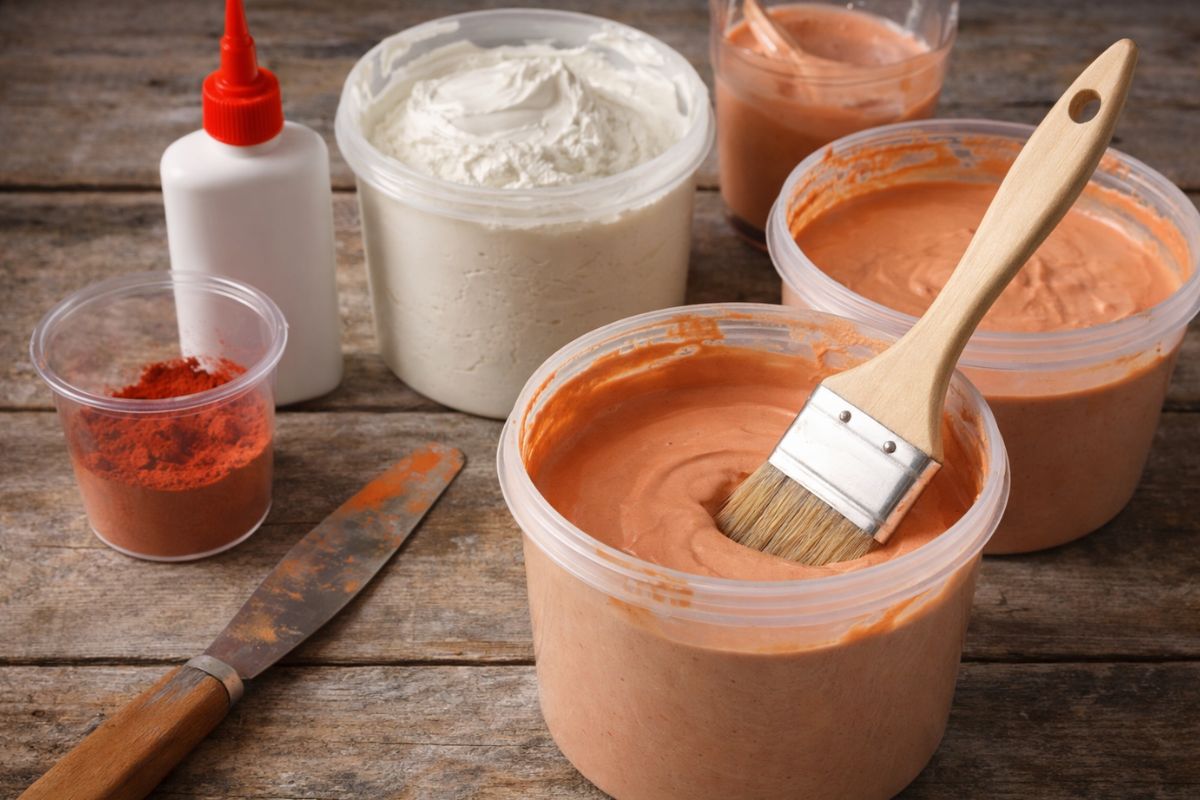
With just joint compound, white glue, and pigment, you can make a homemade paint that yields double the conventional amount, saves up to 70%, and leaves the wall with a finish that no one would believe wasn’t store-bought paint.
-
Home environment can influence the brain, mood, and well-being: studies indicate an increase of up to 15% in productivity, a reduction of 12% in stress with plants, and a direct impact of the circadian rhythm on the 24 hours of the day.


The concept behind the recycled plastic house is straightforward: take the trash that everyone throws away and turn it into an engineering product.
The raw material comes from cooperatives and NGOs like Tampinhas que Curam that collect plastic and receive income for it. The material is crushed, heated to over 200 degrees, and injected into molds that produce blocks with industrial precision.
The black block, for example, is the cheapest because it mixes all colors of plastic and is the most suitable for constructions that will receive external finishing.
How the assembly of a house works in a few hours

The kit for a popular 48-square-meter house arrives at the construction site with everything: blocks, doors, windows, metal profiles, frames, and casings.
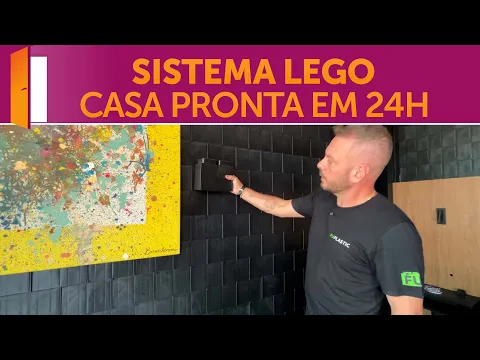
The structure of the house is assembled on a concrete slab, with galvanized profiles bolted to the base that receive steel tension rods that run through the blocks from the bottom to the ceiling, locking everything under pressure.
The system is called tensioned. Every 50 or 60 centimeters, a steel rod rises through the interior of the blocks and secures the structure like a large monoblock.
The recycled plastic bricks fit together in an interlocking locking system, without mortar, and the assembly of the entire house takes 3 to 4 hours.
The electrical wiring runs through the blocks and is installed before the closure. Two days after the kit arrives, the house is ready for finishing.
Why this house does not absorb moisture and has thermal insulation
This is the point that surprises most visitors to a house built with these blocks. The recycled plastic simply does not absorb water, unlike conventional masonry, which pulls moisture from the ground and air and transfers it inside the environments.
In a beach house, for example, this means zero mold and no damp smell even in coastal areas with high relative humidity.
The thermal insulation comes from the design of the blocks themselves. Each brick has internal holes through which the tension rods pass, and these empty spaces create air pockets.
When the sun hits the outer wall of the house, the air inside the blocks heats up, rises, and escapes from the top like a natural chimney; it is a passive exhaust system that does not require electrical energy. The result is a house that stays cool inside even in strong heat outside.
In the aviaries built with the same system, environments that require strict temperature control, the recycled plastic blocks perform best, even eliminating heating costs in winter.
How much it costs to build a house with this system
The kit for the popular 48-square-meter house with two bedrooms, living room, kitchen, bathroom, and laundry costs less than R$ 90,000.
This price includes all blocks, doors, windows, metal profiles, and complete structure. The finishing (flooring, painting, coverings) is the responsibility of each contractor or owner, as in any construction.

For those who want a high-end house, Fuplastic also delivers the constructed project. A 180-square-meter house with two suites was completed in 15 days, and a 450-square-meter house on a 1,500-square-meter lot was ready in 30 working days—a project that, using conventional methods, would take 1 to 2 years.
The average cost of the high-end house, 100% finished with complete finishing, is around R$ 5,000 per square meter. The company sends its own team for assembly and delivers the house ready to live in.
What can be done with the blocks beyond a house
The system has already exceeded residential use. Fuplastic manufactures underground junction boxes for electrical, sewage, and data networks that are up to 4,000% more efficient in logistics than their concrete equivalents—where 2 concrete boxes fit in a truck, 50 of the dismountable recycled plastic boxes fit. These kits are already being exported, including to Chile.
Inside a house, the blocks also become furniture. The company developed an MDF made from recycled plastic, 18-millimeter panels that serve for closets, countertops, and cabinets.
The closet made with these panels will never mold because the material simply does not absorb moisture.
There are also coatings that mimic marble, retaining walls for lakes and pools, and modular containers that function as construction sites—all made with the same recycled plastic that, without this destination, would end up in landfills.
The social impact behind each recycled plastic house

Each block that becomes a house carries a chain of impact that starts with cooperatives and recycling NGOs. Fuplastic buys plastic from organizations like Tampinhas que Curam, generating direct income for communities that rely on the collection of recyclable materials.
The waste that would leave homes for landfills is redefined as a quality engineering product.
The company operates three industrial plants in Cotia, totaling over 43,000 square meters of manufacturing area. From crushing to the finished block, the entire process happens there, and the cycle closes when a recycled plastic house is assembled in hours on the land of someone who, many times, would wait years for a conventional home.
For those who want to see the system up close, Fuplastic will be at Feicon, the largest construction fair in Brazil, from April 7 to 10 in São Paulo, with a complete model house set up at the booth.
Would you live in a house made of recycled plastic? What surprised you most about this construction system? Share in the comments.






Seja o primeiro a reagir!