





 Portuguese
  English
  Spanish
  5 min of reading
  0 comments


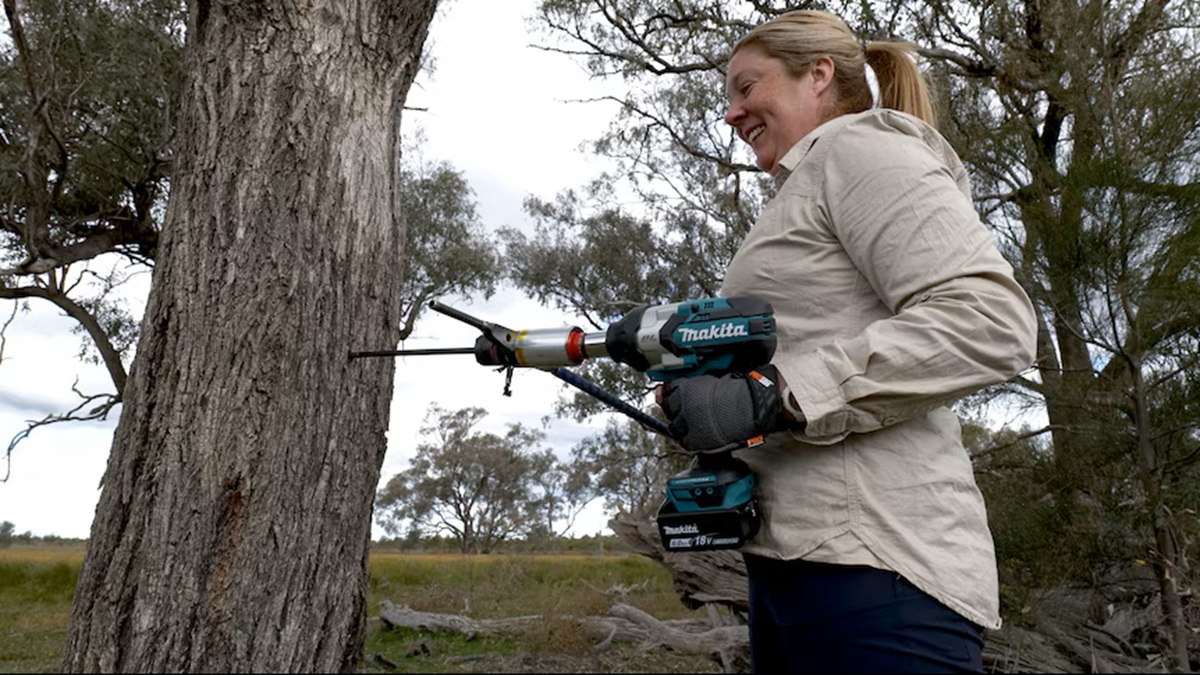
A 566-year-old coolabah tree found in the Gwydir swamps in Australia revealed to researchers a natural record of droughts, floods, and hydrological changes that can help guide future decisions on water management and environmental preservation
In the Gwydir swamps in northern New South Wales, a 566-year-old coolabah tree has become the centerpiece of research that helps reconstruct centuries of droughts, floods, and climate changes. The study, conducted by researchers from the New South Wales Department of Climate Change, Energy, Environment and Water and the University of Newcastle, indicates that these trees record in their growth rings crucial information to understand the region’s water history.
The discovery enhances the scientific value of these centennial trees, including specimens of red gums and other individuals over 500 years old. By examining this natural record, researchers identified signs that could contribute to future water management decisions in Australia.
Centennial tree reveals centuries of environmental transformations
The coolabah trees of the Gwydir swamps were described by researchers as silent witnesses to centuries of climate change. According to the study, the oldest coolabah tree analyzed has stood for over five centuries, enduring the variable conditions of a floodplain marked by environmental extremes.
-
In a flooded well, archaeologists found a 1,700-year-old Roman egg that still contains clear and yolk intact inside the very thin shell.

-
Something is happening around the Earth: Inside the huge explosion of fireballs in 2026

-
A hot air bubble coming from Argentina expands over Brazil, causing thermometers to exceed 38 degrees with a thermal sensation of 40 degrees in late March, affecting 6 states at once.

-
The radish leaf that almost everyone throws away has more polyphenols, flavonoids, and fiber than the consumed root, and a 2025 study showed that the leaf contains compounds that protect the intestine, combat inflammation, and may inhibit the growth of cancer cells.


Dr. Kathryn Taffs from the DCCEEW highlighted the unusual nature of this longevity. “It is truly extraordinary that it has survived in that floodplain for five centuries,” she stated, commenting on the tree’s persistence in an environment subjected over time to droughts and floods.
This resilience has made the coolabah a reference point for scientists involved in the work. The growth rings have come to be treated as a detailed archive of past climatic events, capable of preserving marks left by variations in water and changes in the environmental conditions of the region.
Researchers state that the significance of the discovery lies not only in the tree’s advanced age. The analysis allows for the reconstruction of a timeline of environmental fluctuations, challenging previous assumptions about the local climate and reinforcing the role of these trees as natural recorders of the water history of the Gwydir swamps.
Technique used preserves the tree and expands reading of the past
To access this information, the team used dendrochronology, a technique focused on studying the growth rings of trees. The method allows for the observation of signs related to environmental conditions faced during different periods in each layer formed over the years.
Explaining the procedure, Dr. Taffs detailed that eucalyptus wood is extremely resilient. According to him, the collection is done with a reinforced steel core, the size of a pencil, attached to a drill and inserted into the tree trunk to extract a small sample.
According to the researcher, the process does not cause damage to the analyzed specimen. “It causes no harm, and the final result is… a small fragment of wood, the size of a pencil, that we can then analyze,” he stated, describing the extraction used to estimate age and growth history.
The application of this technique gains special importance in the case of floodplain trees. In these environments, growth closely follows climatic and hydrological changes, making the rings a relevant source for interpreting past cycles of drought and flooding.
In addition to recovering historical information, the analysis also provides a basis for current environmental management. By understanding how previous events influenced tree growth, researchers aim to enhance the capacity to assess how future climate changes may affect the Gwydir swamps.
Reproduction occurs in pulses and depends on water in the floodplains
One of the central points of the study was the finding that the reproduction of these trees does not follow a regular pattern. Instead of occurring continuously, it happens in bursts described by researchers as “mass recruitment events.”
Dr. Taffs stated that the team is particularly interested in understanding how this behavior may influence water management. According to him, one of the conclusions already obtained is that the reproductive process of these trees does not follow a predictable or constant cycle over time.
The research identified six significant pulses in which new trees successfully established themselves.
During these moments, there was seed production, germination, seedling formation, and growth to adulthood, marking decisive episodes for the renewal of the ecosystem.
These events, according to the study, are directly linked to water availability. The presence of sufficient water in the floodplains is treated as an essential condition for the trees to mature and reproduce in the following hydrological cycle.
Dr. Taffs emphasized that this knowledge has immediate practical applications. “We now know that it is essential to provide water to these floodplains for the trees to mature and reproduce in the next hydrological cycle,” he said, relating the survival of the trees to how water is managed in these environments.
Without adequate water supply, the reproductive process can be compromised, impacting the entire ecological system associated with the swamps. In this sense, the study reinforces the need for sustainable water management to ensure the survival of these trees and the continuity of the natural cycles identified by the research.
Natural records help reconstruct climatic history
The conclusions of the work were also presented as an advance for understanding the climatic and hydrological history of Australia.
Associate Professor Danielle Verdon-Kidd stated that the project demonstrated the great potential of floodplain eucalypts to reveal past climatic and hydrological conditions in areas without extensive long-term records.
According to her, this reading capability is especially relevant in regions where traditional records are scarce.
The growth rings provide a continuous sequence of information about water availability, allowing observation of how the environment responded to climate changes over the centuries.
Professor Richard Kingsford, a researcher at the University of New South Wales, also highlighted the scope of the initiative. For him, one of the biggest challenges is understanding the origin and history of these systems in relation to floods, making the reconstruction of the natural rhythms of river systems a decisive point for future studies.
In the assessment presented by the researchers, interpreting these historical changes can improve understanding of how the swamps respond to future climatic events.
By combining longevity, environmental record, and ecological value, the 566-year-old coolabah tree solidifies its status as one of the keys to deciphering the climatic memory of the Gwydir swamps. Data and statements cited are included in the submitted file.








Seja o primeiro a reagir!