





 Portuguese
  English
  Spanish
  5 min of reading
  0 comments


Environmental Policy Exchanges “Greener” for Water Security by Removing Invasive Species that Drain Sources and Strain Strategic Basins.
South Africa has adopted an environmental policy that, at first glance, seems to contradict common sense: instead of increasing tree planting, the country has begun to remove some of what has already grown in its basins to protect rivers, springs, and reservoirs.
The focus is not on native forests, but on invasive exotic plants that have spread across strategic recharge and drainage areas, increasing soil water consumption and reducing the flow that sustains urban supply, agriculture, and industry.
In this context, the Working for Water program has established itself as a large-scale government response, combining invasive control, environmental recovery, and job creation, with ongoing operations in different provinces and priorities defined by risk and water relevance.
-
Workers manually excavate 6 million kilograms of ice to open a cave that allows observation of how a glacier is melting from the inside.

-
Archaeologists find a colossal 2,000-year-old vessel at the bottom of the sea near Alexandria linked to the elite of Egypt and reveal a pleasure barge from the last dynasty of the pharaohs that the sea has hidden for centuries.

-
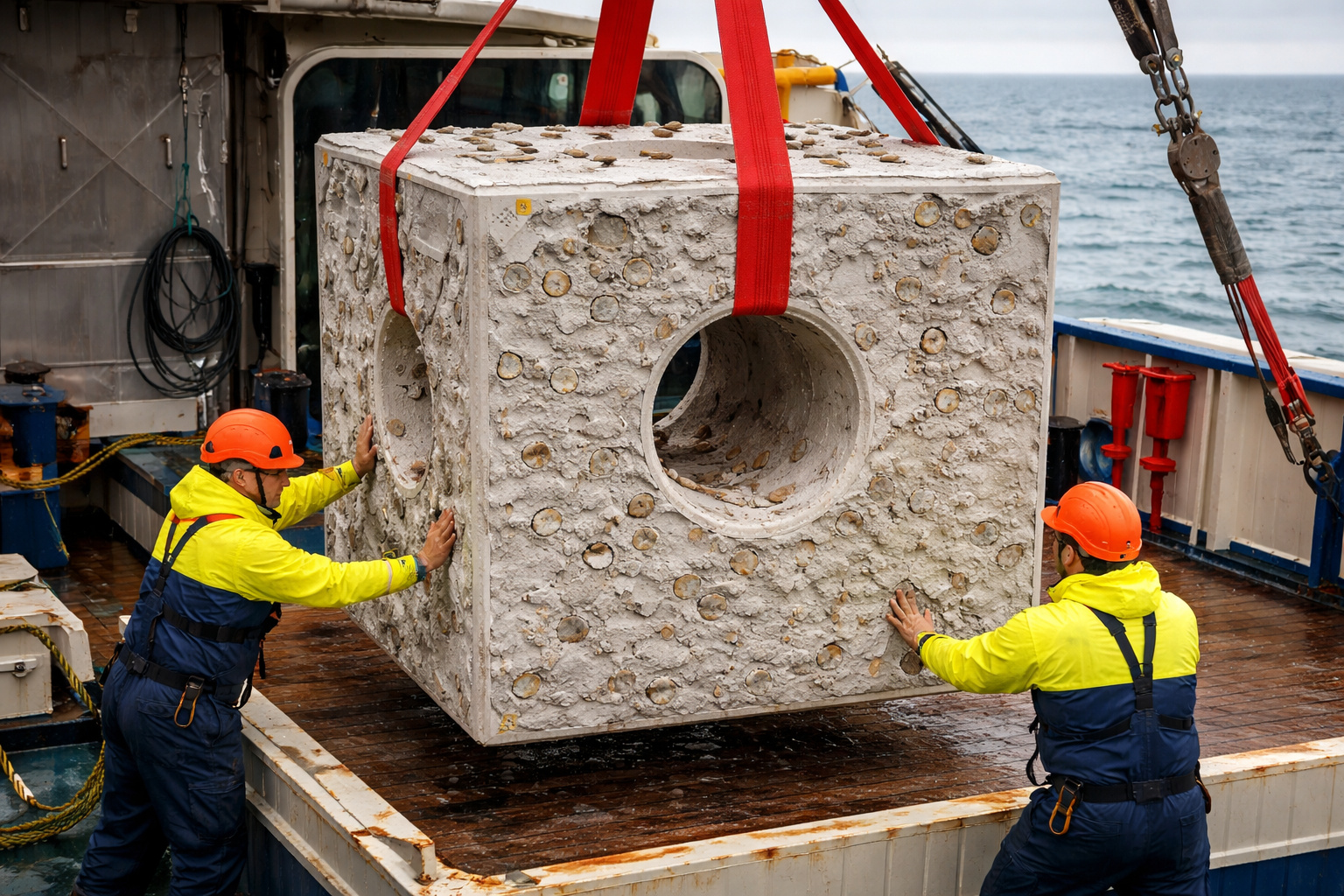
United Kingdom clears 40 tons of shells and concrete into the sea in an innovative project that promises to restore a marine ecosystem lost for over 200 years and improve water quality.
-
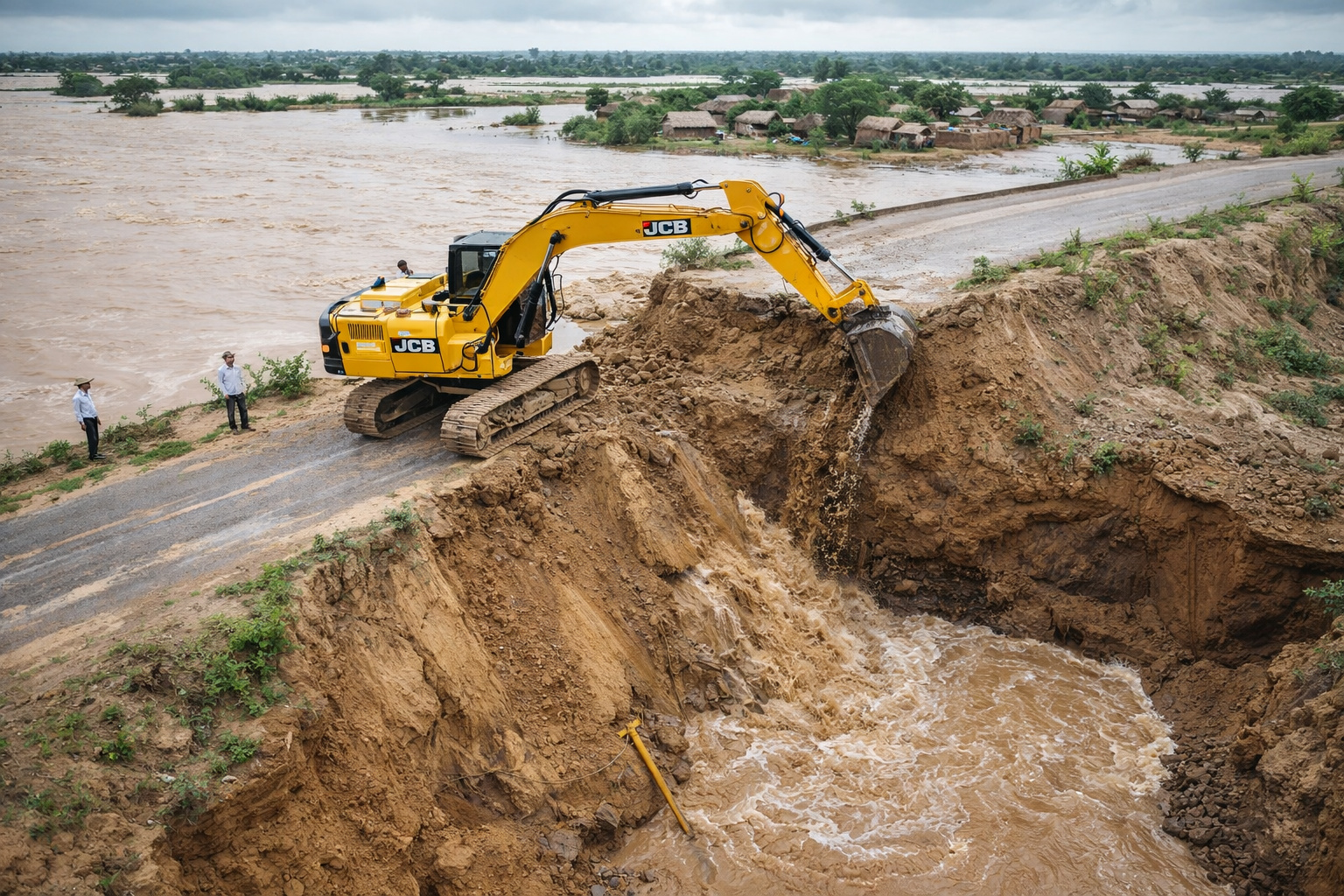
With emergency diversion to abandoned mining craters, engineers save villages from a devastating flood that was advancing through the desert and threatening to destroy entire communities in a matter of hours.

Reports compiled by international organizations, such as the World Resources Institute, and by partner entities of the South African government indicate that management efforts have already covered more than 1 million hectares treated against invasive vegetation.
Water as a Limit to Development in South Africa
In much of South Africa’s territory, water availability serves as a ceiling for development because rain is irregular, evaporation is high, and demand grows around urban centers and productive hubs.
For this reason, public policy has begun to treat water sources and basins as essential infrastructure, where land use decisions must prioritize more stable flows throughout the year, especially during dry months when competition for water tends to intensify.
By shifting the debate from “greener” to “green in the right place,” the country has made measurable a problem that often remains invisible on vegetation cover maps, as a seemingly more wooded landscape can mean less available water.
In this model, native vegetation adapted to the local climate plays a distinct role from that of introduced trees and shrubs because aggressive-growing and large-sized species can alter the water balance when they encroach on slopes, springs, and riparian corridors.
Invasive Species and Direct Impact on Available Water
The South African government, in public materials on the subject, describes invasive plants as a national problem associated with water, noting that they have established themselves on more than 10 million hectares in the country.
In the same set of information, the program linked to the Department of Water and Sanitation states that these plants “waste 7% of our water resources,” in addition to worsening erosion, sedimentation, and water quality, with indirect effects on estuaries and dams.
The magnitude of the challenge also appears in the control cost, estimated by the government itself at around 600 million rands per year over two decades, in a scenario where inaction would allow the problem to expand rapidly.
This impact is not limited to the volume captured because the presence of invasives can intensify floods and fires in certain areas, increasing risks to infrastructure, housing, and public services, as well as straining civil defense teams.
Why Cutting Trees Can Increase River Flow
The basis of the policy originates from a simple mechanism of plant physiology: plants with deep roots and high transpiration draw water from the soil and return part of it to the atmosphere, which can be balanced in humid environments but becomes a dilemma in drier regions.
When out-of-place trees occupy sensitive basins, this increase in evapotranspiration tends to reduce the water that would reach streams, rivers, and reservoirs, particularly affecting periods when human demand grows and natural replenishment is lower.
South African research and articles in international journals describe flow reductions associated with the invasion of tall trees in different biomes in the country, frequently highlighting groups such as pines, eucalypts, and acacias.
Many of these plants were introduced throughout the last century for economic, ornamental, or soil stabilization purposes but found conditions to advance beyond what was planned, forming dense patches and replacing local vegetation.
By occupying catchment areas, the invasive species cease to be merely “more biomass” and start representing less water circulating in the landscape, which alters the water security of communities and cities that rely on regular flows.
Working for Water as a Permanent Public Policy
Established in 1995, Working for Water was designed with a dual focus: controlling invasive plants to protect water resources and, at the same time, creating job, training, and income opportunities in environmental management actions.
According to information from the South African government and organizations that monitor the program, the initiative has already gathered thousands of workers in field operations, with teams trained for removal, monitoring, and maintenance of restored areas.
The removal, however, is rarely a one-time event because complete eradication becomes unlikely when the species has already spread widely, requiring ongoing management, revisits, and actions to prevent reinfestation.
In practice, interventions prioritize areas where the cost-benefit relationship tends to be faster, such as supply basins, riverbanks, and recharge zones, where reducing water consumption by invasive vegetation can free up water for essential uses.
Additionally, the program has been presented as a restoration of landscapes and ecosystem services, not simply as tree-felling, because the declared objective involves recovering hydrological functions and encouraging the regrowth of native vegetation compatible with the climate.
Technical Challenges in Removing Invasive Vegetation
On the ground, success depends on operational choices that do not always enter the public debate because removing dense vegetation can expose the soil, increase erosion, and elevate sediment loads in rivers if the execution does not consider stability and coverage.
In riparian areas, teams need to balance the removal of invasives with the protection of banks, avoiding excessive turbidity and new sources of sedimentation, as poorly applied remedies can worsen the water quality intended for protection.
In slopes and steep sections, access planning, the disposal of removed material, and the control of regrowth influence costs and impacts, in addition to reducing the likelihood that the area will be dominated again by the same species.
The policy also exposes a sensitive point in global restoration agendas because trees are often treated as synonymous with climate solutions, while in water-scarce regions, species and location determine whether there will be a gain or a loss.
By differentiating native vegetation from invasives with high water demand, the South African experience reinforces that the protection of water sources may require first removing the “wrong green” before restoring, with criteria, the “right green.”







-

Uma pessoa reagiu a isso.