





 Portuguese
  English
  Spanish
  7 min of reading
  0 comments


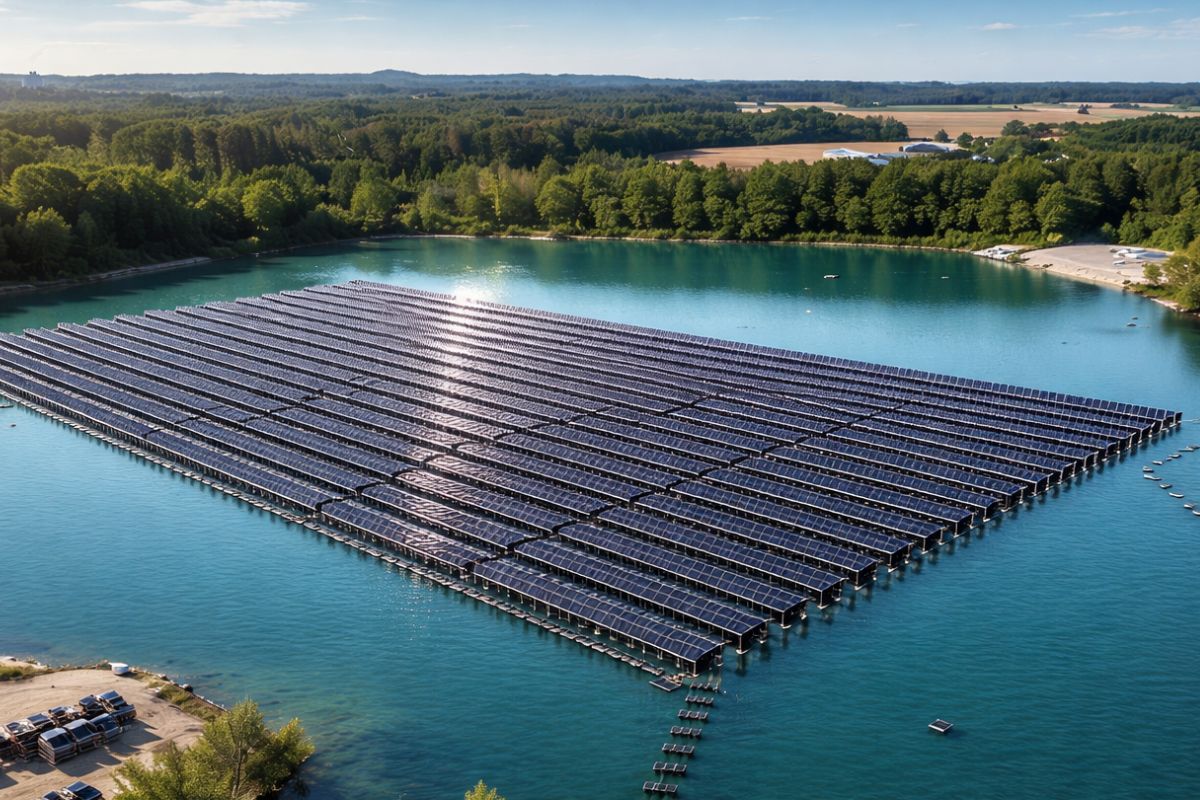
In Germany, the Installation of 2,500 Floating Solar Panels in a Bavarian Quarry Showed That Water Can Also Become an Energy Asset: With East-West Vertical Arrangement, the 1.87 MW System Reduced External Electricity Purchases, Preserved Part of the Ecosystem, and Accelerated Offshore Expansion Plans at Commercial Scale.
The Germany transformed an old industrial space into a showcase of renewable energy by installing floating solar panels on a lake in the Starnberg quarry, Bavaria. The project was born out of an objective need: to generate more clean electricity without encroaching on agricultural land and without putting pressure on forest areas.
The initial result caught attention for its practical impact: an industrial crushing operation significantly reduced its dependence on the electrical grid, cutting electricity purchases by up to 70%. The initiative combines energy efficiency, reuse of degraded area and a clear bet on scalability, with planned expansions and goals to reach the open sea.
How Germany Turned Area Scarcity into Energy Opportunity

The European energy transition faces an increasingly evident physical limit: to expand large-scale solar generation, space is needed. In this context, Germany adopted a solution that avoids direct confrontation between energy production, agricultural land use, and forest preservation. Instead of competing for land, the country began to utilize water surfaces already associated with industrial liabilities, such as artificial lakes from mines and decommissioned quarries.
-
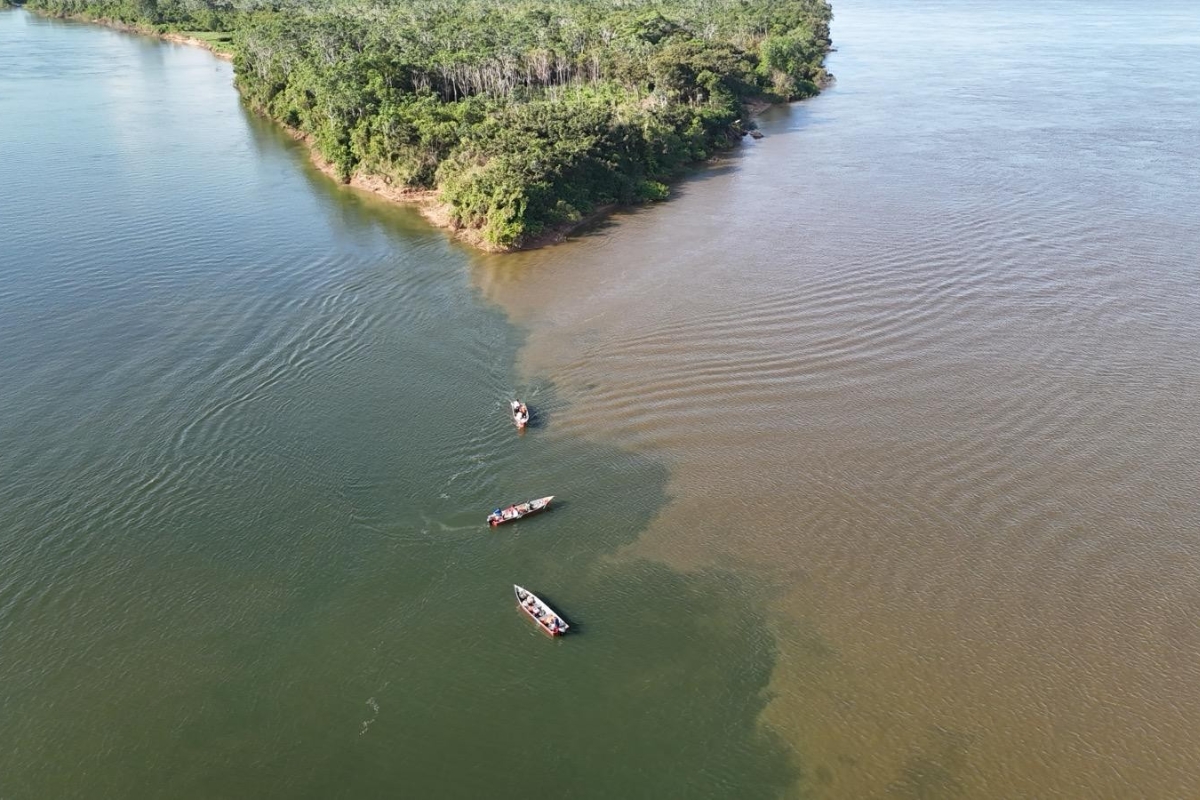
An impressive phenomenon in Northern Brazil causes rivers of different colors to flow side by side, revealing secrets about sediments, currents, and biodiversity.
-
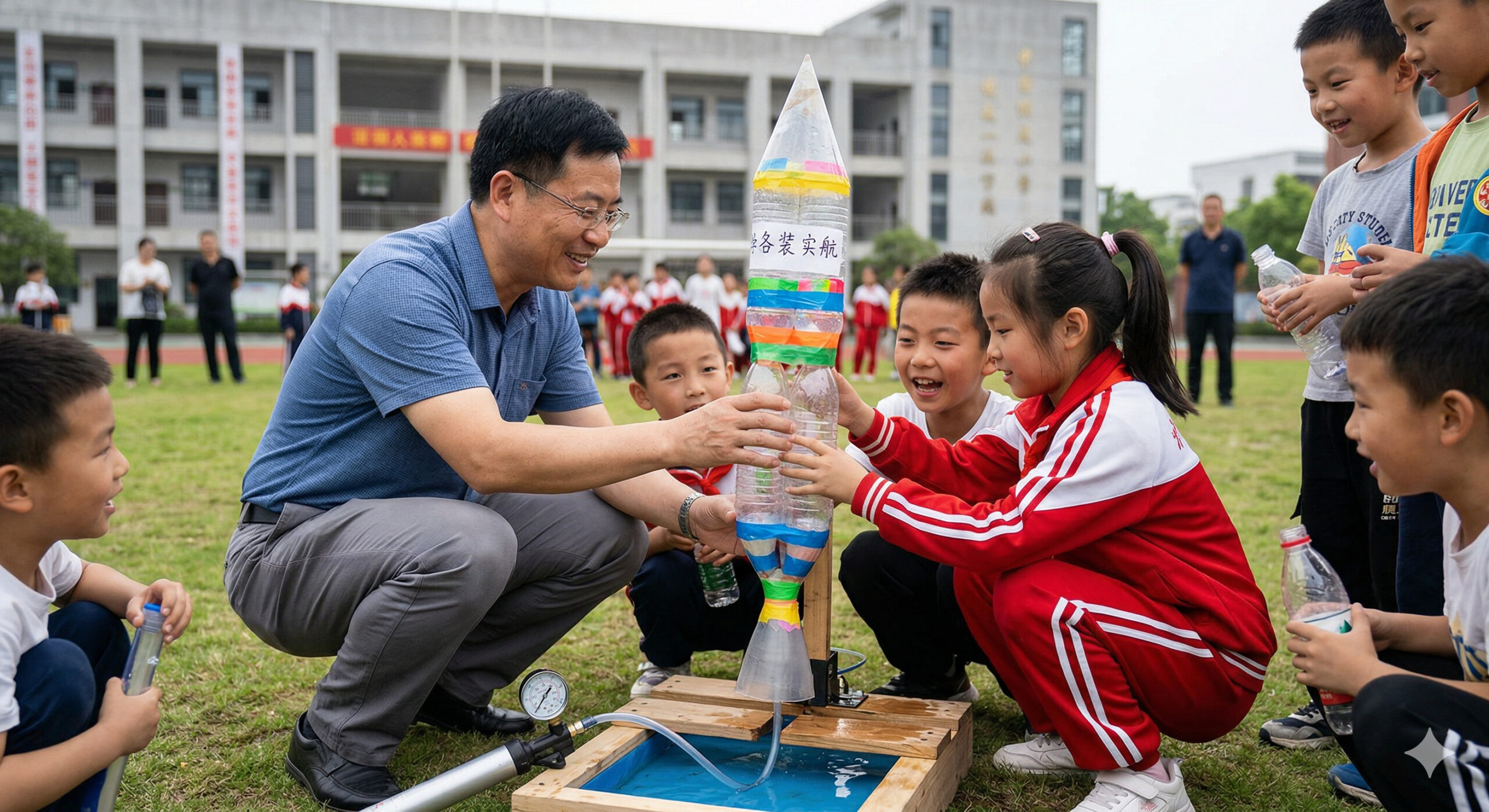
While many schools are still struggling with the basics, a teacher in China went viral for having elementary school students build a two-stage rocket using plastic bottles, water, and pressurized air in a science class that caught the attention of the entire world.
-
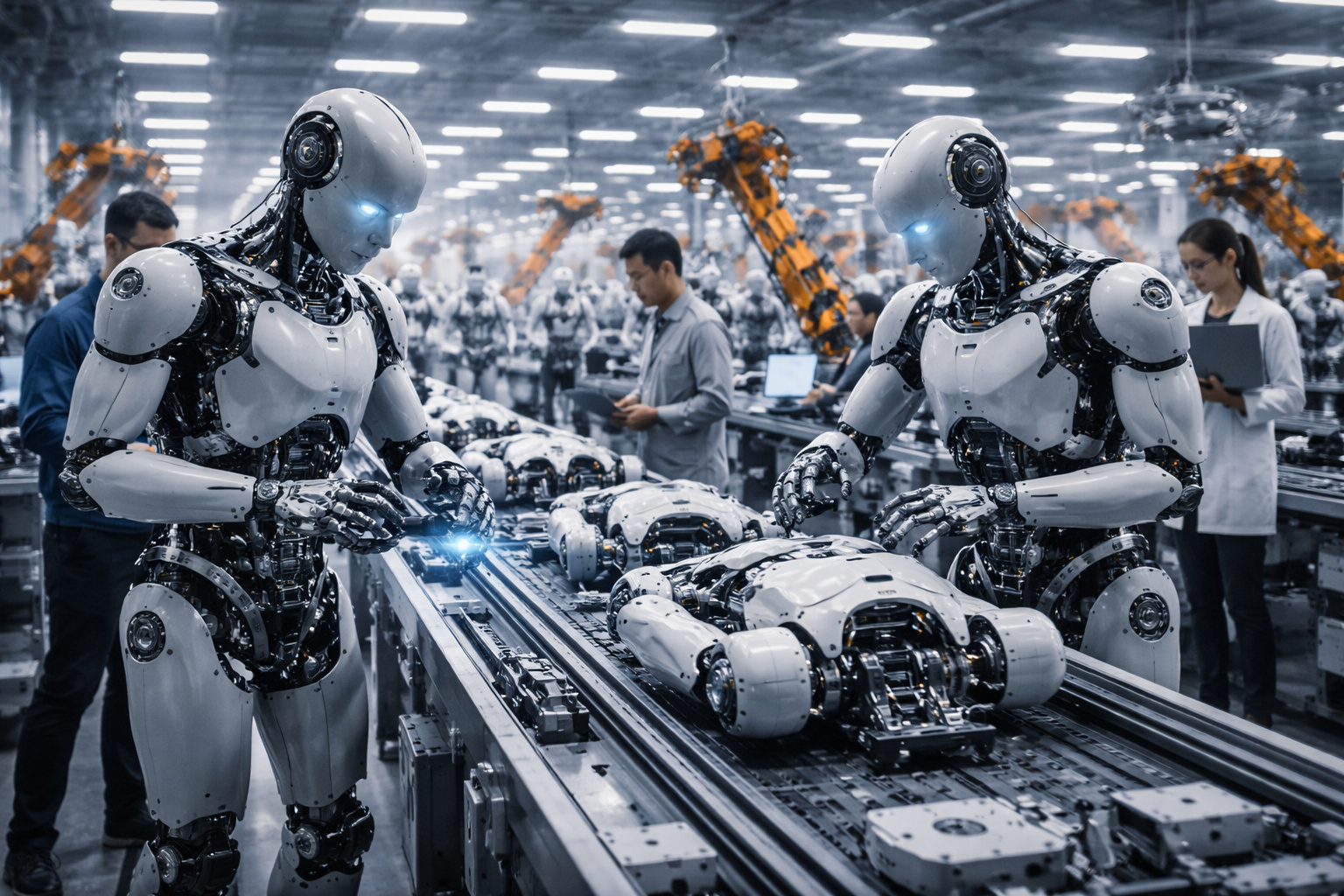
10 million robots per year in unprecedented industrial scale place China at the forefront of automated production and raise the question of how far machines can manufacture other machines.
-
Researchers in Malaysia buried sensors at 15 and 30 cm and can now predict soil moisture with 95.49% accuracy, helping the field to irrigate only at the right time and reduce water waste.

This movement repositions previously underutilized areas. The case of Bavaria shows that an environment marked by extractive activity can be converted into electrical infrastructure with strategic function. The logic is simple and powerful: transform a legacy environmental cost into a low-carbon productive asset, with faster implementation than large projects in new land areas.
In the Starnberg project, the infrastructure was installed with 2,500 floating panels, resulting in 1.87 MW of photovoltaic power. This is not a small laboratory experiment but a commercial arrangement in real operation. The plant meets a concrete need for industrial consumption, which increases its relevance: it is not just a technological demonstration, but an effective replacement for external energy purchases.
From an energy policy perspective, this choice answers a crucial question: who benefits from the solution? The local industry benefits by reducing exposure to electricity costs; the electrical system benefits from receiving distributed generation in new spaces; and land planning benefits by avoiding pressure on sensitive areas. It is a model of integration between engineering, economics, and environmental management.
Why the Vertical Arrangement Changes the Value of Energy Throughout the Day
One of the most interesting technical elements of the project is the vertical arrangement of the modules, oriented east and west. While conventional solar systems tend to concentrate the peak around noon, this design shifts a significant part of the generation to early morning and late afternoon, windows when demand is usually more critical for the grid.
In practice, this alters not only “how much” is generated but “when” it is generated. This difference in profile matters because the systemic value of electricity varies by time of day. Energy delivered during periods of highest grid pressure can have a greater operational impact than energy concentrated in a few central hours of the day. The gain, therefore, is not just volumetric, but also functional.
The initial numbers reinforce this reading: the crushing plant connected to the project has stopped purchasing between 60% and 70% of the electricity it consumes. In industrial terms, this means reducing exposure to tariff volatility and improving cost predictability. In energy-intensive sectors, this type of predictability often influences investment decisions, competitiveness, and expansion.
There is also an indirect systemic effect. When part of industrial consumption is met locally with renewable generation at useful times, pressure on transmission infrastructure and on purchasing energy in the market may decrease. The innovation here is not just in the panel over the water, but in the temporal design of the generation, which aligns better with the real demand behavior.
Water Occupation Limit, Biodiversity, and Impact Control
Although the image of the lake with panels is striking, the installation does not cover the entire surface. In the analyzed case, the occupation was 4.6% of the area, below the 15% limit set by the German Water Resources Law. This choice is not a bureaucratic detail: it helps maintain the circulation of light and oxygen, two essential factors for ecological balance in aquatic environments.
The decision to limit coverage points to a principle of environmental engineering: it is not enough to generate clean energy; it must be produced with ecological governance. Water and energy projects can only be sustained in the long term when the physical design respects the local biological dynamics. This concern prevents the short-term climate gain from being accompanied by medium-term environmental loss.
In the Bavarian lake, the use of artificial structures by fauna and flora has already been observed, including as shelter and nesting areas. This does not eliminate challenges. The coexistence between infrastructure and wildlife requires continuous monitoring, as changes in ecological behavior may appear over time, not just in the first months of operation.
Another technical point is maintenance. In outdoor and humid environments, the modules are subject to dirt, organic matter, and animal waste, factors that can affect efficiency over the operational cycle. Therefore, the real long-term performance depends as much on the panel technology as on the operation and cleaning strategy, with protocols adapted to the aquatic environment.
Structural Stability, High Wind, and Engineering to Maintain Performance
The exposure to wind is one of the main risks of floating photovoltaic systems with panels in a vertical position. The larger the exposed frontal area, the greater the aerodynamic force acting on the structure. In regions with intense gusts, this factor may compromise alignment, durability, and even operational safety if there is no specific stability solution.
To address this point, SINN Power applied the patented Skipp Float technology, based on a 1.6-meter underwater fin. The principle resembles the stability of a sailboat: the submerged part compensates for surface forces and reduces the tendency for excessive tilting. It is a naval engineering response applied to solar generation, combining concepts of flotation, anchoring, and dynamic resistance.
This type of solution is central when thinking about scale. In small projects, manual adjustments and frequent intervention can mask weaknesses. In increasingly commercial deployment, the structure needs to withstand reliably, with less need for continuous correction in the field. Mechanical robustness ceases to be a technical detail and becomes an economic prerequisite.
Therefore, discussing floating panels without discussing hydrodynamics and wind loads results in an incomplete analysis. The energy generated is only the visible face. The other half lies in the architecture of the system: floats, attachments, mass distribution, behavior in climatic variations, and response to extreme events. Without stability, there is no predictable productivity.
From the Interior of Bavaria to the Open Sea: Where the Project Aims to Go
The Bavaria phase was not treated as an isolated test but as a full implementation with a view to expansion. The next announced step is to double the installed capacity, leveraging the initial performance to scale up on the same technological axis. This advancement signals operational confidence in the model and in the energy return for industrial application.
After this second phase, the ambition is to migrate to the open sea, a much harsher environment in terms of wind, corrosion, and water dynamics. Taking the concept offshore implies raising standards for materials, anchoring, and maintenance, but it also expands the horizon of available area for renewable generation. The promise is great, but the technical requirement grows in equal measure.
This transition to the sea addresses the same original problem: lack of land space for accelerated solar expansion. Instead of competing for every hectare, the model seeks to open new energy territory with floating infrastructure. The large-scale implementation reference already seen in China reinforces that the issue is not restricted to experimental prototypes.
In the case of Germany, the differential lies in the combination of industrial pragmatism and regulatory planning: reuse of degraded areas, water occupation limits, hourly generation design, and progressive scaling strategy. It is not a magic solution for the entire electrical matrix, but it is a concrete response to a real bottleneck in the European energy transition.
The project in Germany shows that the discussion about clean energy is not just technological, but territorial: where to install, how much to occupy, how to operate, and what effects to produce in the surrounding environment. By transforming a quarry lake into energy infrastructure, reducing external industrial consumption and preparing for expansion under harsher conditions, the country presents a path of high impact and high complexity at the same time.
If your city had an artificial lake or a decommissioned industrial area, would you support using only a part of the water surface to generate energy and reduce local costs, even if it changed the landscape? What would weigh more for you in this decision: energy price, environmental protection, or social acceptance of the project?




-

Uma pessoa reagiu a isso.