





 Portuguese
  English
  Spanish
  3 min of reading
  0 comments


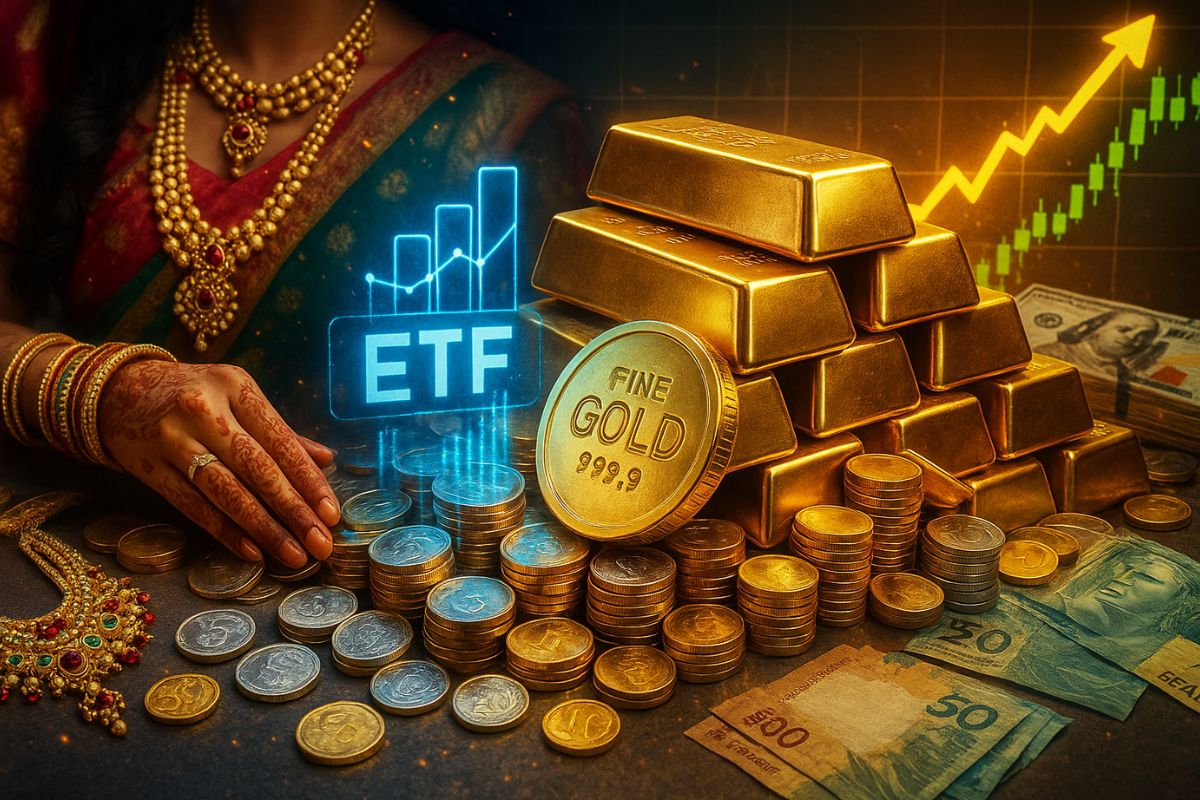
Gold Hits Historic High in September: Morgan Stanley Notes 6% Average Gain Following Rate Cuts, Silver Nears 15-Year Peak and ETFs Buy.
The gold has returned to the spotlight in September, reaching a new historic high, driven by a combination of factors that go beyond market euphoria. According to an analysis cited by economist Nanda Guardian, the recent appreciation is linked to seasonal buying in India, expectations of interest rate cuts, increasing physical demand, and strong flows into ETFs (exchange-traded funds that track precious metals).
This advance did not occur in isolation. The silver neared its highest level in 15 years, driven by industrial demand and the acceleration of solar energy, while platinum and palladium, tied to the automotive industry, also registered recovery.
For analysts, the scenario indicates that the rise in metals is not merely speculation, but a reflection of solid fundamentals.
-
China is building a city in Brazil: a complex with an investment of R$ 5.5 billion comes to light, but allegations involving workers draw attention.

-
While Argentina buys old war equipment, Brazil is keeping an eye open and joins the select group of nations with advanced military technology by investing $5.2 billion, producing 36 Gripen fighters in the country, and reducing operational costs.

-
Brazil on alert? Why invading Brazil is a NIGHTMARE for the USA: 8.5 million km², 213 million inhabitants, Amazon covering 60% of the territory, trillion-dollar war, and resistance that even 13,000 aircraft could not control.

-
How to build a floating island from scratch with reeds, giant blocks, and stakes in the lake in a process that needs to be repeated almost every day.


Why September Is Typically Positive for Gold
The analysis shows that gold behavior follows a historical trend: September and January are traditionally strong months.
One factor is the wedding season in India, when demand for jewelry surges and puts upward pressure on global metal prices. This seasonal effect helps explain the breach of the price barrier in 2025.
Additionally, the report from Morgan Stanley cited in the content highlights that, in previous episodes, gold surged an average of 6% in the 60 days following interest rate cuts, reaching as much as 14% in some cases.
The expectation of monetary easing in the U.S. reinforces the perception that the current movement may extend.
ETFs and Physical Demand Amplify Buying Pressure
Another relevant point is the behavior of precious metals ETFs, such as GLD (gold) and SLV (silver).
These funds have recorded an increase in positions, signaling that institutional investors are also bolstering their exposure.
On the physical demand side, there was an 11% increase in global consumption, according to the analyzed material.
Purchases by central banks and individual investors seeking protection against economic uncertainties have also contributed to the rise in prices.
The Strength of Silver and Its Industrial Role


Although silver is seen as a value-preserving asset, its differentiator lies in its industrial use.
Solar panels, medical applications, and emerging technologies are driving demand for the metal, which has reached its highest price in 15 years.
This explains the greater volatility compared to gold and reinforces the potential for appreciation during periods of productive expansion.
Platinum and palladium, used in internal combustion engine catalysts, also recorded gains, still far from their peaks in 2021.
The movement is attributed to the gradual recovery of automotive demand in some markets.
Gold as Protection in Times of Uncertainty
Historically, gold has stood out during periods of turbulence. The survey shown in the video indicates that, in eight recent recessions, the metal outperformed the S&P 500 in six instances, reinforcing its role as a defensive asset in investment portfolios.
Even with the recent appreciation, analysts point out that allocation to metals should consider the economic cycle.
In September, for example, the positive performance of metals contrasts with the weakening of stock markets, opening space for portfolio rebalancing.
The rise of gold in September is not merely the result of hype, but of structural factors such as seasonality, physical demand, and institutional flow.
With silver near the 15-year peak and other metals recovering, the scenario suggests that investors are seeking protection and diversification amid global uncertainties.
And you, do you think gold should be a priority in times of instability, or do you see the current rise as temporary?
Leave your opinion in the comments.







Seja o primeiro a reagir!