





 Portuguese
  English
  Spanish
  4 min of reading
  16 comments


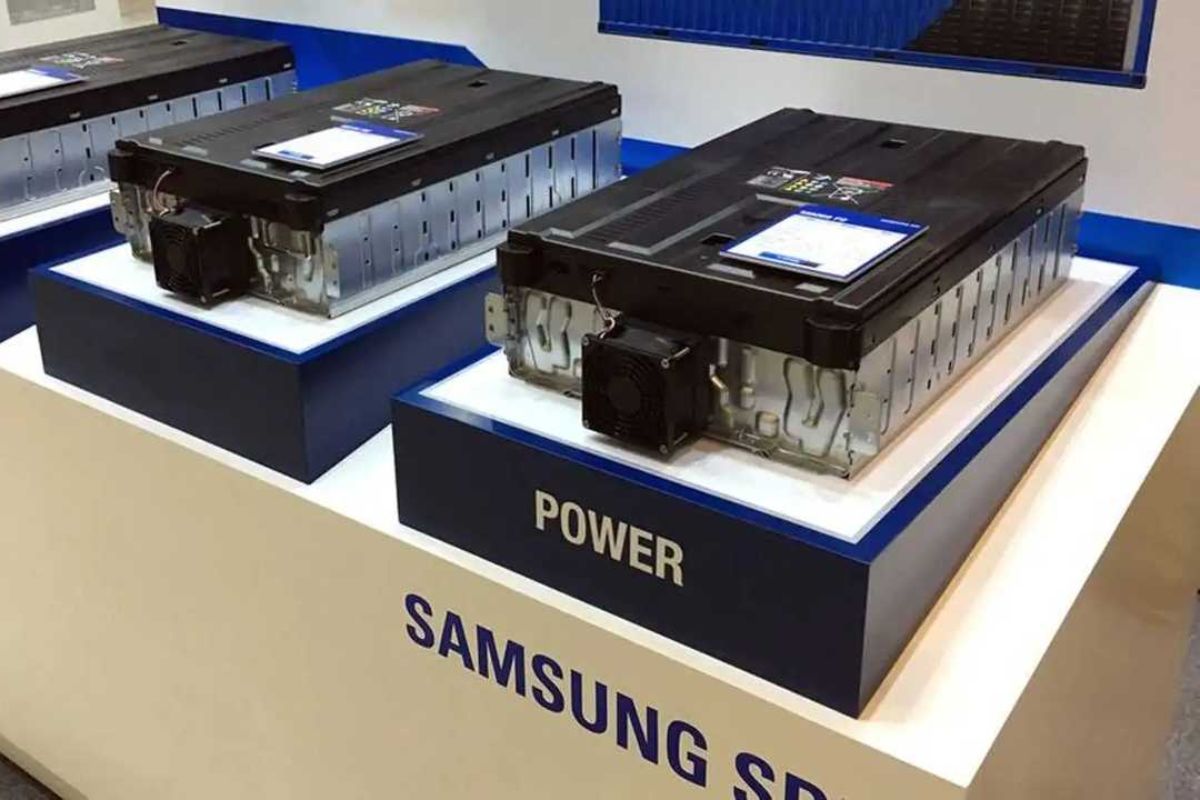


Understand The Technology That Giants Like Toyota And Samsung Are Developing And That Promises To Be The Biggest Leap For Electronics Since The Invention Of Lithium-Ion.
Your cell phone battery that barely lasts a day, the electric car that needs 40 minutes for a significant recharge, the concern with overheating, and the lifespan that decreases with each cycle. These are the dogmas of the lithium-ion era. But what if all of that was about to change?
In the horizon of the technology industry, an innovation is regarded as the “holy grail” of portable energy: the solid-state battery. Promising ranges exceeding 1,000 km in electric cars, full recharges in the time of a coffee, and an unprecedented level of safety, this technology is leaving the labs to become a reality. Let’s understand the engineering behind this revolution.
The Problem With Current Batteries: The ‘Unstable Liquid Pool’
To understand the future, we need to look at the present. A conventional lithium-ion battery, like the one in your phone, works like a “pool.” It has a positive pole (cathode) and a negative pole (anode), and between them is a flammable liquid electrolyte and a porous separator. Lithium ions swim through this liquid to generate energy.
-
The Earth will plunge into a few minutes of darkness in broad daylight in August 2026, when a total solar eclipse transforms the sky into one of the most impressive astronomical phenomena in recent years.

-
How the terraforming of Mars can transform the planet: artificial aerosols can increase the temperature by up to 35°C in 15 years, creating conditions for liquid water.

-
Scientists drilled nearly 8,000 meters into the ocean floor above the fault that caused the 2011 tsunami in Japan and discovered that a layer of clay 130 million years old was responsible for making the wave much worse than any model had predicted.

-
Thousands of years after causing the largest eruption of the Holocene, one of the world’s largest supervolcanoes is rebuilding itself beneath the sea south of Japan, receiving new magma and alarming scientists with its transformation.


The problem is that this liquid electrolyte is the Achilles’ heel:
- It degrades over time, reducing the battery’s lifespan (the famous “battery fatigue”).
- It is flammable and, in case of puncture or short circuit, can cause fires and explosions.
- It limits the use of more efficient materials in the anode.
What Is A Solid-State Battery? The Revolution Of The Electrolyte
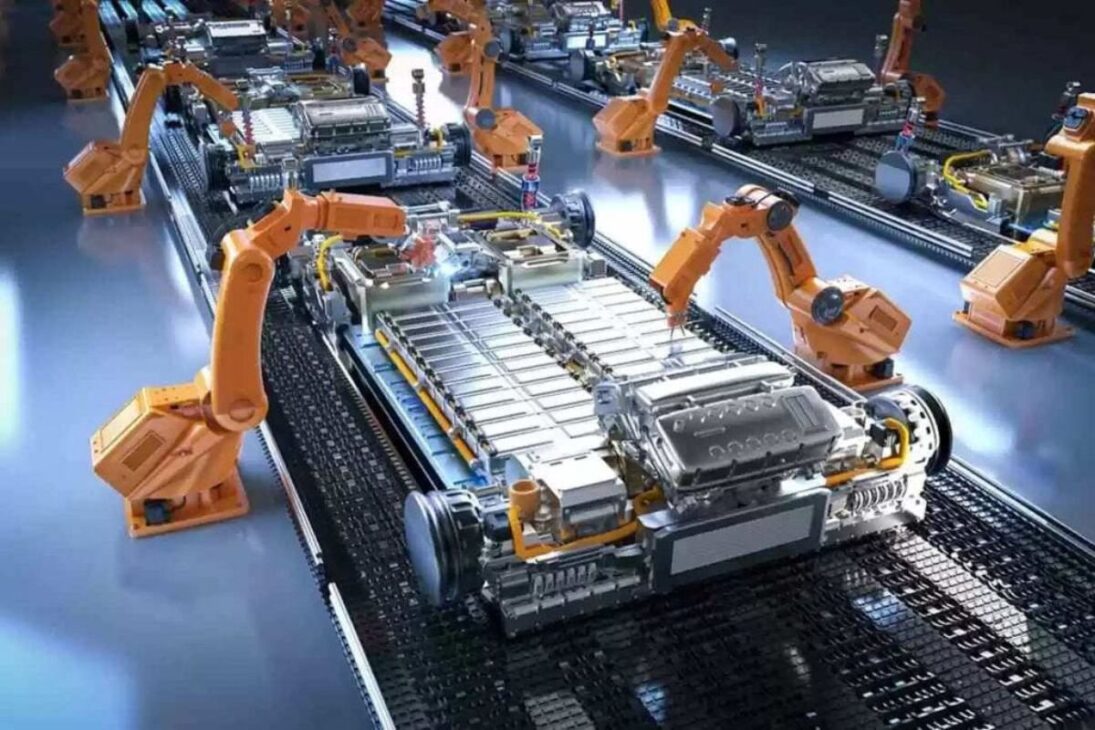
The answer is in the name. A solid-state battery replaces the liquid electrolyte and the porous separator with a single layer of solid material, usually a ceramic or a special polymer.
This simple change of physical state – from liquid to solid – represents a paradigm shift in battery engineering, unlocking three massive advantages.
1. More Energy, Less Space (Energy Density)
The solid electrolyte is much more stable and allows the use of a pure lithium metal anode, which is much denser in energy than the graphite anodes currently used.
- In practice: This means that, in the same physical space, a solid-state battery can store 50% to 100% more energy. This is what will allow for a future of electric cars to have ranges of 1,000 to 1,200 km, or for a phone to theoretically last several days on a single charge.
2. Ultra-Fast Recharge (And The End Of Anxiety)
Another great advantage is the recharge speed. The solid and stable structure of the electrolyte allows lithium ions to move more quickly and orderly during recharging, without the risk of forming “dendrites” (lithium structures that look like needles and can cause short circuits in liquid batteries).
- In practice: Companies like Toyota, with its solid-state battery, have already demonstrated in prototypes the ability to recharge from 10% to 80% in less than 10 minutes. That’s about the time it takes to stop for a coffee.
3. Maximum Safety: The Battery That Won’t Catch Fire

Perhaps the most important advantage of the solid battery is safety. The solid electrolyte is non-flammable. This virtually eliminates the risk of fires and explosions that plague current electric vehicles and electronics. The battery becomes much more resistant to impacts, punctures, and high temperatures.
When Will Cars And Phones Have Solid-State Batteries?
This is the trillion-dollar question. Giants like Toyota, Samsung, CATL, and QuantumScape are in a tight race. The challenge is no longer to prove that the technology works, but rather to figure out how to mass-produce it at a competitive cost.
- Prototypes: already exist and are being tested in 2025.
- First Vehicles (Niche): Toyota plans to launch its first electric cars with solid-state batteries in niche and high-end models around 2027-2028.
- Mass Production: Market expectations are that the technology will begin to become popular and reach vehicles and more affordable electronics starting in 2030.
The transition will be gradual, but the revolution is inevitable. The solid-state battery is not just an improvement; it is the next chapter in portable energy.
What problem with current batteries annoys you the most: the duration, the recharge time, or the lifespan? Comment on which one the solid-state battery should solve first!








Se a maior parte da população não tem acesso aos atuais veículos de ion lítio, quiça aos das tais sólidas, pode por além de 2030, quem sabe fim do século..
Carregar em casa sem problemas
Rsrs duração ae tempo de recarga, gosto dos samsung mas máximo de 25w de recarga é tenso, e um veículo com esse tempo de recarga é extremamente viável para viagens de trabalho por exemplo que não se pode dar o luxo de ficar esperando bastante tempo