





 Portuguese
  English
  Spanish
  4 min of reading
  0 comments


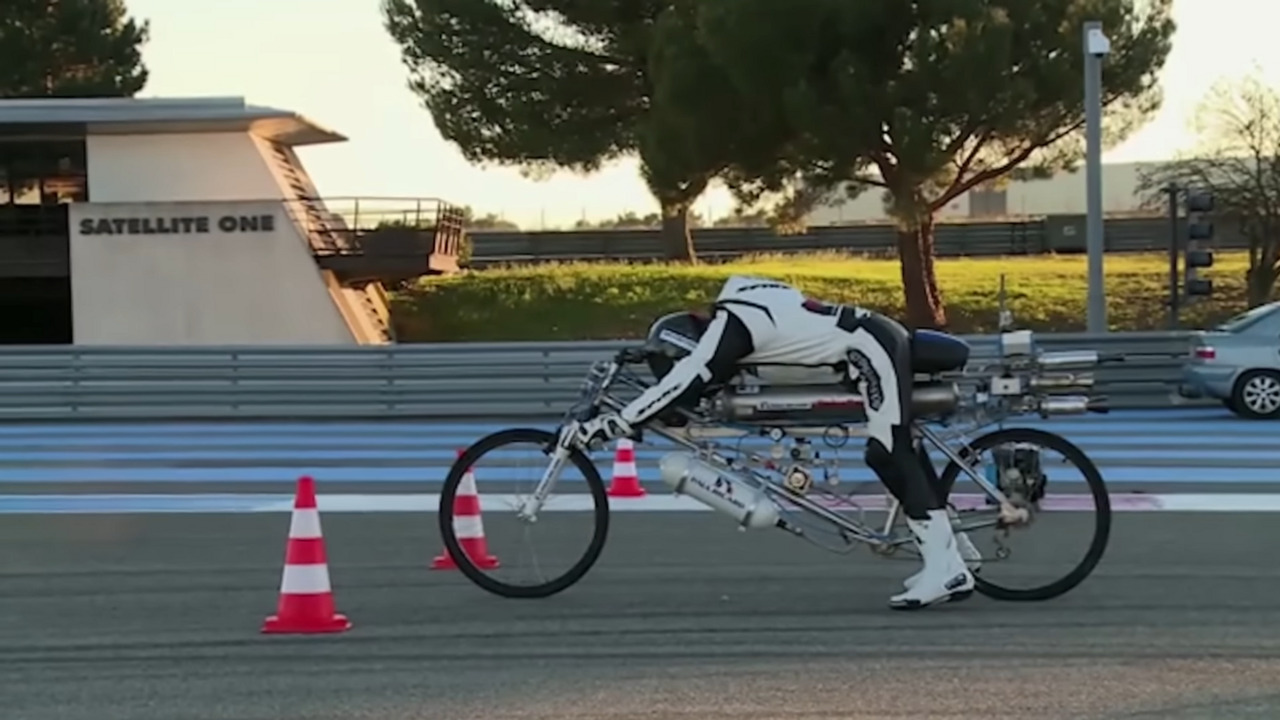
Bikes That Exceed 300 Km/h Reveal a Mixture of Courage, Cutting-Edge Engineering, and Extreme Passion for Speed on Two Wheels
When it comes to bicycles, the image that usually comes to mind is of something simple: transportation, leisure, or sport. But there are those who take this passion to another level. There are bikes that exceed the speed of sports cars, planes on takeoff, and even Formula 1 models on short tracks.
Some of these bikes reach over 300 km/h. Behind this, there is cutting-edge engineering, material technology, and a lot of courage.
This article gathers real stories of those who pushed the limits of physics, including insane records, impressive technologies, and a Brazilian who wants to make history.
-
A Brazilian millionaire couple restores a farm over 150 years old in the interior of São Paulo and transforms the historic property with Portuguese tiles, antique furniture, and new spaces into a refuge that blends tradition, comfort, and sophistication.
-
Submerged city in a lake in Minas reveals intact streets, preserved vehicles, and houses after more than 60 years, impressing divers.

-
Yellowstone has started to rise again in an area of the caldera, and the movement rekindles fears surrounding the U.S. supervolcano, as scientists monitor the deformation and try to understand what is happening underground.

-
Woman arrested after receiving $1.2 million due to banking error and not returning the amount.


Insane Records: Bikes That Fly on Asphalt
The fastest record on a bicycle belongs to Frenchman François Gissy. He reached 333 km/h in just 4.8 seconds.
The bike, equipped with a hydrogen peroxide-powered rocket, left Formula 1 cars behind in acceleration.
In the case of bikes powered solely by human strength, the highlight goes to Denise Mueller-Korenek.
In 2018, she reached 296 km/h in the Bonneville salt flats in the United States. Pedaling in the slipstream of a modified dragster, she used the slipstream technique, which reduces air resistance.
Another example is the Aerovelo Eta, a closed and super-aerodynamic bicycle made in Canada. With it, engineers reached 144.17 km/h, solely with the power of human pedaling. Its shape resembles a missile on wheels, reflecting the efficiency of the design.
These marks show that cycling can be as radical as any motorsport race.

The Brazilian Who Wants to Pedal Above 300 Km/h
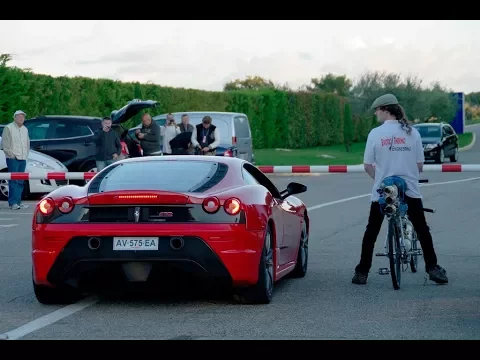
Brazil also has its name among the aspirants for records. Paraná-born Evandro Portela has already reached 202 km/h pedaling on a highway in Paraná.
He used only the strength of his legs and the slipstream of a support vehicle, without any engine or external boost.
But he wants more. The goal is to exceed 300 km/h. The chosen location is the Salar de Uyuni in Bolivia, the largest salt flat in the world. The flat and dry terrain is perfect for those who want to reach extreme speeds.
Evandro’s bike is made with ultra-light materials, reinforced wheels, custom gears, and an aerodynamic design. Everything is calculated: air resistance, stability, and weight. The goal is clear: to enter the record books.
Precision Engineering: How These Bikes Reach Such Speed?
It’s not just physical strength. To break records, it’s necessary to combine precision engineering, special materials, and a design aimed at cutting through the wind.
The materials used are the most advanced: carbon fiber, titanium, special aluminum alloys. The goal is to be lightweight and durable at the same time. These bikes withstand absurd pressures without deforming.
The frame shape also makes a difference. High-speed bicycles have sleek lines, closed structures, and fairing wheels. The design reduces drag, meaning the force that the wind exerts against the bike’s forward motion.
The transmission system is also different. The gears are much heavier than those of a regular bicycle. This allows for converting pedaling into speed without power loss.
All of this together creates a machine capable of reaching previously unthinkable speeds on two wheels.
The Falcon, Storck, and Other Modern Supermachines
Besides records, there are commercial models created to be fast for everyday use. The The Falcon 300 RR Stradale is one such example.
With only 361 watts, it maintains 50 km/h — superior performance compared to brands like Specialized and Colnago.
The Storck Aerfast.5, on the other hand, can maintain 45 km/h with just 195 watts. This is the result of an aggressive aerodynamic design, optimized wheels, and internal cabling.
Every part has been designed to transform effort into performance.
These bikes do not compete for records in deserts, but they show how technological evolution can benefit the cyclist in everyday life. Less effort, more results.
Extreme Cycling Also Requires Extreme Safety
Riding above 200 km/h on a bicycle is a real risk. A small mistake can cause a serious accident. Above 150 km/h, the wind becomes an enemy.
Any lateral gust can throw the bike out of control.
That’s why records usually happen in places like salt flats or closed highways. And the cyclist needs to be protected.
High-performance helmets, Kevlar clothing, and even protective structures are part of the safety package.
The physical effort is also enormous. Controlling a bike at these speeds requires mental and physical preparation similar to that of a Formula 1 driver. Focus, precision, and endurance are essential.
Safety Begins with Basic Care
If high-speed bikes receive so much attention, your bike also deserves care. Registering your bicycle in the Bike Registrada system is an important step. This way, it becomes associated with a unique code, helping to prevent theft and facilitating recovery.
This type of registration is like an ID for the bicycle. It protects your asset, increases the equipment’s value, and shows that you take your passion for two wheels seriously.
Overcoming Limits with Courage and Technology
Breaking records with bicycles is not just a matter of speed. It’s a mix of passion, courage, and engineering.
From rockets to salt flats, these challenges show what humans are capable of when determination and technology unite.
And while some continue to pedal to work or for leisure, others race towards 300 km/h. Each in their way, but all driven by the same passion: cycling.
With information from Bike Registrada.



-

2 pessoas reagiram a isso.