





 Portuguese
  English
  Spanish
 5 min of reading
  0 comments


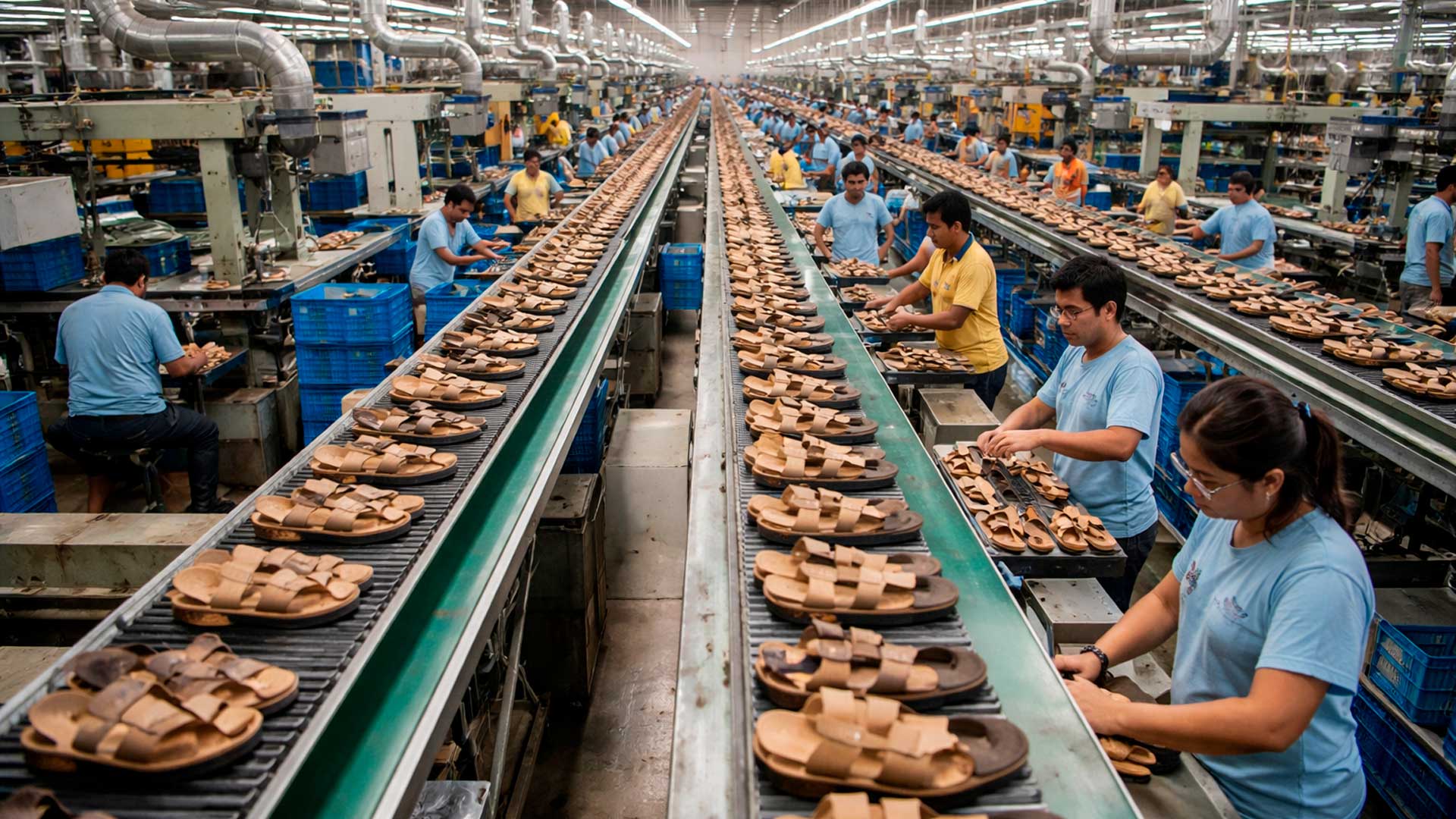
Sobral transformed the strength of the footwear industry into employment, income, and national protagonism within a sector pressured by weak consumption and imports
Sobral, in Ceará, leads footwear production in Brazil and has become a central piece of an industrial chain that still supports thousands of formal jobs. In 2024, the country produced 929.5 million pairs, and the city of Sobral accounted for 16.5% of that total volume.
The regional weight is also noteworthy. Ceará concentrated 24.3% of national production, establishing itself as the main footwear hub in the country, with Sobral at the center of this machinery.
The city’s advancement helps explain why the footwear industry remains one of the most strategic for the local economy. The sector drives factories, commerce, logistics, and labor hiring at a scale well above the average of other industrial segments in the municipality.
-
A millionaire wanted a mansion in Florida, found a protected bird, and is now trying to overturn environmental protection, impacting more than 1,200 species, to avoid a fine of $118,000.
-
Brazilian city next to Natal holds the massacre of 1645, gathers the first saints of Brazil, and concentrates a cultural, religious, and popular heritage that many people still ignore.
-
Few people know, but no one lives in this place, as it is considered the hottest on the planet; still, it surprises with unreal landscapes and extreme temperatures. Discover Dallol, in Ethiopia.

-
This 39-meter hotel boat offers luxury trips through France for around R$ 500,000, accommodates 8 guests, features 4 cabins inspired by golden daisies, and will debut in the European summer of 2026.

This scenario becomes even more relevant in a moment of pressure on the market, with a slowdown in household consumption, an increase in imports, and instability in Brazilian exports. Nevertheless, Sobral maintains a prominent position and reinforces its importance on the country’s industrial map.
Footwear production in Sobral gained national scale and became the main industrial base of the economy of the city of Ceará
The footwear hub of Sobral has become one of the areas of greatest socioeconomic development in recent decades. The activity is the largest employer among the industrial sectors in the region and accounts for 75% of jobs linked to the manufacturing industry in the surrounding municipalities.
In practice, this means that the health of the footwear industry directly impacts the pace of the local economy. When the sector grows, the job market reacts, income circulates more strongly, and the municipality gains traction in different areas.
The Secretary of Economic Development of Sobral, Messias Aguiar, emphasizes that the footwear industry continues to be a pillar of the city’s socioeconomic structure. The sector, besides being historical, remains the main engine of formal hiring in the municipality.
Alpargatas and Grendene sustain the Sobral hub with large factories and brands known throughout Brazil
A large part of Sobral’s productive strength is supported by major companies in the sector. Alpargatas, owner of the Havaianas brand, maintains a large unit in the municipality focused on footwear production.
Grendene also plays a decisive role in this industrial structure. The manufacturer, responsible for brands such as Melissa, Rider, Ipanema, and Grendha, has been operating a factory in Sobral since 1994.
The presence of these companies helps explain the city’s ability to produce on a large scale and maintain a solid base of jobs. In addition to manufacturing itself, large industrial plants create demand for transportation, maintenance, services, and suppliers.
This combination of productive tradition, industrial scale, and established brands strengthens Sobral in an increasingly competitive market. It is an important differential in a sector where costs, consumption, and international competition change rapidly.
Formal employment in Ceará shows the strength of the sector, but the advancement of imports hinders a faster expansion
In the job market, Ceará holds the second national position in formal jobs in the footwear sector, behind only Rio Grande do Sul. This data helps measure the size of the activity in the state and the impact of cities like Sobral on job creation.
At the same time, the industry faces significant obstacles. The executive president of Abicalçados, Haroldo Ferreira, points out that the slowdown in the domestic market, combined with the decline in household consumption in the second half of last year and the growth of imports, has reduced the capacity to expand the job stock.
This situation reveals an important contradiction in the sector. Even with robust industrial hubs and high production, the footwear industry still depends on a more heated consumption environment to resume hiring at a stronger pace.
For Sobral, this means that maintaining competitiveness will be essential in the coming cycles. The city has already proven its productive strength, but now it needs to continue adapting to price pressures and external competition.
Footwear exports grew in volume, lost revenue, and reveal a more difficult external market for Brazilian products
In foreign trade, Brazil exported 103.94 million pairs last year, generating US$ 958.2 million. The result brought a combination that worries the industry, with a 1.8% drop in revenue and a 6.7% increase in volume.
In December, shipments totaled US$ 72.9 million and 9.74 million pairs. Compared to the previous year, there was a 0.8% increase in revenue and a 24.4% increase in volume, indicating that Brazil sold more pairs but with lower added value or under price pressure.
Among the states, Rio Grande do Sul led export revenue in 2025, with US$ 457.7 million and 31.96 million pairs shipped. This performance was accompanied by drops of 5.7% in revenue and 1% in volume.
Ceará followed, with US$ 189.43 million and 32.6 million pairs, recording a decline of 4.9% in revenue and an increase of 8% in volume. São Paulo came in third, with US$ 100.98 million and 6.7 million pairs, along with increases of 10.6% and 14.7%, respectively.
Haroldo Ferreira assesses that this result reflects international instability, especially in markets like the United States and Argentina. In the case of Argentina, the slowdown in consumption that began in the second half of last year was compounded by increased competition from Asian countries.
From Sobral to Jaú, footwear hubs show that the industry still shapes entire cities and defines the pace of the local economy


The case of Sobral is not isolated, although it is currently the most impressive in terms of production volume. In the interior of São Paulo, the city of Jaú, about 296 kilometers from the state capital, also stands out as a reference in the sector and is known as the Capital of Women’s Footwear.
Jaú hosts hundreds of factories and produces about 120,000 pairs per day. The municipality also benefits from specialized commercial centers and shopping tourism, attracting retailers and consumers in search of variety, quality, and competitive prices.
The difference is that Sobral appears with national prominence on an industrial scale, while Jaú stands out for its tradition in the women’s segment and the connection between industry and commerce. In both cases, footwear shapes the economy, drives businesses, and directly impacts the quality of life of the population.
These hubs make it clear that the footwear industry remains alive in Brazil, even surrounded by challenges. Where it remains strong, the impact goes far beyond factories and reaches employment, income, urbanization, and regional development.
Sobral leads, Jaú resists, and the sector remains crucial for thousands of families. Do you think Brazil still values its footwear industry as it should, or is the advance of imports suffocating a strategic sector? Leave your comment and join the debate.







Seja o primeiro a reagir!