





 Portuguese
  English
  Spanish
  5 min of reading
  0 comments


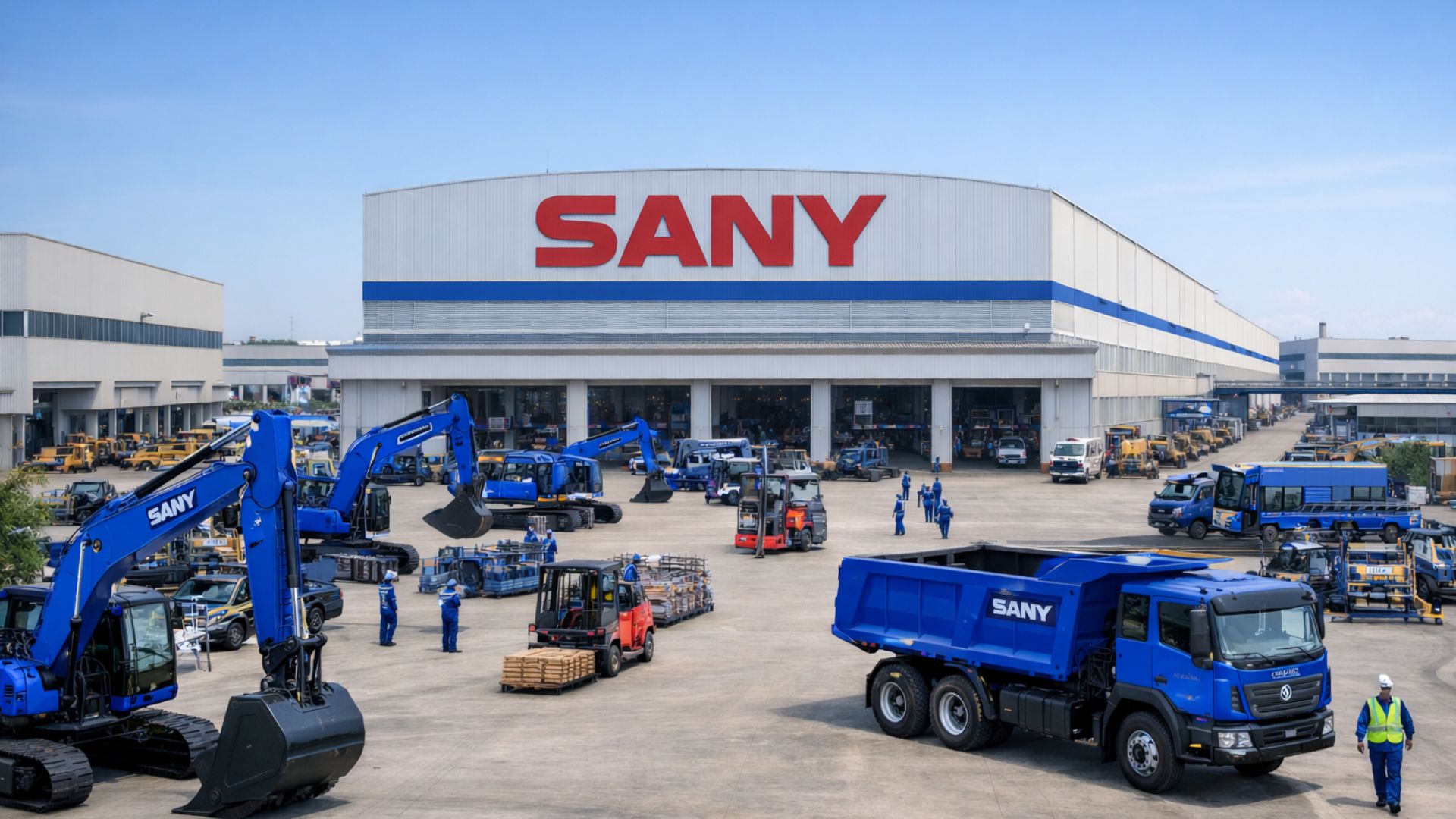
Sany’s industrial movement in Brazil accelerates with new unit scheduled for 2026 in the Campinas region, strategy includes local assembly, reduction of logistical costs, and strengthening of presence in the heavy machinery and trucks sector.
Sany confirmed the installation of a new assembly unit in the Campinas region, in the interior of São Paulo, with operations expected to begin in the second half of 2026.
This move reinforces the Chinese manufacturer’s strategy to expand its presence in the Brazilian market, increase the local content of its products, and use the country as a base to grow in segments related to infrastructure, construction, and heavy transport.
The company has not yet detailed the exact municipality of the future installation, nor has it officially disclosed the investment amount or the number of jobs that could be created with the project.
-
The Central Bank of Brazil rejects freezing credit card interest rates, which exceed 400% per year, while Lula demands relief for family debts and the government promises cheaper credit alternatives soon.

-
Amid the war between Iran and the USA, Brazil is already feeling the financial impact: the rise in diesel prices is putting pressure on freight costs, affecting the National Furniture Capital with over 380 industries, and could increase furniture prices by up to 10%.

-
Young Brazilians are abandoning one of the most important professions in the country, and now Oxford specialists estimate that robots could take over 39% of these tasks by 2033.

-
Oil rises more than 7% and surpasses $102 this Monday (13) after the announcement of the U.S. blockade on Iran, putting pressure on fuels, raising global inflation, and impacting economic costs.

What has been informed is that the initial operation will occupy an existing warehouse, a solution that shortens the timeline, reduces initial spending, and allows for an earlier start of industrial activities.
Campinas region in Sany’s industrial plan
The choice of the Campinas region comes amid Sany’s search for a structure closer to major consumer centers, suppliers, and logistical corridors in the Southeast.
In an interview published by the specialized press, Sany Brazil’s Sales and Marketing Director, Dieter Lommer, stated that the location has already been defined and that the contract was in the process of being finalized, with the intention of starting assembly still in 2026.
According to the executive, the selected area has conditions considered decisive for this start of operations, such as logistical access, availability of skilled labor, and proximity to industrial and technological hubs.
This layout helps explain why the company chose to begin production in the Campinas macro-region, an area that concentrates road infrastructure, connection to the São Paulo capital, and a strong presence of manufacturing industries.

The decision also aligns with a broader logic of the company in Brazil.
Instead of waiting for the construction of a completely new plant to start local manufacturing, Sany chose an already existing structure, in a step that acts as an acceleration of entry.
Still, the company has a more ambitious project on the horizon for the coming years, mentioning a future factory in Jacareí, with a more advanced industrial standard.
Production of heavy machinery and trucks in Brazil
Although the initial formulation about the new unit circulated associated with heavy machinery, more specific information indicates that the operation in the Campinas region is expected to start with truck assembly and also products from the yellow line.
This category includes machines aimed at construction and infrastructure.
The initial production is expected to follow the CKD regime, in which sets and components arrive disassembled from China for assembly in Brazil.
This format is common in phases of industrial entry or expansion because it allows the company to test the market, consolidate suppliers, and structure a technical network before moving on to a deeper nationalization stage.
In Sany’s case, the company’s own discourse indicates that the goal is not to remain limited to simple assembly.
The declared intention is to gradually raise the level of nationalization, with local development of components and adaptations to the Brazilian demand profile.
The company has been operating in the country with heavy machinery since 2007.
At the end of 2025, Sany launched its portfolio of electric and diesel trucks in the Brazilian market and stated that it would have a factory in Brazil soon, signaling that the announcement about Campinas did not come in isolation.
Nationalization strategy and cost reduction
By installing an assembly unit in the interior of São Paulo, the manufacturer gains room to reduce some of the costs associated with importing ready vehicles or equipment, in addition to increasing the capacity to respond to the local market.
In sectors such as construction, infrastructure, mining, and transport, delivery time, availability of parts, and after-sales efficiency often weigh as much as price and technical specification in the purchasing decision.
This logic helps to understand why Sany treats Brazil as a strategic market.
The country has significant demand for construction equipment, trucks, and solutions for heavy operations, while also offering enough scale to justify a more robust industrial presence.
During Brazilian government agendas in China in 2026, the Ministry of Mines and Energy stated that a project under analysis with the group could transform Brazil into an industrial and technological hub for Sany in Latin America.
At the same time, local expansion connects to the attempt to compete in a market contested by already established manufacturers.
Production in the country tends to improve the perception of long-term commitment from the brand, facilitate financing, strengthen the dealer network, and support technical assistance.
Jobs and industrial impact in the region
There is an expectation of generating direct and indirect jobs, in addition to effects on suppliers, service providers, and regional logistics.
This type of installation usually mobilizes everything from transport companies and system providers to maintenance, storage, and engineering services.
Still, Sany has not publicly disclosed a specific number of job positions or the definitive size of the operation in the Campinas region.
Therefore, although the arrival of the company tends to strengthen the local industrial environment, it is still early to accurately gauge the economic impact of the project.
What can be stated with certainty at this moment is that the company has decided to accelerate its Brazilian manufacturing with an assembly unit in an already existing structure, aiming for speed gain, greater market proximity, and gradual advancement of national production.
This step also repositions Sany’s operations in Brazil.
Until now, the brand had been associating its local presence with the sale of heavy machinery and, more recently, with the launch of a line of electric and diesel trucks.
With the confirmation of industrial operations in the Campinas region, the company now combines commercial presence, portfolio expansion, and local production in a single strategy, a clear attempt to compete in the market with more vigor and less dependence on imported finished products.









Seja o primeiro a reagir!