Portuguese
  Spanish


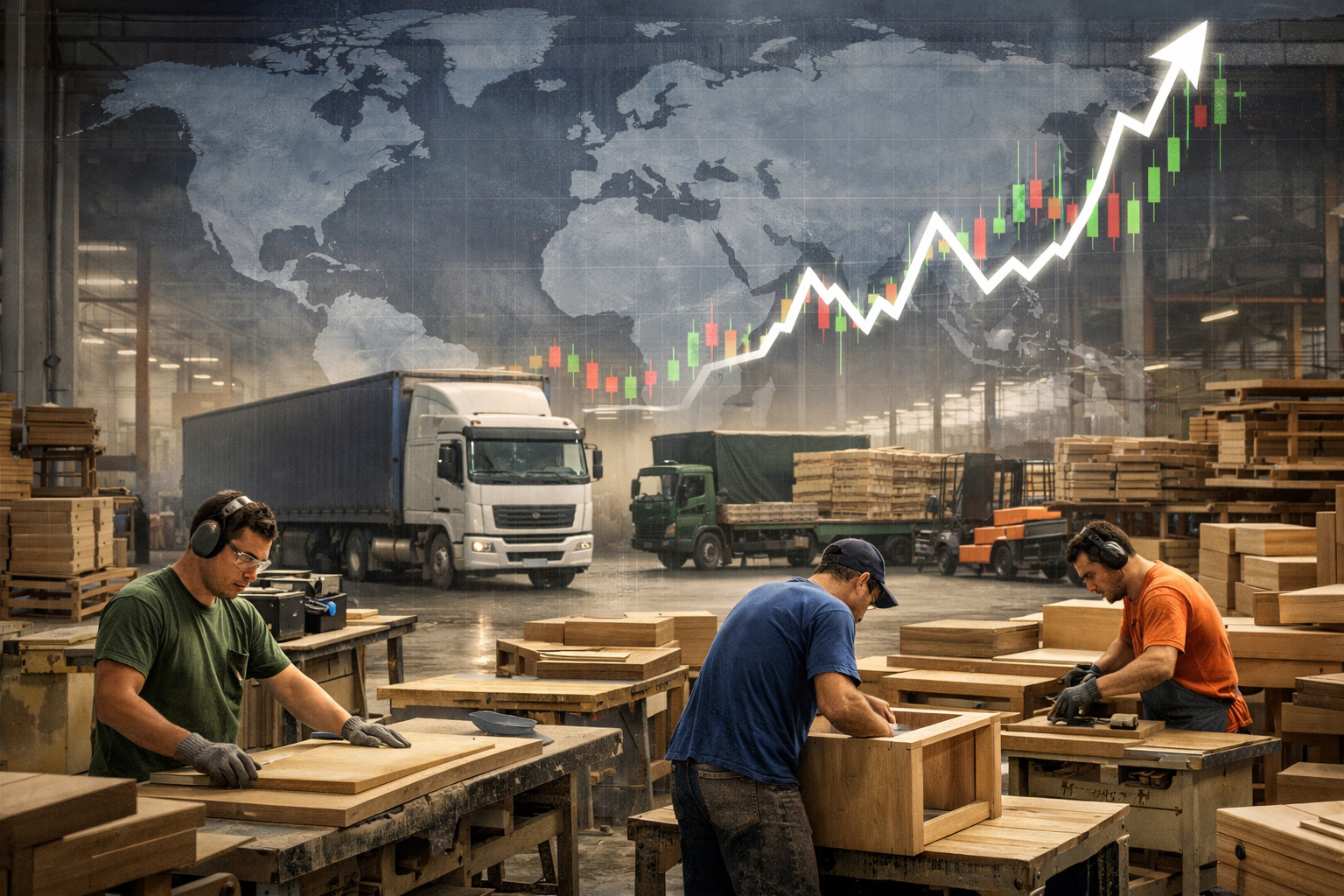

Understand how an international conflict is driving up costs in the Brazilian production sector and pressuring consumer prices, even thousands of kilometers away
The war between Iran and the United States is already starting to have direct effects on the Brazilian economy, impacting everything from fuel costs to the final price of products in the domestic market. Amid this scenario of global instability, the so-called National Furniture Capital emerges as one of the main examples of how international conflicts can quickly and significantly affect local production chains.
This information was released by Tribuna PR, with a report signed by Larissa Ayumi Sato, detailing how the rise in oil prices has directly affected the furniture sector. The city, which received the title through Law 14.728 in 2023, is responsible for producing 10 out of every 100 furniture items manufactured in Brazil, in addition to exporting to various countries.


Rising oil prices increase diesel, freight costs, and pressure the entire production chain
Initially, it is important to understand that the main trigger for this domino effect lies in the rising price of oil, caused by tensions in the Middle East. As a direct consequence, diesel — essential for cargo transportation — becomes more expensive, raising logistical costs across the country.
-
Oil feels the weight of the war between the United States and Iran on the same day that Tehran buries its assassinated supreme leader and the world watches to see who will control the Strait of Hormuz, a strategic route for global oil.

-
The perks at Nubank are over: the bank announces a monthly fee for HBO Max, which was “free,” with a 12-month term on Ultravioleta, 6 months on Nubank+, and the fee starting from January 2027.

-
The Chamber releases R$ 10 billion to hold the price of diesel until December and proves that Brazilian fuel remains tied to Congress.

-
Has the charge for sitting together ended? Anac confirms that minors under 16 have the right to a seat next to their guardians without an extra fee, and airlines may be penalized for failing to comply with the new rule.




In the National Furniture Capital, this impact is even more evident. The municipality houses over 380 industries in the sector, responsible for employing more than 12,000 workers and generating an annual revenue exceeding R$ 5 billion. Additionally, about 12% of local production is exported to over 40 countries, further increasing the region’s sensitivity to international fluctuations.
At the same time, the national scenario reinforces the scale of the problem. According to the Brazil Furniture 2025 report, prepared by the Brazilian Association of Furniture Industries (Abimóvel), the sector has 22,843 active companies, which produced 434.7 million pieces, generating a revenue of R$ 92.1 billion, 287.2 thousand jobs, and US$ 769.3 million in exports.
Thus, any change in transportation or raw material costs tends to directly impact this entire production structure.
Furniture prices may rise by up to 10% and reduce consumers’ purchasing power
In addition to higher freight costs, another factor exacerbating the situation is the increase in raw material costs. This occurs because various inputs used in furniture manufacturing, such as resins, are derived from oil.
According to José Lopes Aquino, president of the Arapongas Furniture Industries Union (Sima) and Colibri Móveis, the sector is already facing significant internal challenges, such as high interest rates, a shortage of skilled labor, and the resurgence of inflation.
However, with the war in the international scenario, the pressure has intensified. “At this moment, we are experiencing rising costs of raw materials and both national and international freight, which increase costs and consequently we will see an increase in selling prices,” says Aquino.
Based on initial studies by Sima, the expectation is that furniture prices for consumers may rise by about 10%. As a result, the increase is likely to directly affect sales volume, as the purchasing power of the population is also being pressured.
Still, despite the challenging scenario, there is a projection of approximately 6% growth in the sector, especially in the domestic market — although this advance is considered uncertain given the current conditions.
Sector bets on innovation, efficiency, and new markets to face the crisis
Even in the face of so many difficulties, the furniture sector demonstrates resilience and seeks alternatives to maintain its competitiveness. In this sense, companies have been investing in improving internal processes, increasing productivity, and developing new products that are more accessible to consumers.
Moreover, strategies aimed at expanding the customer base — both in the domestic and international markets — gain even more importance. For specialists, the balance between supply and demand will be crucial in the short term, preventing margins from being excessively compromised.
On the other hand, in the long term, the path should involve investment in new technologies, innovation, and design, which continue to be important differentiators in the sector. “Design will always be an aggregating differentiator,” highlights Aquino.
Meanwhile, the public authorities are also monitoring the situation. The Municipal Secretariat of Development, Innovation, Labor, and Income continues to monitor the impacts and seek solutions that strengthen the sector.
According to Secretary Claudia Lens, actions that encourage integration between companies and institutions can be decisive. “We need to strengthen ourselves for the greater good,” she states.