





 Portuguese
  English
  Spanish
  5 min of reading
  0 comments


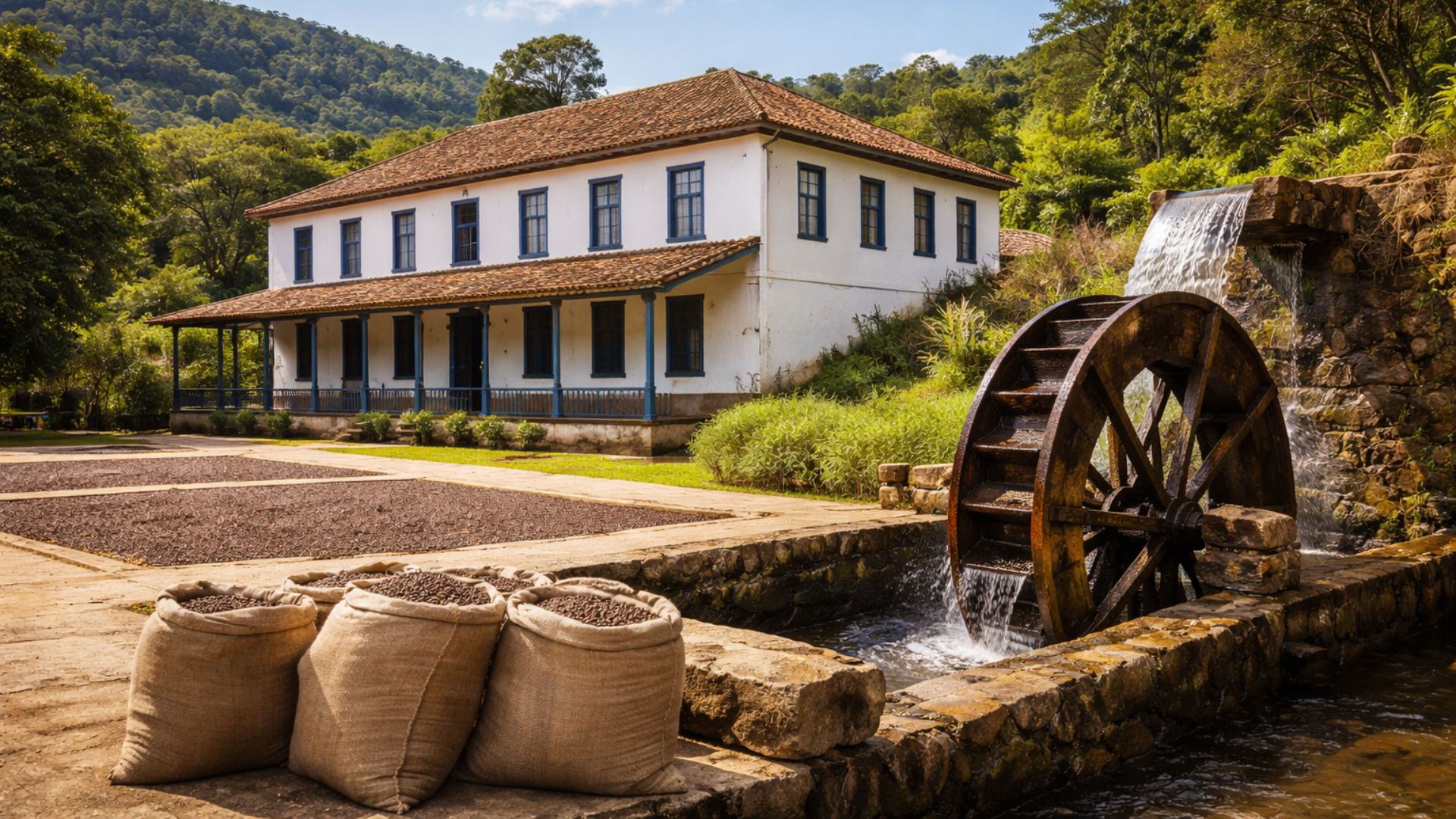
Rural heritage in Minas Gerais gains new life with restoration, special coffee, and opening to the public in a project that integrates history, production, and education in the interior of the state.
The Serra dos Rios Farm, in Albertina, in the South of Minas, underwent a restoration process that combined architectural recovery, appreciation of coffee history, and opening the space for educational activities and visitation.
According to the Mais Caminhos program from EPTV, the property inherited by Rodrigo preserves a century-old mansion, maintains water-powered machines, and carries a coffee tradition that spans generations of the same family.
Raised in São Paulo and distant from rural life, he became closer to the farm upon receiving the inheritance and decided to learn more deeply about a heritage that until then had only been part of his story indirectly.
-
How hatch covers weighing up to 45 tons seal the largest container ships on the planet and support giant stacks of cargo in open water.

-
The United Kingdom transforms chewed gum thrown on the streets into an ambitious and surprising project that could forever change the way cities and stations deal with one of the stickiest and most expensive types of waste to remove.

-
While Argentina reactivates the Dardo gliding bomb after more than a decade of inactivity, Brazil is keeping an eye on it and speeding up its national missile with airborne MANSUP, a range of over 200 km, royalties, and export potential.

-
Society says that family is sacred and that a good child can endure everything, but psychology shows that distancing oneself from toxic parents is not ingratitude; it is the only way to preserve one’s mental health and break cycles of abuse.

The contact with the property revealed not only the productive dimension of the place but also the strength of a family memory linked to the interior of Minas and coffee cultivation since the 19th century.
Restoration of the historical mansion in Minas Gerais
The first phase of the work focused efforts on the main house of the farm, which underwent interventions to recover usable conditions without erasing the old marks of the construction.
Instead of transforming the mansion into an isolated piece of contemplation, the proposal was to restore vitality to the property and reinsert it into the daily life of the farm, preserving historical elements while the space became inhabited and frequented again.
Among the most symbolic points of this set are the hydraulic structures that powered machines related to the functioning of the farm.
The presence of this machinery helps to illustrate how rural production was organized in another period when the use of water was part of the work logic and the economic dynamics of coffee.
More than a scenic detail, this collection reinforces the technical and historical value of the property.
Chalet and rural tourism expand the use of the farm
The restoration also advanced into the contemporary uses of the area.
Rodrigo created a chalet to host guests, introducing a new form of occupation in the space without breaking with the identity built over decades.
The lodging extended the stay of visitors and brought the public closer to an experience linked to the rural landscape, the old architecture, and the rhythm of life in the countryside, in a farm that today also welcomes visitors.
Special coffee production and the Brazilian market
At the same time, the relationship with coffee gained new weight within the project.
During this process, Rodrigo discovered that almost all the farm’s production was going abroad and decided to redirect part of that path.
The choice resulted in the creation of a brand aimed at the domestic market for special coffee, associated with the memory of a former employee of the property, in a move that brought product, identity, and recognition of those who helped build the history of the place closer together.
On the brand’s institutional website, the farm states that its history began in 1875 and that the coffee produced there is 100% arabica, cultivated in an artisanal and sustainable manner in Albertina.
The same presentation highlights that production has reached markets in Europe, Asia, Central America, and the United States, which helps explain why the heir decided to make room for this special coffee to also reach Brazilian consumers more strongly.
Education, memory, and environmental preservation
This effort of updating was not limited to the business.
The property began to be treated as a place of memory and knowledge circulation, with initiatives focused on environmental preservation and heritage education.
As shown by EPTV, the farm now receives schools from the region for educational actions, tree planting, and discussions about the history of coffee, expanding the social reach of a space that was previously linked mainly to the private and family sphere.
History of slavery and the context of coffee in Brazil
The historical importance of the property, however, is not limited to architecture or the persistence of coffee activity.
The report from Mais Caminhos noted that the farm housed enslaved people, information that imposes a broader reading of the property’s past and of the coffee economic cycle in Brazil itself.
Preserving this heritage, in this context, does not mean merely recovering facades and old objects, but recognizing that part of this history is linked to structural inequalities that marked the social formation of the country.
This historical layer changes the meaning of restoration.
The mansion, the machines, the yard, and the landscape cease to be merely material marks of a prosperous time in coffee cultivation and begin to compose an environment where memory, work, and heritage coexist in a more complex way.
By opening the farm for educational activities, the project shifts the focus from simple aesthetic appreciation to an experience that includes reflection on Brazil’s rural past and its effects on the present.
Historical farm gains cultural and touristic function
For this reason, the initiative attracts attention beyond experiential tourism.
The meeting of built heritage, special coffee production, lodging, and pedagogical actions transforms Serra dos Rios into an example of contemporary repurposing of a historical farm without losing its original character.
The space ceases to operate merely as a family memory and begins to function as a territory of coexistence, learning, and contact with a tradition that remains active.
In the daily life of the property, this coexistence between different times appears concretely.
On one side, the century-old mansion, the water-powered machinery, and a coffee tradition that began in the 19th century survive.
On the other side, the chalet, the reception of visitors, the circulation of students, and the attempt to reposition the farm’s special coffee in the Brazilian market emerge.
The strength of the project lies precisely in this combination of permanence and updating.
Without resorting to a rupture with the past, the recovery of the Serra dos Rios Farm reorganized the role of the property within the community and the family’s history.
The old headquarters regained use, production gained a new narrative, and rural heritage began to be presented as a living part of the local culture.
In Albertina, the inheritance received by Rodrigo ceased to be merely a family asset and began to gather memory, nature, coffee, and public circulation in one space.





Seja o primeiro a reagir!